
Lexington could become a ‘climate haven,’ but we need to prepare for more people | Opinion
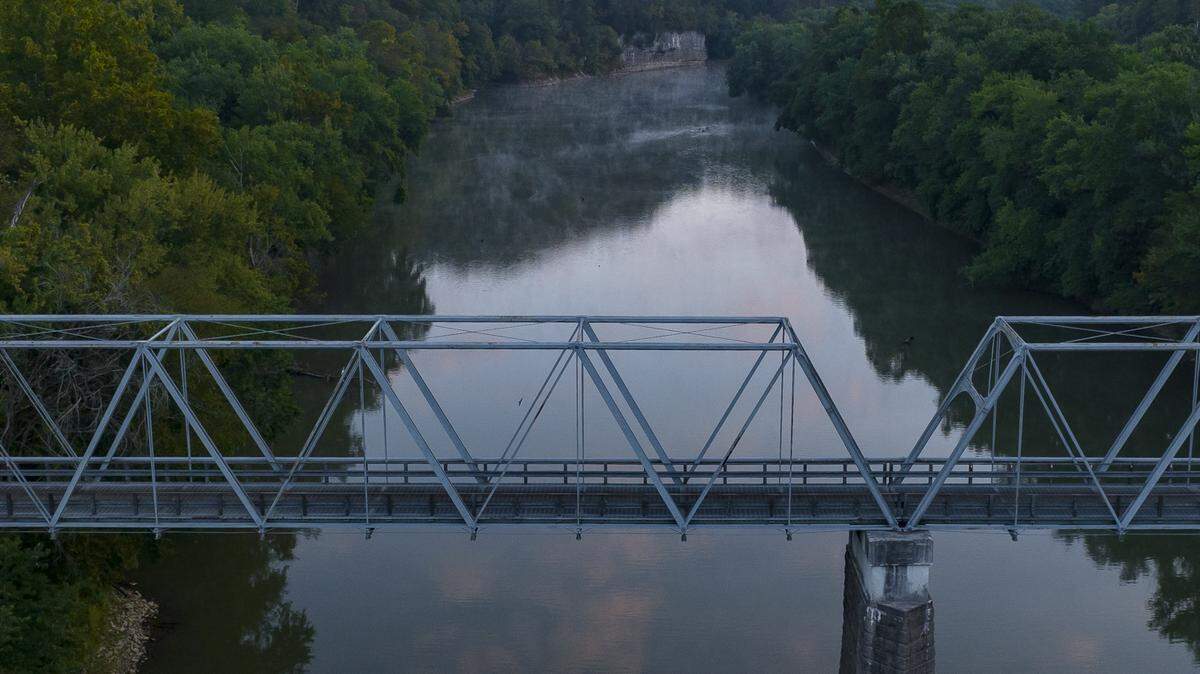
In 2023 I suggested in an op-ed here that Lexington is on track as a climate haven, a place where increasingly destructive weather almost always blows around us and as more assiduously described in an earlier 2021 op-ed by forest scientist Tom Kimmerer.
Suffice it to say that Lexington’s fortuitous location on top of a hill that lies on top of a plateau has fared us extremely well. This is not to say that we don’t have some damaging straight line winds, ice storms, and the like. But nothing like the frequent devastation around us.
The thrust of our earlier articles was that Lexington’s good fortune as a climate haven could very likely become a huge draw for climate refugees in search of safer climes, especially when compared with other climate havens given our central location, world class health center, university town, and tourist destination.
The big question is how much of a draw might the Lexington region prove to be? Current six-county population forecasts project about 134,000 new residents by 2050 or a 26% increase over the next 25 years. [1]
However, if the Lexington region should become a place of choice for mass in-migration, the number could be far greater. The likely combination of sea level rise, more severe flooding, more tornadoes and hurricanes, dryer conditions leading to more forest fires, could likely lead to a staggering influx of people far beyond current plans. Florida alone has about 14 million residents that live in its coastal counties – and that’s just Florida.
With that in mind, the city ought to pause its current plan to expand the Urban Service Boundary and instead, investigate a more ambitious plan to welcome a far greater influx of new residents otherwise gobbling up irreplaceable farmland.
One such possibility might be to investigate a city planning concept called the garden city plan. The idea would be to connect Lexington with its “satellite” cities, such as Versailles, Georgetown, Richmond, etc. with a high speed rail line to be built with intermittent station stops that would include higher density (and affordable) housing, also known as transit oriented development. The term garden city referring to the preservation of open spaces between designated development areas.
This would be a unique and challenging urban design facing ever threatening climatic conditions. The design process would best start with a search of applicable case studies. This is not the first time that this idea of a Lexington satellite city plan has come up. In fact, there was an interurban rail service that ran from Lexington to five nearby towns between 1902 and 1934, albeit a different technology, a different world.
Time is of the essence. Once the push starts to relocate here, the money and politics would be overwhelming. It seems altogether fitting and proper that the city with the oldest urban growth boundary in the nation to at least examine what might happen with a huge influx of climate refugees and how to best accommodate it.
The younger you are the more you have at stake. But rest assured that for your kids and grandkids the stakes couldn’t be higher.

Henry Jackson is a retired LFUCG strategic planning manager and member of the Sierra Club Bluegrass Climate Action Team.