
We need more ‘third places,’ unconventional spaces for civic engagement | Opinion
AI-generated summary reviewed by our newsroom.
- Third places foster civic engagement by encouraging informal community ties.
- Digital isolation and reduced in-person interaction threaten public civic hubs.
- Reviving third places may boost youth participation in local civic life.
When people think of civic engagement, they tend to think about political participation. But civic engagement encompasses much more than just that; it defines the ways individuals actively participate in their communities and society, contributing to the public good.
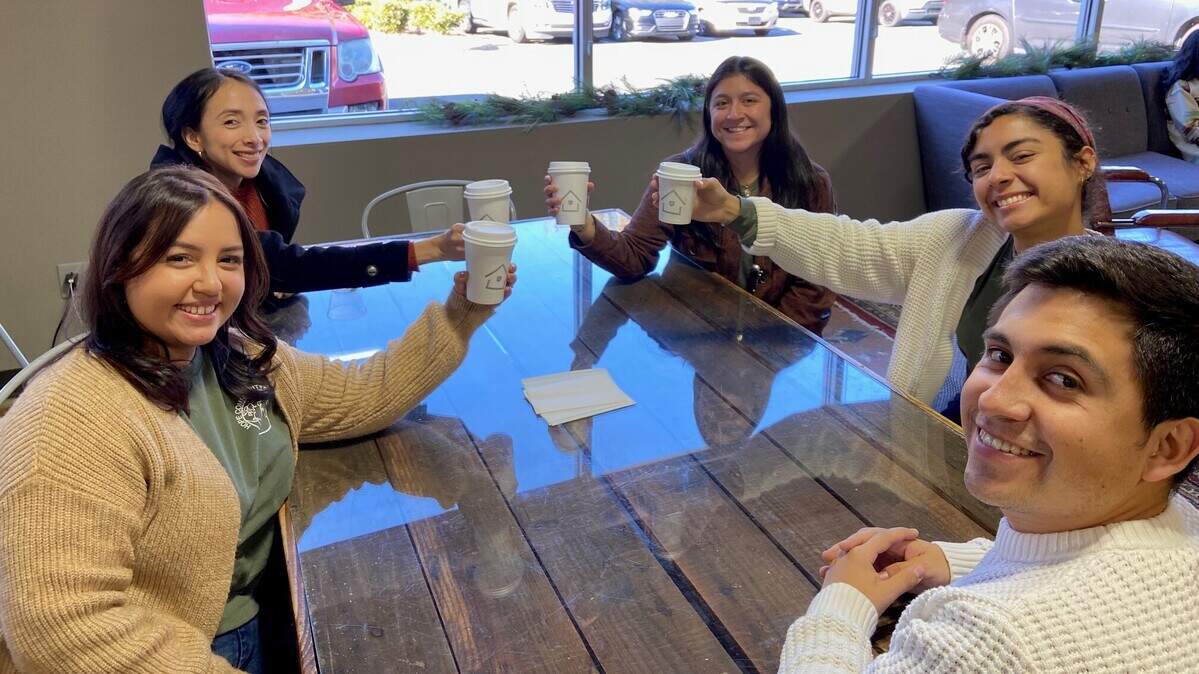
At the heart of civic engagement is community, and oftentimes these community connections are facilitated in third places — a space where community members can gather together to build networks and connect. For young people, third places provide a safe and comfortable space where they can better explore the world around them. As a young Kentuckian myself, I have found that third places let me to learn from friends, neighbors, and community members, allowing me to become more engaged in my community in casual but meaningful ways.
As defined by sociologist Ray Oldenburg in his 1989 book The Great Good Place, third places are public spaces on common ground where a diverse group of people can gather and interact. According to Oldenberg, third spaces “host the regular, voluntary, informal, and happily anticipated gatherings of individuals beyond the realms of home and work.”
But third places don’t just offer leisure and connection; they are vital facilitators of civic engagement.
“There is a concept in sociology of strong ties and weak ties,” said Dr. Beau Weston, a sociology professor at Centre College. Weak ties are casual acquaintances that you don’t interact with often, but provide valuable information or connections.
“Your strong ties are with your family, with your friends, you communicate a lot, and you know what they know,” Weston said. But it’s the network of weak ties that “actually transmit information from one strong tie group to another.”
When you are sitting in a public space in your hometown, say a coffee shop, you are likely to run into one or two people you may recognize. Maybe they know of a job opening that you’re interested in or a project you would love to help with — third places are where that information can be relayed to you.
Historically, third places have encouraged civic engagement and even sparked political revolutions. In 17th-century Britain, civic engagement and political discourse often occurred in places known as “Penny Universities,” which Dr. Weston also referenced in the discussion of third places and civic engagement. Named for the cost of entry, Penny Universities were a type of coffeehouse where people could enjoy coffee, conversation, and intellectual discourse.
Unfortunately, third places are dying in an age of increasing digital isolation due to the prevalence of social media. In a survey conducted by Monitoring the Future, the number of high school seniors who gathered in person with friends “almost every day” dropped from 44 percent in 2010 to 32 percent in 2022. For the typical eighth-grade student, social outings decreased from about 2 ½ a week in 2000 to 1 ½ in 2021.
Third places offer a space for spontaneous, casual, and often purposeless conversation to occur, but that purposelessness is exactly their appeal. As a high school student who often feels overwhelmed by the pressures of classes, extracurricular activities, and upcoming exams, I find third places as a space where those pressures are resolved. They create environments where daily stresses can fade away, allowing for the creation of new connections unrelated to school or work. In these spaces, individuals who may otherwise have no connection to one another can freely share ideas and speak non-productively about anything and everything.
In an age where connection is only a tap away, it is ironic how disconnected many of us actually feel. For students specifically, most social interactions take place behind screens, reduced to DMs, likes, and story replies. According to Dr. Weston, “If you live a virtual life… [you] really are impoverished in [your] social connections and really unlikely to engage in civic action.”
It is imperative that people find regular social interaction outside of screens, as it facilitates community and political engagement. Third places are important spaces for fostering connection and community, and increasing isolation due to social media is threatening this. All of us, and especially younger generations, need to find spaces for regular social interactions and civic activity.
Charlie Kinkade is a rising junior at Danville High School and a member of the Kentucky Student Voice Team. He serves as the Editor-in-Chief of the Kentucky Review of Art, and is the assistant editor of the DHS Crow’s Nest newspaper.