
Kentucky’s people cannot afford the realities of federal budget bill | Opinion
AI-generated summary reviewed by our newsroom.
- Proposed Medicaid cuts risk $28B loss for Kentucky over the next decade
- Over 90,000 hospital jobs statewide face disruption under funding reductions
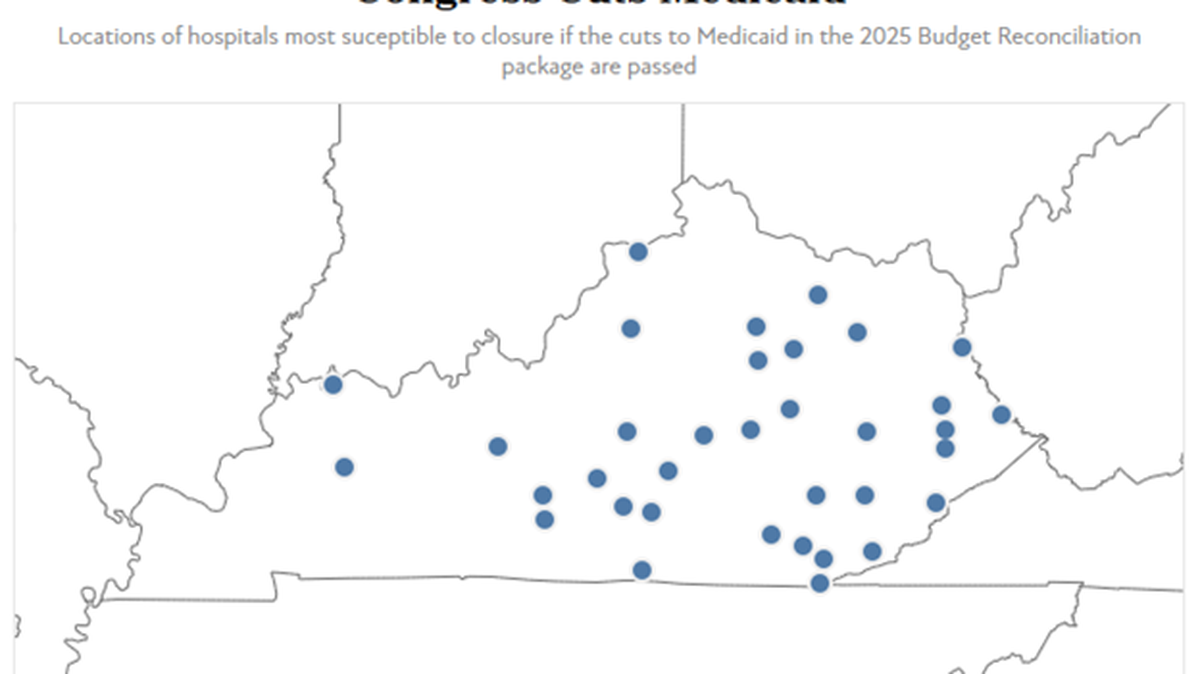
- Thirty-five rural Kentucky hospitals face closure, most of any U.S. state
As a state representative, I often hear from Kentuckians who are trying to access care that is affordable and delivered in a timely manner. The latest proposal from Congress to slash Medicaid would not only put that basic need even further out of reach, it would pull the rug out from under communities across the Commonwealth.
If these cuts become law, Kentucky could lose up to $28 billion in federal Medicaid funding over the next decade. That’s not just a budget line item. That’s hospital doors closing, ambulance response times stretching longer, jobs disappearing and health outcomes worsening, especially for our rural families, children and seniors.
But let me be clear: no part of Kentucky would be spared.
In urban areas like Louisville and Lexington, our health care systems are major economic engines. Hospitals and health centers support thousands of jobs, from nurses and doctors to technicians and administrative staff. In 2024, more than 90,000 Kentuckians worked in hospitals, earning family-supporting wages that help drive local economies. If Medicaid is gutted, those jobs—and the families who rely on them—are at serious risk. That ripple will be felt in every local business, every school system and every neighborhood.
Meanwhile, in rural Kentucky, the situation is even more dire. Many communities already struggle with limited health care access, and they rely on small, often underfunded hospitals that operate on razor-thin margins. The University of North Carolina’s Sheps Center estimates that 35 rural hospitals in Kentucky are at risk of closure under these proposed cuts—more than any other state. That’s nearly 1 in 10 of the most vulnerable hospitals in the entire country, right here in our backyard.
These aren’t just statistics. Places like Morehead’s St. Claire Hospital, a partner of the University of Kentucky Healthcare system, could be forced to shut their doors. That means expectant mothers driving longer distances for care. That means stroke or trauma victims losing precious minutes that could cost their lives. It means losing the very institutions that anchor our communities, provide stability, and keep people well enough to work, raise families and live with dignity.
And it doesn’t stop there. Hospital closures lead to health care deserts, pushing more people to overcrowded urban hospitals. Patients traveling farther for care end up paying thousands more on average and are more likely to require intensive treatment, longer stays and costly transfers. It’s a bad deal for everyone, rural or urban, insured by Medicaid or not.
Governor Beshear put it plainly: “Health care is a basic human right.” Medicaid is the lifeline for half of Kentucky’s children and 70% of long-term care for seniors. Cutting that lifeline to save federal dollars would come at the cost of real lives, real communities and our state’s future.
This is not the time to backtrack on health care. It’s time to protect it. We must tell Congress loud and clear: Kentucky cannot afford to lose access to reliable healthcare. Not now. Not ever.

Kentucky Representative Chad Aull represents the 79th House District in Fayette County.