
Men need to get more involved in the fight to stop domestic violence | Opinion

AI-generated summary reviewed by our newsroom.
- Men remain largely absent from domestic violence prevention despite their influence.
- Mass shootings and homicides link closely to domestic violence in Lexington in 2025.
- Male-led dialogue aims to challenge harmful cultural norms and encourage accountability.
Imagine if we tasked only the black community to solve racism or the Jewish community with eradicating antisemitism. It would be crazy, right?
So why are we as a society comfortable with asking women to be the only ones to highlight, address, and ultimately resolve the issue of domestic violence, when they are disproportionately the victims? When you look at the front-facing involvement, the behind-the-scenes work, and the boots on the ground of most domestic violence organizations and coalitions, it’s women leading the charge. But where are the men in this fight?
A history of domestic violence has been identified in 68 percent of the mass shootings in the US from 2014 to 2019. On July 13, Lexington experienced two mass shootings in a single day, one of which was triggered by domestic violence. So far in 2025, a quarter of Lexington’s homicides have been related to domestic violence.
Three years ago, our city launched a domestic violence campaign called “It’s Time Lexington,” aimed at increasing awareness about intimate partner violence. In partnership with “It’s Time,” I co-hosted a content series called “Good Guy Guide” that brought together prominent male community members to discuss the root causes and behaviors that lead to violence in relationships.
This was important because women are not only disproportionately affected by domestic violence, but the mortality rate for women who have been abused in personal relationships is significantly higher. The series aimed to encourage men to confront an issue that is rarely discussed among ourselves or in public. By having these conversations, we hope to raise awareness and even challenge men in our community.
In these podcasts, men open up about the “boys will be boys” mentality that fuels many problematic behaviors and language, which can create unsafe environments in relationships. This includes issues like gender inequality and the unhealthy expectations tied to it. Another problematic trope is viewing sex as something a woman owes a man. There’s also the normalization of offensive and even violent language directed at women in general or within intimate relationships.
In my conversations with men, they share how untreated trauma and suppressing feelings often influence their behavior in relationships and marriages. Many men relate to the pride and ego instilled in most young boys. When a girl falls at the park, she is nurtured, but when a boy falls, he is told to “be tough,” “get up,” and “be a man!” Some of these behaviors are early signs of unhealthy tendencies that can lead to violence in relationships. While these feelings are common among men regardless of background or upbringing, many individual, relational, community, and societal factors also increase the risk of victimization and domestic violence. So, how can we respond?
As men, we have to acknowledge not only the societal norms, generational cycles, and untreated trauma that till the soil for toxicity to grow in our intimate relationships, but we must also acknowledge our male bias. Acknowledgment is only part of the work. We also have to do the internal and external work, which may require breaking generational cycles, creating new habits, and having difficult conversations with our friends. As son to a mother, a husband to a wife, a father to 5 daughters, and a mentor to many, the journey starts with me.
As my friend Lille told me when we started filming our podcasts, “Be the highest and best version of yourself.” Though I’m wildly imperfect, I strive each day to be better, more informed, and more vocal on the issue of domestic violence. The women in my life and the women in this community deserve that. My pardoning advice to my brothers who their looking to become allies, is to simply learn to LISTEN. Your journey should start there.
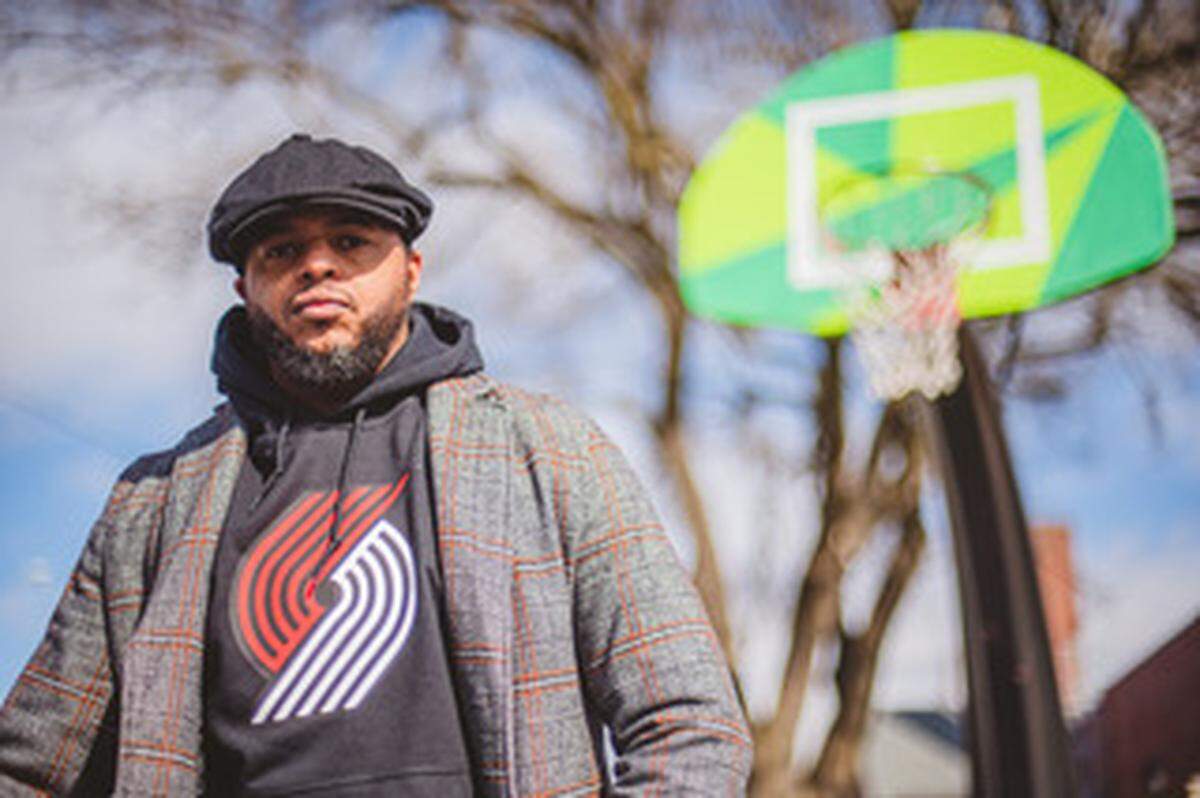
Devine Carama is an Emmy-award winning hip hop artist and the director of One Lexington, a youth violence prevention organization.