
I’m a Democrat. Here’s why I attended a conservative think tank | Opinion

As a left-leaning college student, I never imagined I would go to a conservative think tank. I didn’t agree with everything I heard at the American Enterprise Institute’s (AEI) Summer Honors Program, but I left with sharper thinking, unexpected friendships, and a deeper belief in the value of honest dialogue. If you tend to tune out those on the opposite side of the political spectrum, my story just might change your mind
In Mid-February I received an email from a professor about the AEI Summer Honors Program in Washington, D.C. I started the application with little research. I thought, “Oh, D.C. for the week? All expenses paid? And I get to take a class on my favorite topic? Sign me up.”
In my interview, I made a point to share that I think one of my generation’s greatest challenges is an inability to have civil discourse about politics. I marked myself as “center-left” on the boarding survey and hoped that wouldn’t get me cut from the list.
Participants were ambitious, sharp, and, for the most part, open-minded. During the week-long seminar my peers and I dove deep into the K–12 education system, under the guidance of Dr. Michael McShane. McShane is a researcher for EdChoice, a nonprofit for American education reform, and an adjunct fellow in education policy at AEI. While a strong proponent of school choice, Mike curated a diverse selection of articles for our pre-arrival reading packet. I wondered which topics might be avoided and whether I’d be bold enough to bring them up in what I assumed would be a room full of conservatives.
Here’s the corny part. The most valuable aspect of the program was the people. I wasn’t the only one who felt like an undercover agent for liberal-leaning education policy. For five days, we were a tight-knit microcosm of driven, curious people. Instead of being irritating, the level of passion and intellectual rigor in many of our conversations was inspiring, even when I disagreed with my peers. Debates carried over from the classroom into the Metro, dinners, and group outings. We took photos in front of the White House and walked around the National Mall. We even went to the Congressional Baseball Game.
There were sobering moments, too, like our visit to the Department of Education (DOE). Everything about the visit depressed me. Even the building itself felt desolate. The emptiness felt symbolic. We had entered a highly politicized space at a consequential moment in time. It was both disheartening and, oddly, energizing. Disheartening, because the DOE truly appeared to be drifting. Energizing, because it felt like a moment that could be catalysts for reform.
While at the DOE, we met with Principal Deputy Assistant Secretary Hayley Sanon. Sanon told us the administration’s plan was to ultimately shut it down. As she so carefully phrased it, the goal is to “cut through the bureaucracy, not the budget.” It is deeply concerning how the states will manage without federal oversight.
One of our most unexpected speaker sessions came from Anna Moreland and Thomas Smith, co-authors of “The Young Adult Playbook: Living Like It Matters.” Their core message? A meaningful life rests on three pillars: work, leisure, and love—and Gen Z is falling short on the last two. They argued that our generation has become hyper-efficient, résumé-driven, and achievement-obsessed, often at the expense of real connection. At times, it felt like they were urging us to start dating each other. It was funny, but also uncomfortably real.
I wasn’t sure what AEI’s Summer Honors Program would be like, but now that it’s in the rear view, I wouldn’t trade the experience for anything. The program challenged me, not just to engage in serious, nuanced conversations about the future of American education, but to give an ear to people across the aisle. I’m even more confident in my beliefs now because my views were tested.
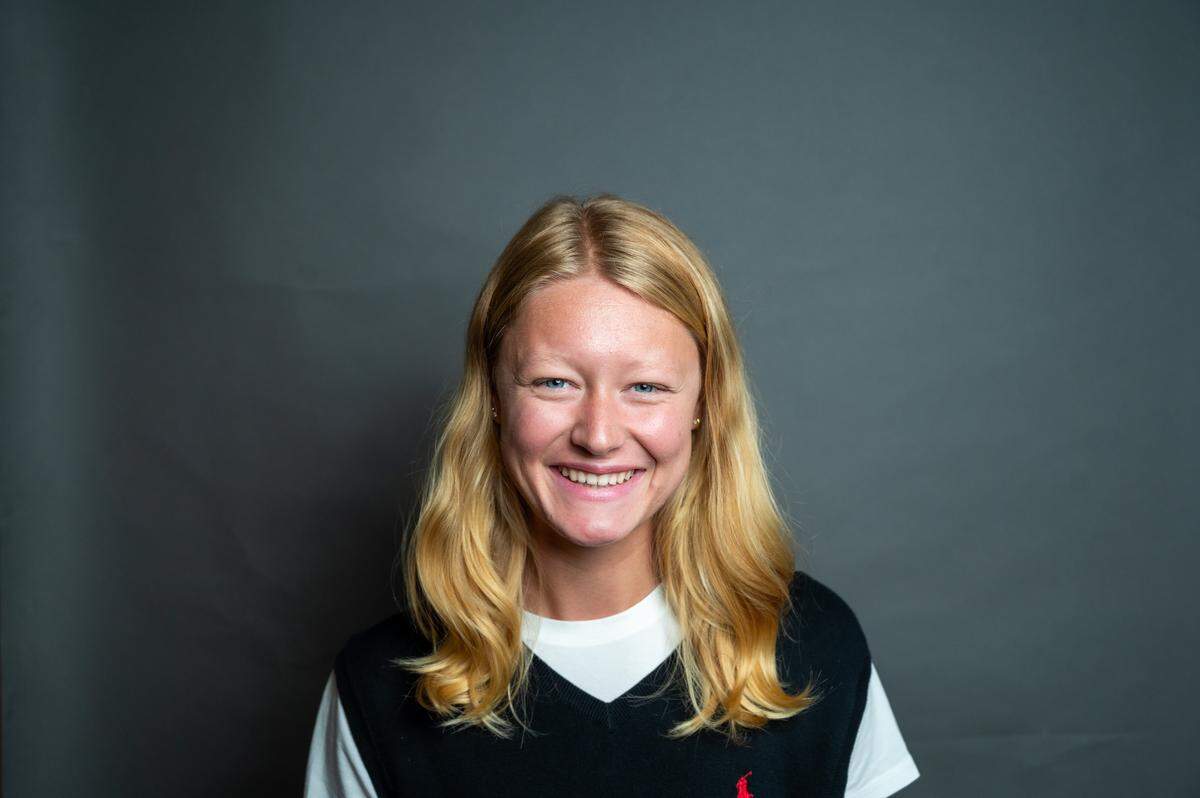
Kate Polson is a pre-law student at Transylvania University studying Education and Social Change.