
Banning cell phones in class is a start, but KY educators, parents must do more | Opinion
AI-generated summary reviewed by our newsroom.
- House Bill 208 restricts cell phone use but leaves classroom tech largely unchecked.
- Educators report students struggle with handwriting, attention, and basic skills.
- Critics urge investment in teachers, in-person learning, and reduced screen reliance.
As July creeps towards a suffocating close, it’s almost that time again: the start of a new school year, filled with frantic learning and nearly bursting with the potential of new memories to be made. It’s been half a decade since I was last preparing for this time of year, and a lot has changed.
Just this week, I was scrolling Facebook when I came across my former elementary school posting school supply lists. Curious, I clicked through — and found myself in shock. Every grade, down to preschool, included headphones as a required item for the new school year. I had known technology had inundated modern schools, but it wasn’t until that moment that I realized how far the inundation had gone.
This realization was an uncomfortable one. For as much as I enjoy scrolling TikTok, and for as fond as my childhood memories in the school computer lab are, I felt troubled at the thought of kindergarteners and preschoolers learning digitally, on iPads and Google Chromebooks instead of with paper and pencil, ink and crayons.
Just two years prior, I had substitute-taught for middle and high school, and even then, my suggestion that we only use pencil and paper in class for the day was met with righteous indignation. Students begged to use the Chromebooks instead, to type instead of physically write the answers to their assignments. Some seemed unable to even hold a pencil appropriately. Seeing those Facebook-posted school supply lists brought memories of that indignation back to the surface. Was this the result of technology-driven classrooms?
Surely, the COVID-19 pandemic shares some of the blame. But in general, reading and math test scores were declining even before the pandemic, and those scores have failed to rebound since. This decline, despite years of financial investments—federal and state alike — devoted to solving this issue. This decline, despite the weakening of many testing requirements. The result is that our children are less knowledgeable in critical subjects, have shortened attention spans, experience stunted behavioral development, and are by and large increasingly underprepared for adult life.
“I don’t know what to do,” I recall an honors history professor at the University of Kentucky telling me during 2022. “Honors students are supposed to be the best of the best, but many of them can’t write a basic essay. I can’t teach them the fundamentals at this level. I don’t have the time or the resources.”
Everyday Americans feel the effects, too. According to a Pew Research Center survey conducted last year, over half of Americans are unsatisfied with the country’s K-12 education system, with only 16% of Americans expressing a positive view of the system. And with President Trump’s assault on the U.S. Department of Education, these statistics are unlikely to improve.
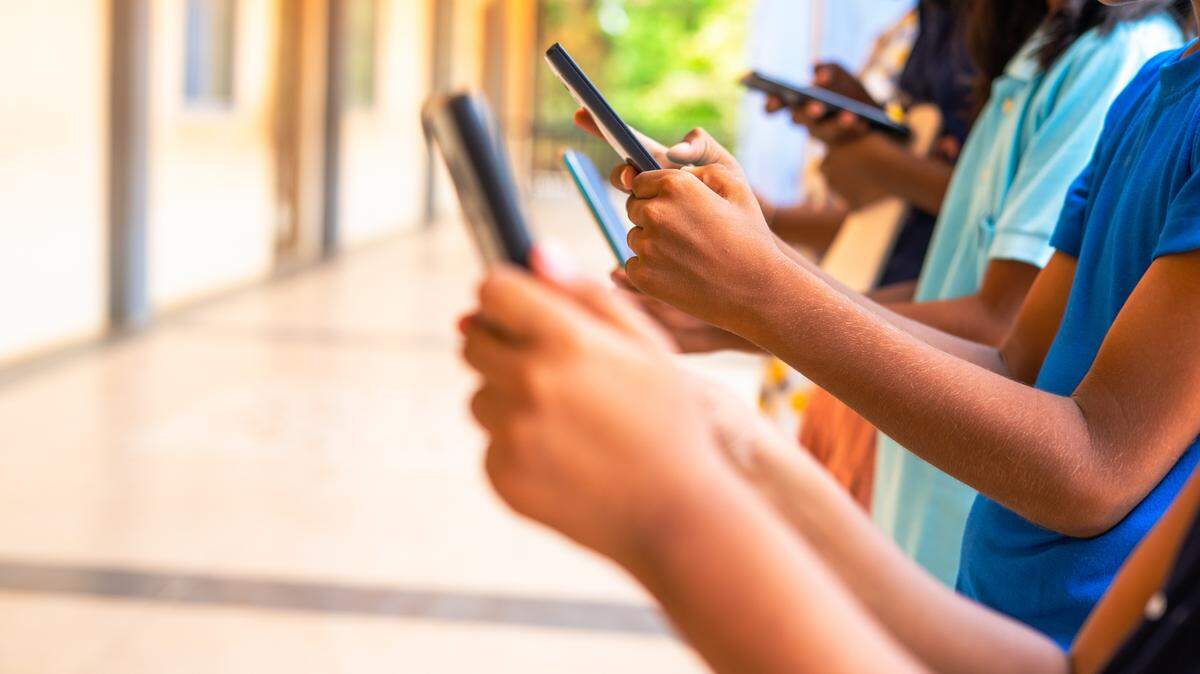
To the Kentucky General Assembly’s credit, it has taken steps to curb cell phone and social media use. House Bill 208 requires Kentucky school districts to develop policies to prohibit cell phone and social media use during instructional school hours, except in the case of emergencies. That bill became law in March of this year. But while a step in the right direction, the General Assembly has not gone far enough.
Children will still be given electronic devices while at school and will often receive their primary learning through apps and websites. They will still suffer shortened attention spans and cognitive and behavioral declines. The cell phones are but tiny fractions of the ultimate problem. The pervasive touch of technology in the classroom, especially for younger children, is the real challenge. Such technology is of course an easy solution for teachers who are overworked and underfunded, but it comes at a cost. A cost we cannot afford. Now is the time to invest in our teachers and to give students room to socialize, play, and learn in-person sans screens. If the children are the future, then the future depends on those investments.

Peyton Mills is a lifelong Kentucky native, having grown up in Eastern Kentucky before moving to Lexington, and is currently a law student.
This story was originally published July 29, 2025 at 2:08 PM.