
In KY, nation, the answer to unpopular speech is more speech, not censorship | Opinion

I’m no stranger to fighting in conventional spaces to protect the First Amendment on college campuses. That work has placed me and our organization in unusual positions. From supporting a ban on DEI’s censorship in higher education to defending the free expression rights of drag queens, the Kentucky Student Rights Coalition (KSRC) has partnered with people from every walk of life across Kentucky.
We are not ideological. Our commitment is to the principle that students, faculty, and the public have the right to speak, express, believe, think, and access higher education freely.
Rabbi Shlomo Litvin is correct: antisemitism is on the rise on college campuses, including here in Kentucky, and the complaints are not exaggerated. Since Oct. 7 —the day Hamas committed its massacre in Israel — KSRC has addressed an increase in reports of free speech violations, including incidents targeting pro-Israel and Jewish students at the University of Louisville and the University of Kentucky. These range from hecklers’ vetoes that obstructed pro-Israel demonstrations to outright suppression of speech.
However, instead of dismantling the tools of censorship used against pro-Israel Jews and their allies, I was troubled to see them normalized — sometimes through conflated or inaccurate arguments — using the International Holocaust Remembrance Alliance’s (IHRA) Working Definition of Antisemitism, as referenced in a recent op-ed by Rabbi Litvin.
KSRC worked with Rabbi Litvin, Senator Tichenor, and Senator Robby Mills on SJR 55 to ensure campuses protect equal access to education, promote free speech, and teach that the best counter to hate speech is more speech. The IHRA definition was adopted only as non-binding “guidance” in SJR 55 — not enforceable law. Why? Because codifying it would endanger the First Amendment rights of students, faculty, and the public.
Across the spectrum — from Albert Mohler, president of The Southern Baptist Theological Seminary, to the ACLU, the Foundation for Individual Rights and Expression, and Alliance Defending Freedom — legal experts agree: the IHRA definition is unconstitutionally vague, too broad, and risks limiting protected speech on campuses subject to Title VI.
The problem begins with its wording: “Antisemitism is a certain perception of Jews, which may be expressed as hatred toward Jews.” This offers no clear boundaries for what speech or conduct qualifies as antisemitism. It goes on to say antisemitism may target Jewish or non-Jewish individuals, which could include anyone. Adopting such language as enforceable law would pressure universities to police protected speech and chill debate.
Who exactly must speech target to qualify? What conduct is covered? The definition does not say. This vagueness is precisely why the enforceable version would have failed in the legislature, as Representative Roberts noted.
The constitutional concerns aren’t hypothetical. Last October, a federal judge blocked Texas public universities from enforcing the IHRA definition after Students for Justice in Palestine argued it imposed viewpoint discrimination. The court agreed they were likely to succeed on First Amendment grounds.
The IHRA’s examples also raise issues. Some define antisemitism as claiming Israel is a racist endeavor, comparing Israeli policy to Nazis, or alleging Jews killed Christ. Many of these could cover criticism of Israel — criticism that, while it may be harsh or unfair, is not inherently antisemitic and remains protected speech.
We’ve already seen how misapplying the IHRA definition can chill speech and lead to First Amendment violations in Kentucky. At the University of Kentucky, Professor Ramsi Woodcock was suspended after criticizing Israel’s actions in Gaza— comments made on his personal website and at conferences. The university refused to share the complaints against him, banned him from campus, and publicly condemned his views. Yet, as a public university professor, Woodcock has the constitutional right to express his views, however unpopular.
With the help of the FLDF, Woodcock is being represented by Joe F. Childers of Joe F. Childers & Associates. Childers will work to lift Woodcock’s suspension so he can return to teaching in the classroom and continue speaking freely outside of it. Criticism of Israel — or any foreign government — is protected under the First Amendment. Those who disagree are free to respond with their own speech, but government entities cannot suppress it. That’s why SJR 55 left the IHRA definition as guidance rather than law.
There is no question antisemitism is a growing problem, especially on campuses. Rabbi Litvin is right about that. But he is mistaken about the constitutionality, controversy, and binding nature of the IHRA definition in Kentucky. Hate speech—however offensive — is still protected speech in the United States.
As noted by Justice Louis Brandeis, a Jewish Kentuckian who served on the Supreme Court of the United States: “Those who won our independence by revolution were not cowards. They did not fear political change. They did not exalt order at the cost of liberty…If there be time to expose through discussion the falsehood and fallacies, to avert the evil by the processes of education, the remedy to be applied is more speech, not enforced silence...Such, in my opinion, is the command of the Constitution.”
The command of the First Amendment and the Constitution is clear: No hate speech laws based upon one religion or petition against grievances for supporting a foreign country. The remedy for bad ideas is better ideas, not the IHRA definition and censorship.
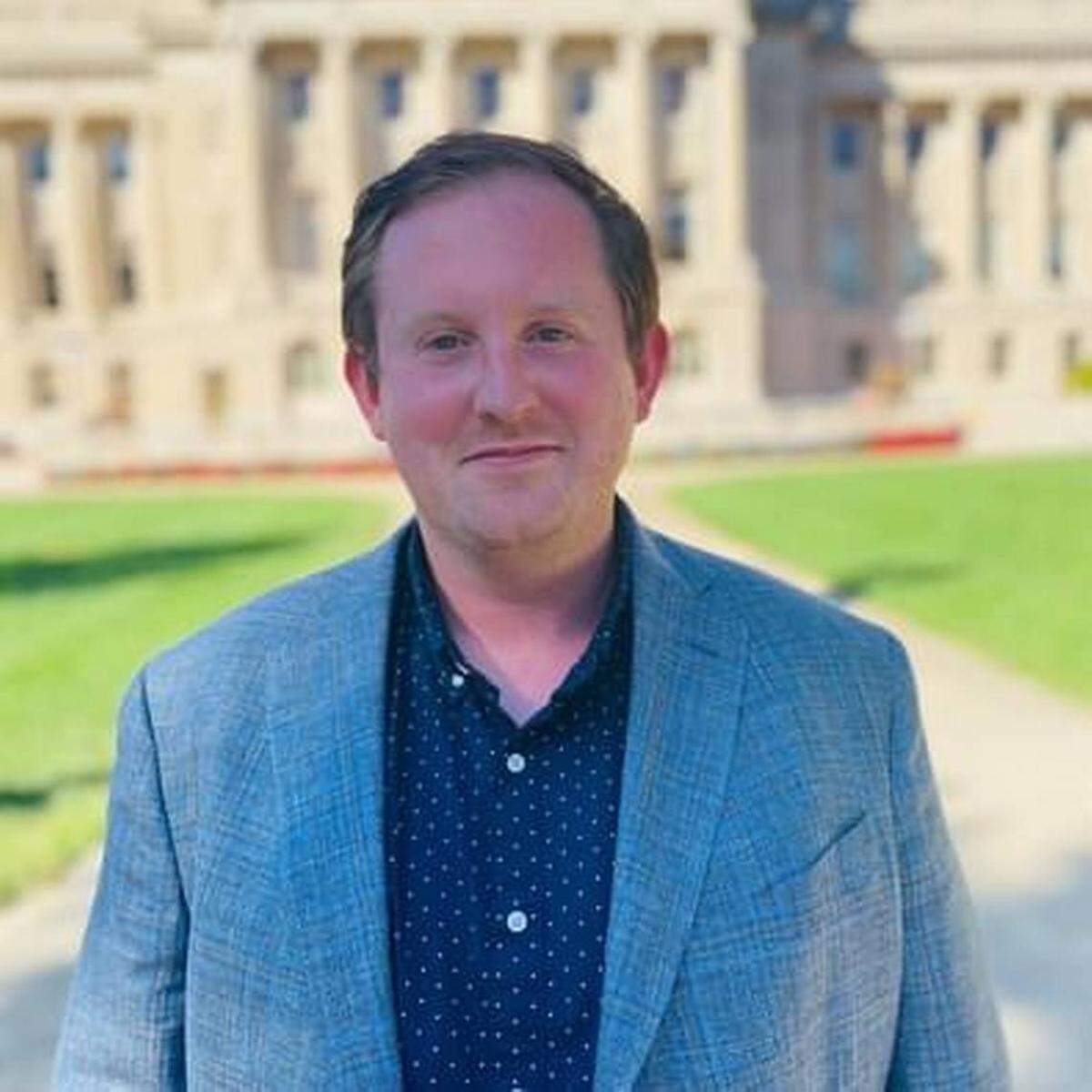
Michael Frazier is Executive Director of the Kentucky Student Rights Coalition, a Powell County native, a National Hugh M. Hefner First Amendment Award Recipient, queer equality activist, higher education policy advisor and a Republican lobbyist in Frankfort.
This story was originally published August 14, 2025 at 2:34 PM.