
New documentary on Lexington redlining is profoundly moving piece of resilience | Opinion
AI-generated summary reviewed by our newsroom.
- Documentary showcases Lexington's Black communities resisting systemic racism.
- Historical tactics like redlining and realtor steering detailed with local impact.
- Film sparks renewed calls for housing equity and civic action in Lexington.
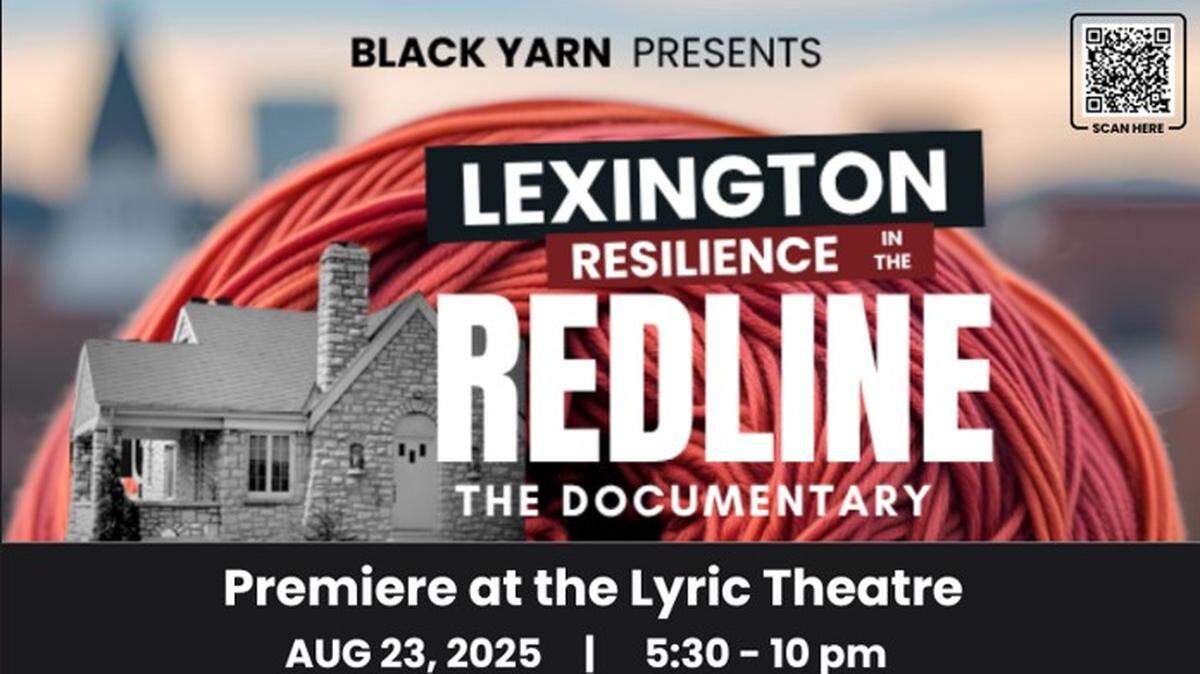
As a Black queer youth in the 6th District, seeing the new documentary, “Lexington Resilience in the Red Line” helped solidify my knowledge of Black Lexington. The strength, the resilience, the culture ... I felt a sense of pride, watching the film.
As a housing advocate, the documentary presented a story of how Black Lexington has fought systemic racism and continues to do so. These advocates were dedicated to the fight for sustainability, stability, and equality even when they were ignored by media and the larger community.
I’ve been living in Lexington for five years, growing up here a bit before moving to the West Coast, East Coast and different parts of Kentucky. My background is one of poverty and evictions, a plight that is shared by many of my ancestors and Black kin. Using my special skills of advocacy and story telling, I like to inspire other Black Lexingtonians to pursue civics and art, especially those of us who are queer. So when I was invited to the premier of “Lexington Resilience in the Red Line,” I was excited and ready to nerd out with other housing nerds. On Saturday night, I headed to the Lyric with my pens and notebook right after a very much needed nap.
The film was astounding in more ways than one. From the production, stories told, facts presented, hope for the future, all of it left an impact on me. Wrigley Media paired images of Black Lexington with articles and interviews for a compelling history of redlining in Lexington. I personally was really moved by the housing stories and how the rural hamlets developed, the creation of Bluegrass Aspendale, and how the realty world systemically segregated Black Americans with tactics such as steering.
There was also a moment of acknowledging how strong the sense of community was in predominantly Black areas, even though they faced such afflictions. Being at the premiere, I was moved by the reactions of the crowd, the nods of agreement, the shaking of hands, the “tsks” and “hmphs,” people proudly proclaiming, “that’s my neighborhood!” rang around me, bringing a smile to my face. The sense of pride and resilience is strong and very well alive here in Black Lexington. And seeing multigenerational Black folk in a room together, celebrating their history sharing their stories brought a sense of peace I’ll forever hold dear.
A few facts that were presented in the documentary stuck with me, not only because they represent me and my ancestors’ struggle, but because they highlight a greater story of American history. It’s continued systemic racism and discrimination to Black and brown individuals. Realtor steering was a tactic used by Realtors to segregate neighborhoods in the years 1924 to 1950. The National Association of Real Estate Boards (which became the National Association of Realtors) had written in their code of ethics that “a realtor should never be instrumental in introducing it to a neighborhood, a character of property, or the members of any race or nationality, or any individuals who presence will clearly be detrimental to property values in that neighborhood.”
The NAREB issued an apology, however, that doesn’t reverse the decades of harm Black Americans had to face and it most certainly doesn’t fix the $71,030 medium wealth gap between white and Black Kentuckians.
After watching this documentary, I felt moved to take action. With encouragement from Council Member Liz Sheehan, I decided to write this op-ed. I highly encourage readers of this piece to take action to uplift Black and brown voices. Start tenant unions, invest in black non-profits, screen this film and host discussions. Don’t let your action begin and end with reading this op-ed. Black Americans, our Black neighbors here in Lexington deserve to have our stories heard and to have sustainable, stable, and equal housing. Housing is a human right, after all. Thank you so much to Black Yarn for this project. I’m grateful for the existence of this documentary and the dedication you all have to uplifting Black voices and art.
Phoenix is a Black queer youth housing organizer with a passion for writing.
This story was originally published August 25, 2025 at 12:54 PM.