
Former UK Provost: What is academic freedom and why should we care? | Opinion
AI-generated summary reviewed by our newsroom.
- Academic freedom protects democratic debate and public education from censorship.
- Government limits on classroom content threaten innovation, jobs, and local economies.
- History shows inquiry suppression stalls progress; open discourse ensures future growth.
When politicians start deciding what can be taught in college classrooms, every citizen should pay attention. Academic freedom — the right of professors and students to explore ideas without government interference — is not some ivory-tower perk. It is a safeguard for democracy and for the quality of education that prepares our children and neighbors for the future.
Think about it this way: when you send a young person to college, you may want them to become a capable nurse, engineer, teacher, business owner, or city council member. That requires the ability to wrestle with tough questions, not memorize a list of government-approved answers. Are greenhouse gases bad for our climate? Should energy companies balance profit against the potential long-term costs of climate change? How should society balance the public health benefit of vaccines against individual rights? Will artificial intelligence replace jobs in agriculture, trucking, or finance?
These are the kinds of issues our students will face as citizens and professionals. If lawmakers dictate which answers are acceptable, tomorrow’s leaders will be trained in dogma, not in problem-solving.
History shows us the cost of silencing inquiry. Galileo was condemned by church authorities for supporting the theory that the Earth revolved around the Sun, a discovery that opened the door to modern science. In the Soviet Union, genetic research in agriculture was suppressed in the mid-1900s because it contradicted official ideology. The result was a devastating famine and decades of scientific stagnation. In both cases, society paid dearly for letting political power overrule truth–while the church and the oligarchs thrived.
By contrast, America’s tradition of academic freedom has produced breakthroughs that shaped entire industries: medical advances that saved lives worldwide, crop science that advanced our food production, and technologies that built our manufacturing base and digital dominance. Universities in our own region fuel innovation for healthcare, energy, and small business. Restricting what professors can teach or research doesn’t just threaten abstract “freedom”—it puts our local economy and workforce at risk.
Some critics say universities lean too far left. That concern shouldn’t be brushed aside. Faculty have a responsibility to take good faith criticism seriously and to welcome diverse viewpoints and well-reasoned skepticism. But the answer to such concerns is more debate, not government censorship. Once politicians get in the business of deciding what’s “acceptable knowledge,” a bad precedent is set. Today it might target ideas you dislike; tomorrow it may suppress ideas you hold dear. Either way, citizens lose.
The U.S. Supreme Court recognized this danger decades ago when it wrote that our nation’s future depends on leaders educated through “a robust exchange of ideas.” (Keyishian v. Board of Regents, 385 U.S. 589 (1967). That principle is not about protecting professors—it’s about protecting the public. When our local universities can no longer freely explore new knowledge, the losers are the students who graduate less prepared, the industries that rely on skilled workers, and the communities that need informed leaders.
Academic freedom is not a luxury. It is the oxygen that allows universities to do their job: training the next generation, sparking innovation, and equipping citizens to make informed choices. If we value our democracy, our economy, and our children’s future, we must resist efforts to turn college classrooms into echo chambers for whichever party happens to hold power.
At this moment we stand at a crossroads. We can allow political expedience to erode one of America’s greatest strengths, or we can defend the principle that truth emerges from open inquiry. Academic freedom is not about protecting a profession. It is about protecting our future.
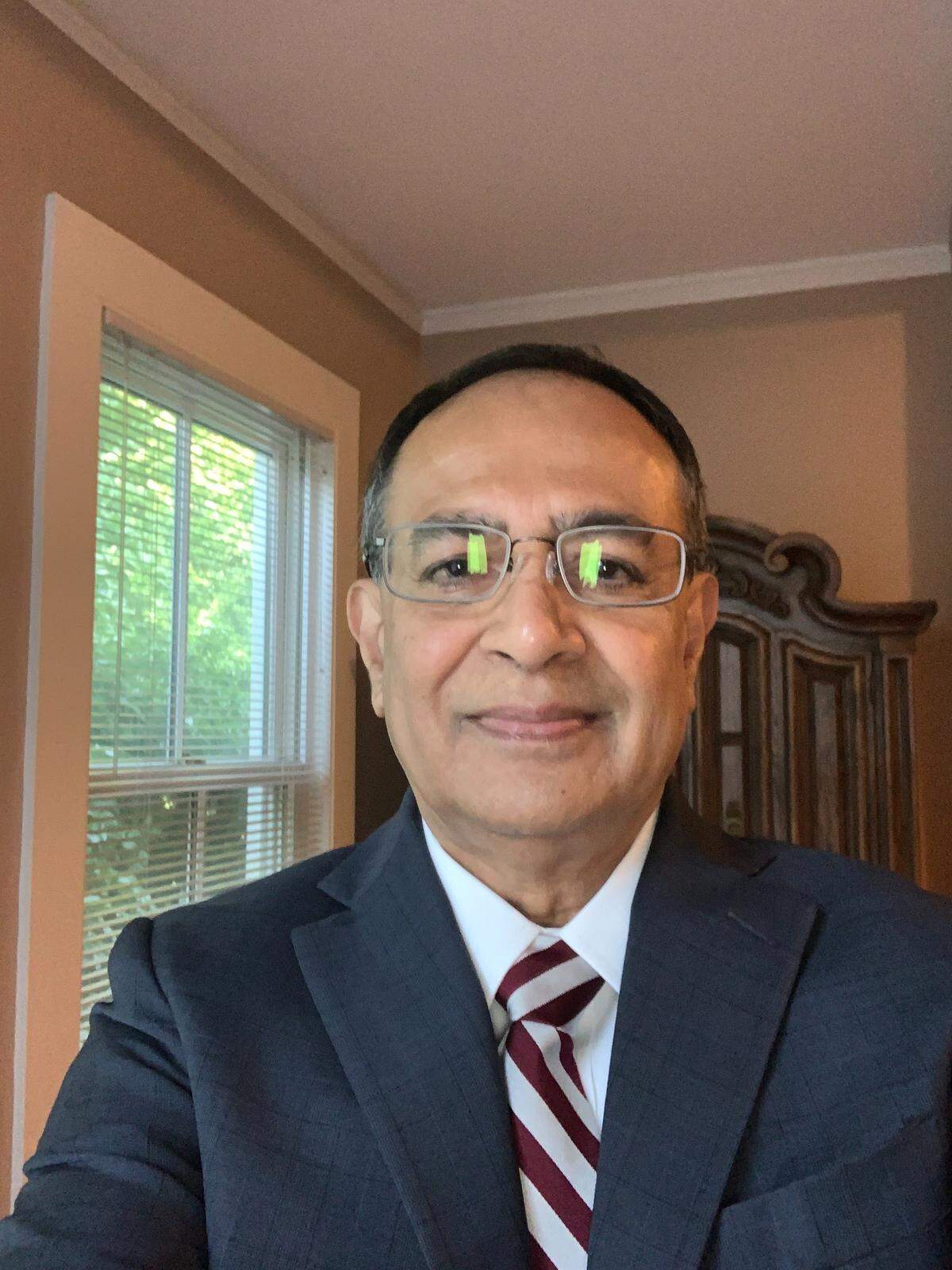
Kumble R. Subbaswamy, a Lexington resident, is a former Provost of the University of Kentucky and former Chancellor of the University of Massachusetts Amherst. He is a Senior Advisor to the non-profit, non-partisan Stand Together for Higher Ed (standtogetherhighered.org), a free membership organization for higher ed faculty and staff across the country.