
Thomas Jefferson inspired part of the KY Constitution. It still reverberates today | Opinion
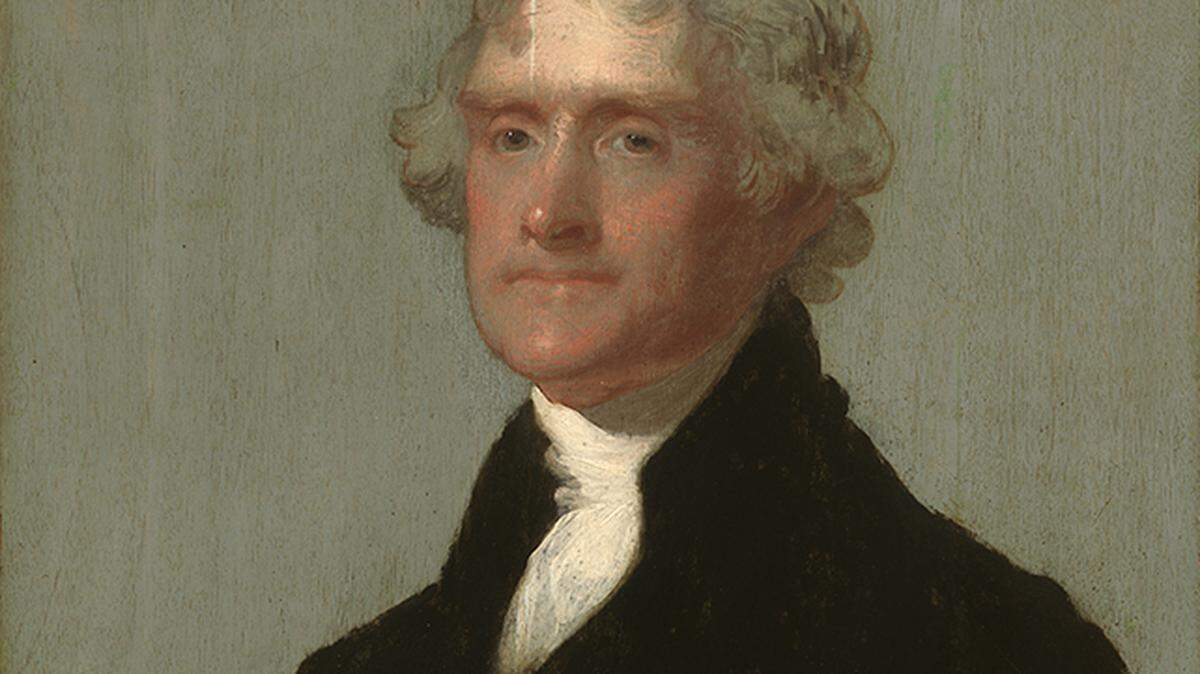
In writing my new book, “Thomas Jefferson and the Kentucky Constitution,” I never dreamed it would have relevance today in its description of Kentucky’s strong reaction in 1798 to the passage by Congress of the Alien and Sedition Acts.
Jefferson’s role in Kentucky’s constitution has long been a matter of debate in the opinions of Kentucky’s appellate courts. But in the papers of George Nicholas, Kentucky’s first attorney general and a contemporary of Jefferson, I found direct attribution to the writings of Jefferson for the unique separation of powers clauses in our state constitution. These papers include repeated references to Jefferson in the handwriting of Nicholas from 1792, the year Kentucky’s constitution was formed.
Notably, the book also has several chapters on the 1798 Alien and Sedition Acts, now in the news thanks to the Trump administration. In my book, I tell the history of Kentucky’s reaction to this federal law and Jefferson’s secret authorship of the Kentucky Resolutions passed by Kentucky’s legislature in opposition to them. The book also describes the unrest in Kentucky at the time. While somewhat lost in history, the Kentucky Resolutions were a series of controversial provisions drafted by Jefferson, introduced in the Kentucky House of Representatives by John Breckinridge and first enacted by the General Assembly in November 1798.
The Kentucky Resolutions were incendiary documents for the time. They called for nullification of the Alien and Sedition Acts, which empowered the president to deport aliens considered a threat, and made it illegal to criticize the president or Congress. These laws were enacted by Congress and signed by President Adams, who considered the bills a form of protectionism while the nation was in a developing naval war with France.
The new laws allowed the president not only to deport noncitizens but to jail them if necessary; in the portion that angered Jefferson, they criminalized false statements about the government and the president himself. Another part of the law increased from five to 14 years the time for naturalization and citizenship, which irritated Irish immigrants, who were seen as sympathetic to the French. These acts of Congress passed quickly in 1798 as war fever gripped the nation.
One cannot help but marvel at the similarities we see on the national scene today raising similar remedies for the deportation of immigrants. A portion of these acts known as the Alien Enemies Act is now under consideration by federal courts to deport illegal aliens. This law likewise was used by President Adams in 1799 when his administration considered a list of people he proposed to deport, even though Adams never carried through on it. Great numbers of people who had immigrated recently to the United States picked up their belongings and left the country for good.
In relation to Kentucky, there was much reaction to the Alien and Sedition Acts. Once word circulated about the law, protests occurred across the nation, with one of the largest being in Lexington. Newspapers of the time report a young Henry Clay was a speaker at a raucous rally opposing these acts in the Cheapside area of downtown Lexington. Cheapside was akin to Lexington’s public square, and Clay’s speech at this protest rally, attended by nearly 5,000 people, was well received. Clay and other speakers at the rally, including George Nicholas, channeled the anti-Federalist mood of Kentucky.
The Kentucky Gazette, the state’s pre-eminent newspaper of its time, was filled in 1798 with stories about the outcry against the Alien and Sedition Acts, including the Lexington rally. This paper was founded in 1787 by John and Fielding Bradford and began first as a weekly publication in Lexington. The Alien and Sedition Acts were the last straw for many citizens, who resented the perceived attack on immigrants recently located throughout Kentucky.
Other than Virginia, Kentucky appears to have been alone among the states that opposed these federal acts, which were not implemented but which became an important issue in the presidential election of 1800 when Jefferson defeated Adams. As is the case today, strong arguments on both sides supported use of the Alien Enemies Act in the late 18th century, and sentiments ran high. While all of this happened long ago, it’s an interesting bit of history in which Kentucky played a notable part.

Denis Fleming is an attorney, an author and a graduate of the University of Kentucky College of Arts and Sciences and the UK Rosenberg College of Law. He later served as general counsel to Governor Paul Patton, chief deputy attorney general under Kentucky attorney general Greg Stumbo, and chief of staff to Congressman Ben Chandler (KY-6). “Thomas Jefferson and the Kentucky Constitution” is his first book. He is donating all royalties to the UK Rosenberg College of Law for students interested in public service.