
As a Pike Co. student, I see the SNAP delays, and I see our people suffer | Opinion
I notice students in the halls who are already fighting to keep their grades afloat becoming burdened with the weight of fending for their family. I have watched as young kids are told to put back food they chose at school because they do not have money in their account. At my church, I find lines of cars wrapped around the building hours before we begin to give out food. As numerous students and families are fighting to stay fed, delays to Supplemental Nutrition Assistance Program (SNAP) benefits, used by over 42 million people, are detrimental to small communities similar to my own.
More than 600,000 Kentuckians use SNAP. The Trump administration was ordered to fully fund SNAP benefits in November as the government shutdown continues, yet this has not held, since benefits are still delayed in many states while the administration appeals the decision, leaving thousands uncertain about whether they’ll starve.
As a high school student in Pike County, the struggles of our mountain communities are clear to me in all my experiences. A report by the Kentucky Center for Economic Policy reported more than 200,000 underfed children in Kentucky in 2024. One in five kids would fall asleep nightly, counting the hours their stomachs would stay empty. In Appalachia, for households with children under age 18, the SNAP participation rate, 21%, is almost “three percentage points higher than all U.S. households,” according to the Appalachian Regional Commission.
My family doesn’t currently use SNAP. Still, when I was younger, we faced times of financial hardship. I never thought about it too deeply then; I knew my mom would always provide for me. However, I know the feeling of being at school and not being offered the same food as your friends, or being warned, “you don’t have any money left. Now, faces of all ages ask me: What will happen next? How will we afford to feed and clothe our families?
In February, a destructive flood drowned my town. Many people lost everything. Smaller areas of town with less resources were hit, causing loss in already struggling communities. Losing SNAP benefits is going to be even more hurtful to those still working tirelessly to climb out of the hole caused by the flood.
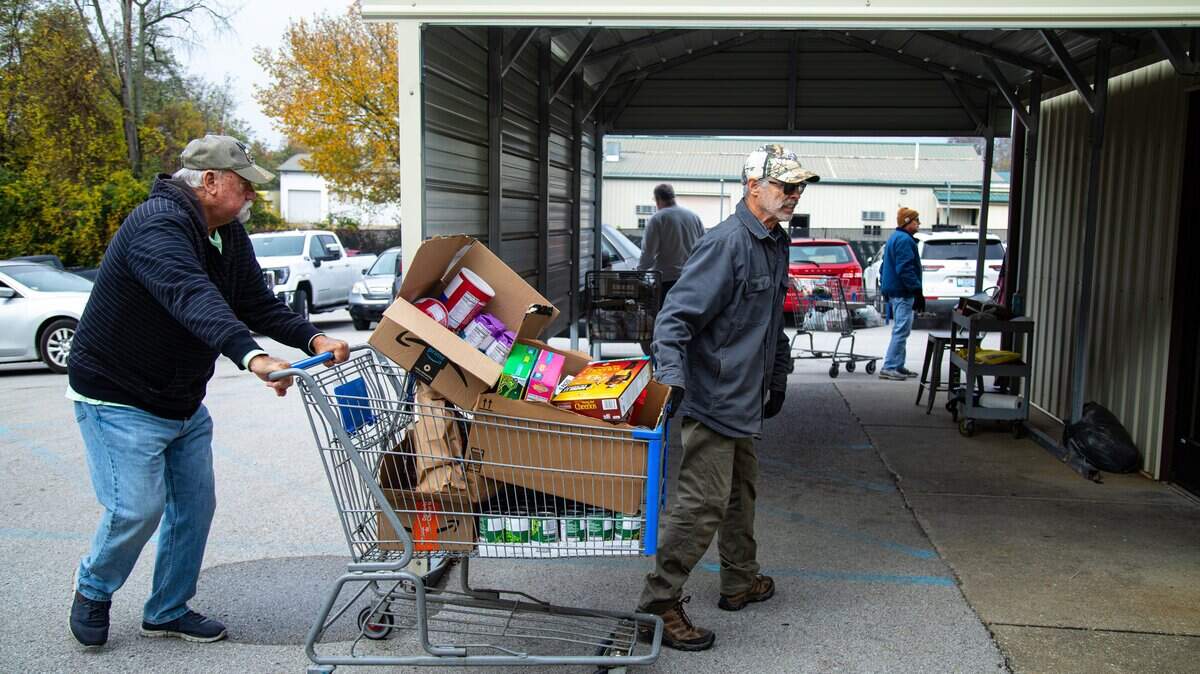
At my church, I volunteer packing bags of food. I watch as processions of cars carrying people in need wrap around the building and file down along the side of the road, sometimes lining up at noon, when giving doesn’t begin until three or four o’clock. People are lining up early out of fear of the supply running out before the demand is met. I see this line growing longer and longer month after month, and begin to wonder what threats to SNAP benefits will do to this already worrying state of affairs.
I watch volunteers serving with cheerful faces and heavy hearts, knowing it will not be enough for long enough. WEKU reports that food banks are struggling to meet the ever-growing needs of their communities. No bandage is strong enough to cover cracks growing every day of the shutdown.
Years ago, my church was where I saw firsthand how people can help people. When we were younger, they gave my siblings and me beds, clothes, toys, and comfort. I knew somebody would always have me covered, no matter what got me there, no matter their beliefs. Now, I think of what I would’ve thought at that time: You’re 10 years old, and you’re hearing that people won’t get food. This raises the question of: why aren’t we feeding our neighbors?
With no answers given by the national administration, the people of Appalachia persevere. Flooding every social media platform, I see video tutorials on bread-making recipes. In each one, the creator pulls fresh bread from the oven and reminds their viewers: even if you are not directly affected, become a cause for the solution. While inspiring, the sheer bond of our community alone cannot withstand imminent, harsher realities. Across Kentucky, the usual pools of resources are beginning to swell in demand and shrink in supply.
With government support on the decline and the cost of living on the incline, empathy and connection must override self-preservation and disagreement. The bonds of those usually opposed can be built and strengthened in times of need, providing financial, emotional, and mental support to each person willing to connect with one another when those in power have become so disconnected. Pike County stands out on this account, finding hope in the arms of strangers during the flood to our mountains. Now, it’s vital to stand with those suffering, to give to food pantries, share the bread, and remember how our mountains hold us as one.

Lottie Moon Musick is a sophomore in high school in Pike County who has been writing for a few months with her school newspaper, The Panther Roar.
This story was originally published November 10, 2025 at 5:00 AM.