
When togetherness becomes a transaction, we all suffer | Opinion
I remember the first time I felt repulsed by a place designed to take my money.
I was in college, at a Dave & Buster’s with friends. The lights were bright, the noise constant, and everything moved you forward toward another swipe, another game, another purchase. It was meant to feel playful. Instead, it felt aggressive in a way I couldn’t name yet.
What stayed with me was a funnel.
You’ve seen them before, the kind where you drop a coin in and watch it spiral faster as the opening narrows. At carnivals or museums, they’re often tied to charity. The spectacle gestures toward something beyond itself.
This one only accepted quarters. And the money wasn’t going anywhere.
For reasons I couldn’t explain at the time, that bothered me more than it should have. The funnel was honest in a way the rest of the room wasn’t. It showed acceleration, narrowing, inevitability. Money moved faster as the space for it to land disappeared.
Years later, that image feels less like a novelty and more like a diagram.
People are talking about affordability, housing, groceries, childcare, and healthcare. But what they’re reacting to isn’t just cost. It’s the feeling that everything is now designed like that funnel: tighter, faster, more relentless, with fewer places to stop.
Participation no longer feels optional. Opting out feels like failure. The systems don’t even hide their intent anymore. They just speed up.
But there’s another part of this conversation that goes mostly unspoken.
Affordability isn’t only about what costs money. It’s about what no longer exists unless you pay.
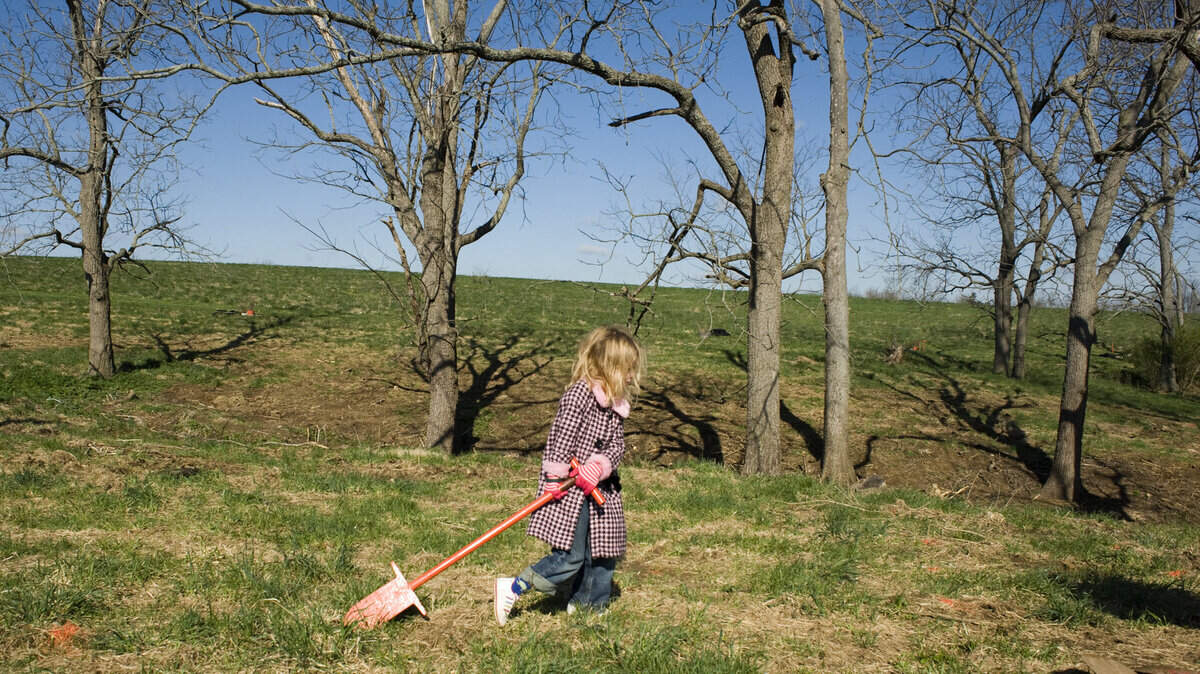
There used to be places where you could exist with your family for free. Parks. Libraries. Public spaces where no one asked what you planned to buy. You could show up, linger, sit, let children run ahead, let time loosen its grip. Those spaces weren’t perfect, but they carried a quiet assumption: your presence alone was enough.
When those spaces became harder to sustain as a central part of everyday family life, it hit harder than expected. The places themselves remain, but they no longer hold the same cultural priority.
Because what replaced them wasn’t neutral.
What replaced them were spaces designed to move you along, to manage you, monetize you, and keep the pace tight. Places where lingering feels suspicious unless you’re spending. Where togetherness is tolerated briefly, but only as long as it remains efficient.
Existence with others began to work only if it was transactional, not familial.
In places like Appalachia, this shift is easier to feel because the distance between people is shorter. You don’t disappear into anonymity as easily. You still see the same faces at the store, the school, the clinic. When togetherness becomes conditional, when presence starts to require payment or performance, the loss registers quickly. There are fewer substitutes. When everyday public space fades here, people don’t just lose amenities. They lose one of the few buffers against isolation.
Familial life, real family life, is inefficient by nature. Children are loud and slow and unpredictable. Care moves unevenly. Attention drifts. Nothing optimizes cleanly. In familial space, people are allowed to exist without proving their worth in real time.
Transactional spaces can’t tolerate that for long.
So families adapt.
As physical public spaces shrink in practice, family life doesn’t disappear, it relocates. Social media becomes a substitute public commons, but it comes with conditions. Families are welcome there as long as they perform. As long as they are entertaining, aspirational, emotionally consumable. Intimacy becomes legible only when it can be packaged and shared.
Togetherness survives, but only if it turns itself into content.
This isn’t a critique of parents. It’s a reflection of conditions. When there are fewer places to exist together without paying, people learn to exist by being watched. What doesn’t translate, boredom, fatigue, quiet care, gets edited out.
The result is a strange inversion. We are more visible than ever, and less held. More connected, and less tolerated in our ordinary, unproductive forms.
Public libraries still resist this logic.
They remain among the last places where you can sit without being sold to. Where curiosity doesn’t require a transaction. Where children can exist without needing to entertain anyone. That’s why attacks on libraries feel so personal. They aren’t just culture-war skirmishes. They are fights over whether free presence is still allowed.
Parks matter for the same reason. They don’t optimize you. They don’t hurry you. They don’t ask what you’re worth. They let people be ordinary together.
When those forms of space erode, people don’t just lose amenities. They lose a way of relating to one another that isn’t mediated by money or performance.
Cultural shifts often announce themselves this way, not through argument but through aversion. A moment when people realize the design is no longer neutral, and participation begins to feel compulsory rather than chosen. When opting out starts to resemble failure, not preference.
What is being decided now isn’t simply how much things cost. It’s whether there will still be places where people are allowed to exist together without performing, purchasing, or proving anything at all, or whether even that will be treated as inefficiency, something to be phased out once the funnel spins fast enough.
William Ney is the coordinator of Assisted Outpatient Treatment (AOT) at Pathways Inc., a nonprofit behavioral health provider based in Ashland. He is a Master of Education candidate in clinical mental health counseling at Lindsey Wilson College. His work focuses on recovery, advocacy and systemic improvement in Appalachian mental-health care.