
When politics replaces evidence, Kentucky students pay the price | Opinion
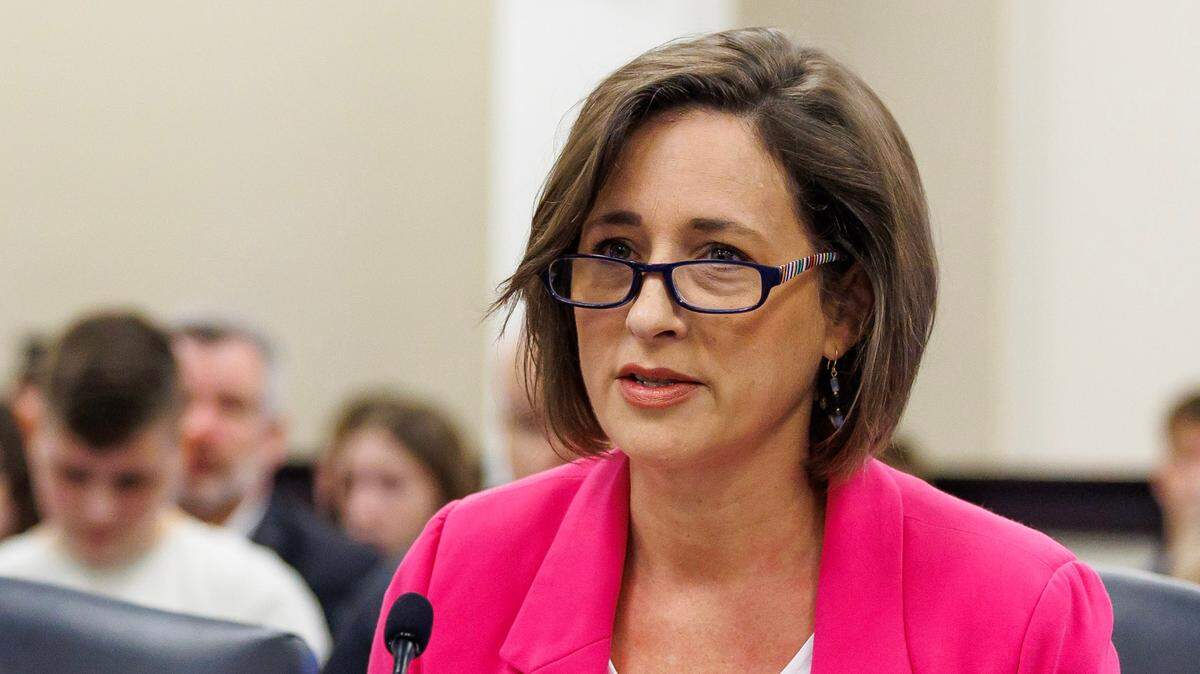
Kentucky has already run this experiment in higher education—and the results weren’t what lawmakers promised. Now the same playbook is coming to K–12. On December 9, the Kentucky Legislature’s Interim Joint Committee on Education met, and Senator Lindsey Tichenor, R-Smithfield, used the hearing to preview a 2026 bill — the Kentucky Educational Equality Protection (KEEP) Act—that would prohibit diversity, equity, and inclusion (DEI) in K–12 public schools. Last session, a similar bill, HB 4, targeted colleges and universities.
Tichenor framed DEI as “wasteful, ineffective, and divisive,” pointing vaguely to the misuse of district funds. But she offered no examples of fraud, no indication of which programs were “wasteful,” and no evidence that mentoring or belonging initiatives harm student achievement. She leaned on a familiar tactic: gesture toward a big number, imply corruption, and avoid evidence. Kentucky deserves evidence-based policymaking, not fear-based storytelling.
We saw the same pattern with HB 4: lawmakers portrayed DEI as ineffective and linked it to enrollment concerns, even though enrollment at many institutions was already stable or rising. If enrollment wasn’t falling, what do lawmakers expect happens when student-support efforts are cut? Meanwhile, tuition and cost of living—the real barriers—continue to climb.
Tichenor noted that all but two of Kentucky’s 171 school districts signed a federal pledge vowing not to use “illegal DEI practices.” The two that didn’t? Jefferson County Public Schools and Fayette County Public Schools—the state’s largest districts.
That pledge was not law, and it exceeded existing federal law. It was an administrative form from the U.S. Department of Education requiring districts to certify they don’t use “illegal DEI” to retain federal funds—yet a federal judge later ruled the requirement unlawful, in part because it never defined “illegal DEI.”
It is striking that Kentucky politicians and U.S. Secretary of Education Linda McMahon rail against “federal overreach” and promote a “returning education to the states” tour, WWE-promotional style, while punishing the two districts that refused to bow to a vague federal pledge—districts that were acting to defend their educational missions and local authority.
Yet we hear the same claim: “DEI doesn’t work.” Tichenor pointed to test scores and achievement gaps, suggesting that if gaps remain, DEI must have failed. That is not evidence—it’s a confusion of correlation and causation. Student outcomes are shaped by decades of underfunding, economic insecurity, and inequitable school finance formulas. Blaming DEI for achievement gaps is like blaming your seat belt for not fixing potholes.
HB 4 has already revealed what happens when legislators copy-and-paste talking points from national right-wing think tanks—including the Heritage Foundation, Manhattan Institute, and Goldwater Institute—instead of relying on evidence or listening to Kentuckians. Universities have spent scarce resources on attorneys and compliance. Programs were cut, staff reassigned, talent departed, employee resource groups dismantled, and policy language recognizing and supporting students with the greatest barriers to success was erased — all while structural barriers facing students remain.
The KEEP Act would import this same chaos into K–12. It would ban spending on DEI offices, officers, training, programming, or even sharing research about what helps underserved students succeed, while opening the door for parents and outside groups to sue districts and individual educators for perceived violations.
If the goal were to improve learning, the solutions are well known: smaller classes, stable staffing, increased pay, mental health supports, and strong pathways from high school to college and careers. If the goal were closing gaps, districts like Jefferson and Fayette, along with school districts across Kentucky, would be given more flexibility—not new restrictions—to design local solutions.
But if the goal is political theater—casting “DEI” as the WWE heel in a Trump-era culture-war smackdown—then the KEEP Act makes perfect sense. It creates villains (educators, students, and districts that refuse to sign an unlawful pledge), declares them the source of our problems, and then uses the machinery of the state to punish them.
We don’t need another show-trial bill. We need investment in students’ learning in historically underfunded schools across Kentucky. Many districts objected to the pledge but signed out of fear of state retaliation. JCPS and Fayette County refused to fold. They should be applauded for their courage and for resisting an increasingly authoritarian approach to education.
The question before us is simple: Will Kentucky let fear-based storytelling dictate the future of public education, or will we choose policies grounded in peer-reviewed data, evidence-based practices, lived experience, and the belief that every child, in every zip code, deserves the chance to belong and to thrive?
James Orlick is a higher education leader with more than 18 years of experience in innovation strategy and institutional change. He is a Ph.D. student in Educational Leadership and Organizational Development at the University of Louisville. The views expressed are his own.