
Fayette students suffer real consequences when grown-ups can’t clear snow and ice | Opinion
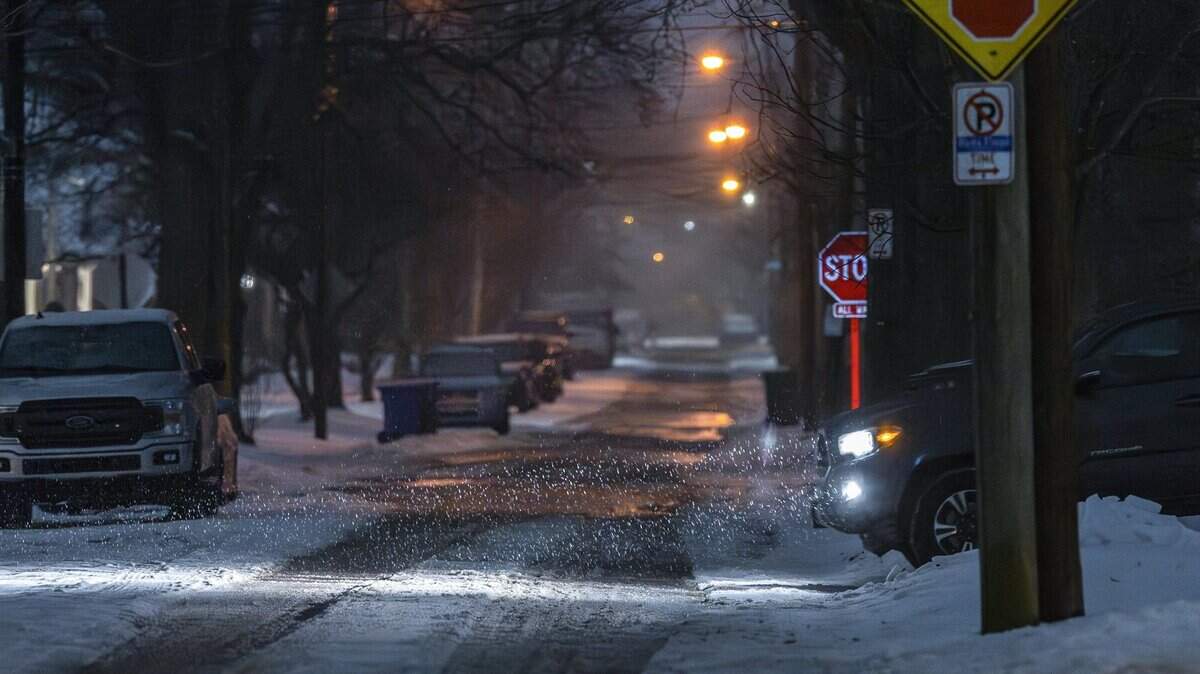
One of the truisms of life is that you cannot see the picture if you are in the picture. I freely admit that when I was teaching in Fayette County, I waited with bated breath for those magical words evoked by snow days “No school today in Fayette County.” A one-day absence in the 180 days of the school allowed a little more time to sleep or do errands that have been pushed to the back burner, as well as giving an unexpected respite from the daily routine of students and teachers.
The main reason for snow days is to provide safety from the risks of buses slipping and sliding on dangerous roads. Having school when the weather is bad will inevitably result in higher absenteeism which will negatively impact attendance-based state funding.
Educational experts have long expressed concerns about the learning losses resulting from the summer vacation. The current academic calendars are largely based on agrarian society when students were needed to work on farms. The transition away from that model has called into question whether long-accepted tradition should be abandoned.
Unfortunately, traditions are difficult to ignore. Humans are creatures of habit and students will adjust their internal clocks within a few days of the start of the new school year. Their parents may have to adjust their daily routines to accommodate changes in the domestic environment. Once these changes are made, everyone settles into a predictable schedule tailored to academics.
Protracted school closures for several days quickly disrupt the everyday lives of students. A study from Boston University estimated that missing one day in the 180-day calendar will cause a 1% loss of learning. The decrease on learning loss is probably exponential so that the recent 11 snow days may have caused a 10% decrease in learning.
These losses cannot be ameliorated by adding school days to the end of the school calendar. As a high school mathematics teacher, I can attest that a sizable number of school days are devoted to state-mandated testing. Most schools schedule a one-week spring break. Students are distracted by high school and college-based basketball tournaments, baseball and soccer games, and preparations for Senior Prom and college visits. Meaningful instruction is seriously diminished for the last few weeks of the school year.
But there are more dire consequences. For many students from low socioeconomic homes, the breakfasts and lunches available at school may be the only ways to address food insecurity of students. Parents who are required to go to work every day may see losses of income caused by absences tied to child care needs that result in decreases of finances allocated to groceries. Students subject to food insecurity show significant declines in learning and even behavior patterns.
Much more insidious consequences can occur if children live in homes where sexual, physical, and emotional abuse are commonplace. In my years of high school teaching, I lost track of how many students suffered from the devastating effects of these abuses. If students are forced to live in the same environment as their abusers, snow days offer more opportunities to abuse these children.
Ecologists remind us of a fundamental truth: You can never do just one thing. No one can accurately predict the weather, but inexorable effects of climate change will continue to plague human societies with often catastrophic weather patterns. Instead of closing our eyes and adopting a Pollyanna fallacy that everything will be fine, we need to accept the fact that we must change ourapproaches to inclement weather by improving snow and ice removal methods.
Remember the definition of crazy: Keep doing the same thing and expect a different outcome.
Roger L. Guffey is a retired teacher and author of the new collection “Stories from the Porch” about his Appalachian childhood.