
This talented Lexington girl hit the big time on stages around the world | Opinion
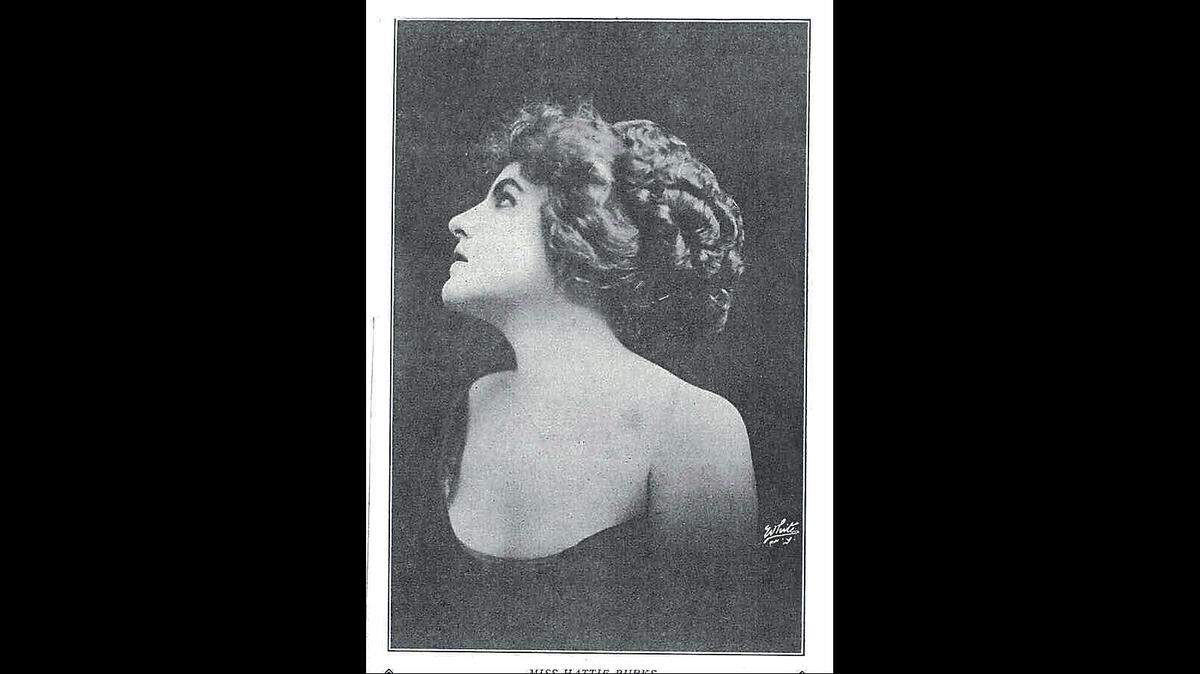
Starting out as a fatherless kid from Kentucky with a bad case of stage fever, Hattie Burks made quite a life for herself. She was born in Lexington, Ky., in 1885, but her life carried her to the bright lights of Broadway, the glamour of vaudeville, and the concert halls of Europe. Her story is one of grit and a relentless hunger for the stage.
Her childhood was marked early by tragedy. At just six years old, Hattie lost her father, James Burks, to a brutal shooting in Cumberland Gap. The Lexington Leader reported that he was killed after a quarrel began in a saloon and ended in the street. His assailant was later lynched by an angry mob.
Left a widow with four children, Hattie’s mother, Rannie, managed a boarding house above Central Bank in downtown Lexington. The Family Hotel became both their livelihood and Hattie’s first window into the theatrical world. Performers passing through town stayed under their roof, dazzling young Hattie with their fashion and their tales of being on the road. She loved their clothes, their jewelry, and their lifestyles, and the seed of ambition took root.
Hattie trained at the Lexington Conservatory of Music, studying voice under the admired instructor Carrie Kidd. Her talent blossomed quickly. By 12, she had won several awards, and by 14, she was bold enough to elope to Cincinnati with a college boy. This escapade was cut short when her mother had the pair arrested. Her romantic impulsiveness would become a recurring theme. She ultimately married at least three times, once to a man 16 years older and later to one 22 years younger.
At 16, she married Lexington florist owner, David Honaker, a well-traveled businessman who introduced her to the theaters of New York, Atlantic City, and Washington, D.C. These trips exposed her to Broadway and fueled her longing for the stage. Though society expected her to settle into the life of a respectable young matron, Hattie was restless. Her marriage was unhappy, and she escaped often to St. Louis to visit her sister.
Her break came when she auditioned for The Mikado in St. Louis and was immediately cast. A New York impresario spotted her and offered to underwrite her stage career. By 1910, she was performing on Broadway with Fritzi Scheff, and soon after, she entered the fiercely competitive world of vaudeville. She joined United Booking, worked with Oscar Hammerstein’s company, and became half of a celebrated duo with dancer Ted Lorraine. Reviews praised her as a “dainty ingénue” with “a voice far above the average and a magnetic personality.”
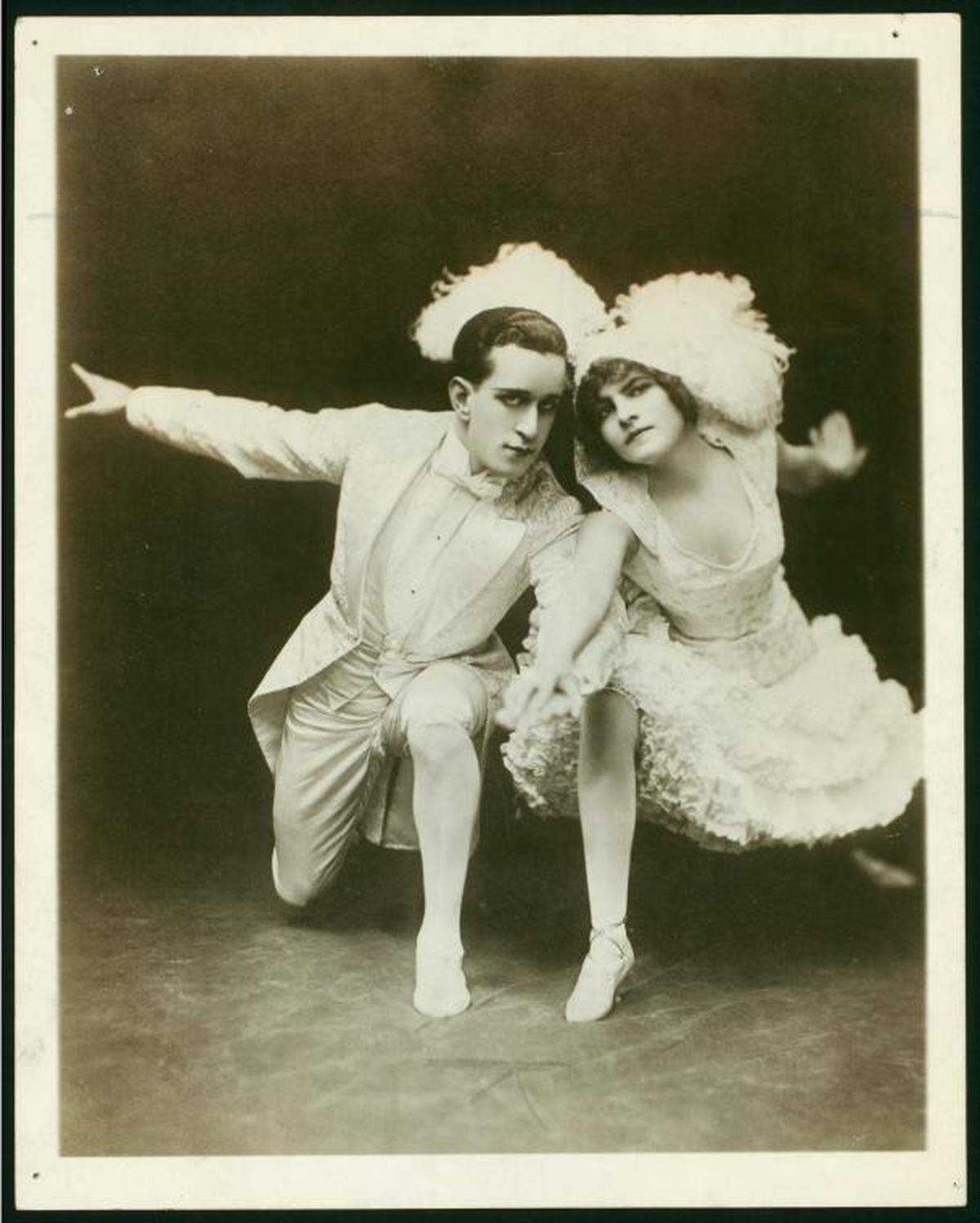
Hattie and Ted became national sensations. They headlined at the Palace in Chicago and the Proctor’s Fifth Avenue in New York, sharing the bill with legends like Houdini and Chaplin. Their performance, Piano Movers, was touted by Billboard and The New York Times. But it was Hattie’s fashion sense that made her unforgettable. She designed her own costumes, popularized the “minaret” skirt, and spent more than $15,000 on clothing in a single season— that’s more than $480,000 in today’s money.
“Nothing gets out of date so quickly as a woman’s clothes,” she said, defending her investment.
In 1914, she and Ted toured Europe, performing in London and Paris until World War I forced their return. Back in the States, she continued to rise, starring in The Blue Paradise, appearing in Cosmopolitan and Vogue, and eventually signing with Fox Film Corporation. Her silent-film debut came in “Sins of Men” (1916), where she was billed as the “Titian-haired dancer taken from The Blue Paradise.”
Hattie’s personal life was as dramatic as her career. She married Dr. Jerome Wagner, a New York physician connected to Broadway’s elite, and later moved to Europe to pursue concert work. In Paris, she fell in love with Pierre Le Tellier, a Frenchman 22 years her junior. She lived through the German occupation of Paris during World War II, standing in food lines and surviving on rationed heat and clothing. Eventually, she returned to the United States and shared her wartime experiences with civic groups in Lexington.
Hattie Burks died suddenly in 1957 while visiting family in Illinois. She was brought home to Kentucky and buried at Louisville’s Cave Hill Cemetery, far away from European stages, boisterous applause, and repeated calls for encores. Her life – bold, glamorous, and defiantly unconventional – remains one of Kentucky’s most dazzling untold stories.

Bobbie Bryant is a historian, genealogist, and faith-based writer based in Louisville.