
When it comes to Duke Road, ‘common sense’ should begin with facts about proposal | Opinion
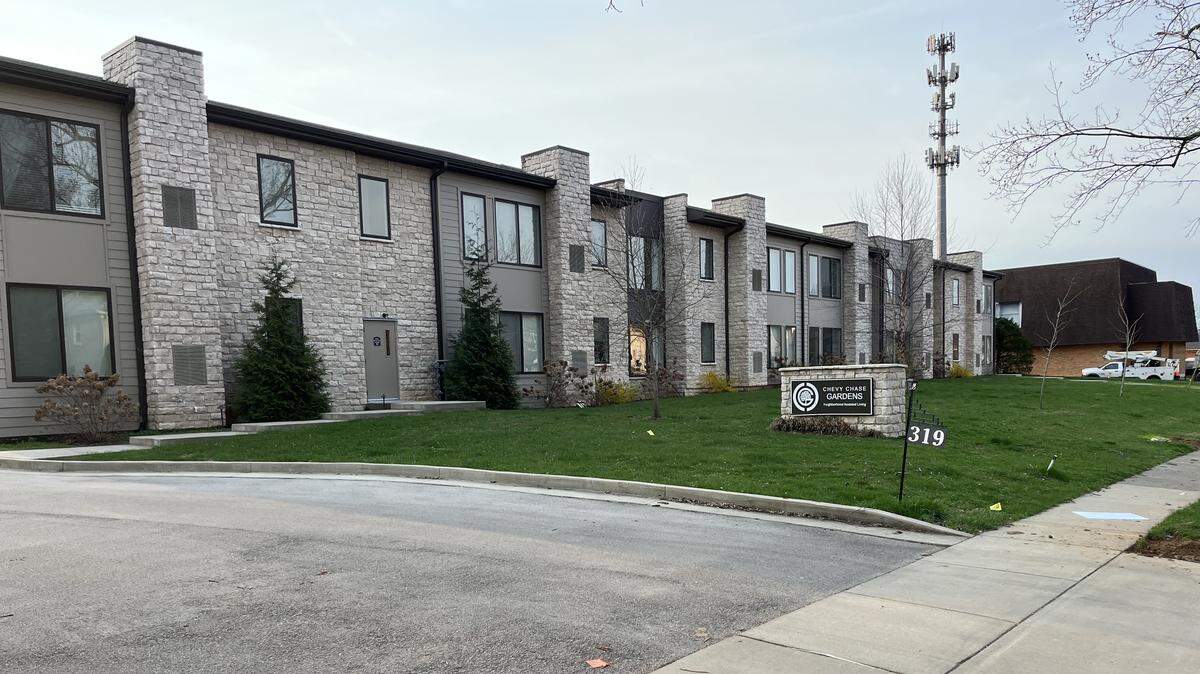
I am involved in the proposed mental health treatment facility at 319 Duke Rd. and the conditional use permit (CUP) pending before the Board of Adjustment. I am a fourth-generation Lexingtonian and I care deeply about this city and its neighborhoods. That is why I believe the debate about this land use proposal needs more clarity, more honesty, and less confusion.
Neighbors have every right to ask hard questions about safety, scale, traffic, and enforceability of the conditions attached to approval. Those are legitimate concerns in any part of Lexington. But those questions should be answered based on the actual proposal before the Board of Adjustment, not on rumors or on the broadest fears imaginable.
So, let’s state the central point plainly: 319 Duke Rd. is not being proposed as a drug rehab facility, and the written conditions being offered are designed to ensure that it does not later become one or anything other than a subacute mental health treatment facility.
The proposed use is a voluntary adult residential mental health treatment program for individuals whose primary diagnosis is a mental health condition. It would operate under a Kentucky Behavioral Health Services Organization mental health license, not a Kentucky Alcohol and Other Drug license. It will not accept individuals whose primary diagnosis is substance use disorder.
It is also important to explain who these residents actually will be. This program is for adults who need more support than a weekly outpatient appointment, but who are appropriate for a structured residential setting. In plain English, this is subacute care: care for people who need daily therapy, supervision, stability, and support but can participate in treatment in a residential environment. This is not the same as an acute psychiatric hospital. It is not a locked institutional setting for people in active crises who require seclusion, emergency sedation, or restrictive hold procedures.
That distinction matters because much of the public conversation has blurred very different types of care. People hear words like “rehabilitation” or “behavioral health” and imagine the most extreme scenario. But the actual residents proposed for this program are voluntary adults seeking help for conditions such as depression, anxiety, trauma, and eating disorders in a structured, professionally supervised environment.
That need is real. Lexington and Kentucky have major gaps in mental health care, especially for people who need a residential level of support. That is particularly true for eating disorders. As proposed, this program would include residential eating disorder treatment beds that do not currently exist in the commonwealth. For many families, that means the only option today is leaving Kentucky to find care.
The proposed operating model is also more well-defined than some public discussions suggest. The facility would be capped at 52 beds and is expected to operate at roughly 80% occupancy, not full capacity at all times. It would accept commercial insurance and private pay only. It would have 24/7 on-site staffing, no walk-ins, no court-ordered placements, no correctional or forensic placements, no resident vehicles, controlled visitation, and staff-coordinated transportation.
If the real concern is whether those limits would be enforceable, that is a fair question. But the answer is not to assume the most alarming hypothetical future use and treat it as though it were the actual proposal before the Board. The answer is to define the use clearly and attach written conditions so that these limits can be monitored and enforced, if necessary, by the Lexington Fayette-Urban County Government.
It is also important to note that conditional use permits can be periodically reviewed and if the conditional use permit is not complying with the approved conditions, the permit can be revoked. There is built in accountability for every conditional use permit.
I understand why people care deeply about Chevy Chase and the surrounding area. I would expect the same from any Lexington neighborhood. But mental illness does not stay outside beautiful neighborhoods, school zones, or church walls. Families in this city quietly struggle every day to find appropriate care for loved ones dealing with depression, trauma, anxiety, and eating disorders. These families deserve an honest conversation about what care is being proposed and what is not.
Reasonable people can still disagree about whether this is the right site. But that decision should be made on clear facts, and the actual program being proposed —not on rumors or the scariest label someone can attach to it. Lexington should insist on that level of honesty in every land-use debate, especially one as sensitive and important as this one.
If there are questions or concerns regarding the applicant’s proposal, please reach out to 319dukeroad@gmail.com.
.jpg "Headshot (1).jpg")
Matthew Douglas is a Lexington resident and co-owner of ZLD Partners, the group applying for a conditional use permit at 319 Duke Rd.