
My party was wrong. The KY Supreme Court saved judicial independence | Opinion
I am a Republican. I am a conservative. I grew up in Eastern Kentucky, and I have spent the last three years studying law. I have read the six cases the Kentucky House cited as grounds for impeaching Fayette Circuit Judge Julie Muth Goodman. I disagree with every one of them.
None of that matters. Because what the Kentucky Republican supermajority tried to do is not conservatism. It is a dangerous display of partisan politics, and it wasn’t really about Judge Goodman. It was about every judge in this Commonwealth. Thankfully, on April 6, Chief Justice Lambert and the Kentucky Supreme Court put a stop to it.
The legislature’s implied theory is breathtaking in its ambition and contained no limiting principle. If an impeachable offense means whatever a House majority decides it means on a given afternoon, then every reversed ruling becomes potential grounds for removal. Conservatives spent 50 years rightly criticizing that view when Gerald Ford articulated it in 1970. Then they used it anyway.
In 2026 alone, three sitting judges faced impeachment investigations. Justice Pamela Goodwine was investigated after she voted to strike down a statute the legislature liked. The inquiry never concluded. It didn’t need to. The pending investigation alone forced her recusal from the very case she had already participated in deciding. The legislature didn’t need to remove her. The threat was enough.
That is what a partisan impeachment power looks like when it has no constitutional limits. It doesn’t need to succeed. It doesn’t need to end in removal. It just needs to exist, and the chilling effect does the rest. A judge facing impeachment for her rulings is a judge who knows that the next controversial decision could cost her career, her pension, and her ability to ever hold public office again. In those circumstances, the legislature has its hands on the judiciary’s throat, and judicial independence is compromised.
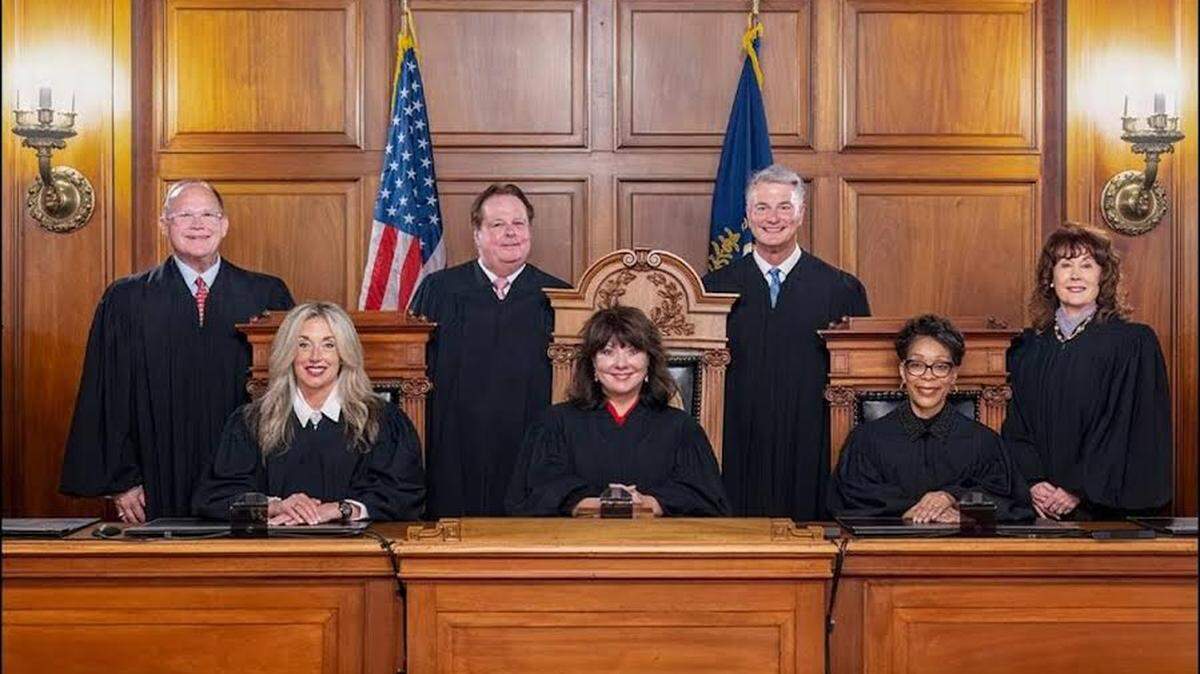
Chief Justice Lambert understood exactly what was at stake. The majority opinion, joined by four colleagues, declared H.R. 124 void from the start — not just wrong on the merits, but an unconstitutional intrusion on the separation of powers that Kentucky’s constitution demands. The court was direct: the legislature had intruded on the authority of the judicial branch by attempting to punish a judge for decisions that were, right or wrong, within her constitutional authority to make. The court went further still, calling the attempt what it actually was: “a thinly veiled and unconstitutional attempt to revive the practice of removal by address,” a legislative power to remove judges that Kentucky’s constitution was specifically amended to eliminate in 1976. That is not what impeachment is for. It never has been.
Two hundred and thirty-three years of Kentucky history back the court up. Every officer this commonwealth has ever seriously moved to remove committed conduct that is either criminal, a violation of a specific legal duty, or so fundamentally incompatible with the office itself that no reasonable person could dispute it rises to that level.
What did Judge Goodman do? She got reversed on appeal. In five of the six cases the House cited, a higher court disagreed with her and corrected the error. That is the appellate system working exactly as designed. The Supreme Court said it plainly: “an individual’s disagreement with a judge’s ruling, or even the fact that a judge’s ruling has been deemed an abuse of discretion by an appellate court (no matter how scathingly), does not and cannot constitute a misdemeanor in office.”
The same Republicans who spent years insisting that the impeachments of President Trump were naked partisan abuses of constitutional power just tried to do the same thing to a circuit judge in Fayette County. Weaponizing impeachment to settle political scores is wrong. It was wrong when Democrats did it, and it is wrong when Republicans do it.
Even the only House Republican to vote against the articles conceded Judge Goodman had committed no crime and that there was “no historic precedent in the history of the Commonwealth” for what the House majority did. If your own members can’t defend it, you shouldn’t have done it. What the Republican legislative supermajority attempted was a dangerous partisan power grab, and Chief Justice Lambert and the Kentucky Supreme Court were right to stop it.
What the Kentucky Supreme Court did on April 6 matters beyond this case. It drew a constitutional line that protects not just Judge Goodman but every judge who will ever have to issue an unpopular ruling, reverse a conviction, or strike down a law that the legislature likes. Those are the moments when judicial independence is paramount to the function of our democracy. Those are the moments when a courthouse either stands apart from politics or it doesn’t stand at all.
An independent judiciary that rules in fear of the legislature is not a judiciary at all. Kentucky came close to having one. It shouldn’t have gotten that close.
Garland Ellis is a third-year law student at the University of Iowa College of Law, originally from Bell County, Kentucky. He currently serves as Vice President of the University of Iowa Federalist Society chapter.
This story was originally published April 8, 2026 at 5:30 AM.