
Nothing pretty in child pageants
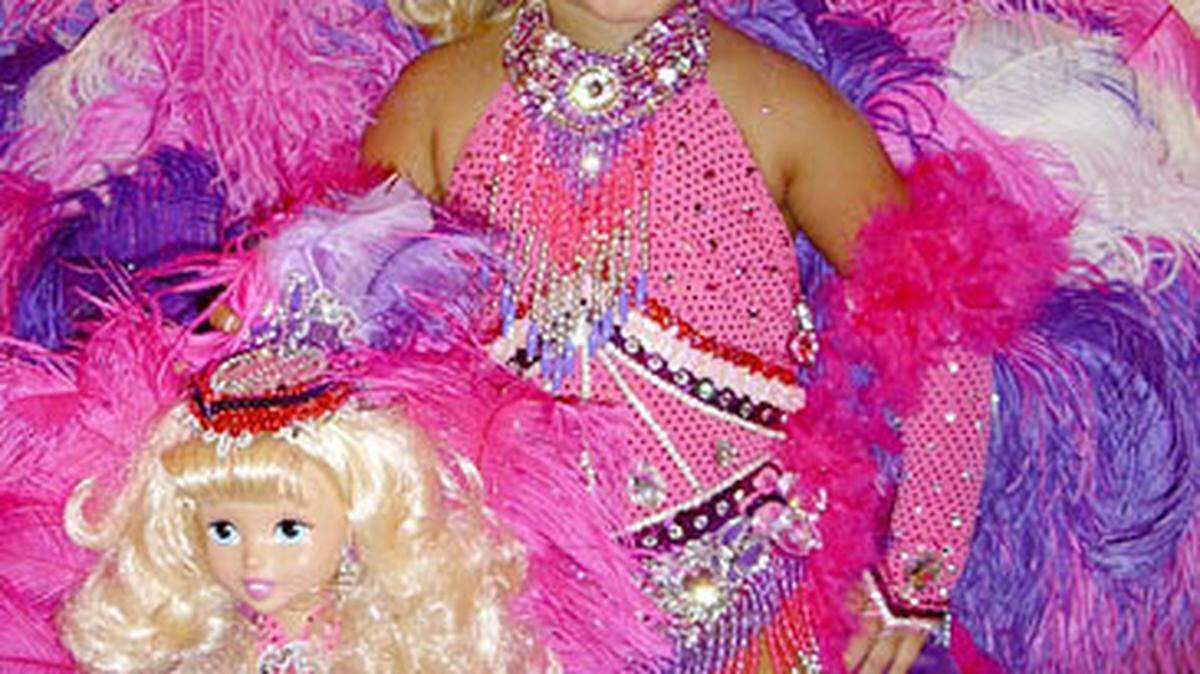
Toddlers and Tiaras is a televised beauty pageant for very young children which appears weekly ironically on The Learning Channel. The Web site for the show describes it this way: "On any given weekend, on stages across the country, little girls and boys parade around wearing makeup, false eyelashes, spray tans and fake hair to be judged on their beauty, personality, and costumes. Toddlers and Tiaras follows families on their quest for sparkly crowns, big titles and lots of cash."
A TV viewer will see the program's feeble attempts at Las Vegas-like glamour and glitz in a rented hotel ballroom or school auditorium with primarily little girls in adult-like pageant attire parading in front of a small audience consisting largely of participants' families. The tots' attire includes makeup, hair extensions and "flippers" to hide missing teeth. Mothers, often overweight, engage in silly antics coaching the children in every move of their routines with the hope of winning a trophy taller than the child, a rhinestone crown, the title of "Ultimate Grand Supreme" and possibly some cash.
The viewer will also be taken behind the scenes to witness temper tantrums from children resisting the role into which they are being put. On a recent show, a 2-year-old cried the entire time on stage; in another show, a mother literally dragged the child around the stage supposedly putting the child through her routine.
It raises questions for the viewer: Whose idea is this — the child's or the adult's? Is participating in such pageants age-appropriate behavior for a small child? Might such participation even represent a potential danger for the child's emotional development?
The potential impact of child beauty pageants may be viewed in terms of the fallacious arguments most frequently cited in support of this activity:
All little girls like to play dress up at some time.
Dress-up, a sign of a child identifying with or mimicking the mother, is significantly different from organized child beauty pageants.
First, dress-up play generally is an activity engaged in by a young girl alone or with a group of playmates at home rather than on a stage in front of an audience.
Second, competition, an important element in child beauty pageants, ranks contestants, with one child becoming a winner and the others losers.
Third, dress-up involves little girls wearing their mothers' cast-off clothing or cosmetics in a way the child perceives mother uses these objects. Participants in Toddlers and Tiaras spend hundreds and even thousands of dollars for costumes, cosmetics and even beauty consultants.
Parents certainly have a right to spend their money on children as they wish, but if this expenditure of money and effort is for the ultimate goal of the child winning the contest and the child fails to do so, what is the emotional cost to the child? What happens to the child's self-esteem?
Children's beauty pageants teach poise and self-confidence.
Even if the pageants do foster the development of these attributes, the question must be raised whether poise and self-confidence stemming from beauty pageants is age appropriate for the child. One of the most dangerous aspects of these pageants is the sexualization of young girls.
Sexualization occurs through little girls wearing adult women's clothing in diminutive sizes, the use of makeup which often is applied by makeup consultants, spray tanning the body, the dying of hair and the use of hair extensions, and assuming provocative postures more appropriate for adult models.
The sexualization of young children sends a conflicting message to the child and a dangerous message to adults. To the child, a message is given that sexuality — expressed in clothing, makeup and certain postures — is appropriate and even something to exploit. The message to adults, especially pedophiles, is one condoning children as sexual objects. Research on child sexual abuse shows that the sexualization of children is a contributing factor to their sexual abuse.
Children enjoy participating in beauty pageants.
While young children may express enjoyment in participating in pageants, children are eager to please adults. Sleeping with their hair in curlers, having to sit quietly while their hair is being tinted or rolled, fake nails being applied or their body being spray tanned hardly seems like activities very young girls would choose over having fun with friends in age-appropriate play. The negative reactions of many of the participants in Toddlers and Tiaras testify to this.
Participation in beauty pageants is no different from participating in athletic or Suzuki music education programs.
Children's athletic programs and music education programs teach skills appropriate to the developmental stage of the child upon which the child can build later in life rather than emphasizing the beauty of the human body that can change significantly with time. In Suzuki recitals, for example, the unique contribution of each child is recognized and no child loses.
Do child beauty pageants constitute child abuse?
This question must be answered on an individual basis. Parents who force their children to participate in pageants, as well as in athletic and music education programs, can be emotionally and even physically abusive, if participation is meeting parental needs rather that the needs of the child.
The risk for such abuse to occur is perhaps greatest when children are not recognized for what they are — children — but rather are forced to assume miniature adult roles.
Play is an important factor in children's early development because, through play, they learn skills for adulthood.
After all, what is the rush to become an adult?
This story was originally published August 14, 2011 at 12:00 AM.