
Hatfield-McCoy: Economic motives fueled feud that tarred region's image
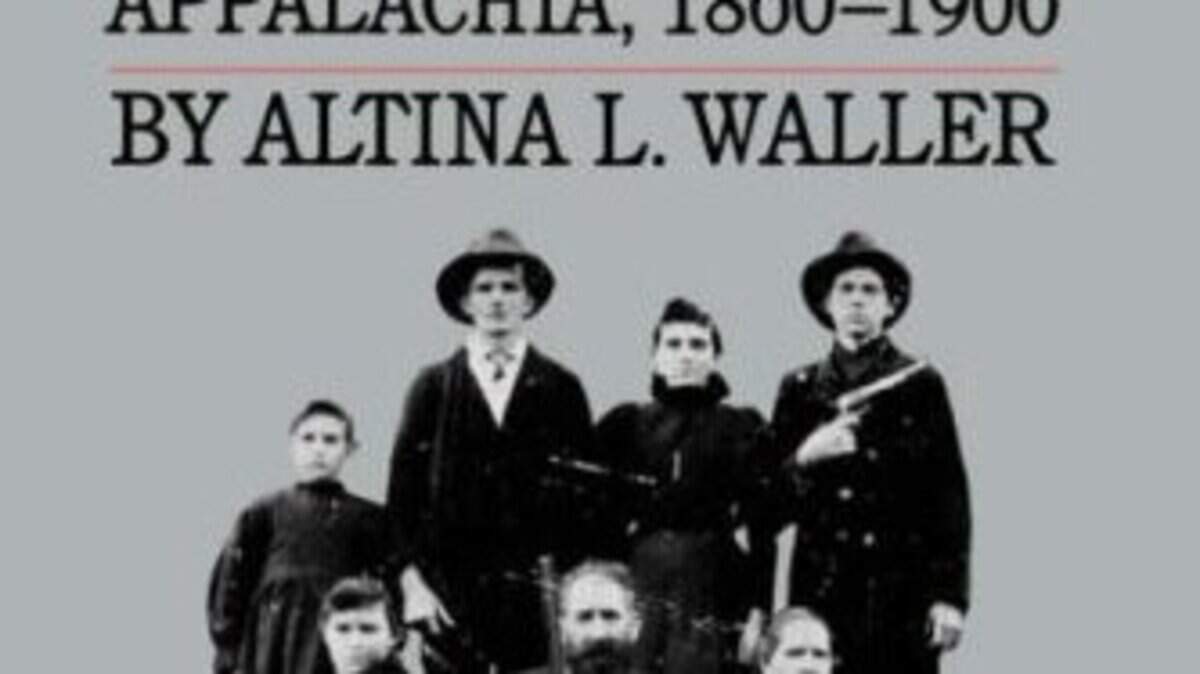
What's missing in recent media portrayals of the Hatfield-McCoy feud is context: the social and economic circumstances that confronted post-Civil War Appalachia.
In the Tug Valley, as in all Appalachia and even the entire South, economic decline was a serious threat to almost everyone. Agricultural families need lots of children to work the land; in this regard both families were typical —13 children in both Randal McCoy's family and Devil Anse Hatfield's family.
As essential as children were, they also contributed to an economic crisis in a region where there was not enough land to support the burgeoning population.
Statistics bear this out for the Tug Valley, where farm size was rapidly decreasing in the postwar years and many young men were unable to become independent farmers. Randal's sons stayed home with him or worked as farm hands. Devil Anse's sons worked on their father's timber operation.
This lack of opportunity for young people is a familiar pattern even today; many cannot expect to do better economically than their parents. Declining economic and social opportunity fuels feelings of insecurity, frustration and anger.
This background explains a lot about the feud. After the war, the United States went into rapid economic development mode that meant a huge demand for timber for building cities, houses, businesses. The Tug Valley, like most of Appalachia, had a lot of timber, but the land on which it stood had never had been highly valued because it wasn't productive agricultural land.
Almost overnight the demand for timber increased land values. Many small farmers attempted to take advantage of the market for timber. Randal McCoy worked with his father on a small timbering operation that ended badly because they did not own enough land.
They made the mistake of cutting timber on someone else's property. They were sued and not only lost everything, but the stress caused Randal's parents to divorce.
By contrast, Devil Anse started a successful large timbering operation. He was able to do this because he discovered that his neighbor, Perry Cline, the slick mustached lawyer in the History Channel film, had cut timber on Hatfield land and sued him.
As damages, the court awarded Anse Hatfield 5,000 acres — all of Cline's West Virginia land. Cline was forced to leave the Tug Valley. He went to Pikeville, Ky., where he became a druggist and a lawyer but, most significant for the future of the feud, made some important political connections.
Cline's hatred of Devil Anse only reinforced Randal's obsessive resentment of Hatfield.
The so-called pig trial illustrates the connection between personal animosity and economic circumstances. Randal McCoy accused Floyd Hatfield of stealing his pig not because he was still angry about his brother's death 13 years before but because Floyd worked on Devil Anse's timber crew.
In fact, Floyd lived on the Kentucky side of the river and was related to the McCoys as much as to the Hatfields. What becomes very clear is that what, in Randal McCoy's eyes, identified a member of the Hatfield group was not the Hatfield name but rather an affiliation with Devil Anse's timber operation. Selkirk McCoy, the McCoy who voted against Randal in the pig trial, worked on Anse's timber crew along with his two sons. Further, analysis of the 35-40 members of Anse's work crew shows that many of them were not related to Devil Anse at all.
What is significant is that Devil Anse was so successful that he was able to provide his partners and employees with economic rewards and social status that most Tug Valley farmers were actually losing.
So the Hatfields were not a family group but rather an economic and social group that was defending its newly won prosperity. The inability of Randal to provide this kind of opportunity to his sons helps explain their drunken attack on the unarmed Ellison Hatfield.
The economic crisis and declining opportunity in the Tug Valley and Appalachia created a situation ripe for resentment, aggression, and violence. Not old Civil War hatreds, not mountain culture, but very real economic and social threats created this conflict.
But it is also important to remember that not everyone, not even all Hatfields and McCoys, participated in the feud. There were only about 30 feudists on each side and many Hatfields and McCoys were horrified at the violence and tried to distance themselves from it. They, too, were feeling the effects of the economic crisis, but they did not resort to violence.
This may have been why, after Devil Anse avenged the killing of his brother by executing the three McCoy boys, the feud went into remission. The state of Kentucky did indict Anse and several of his supporters but no attempt was made to extradite them; it seemed that local residents wanted to put the entire thing in the past.
Many, after all, had witnessed the three McCoys attack and kill the unarmed Ellison and they hoped a rough kind of justice had been done. Five years passed with no further violent feud events.
But then, five years after the execution of the three McCoy boys, the feud was revived by Perry Cline. Cline, now an influential figure in Pikeville, used his influence to persuade the governor of Kentucky to reissue indictments against the Hatfields and hired Frank Philips to lead a posse in order to capture Devil Anse and his supporters.
This is what actually precipitated the most violent and notorious events of the feud. Private detectives flooded the valley to collect bounties by capturing or killing Hatfields, and the only pitched battle of the feud at Grapevine Creek took place.
But the real question is how was Cline able to persuade the leaders of Pikeville and the governor of the state to restart the feud? That is the crux of the matter. The film claims it was simply that Cline had the ear of the governor who owed him a favor.
But it is unbelievable that the governor of Kentucky would restart a five-year-old violent conflict just to return a favor. So the crucial question is: What happened between the 1882 execution of the McCoy boys and 1887 when Cline managed to recast the feud into the Kentucky vs. West Virginia feud?
What happened was that politicians and businessmen in Kentucky learned that the Tug Valley, up until then considered the backwater of the state, contained valuable resources. A government commission reported that the region was rich in coal, another resource now in great demand by industrializing America, such great demand in fact, that the Norfolk & Western Railroad was proposing to build a railroad right smack through the Tug Valley. If timber had increased land values, the imminent building of a railroad made them instantly skyrocket.
The mountain region of Kentucky had been a quaint backwater; now overnight it became Kentucky's economic salvation. So Cline, harboring his own motives of revenge and hopes to get his land back, happened to be in the right place at the right time. He was able to convince the governor that the barbaric Hatfields stood in the way of economic development.
Only this potential economic bonanza can explain why the governor would respond to Perry Cline's rants against the Hatfields and his demands for revenge.
This second phase of the feud, the Cline-Hatfield phase, brought about the worst violence along with national notoriety. Eight of the desperate Hatfields attacked the McCoy cabin, killing two children. Both governors authorized posses to do battle on the border and bounty hunters appeared in great numbers.
Most of the initial newspaper reports came from Cline, who was able to portray the Hatfields as the uncivilized barbarians. Yet, in the end, all mountaineers came to be tarred with that brush. The civilized capitalists who built railroads and coal mines were delighted to portray all mountaineers as ignorant, immoral and violent, arguing that economic development — railroads and coal mines — would bring civilization to the region.
What it did bring was more violence and more poverty.
Thus, the context that most helps to explain the feud is not the old rivalries of the Civil War but the agricultural crisis and rapid economic exploitation of the region occurring at exactly the same time as the events of the feud. That coincidence of timing alone suggests we take seriously the relationship between them.
This story was originally published July 8, 2012 at 12:00 AM with the headline "Hatfield-McCoy: Economic motives fueled feud that tarred region's image."