
In Tammy Faye Bakker’s eyes, a vision of God’s love for everyone
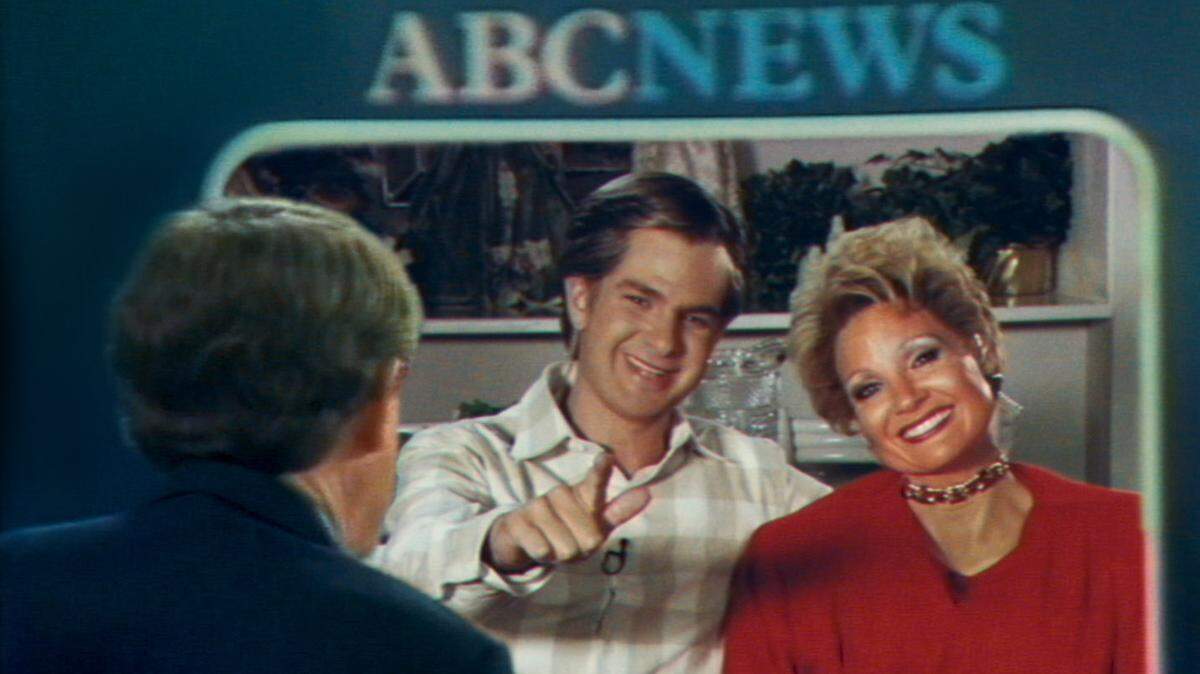
Watching “The Eyes of Tammy Faye” the other night with my wife Liz, I was especially struck by its portrayal of the late televangelist’s conversion.
The 2021 feature film (not to be confused with an earlier documentary of the same title) is hit-or-miss in its rendering of Tammy Faye Bakker’s Pentecostal/charismatic subculture—I say this as a long-time member of that same subculture who once, yes, truly, vacationed at Jim and Tammy Bakker’s Heritage U.S.A. theme park.
But her movie conversion rings true.
From that crucial moment grows the remarkable, over-sized persona of the future star of Christian TV. Bakker was often, and perhaps deservedly, ridiculed during her years as a superstar of the PTL network—too much makeup, too many tears. She was also largely misunderstood. And she deserved better than she got, from critics and life itself.
“The Eyes of Tammy Faye,” which we watched on HBOMax, stars an Oscar-nominated Jessica Chastain as the adult Tammy Faye.
However, it opens with young Tammy Faye LaValley (Chandler Head) as a child in Minnesota. Her mother (Cherry Jones) plays the piano at their Pentecostal church, but Tammy Faye isn’t allowed to attend. She’s an outsider not only there, but within her family, too.
She’s the daughter of her mother’s previous marriage, a child of divorce, which under their congregation’s harsh rules stigmatizes her.
Her mother thinks that if Tammy Faye shows up at church it will remind the other worshipers of her own shameful past. Rachel, the mother, has only recently been reaccepted into the congregation’s fellowship, and if she’s banned again, her younger children (apparently from her second marriage) will be shunned as well. They might go to hell.
So she makes Tammy Faye stay home by herself.
But Tammy Faye can’t take the rejection. One Sunday she gets down on her knees by her bed and begs God to accept her. She walks to the church, enters into the midst of a frenzied Pentecostal service and approaches the preacher. She says she wants God’s love.
The minister prays for her. She spontaneously begins to speak in tongues, swoons to the floor, still speaking in tongues, and is so overcome by ecstasy she loses control of her bladder.
To her mother’s astonishment, the adults around Tammy Faye don’t get angry. They erupt in shouts of praise, embracing Tammy Faye as a miracle child.
In Pentecostal terminology, she has been both saved and baptized in the Holy Spirit. She comes away from that service filled with love for God and mankind, and accepted by the Lord and his people. For this wounded child, it’s a cataclysmic, life-altering day.
After that, she decides she should be just who she is, without shame. And she can accept and love others as they are.
Raised in a sect so strict women couldn’t wear makeup or jewelry, she eventually becomes infamous for her flamboyant appearance, which is a part of who she authentically is, she says in the movie. (She reminds me here of another flamboyant and gracious saint of sorts, Dolly Parton.)
Mainly, the film deals with Tammy Faye’s adulthood: her marriage to Jim, their early, heady professional successes and finally the much-publicized years of mutual adulteries, financial scandal, prison for Jim and penury for Tammy Faye—and this is only the short list of their problems.
Through it all, Tammy Faye’s love for God and mercy toward others propel her. In the 1980s, she reaches out to a gay man suffering from AIDS, a terrifying new disease, even as the legalists in her subculture reject such men as sinners getting their comeuppance. She expresses compassion for the woman with whom Jim had the assignation that destroyed their PTL empire. When she overhears a gaggle of teenage boys mocking her, she kindly introduces herself as their neighbor instead of launching into a tirade.
As I said, this is the part of “The Eyes of Tammy Faye” that rings most true. It illustrates why I’ve stayed a part of the Pentecostal/charismatic faith all these years, even as I’ve come to disagree with some of its dogmas and certainly with most of its adherents’ political views.
I love this branch of the faith because sometimes those radical, even melodramatic, conversions the movement specializes in are absolutely real. Explain them however you prefer. I’ve heard all those explanations, the arguments of the skeptics.
But 40-some years ago, I experienced a similar conversion myself—for the record, I didn’t burst into tongues or pee my pants—and it revolutionized my life forever-after, just as dramatically as Tammy Faye’s conversion transformed her.
It didn’t make me perfect, any more than Tammy Faye’s made her perfect. Far from it.
Yet I saw for a moment clearly into some unknown dimension, stared straight into God’s unfathomable, unconditional, shimmering love for me and every last human being.
God’s love instantly stopped being a doctrine or a theory. It became a living, breathing, all-encompassing reality. I’ve never been quite the same. Once you see that love, you can’t unsee it.
I’ve been preaching about it ever since, everywhere I go. Just like Tammy Faye. Except without the makeup and wigs.
Paul Prather is pastor of Bethesda Church near Mount Sterling, Ky. You can email him at pratpd@yahoo.com.