
Paul Prather: My take on the 'American Sniper' discussion
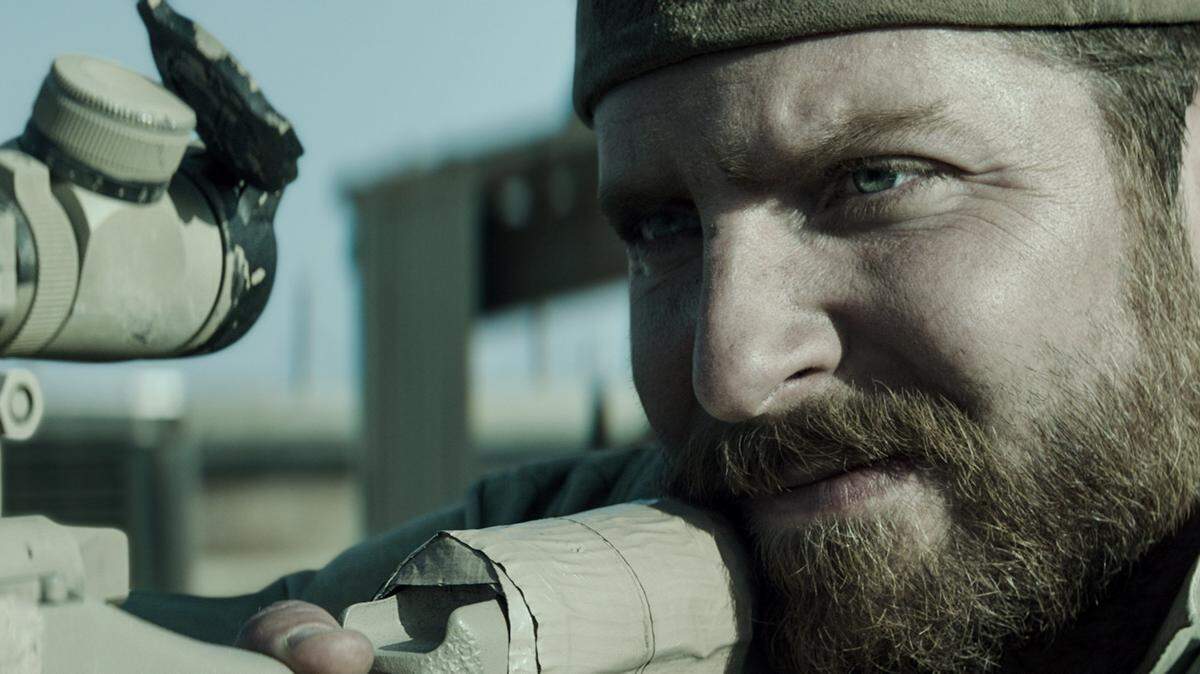
You're aware of the ongoing controversy over the late Chris Kyle, a former U.S. Navy SEAL and sniper credited with dispatching at least 160 enemy fighters in Iraq.
He co-wrote a bestselling 2013 memoir about his exploits, American Sniper, which is now a box-office smash movie.
Kyle, his book and the film, directed by Clint Eastwood, have become cultural flashpoints for conservatives and liberals.
For the right, Kyle was a fearless warrior and an earnest Christian who defended our country against terrorists. (After leaving the Navy, he was murdered, allegedly by a troubled veteran he was trying to help.)
To the left, Kyle was little more than a sociopath who coldly shot from ambush and regarded all his victims as "savages." He wore a blood-red crusader's cross tattooed on his arm as a statement of his feelings about Iraqis' Islamic beliefs.
I've paid too much attention to this dustup, but there are several reasons.
I'm a sucker for war movies generally. I'm a sucker for Eastwood's directing. I'm a sucker for controversies in which self-appointed patriots and scandalized bleeding hearts scream wild insults at each other.
Weeks before the American Sniper arrived at our local theater, in anticipation I listened to an unabridged audio recording of Kyle's memoir.
I also went online to find out whatever else I could about him.
Then, at last, I got to see the movie.
Here are my two central takes on the American Sniper brouhaha.
First, Eastwood's movie, whatever its moral faults, is more nuanced and more artfully rendered than the book. To me, the film is as much a domestic drama about the toll war takes on warriors and their families as it is a battle cry.
As for the book (or in my case, audiobook), the best I can say is that I forged through to the end. It's not the worst book I've read, but it resides on the same block.
Kyle and his co-authors manage not to miss any tired trope, emotional cliché or jingoistic rant about manhood, America, Iraqis, the military or liberals. It's essentially a long sequence of macho sound bites. If it includes even one original thought, I missed it.
It does include, fortunately, a fair amount of interesting (to old rednecks like me) technical information about ballistics, which breaks up the tedious crotch-grabbing.
Then there are the attempts at humor. The intent, I suppose, is to portray Kyle as an insouciant, devil-may-care commando who laughs at pain — his own and others'. Instead, he comes across as a garden-variety bully, a huge, muscular guy who chokes out strangers at parties and displays the self-awareness of a maladjusted 13-year-old.
Second, both the patriots and the bleeding hearts are correct about Kyle and the American Sniper juggernaut. And both sides are simplistically wrongheaded.
When admirers call Kyle a war hero, they're right. He served at great peril to himself and his family's stability. He took a lot of lives, but that's what we ask snipers to do: kill. As both the book and film demonstrate, he also saved many lives.
If he didn't feel conflicted about his actions, well, I don't imagine too many guys with Ph.Ds in philosophy volunteer for the SEALs.
The Birkenstock-wearing crowd might be more sensitive and make better neighbors; they're less likely to beat you unconscious at the neighborhood barbecue.
But they also aren't likely to man a rifle on a Fallujah rooftop or drop at night into Osama bin Laden's compound.
Kyle fought in a war many disagree with. The war wasn't his doing. He went where he was sent. You can dislike the war without blaming an enlisted man for it.
At the same time, why do his fans feel compelled to turn him into a demigod? Why can't he have been spectacularly brave and spectacularly flawed, too?
Maybe he wasn't too evolved. Maybe he was a bigot or an icy killer.
He definitely tended to lie. Brazenly.
In the original version of his book, Kyle claimed he'd beaten up Jesse Ventura in a bar, because Ventura insulted the SEALs who fought in Iraq. Ventura swears none of that ever happened. A jury sided with Ventura, to the tune of a $1.8 million judgment. The tale was removed from subsequent editions of the memoir.
There's another story Kyle told, in which he killed two would-be carjackers at a gas station in Texas. Never happened, law enforcement officials insist.
There's still another in which he said he traveled to New Orleans after Hurricane Katrina to shoot 30 looters from the roof of the Superdome. Publications from the Washington Post to the Times-Picayune of New Orleans have cast doubts on that one.
Here's what I find bizarre. Why did a man so verifiably brave make up so many self-aggrandizing whoppers? It's weird. Very weird.
Still, courageous men and women often turn out to be imperfect, damaged people. Read about Audie Murphy, the most-decorated American soldier of World War II. His story is its own litany of insecurity, early deprivation, rage, assaults, addictions.
Kyle, like Murphy, was just a man. Perhaps he was a confabulist and a bully. He could have been those things and also have been a hero.
We can owe him gratitude and respect without owing him blind worship.
This story was originally published February 7, 2015 at 8:24 PM with the headline "Paul Prather: My take on the 'American Sniper' discussion."