
Paul Prather: These works of art are news that stays news
Recently, in a talk I gave, I mentioned Ezra Pound’s observation that literature “is news that stays news.”
For some reason that line kept bouncing around in my head for days after I mentioned it, like a tune you can’t get out of your mind.
I started thinking about artistic works in various media, not just literature, that have stayed news for me through the years, that have enlightened and matured me, that have enlarged my spirit and helped me see God or my fellow man, or both, more clearly.
Having jotted down a few (OK, more than a few) artists and titles, I thought I’d share them with you. This isn’t the first time I’ve written here about some of my favorites, but my list keeps evolving. And anyway, it’s an enjoyable exercise for me.
I’ll bet you could compile your own list. Perhaps you should. If nothing else, it’s a way of whispering a quiet thanks to the artists who’ve nurtured our souls.
Here’s my (current) list:
Books and short stories
▪ The Power and the Glory, by Graham Greene. This might be the single finest novel I’ve ever read, about a “whiskey priest” who, despite his own sin and despair, finds grace and embodies it.
▪ The Road, by Cormac McCarthy. McCarthy’s dystopian tale turns into a heartrending portrait of love between a father and son trying to reach shelter. I defy any parent — I defy anyone, actually — to make it through the last couple of pages without weeping.
▪ “Pray Without Ceasing,” a short story by Wendell Berry, from his collection Fidelity. Berry plumbs the depths of violence and forgiveness among a community of farmers. Beautifully rendered.
▪ The Collected Stories of Eudora Welty. Welty, a literary master from Mississippi, looked at the 20th century South with an unsparing eye and an unfettered heart. “A Worn Path” is my favorite of her stories; it takes us along on an old woman’s sacrificial journey as she tries to save her sick grandson.
▪ The Complete Stories, by Flannery O’Connor. Nobody knew low-church Protestantism better than O’Connor, herself a Roman Catholic. Her stories are hilarious, barbed, pessimistic and revelatory.
▪ The Adventures of Huckleberry Finn, by Mark Twain. This masterwork has been maligned, but for me it still stands as the most potent indictment of racism I know of, and it’s also the best coming-of-age novel. And it’s about poverty and class, too. And buddies. Plus, it’s funny.
▪ “Pigeon Feathers,” a short story by John Updike, from the collection Pigeon Feathers and Other Stories. A boy tries to discover whether God exists and, no thanks to the adults around him, ultimately gets his answer in an unexpected form.
▪ All the King’s Men, is Kentuckian Robert Penn Warren’s story of political ambition and self-destruction. Its memorable politician, Willie Stark, apparently was based on Huey P. Long. The 1949 movie version also is terrific.
Films
▪ Marty. Ernest Borgnine stars as the title character, a perpetual loser with a tender heart and an overbearing mother. He finally discovers the romantic partner (Betsy Blair) he has longed for. Paddy Chayefsky’s Oscar-winning screenplay is just flawless, as is Borgnine’s Oscar-winning performance.
▪ Chariots of Fire. My favorite of this movie’s two plotlines concerns real-life runner Eric Liddell (Ian Charleson), a devout Scotsman who competed in the 1924 Olympics as a means of glorifying God, despite disapproval from his fellow missionaries and conflict with the British aristocracy.
▪ To Kill a Mockingbird. This ranks among those rare instances in which the film is as good as the book. Gregory Peck’s small-town Alabama lawyer Atticus Finch personifies courageous, quiet integrity.
▪ Tender Mercies. Horton Foote wrote this tale of an alcoholic former country music star (Robert Duvall) who stumbles into a rundown Texas motel. There, to his astonishment, he finds religious faith, redemption and a family.
Other
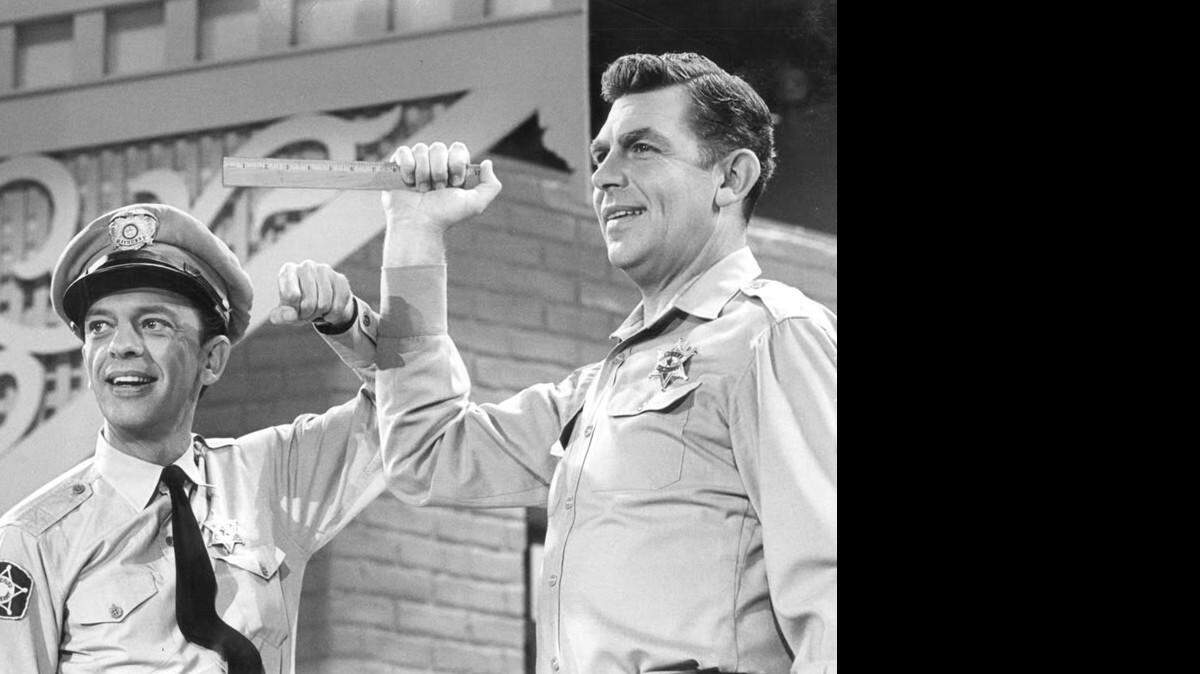
▪ The Andy Griffith Show. Some critics have dismissed this best-of-all-possible TV sitcoms as a yokel show along the lines of The Beverly Hillbillies. I disagree. Of course, Griffith’s fictional Mayberry, N.C., is a tad too idealized. But the series’ recurring themes of friendship, mercy and grace are profoundly wrought. The acting is inspired. A half-century after it debuted, the show still leaves you feeling as if Andy, Barney, Floyd and the rest were your friends.
▪ The music of John Prine. He’s been my favorite singer-songwriter since I was in high school. If it’s worth being said, Prine has said it — about love, sadness, family, humor, romance, God, drinking or philosophy. Sometimes all in the same song. Nobody turns a phrase or creates an image like he does. He’s a poet of the highest order.
▪ Speaking of poets of the highest order, Ted Kooser is among the few modern poets — another being Wendell Berry — whose work I return to again and again. Kooser, a former U.S. poet laureate, speaks in plain language about subjects as mundane as two women shopping in a cosmetics department, and in doing so somehow manages to fracture the universe.
Paul Prather is pastor of Bethesda Church near Mount Sterling. You may email him at pratpd@yahoo.com.
This story was originally published February 20, 2016 at 10:49 AM with the headline "Paul Prather: These works of art are news that stays news."