‘A very powerful feeling.’ New approach to baseball offense to be tested in Lexington.
Lindsay Gardner has a simple mindset at the core of her coaching technique.
Gardner wants to score, with the knowledge that runs must come across home plate to win a baseball or softball game.
“The data is not as important as getting the hit,” Gardner explained in a wide-ranging interview with the Herald-Leader. “I personally teach how to get the hit and I know which hits to aim for to get the highest exit velocity, to get the best launch angles . . . for me, it’s about getting doubles and home runs.”
It’s the context in which Gardner’s hitting philosophy will be tested — and her path to reach this moment — that makes her story noteworthy.
In early February, Gardner made history after she was tabbed to be the hitting development coordinator for the Kentucky Wild Health Genomes, the newest team in the Atlantic League of Professional Baseball.
Gardner’s appointment comes in connection with the Louisville Slugger Hitting Science Center, for which she is a hitting consultant.
It’s also a historic appointment: Gardner is the first female coach in Atlantic League history.
Gardner enjoyed a prominent career as a softball player, starring at the University of Texas in the early 2000s and playing with the USA National Team and in the National Pro Fastpitch league.
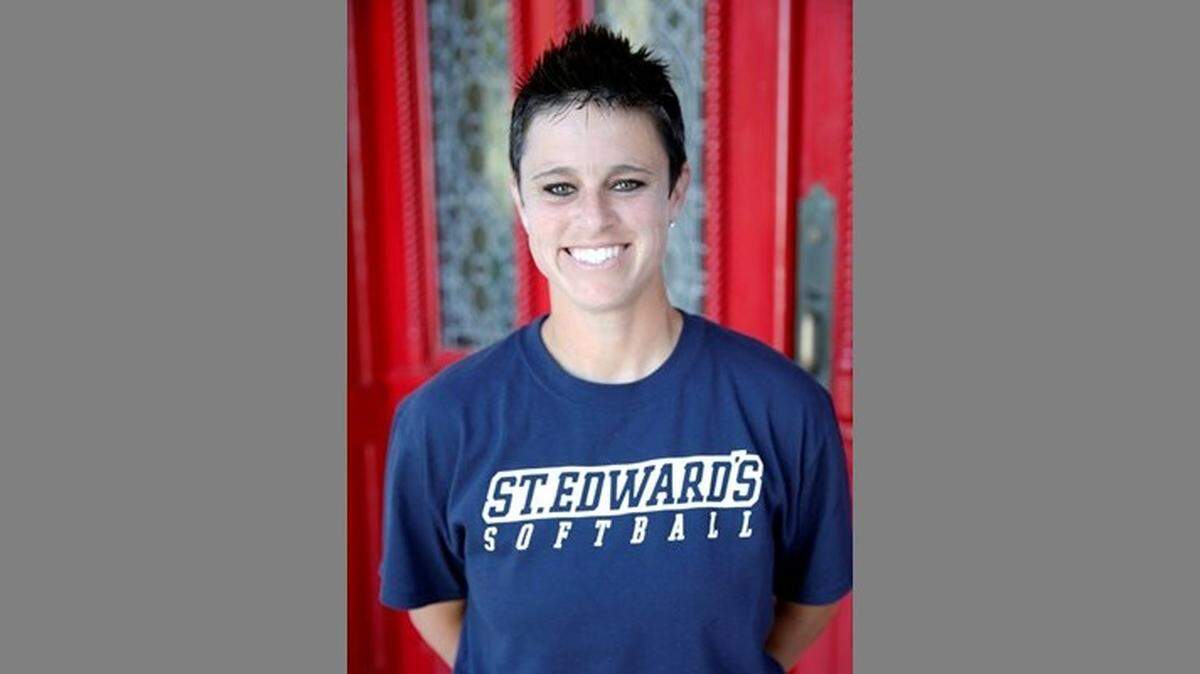
Gardner previously was the head softball coach at NCAA Division II school St. Edward’s University in Austin, Texas, and she’s also the founder of “Just dig in,” a baseball and softball training company.
Dating back to her childhood in southeastern Texas, Gardner always wanted to be involved in baseball. Now she has that opportunity, with a coaching approach she believes will have an impact.
“I know that what I have is going to be incredible,” Gardner said. “The changes for these baseball players. It’s going to give them something to hold on to, it’s going to give them a way to adjust (when hitting).”
Love of baseball leads to softball stardom
Gardner was born in San Antonio, and her early days were filled with quintessential moments of playing baseball with friends.
There were games of Wiffle Ball in the street, pizza boxes used for home plate and second base, and mailboxes marking first and third base.
Gardner would imitate Babe Ruth each time she came up to bat, pointing her bat toward a flower bed in left field that marked home run territory.
These childhood games instilled a fundamental quality in Gardner’s offensive approach.
“I was always trying to score, one swing of the bat,” she explained. “I didn’t realize that one thing right there, the aiming, would be the ultimate thing that took me into professional baseball coaching.”
After her family moved to Katy, a city just west of Houston, Gardner begrudgingly went to a softball tryout after sustaining a knee injury in a baseball game.
She immediately took to fast-pitch softball, and Gardner and her father went on to start their own travel team, the Katy Cruisers.
By finding success at national tournaments — with the help of legendary pitcher Cat Osterman — Gardner’s passion for winning and scoring was sparked.
Her college career at Texas brought more success: All-America honors, the Big 12 Freshman of the Year award and time spent with the national team.
Gardner was an assistant coach at St. Edward’s before becoming the head coach from 2011 to 2016, but her decision to step away from coaching was based in a disconnect between how she was taught to play softball and what she tried to teach her players.
“When I left, I just realized that the biggest difference between me and my players at that time was that it was almost like everybody was playing to get to first base and I was trying to score and they didn’t really match up,” Gardner said. “I think that’s something that I was lacking when I became a college coach is I was teaching physically how to swing and the contact points versus how to play the game.”
Hitting theory ready to be tested
Aiming for something specific represents the basics of what Gardner calls her “Green Zone Hitting Theory.”
How does Gardner describe the theory in her own words?
“Green-zone hitting is when a hitter chooses a pull-side target (open gap on the field) to hit to before they step in the box, regardless of pitch speed and location. By making the pull-side gaps their aim for being ‘on time,’ hitters can trust that the opposite field gaps will be there for them on their ‘just a little bit late’ hits.”
The green side refers to a hitter’s pull side when batting.
Some of this was discovered after Gardner moved from Austin back to Katy after her time at St. Edward’s was up and began giving softball hitting lessons in her driveway.
At the end of one lesson, Gardner tossed a girl 12 Wiffle Balls to hit. The girl swung and missed all of them.
Gardner issued a new challenge for the next five pitches: To try and hit a wind chime hanging from her house about 35 feet away, beyond where the shortstop would be.
Gardner offered the girl $1 for each time she hit the wind chime, a seemingly impossible proposal. The girl hit the wind chime twice.
This challenge became commonplace during Gardner’s hitting lessons, and Gardner eventually switched from a cash reward to stickers because she was losing so much money.
“Me being able to say, ‘Try to hit the fan out there in the red shirt in left-center field. Just go hit the next pitch right there,’” Gardner said. “It’s incredible what literally that simple mindset will do to a hitter’s timing, almost like the target gives the trigger for the swing.”
Still with aspirations to be involved in professional baseball, Gardner wanted to test this hitting method with baseball players.
Gardner used this mode of coaching with several players — including one player she thinks could be drafted this year into Major League Baseball straight from high school — after she relocated to California in 2019.
In 2019 she participated in Take The Field, an annual MLB program designed to promote women in baseball operations and on-field roles. She interviewed with four MLB teams — the Boston Red Sox, Houston Astros, Los Angeles Dodgers and Oakland Athletics — and presented those teams with her hitting theory.
“They didn’t have anything (jobs) at that time and I didn’t necessarily have the data that I needed,” Gardner said. “I need to go prove this theory of what you aim for matters and how to basically get the highest exit velocities and also the highest batting averages.”
Enter Lexington’s Genomes, the new Atlantic League franchise that has given Gardner a space in pro baseball to test her approach.
”We are thrilled that one of our partner leagues is welcoming an eminently qualified individual as a coach and continuing the momentum of talented women holding on-field and player-facing roles,” said Peter Woodfork, MLB’s senior vice president for minor league operations and player development, when Gardner’s hiring was announced.
Earlier this month, the Genomes also drafted catcher Alexis “Scrappy” Hopkins during the Atlantic League’s annual player draft in Florida.
Hopkins is believed to be the first female position player ever drafted by an American pro baseball team for an on-field role.
“I think that on one hand, we’re definitely leading the charge. But on the other hand, we’re just continuing to do the things that are best for our organization, let alone our community,” said Andy Shea, the CEO of Lexington-based Stands LLC, which oversees both the Genomes and Lexington Legends. “It really has been something that we’ve been very consciously a part of for a long time now.”

‘Make the ball go where they want it to go’
Gardner believes her hitting theory is something Genomes players will be able to incorporate and use to great effect this Atlantic League season.
“I’ve got so much to learn and I don’t want to say I’m just happy to be here,” Gardner said. “That’s like just saying you’re happy to be at the World Series. I want to win.”
Gardner and the Genomes will have plenty of chances to see if the hitting theory results in increased offense.
The 2022 Atlantic League season will begin for the Genomes on April 21, with the regular season running through late September.
That’s nearly five months to gather data, and wins.
Gardner has spent recent weeks preparing to make the cross-country road trip from Los Angeles to Lexington by getting a 1993 Ford E-350 passenger shuttle bus — now outfitted with solar panels — into working shape.
She refers to the vehicle as her “Boom Boom Bus,” and it will serve as her home while she coaches in Lexington.
Gardner has chronicled this preparation work on her Instagram page and TikTok, which combined have more than 32,000 followers. Gardner also has a fundraising page set up to help pay for expenses.
All this work will culminate with the realization of a lifelong dream and the implementation of her hitting theory.
What does Gardner think the reception to her coaching will be?
“I think the biggest thing for players is how swings feel. If a swing feels incredible and the results are incredible, a player is going to want more of that,” Gardner said. “They can actually make the ball go where they want it to go, regardless of what the pitcher is throwing. That’s a very powerful feeling.”