
Alcohol sales at NCAA tourney games: Enhanced fan experience or ‘catastrophe’?
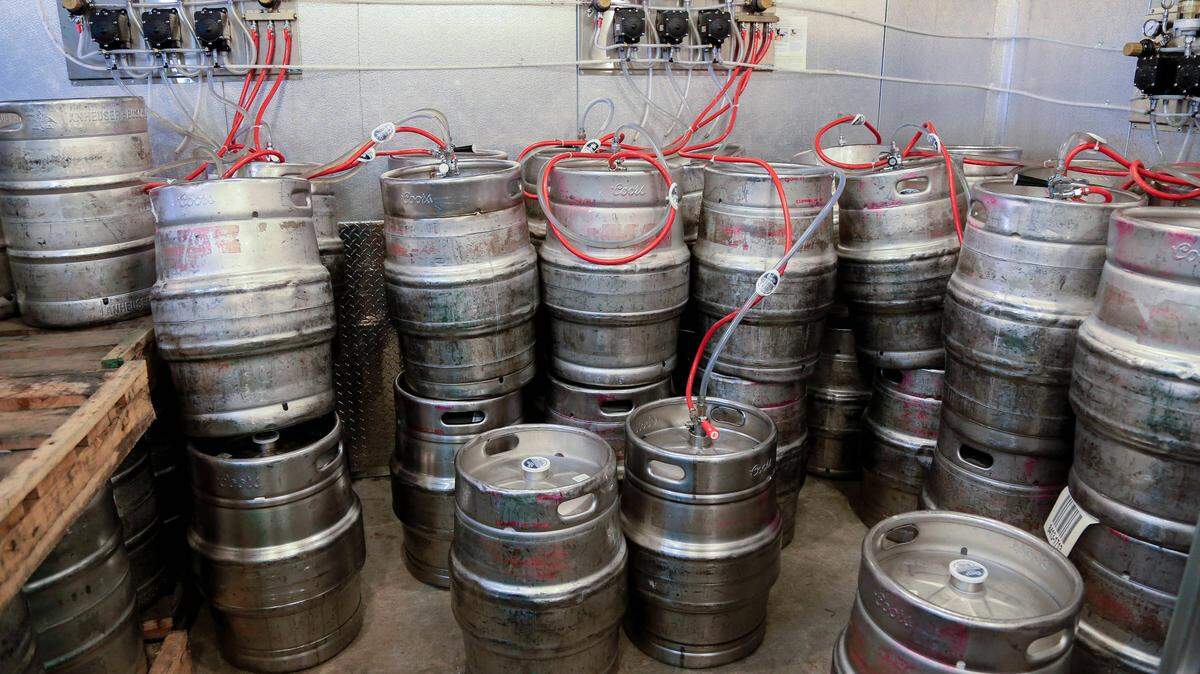
Beginning with the 2019 NCAA Tournament, Kentucky fans will not have to leave the arena and go to a bar to toast a victory or ease the sorrow of defeat. Beer and wine will be on sale to the general public at concession stands for the first time.
A headline in The New York Times last week suggested the reason: “To Pull Fans Away From TVs, College Stadiums Open the Taps.” The story said that colleges saw alcohol sales as a way to increase attendance at games. Increasingly, schools including West Virginia, Arizona, Colorado, Texas, Oklahoma State, Wake Forest and Louisville are selling beer in their football stadiums.
But Dan Gavitt, the NCAA’s senior vice president of basketball, said that increasing attendance was a “secondary” consideration. More than 90 percent of tickets were sold for all sites in the 2018 NCAA Tournament, he said, so how much of an attendance boost is needed?
“We always want to keep the tournament relevant and contemporary,” Gavitt said in a telephone conversation. “And if this is the accepted way that fans engage a sporting event these days, and we believe it is, then we need to keep the tournament relevant in that perspective and not fall behind the times.”
The New York Times suggested that money was a factor. It termed alcohol sales “a straightforward play for revenue.” Retired referee Don Rutledge agreed.
“What I really think is the NCAA wants to make money ...,” Rutledge said. “Money runs the NCAA. It runs the conferences. It runs college football. Money runs everything, and they’re going to do anything they can to make more of it.”
The NCAA will split revenue from alcohol sales at the tournament with the venues and the host institutions. The NCAA’s split is expected to go into its general fund, which is funneled to schools.
Rutledge voiced concern about safety, especially for referees. Still fresh in mind are the death threats some UK fans directed at referee John Higgins after the Cats lost to North Carolina in the 2017 NCAA Tournament. Adding alcohol to a volatile mix of blame-the-referee emotion and high stakes basketball drama can give pause.
“Alcohol could be another incentive to add another level to their anger,” Rutledge said of fans. “It’s a chance the NCAA is taking, in my opinion. And is it worth the money they’re going to make to have one thing go wrong that would be a catastrophe?”
Gavitt said the NCAA will rely on security at venues. And Rutledge acknowledged that professional sports teams offer alcohol without a serious problem.
University of Kentucky Athletics Director Mitch Barnhart declined a request to comment about alcohol sales at sporting events.
The NCAA has experimented in recent years with beer and wine sales at championships in such sports as baseball, softball, wrestling, men’s ice hockey, volleyball, FCS football and men’s and women’s lacrosse.
“We got favorable data back on the fan experience,” Gavitt said. This included an “actual reduction in alcohol-related incidents,” he said.
There are guidelines. Only venues that sell alcohol during other events will be permitted to serve beer and wine at NCAA Tournament sites. Rupp Arena serves beer, wine, bourbon cocktails and vodka at concerts and other events. It would sell beer and wine — but no hard liquor — as the host site for an NCAA Tournament.
Of course, excepting private suites, the Southeastern Conference prohibits the sale of alcohol at its sporting events. For comparison sake, the Atlantic Coast Conference, the Big 12, the Pac-12 and the Big Ten let each member school decide if it wants to sell alcohol.
Incidentally, Rupp Arena plans to expand its regular-season access to alcohol by adding three new hospitality rooms on the west side of the building and a fourth on the east side. Much like suites and other exclusive areas in football stadiums, these rooms are not open to every ticket holder.
Tom Jernstedt, a retired NCAA executive who is credited with helping invent the modern concept of March Madness, voiced mixed emotions about the increased availability of beer and wine. He saw it as a sign of the times.
“People are more accepting and don’t seem to be bothered by it,” he said. “If I was still with the NCAA, I’m not sure what my attitude would be. We tried to keep it as pristine and as good as it could be in every way.”
‘Pro Day’
This coming week will see NBA scouts on a basketball caravan beginning in Lexington on Sunday night. Then they will be in Nashville on Tuesday, Tuscaloosa, Ala., on Wednesday and Auburn, Ala., on Thursday.
The growing trend of college programs staging a “Pro Day” is the reason. It will be UK’s fifth Pro Day, the first for Vanderbilt and the second for Alabama and Auburn.
“The other schools set their dates around Kentucky to make it easier from a logistical standpoint,” Bobby Marks, ESPN’s analyst of NBA front office decisions, wrote in an email.
The “Pro Day” events serve a purpose. “Highly valuable for NBA scouts because it gives you a baseline from where a prospect is Day 1 in comparison to when the season ends in March/April,” Marks wrote. “The practice setting is also valuable based on how coachable that prospect is along with how he can pick up things (learning IQ).”
The SEC Network will televise UK’s Pro Day: 7-9 p.m. Tom Hart, Seth Greenberg and Jimmy Dykes will be the announcers.
The Pro Day events can also serve as promotional tools for college programs. A link to the NBA is a good thing.
“For our team, we feel like we have several guys in our locker room who’ll have the chance to play in the NBA,” Vanderbilt Coach Bryce Drew said in an email sent by the school’s media relations office. “All of our guys will participate, and we’ll treat it like any other practice. We’ll just have a different audience.”
Vandy asked NBA teams what they wanted to see.
“One thing for sure is they want to see shooting and live competition,” Drew said. “We’ll have other things thrown in, but we will most certainly include those two things in Pro Day.”
Auburn Coach Bruce Pearl linked Pro Day to players’ NBA aspirations.
“Auburn basketball has had some great NBA players in the past, and we have some guys on this roster that will join them,” he said in an email sent by the media relations office.
Love story
To promote the upcoming series of films titled “Basketball: A Love Story,” Dan Klores recalled a clandestine meeting between Hall of Fame basketball coaches Adolph Rupp of Kentucky and John McClendon of Tennessee State.
“Quietly and silently and confidentially” is how Klores described Rupp’s trip sometime in the 1950s to McClendon’s office in Nashville. Rupp, who would come to personify reactionary racism, sought basketball insight from a black coach at a traditional black college.
“McClendon was going down his fast break with Adolph Rupp,” Klores said, “and I love that.”
Klores, the director of the 62 films that will begin airing on ESPN on Tuesday, said the Rupp-McClendon meeting showed how basketball can bring disparate people together. A “global common denominator” is what he called basketball.
“What I mean by that is you can go anywhere in the world and speak about four or five things that we can make a connection to people with: music and food and sex and God and basketball,” Klores said.
“OK, Rupp grew up in a generation and background that wasn’t so kind to black people. But here is a common denominator. Here’s the common love. Here’s a common respect.”
Kentucky figures prominently in the films, which Klores said involved 165 interviews. Klores, an AAU coach who counts ex-Cat Hamidou Diallo among his former players, said the films and accompanying book are not intended as an exhaustive study.
“It’s not a Ken Burns history,” Klores said. “It’s not a history of basketball. It’s 62 short stories.”
To explain what he meant, Klores said that the third scene the viewer will see in the first film will be Latrell Sprewell choking his NBA coach, P.J. Carlesimo.
“I figured if I open up with (James) Naismith, I lose half the audience,” he said in reference to the inventor of basketball. “I don’t want to tell a linear history. That’s exactly what I did not want to do.”
Klores, 68, said the word “love” is key to the title of the series and book.
“The complicated nature of love,” he said. “It’s not all pretty. Nor is love. There are moments of joy, and there’s moments of embrace. And there’s moments of satisfaction. And there’s moments of loss and disappointment. ... But there’s lots of revelations.”
For instance, Klores said that some players on the U.S. basketball team were paid to play in the 1968 Olympics. The preeminent player at the time, Kareem Abdul-Jabbar, declined a chance to try out for the team. It was his way to call attention to racial injustice in the United States.
ESPN will air “Basketball: A Love Story” over the next five Tuesdays, from 7-11 p.m. the next three Tuesdays, and from 8 to midnight the final two Tuesdays.
Happy birthday
To Junior Braddy. He turned 47 on Thursday. ... To Sean Sutton. He turned 50 on Thursday. ... To Sheray Thomas. He turned 34 on Thursday. ... To Rex Chapman. He turned 51 on Friday. ... To Adrian “Odie” Smith. He turned 82 on Friday. ... To Preston LeMaster. He turned 35 on Friday. ... To former Auburn coach Jeff Lebo. He turned 52 on Friday. ... To Bill Busey. He turns 70 on Monday. ... To Reggie Hanson. He turns 50 on Monday. ... To former Tennessee Coach Wade Houston. He turns 74 on Tuesday. ... To former South Carolina coach Dave Odom. He turns 76 on Tuesday. ... To Mark Krebs. He turns 32 on Wednesday.