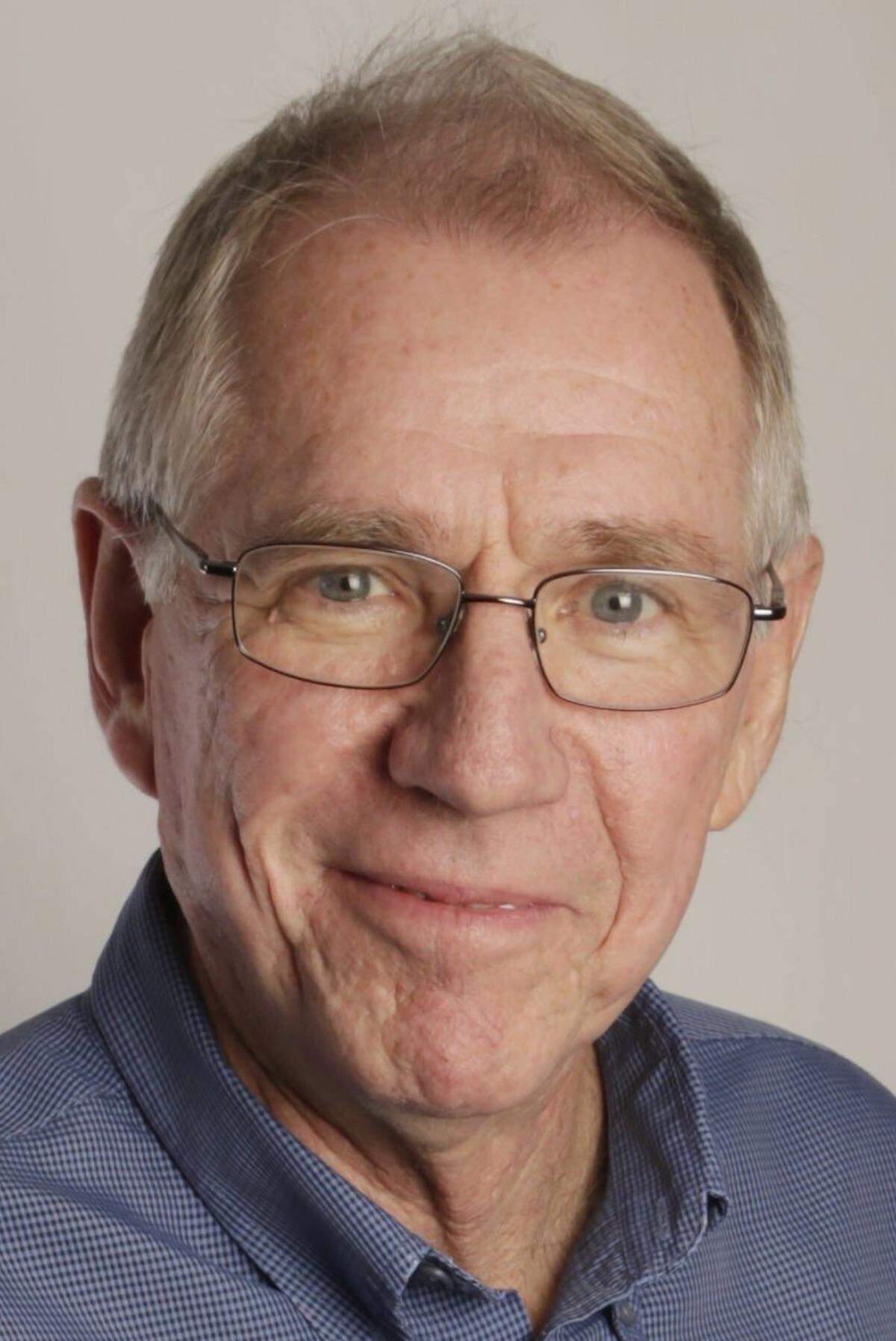
‘I was a human being.’ A foreign country offered refuge from racism for ex-UK player.
After completing his Kentucky career in 1981, Fred Cowan lived and played basketball for 10 years in Japan. He remembers that decade as an eye-opening experience.
“I felt like a person living in Japan,” he said. “The way I was treated wasn’t because of my color.”
Of course, African-Americans have lived with systemic racism in this country for centuries. Not being prejudged because of race? “It’ll blow your mind,” Cowan said.
As Cowan came to believe, the Japanese were not free from bias. The Japanese did not like Koreans. But this ill feeling was not as stark and inescapable as black and white.
One form of acceptance Cowan remembered feeling came when the team returned to Japan from a game in another country. While his teammates went to the customs desk for returning Japanese, he moved toward the line for the customs check-in for foreigners.
“The whole team told me, no, you stay in line with us,” Cowan said. “That kind of blew me away. You don’t realize these things until you can see the difference. Because when you grow up in America, you get programmed. You know you’re not supposed to do this. You’re not supposed to go there.”
When Cowan would return to this country after each season, he tried to keep that feeling of acceptance he received from the Japanese as long as he could. He made a point of flying to the United States on Japanese airliners rather than American.
“I wanted to stay away from America, the prejudice, the way people look at you as long as I could,” he said. “Because I knew if I flew United or Delta, as soon as I walked on that plane, I was a black man. As long as I stayed in Japanese territory, I was a human being. I had no color.”
White minority?
When former UK player Erik Daniels played professionally in Europe, Asia and South America, he noticed a role reversal.
“Some of my Caucasian teammates from America felt a little different because they were usually the minority,” he said. “They were usually the only white guy on the team from America.
“So they kind of understood or felt our pain a little bit because they didn’t have the same support system that they normally would as far as seeing the same kind of faces or being around the same type of people.”
‘That’s enough’
Even while cameras recorded what was happening, Minneapolis policeman Derek Chauvin brazenly kept a knee on the throat of George Floyd for more than eight minutes. Question: If a sense of human decency couldn’t prevent the killing, shouldn’t the presence of a camera have inhibited Chauvin?
Not “if you don’t care, if you feel like you’ve got the privilege,” former UK All-American Kenny Walker said. “If you feel like you wear the badge. … Or maybe he was overcome with emotion and wasn’t really thinking.”
Whatever the case, Walker said he has wondered why the three other policemen at the scene or even an onlooker did not intervene.
“If I was one of those cops, I think I would have said, ‘Hey man, that’s enough,’” Walker said. “If I was one of the bystanders, I’m not sure I wouldn’t have reacted myself and pushed (Chauvin) over and taken the chance of getting arrested or getting shot.”
‘Black Lives Matter’
The Sacramento Kings’ longtime television play-by-play announcer resigned two days after a Twitter exchange with former UK player DeMarcus Cousins.
The announcer, Grant Napear, also lost his job with the radio station that owns the broadcast rights to Kings’ games. The station’s owner, Bonneville International, said Napear’s tweet was “particularly insensitive” as protests against police brutality were staged in various places around the country, The New York Times reported.
The exchange began with Cousins, who formerly played for the Kings, posting a tweet asking Napear what he thought about the Black Lives Matter movement.
Napear’s response included this: “ALL LIVES MATTER. … EVERY SINGLE ONE!!!”
The phrase “All Lives Matter” has often been used dismissively against people noting the specific prejudices faced by black Americans, The Times story read.
‘What leaders do’
San Antonio Spurs Coach Gregg Popovich has a reputation for speaking his mind. This came through in an interview with The Nation last week.
On the subject of protesters decrying police brutality, Popovich said, “We need a president to come out and say simply that ‘Black Lives Matter.’ Just say those three words. But he won’t and he can’t. He can’t because it’s more important to him to mollify the small group of followers who validate his insanity.
“But it’s more than just (Donald) Trump. The system has to change. I’ll do whatever I can do to help because that’s what leaders do.”
Chicago to Boston
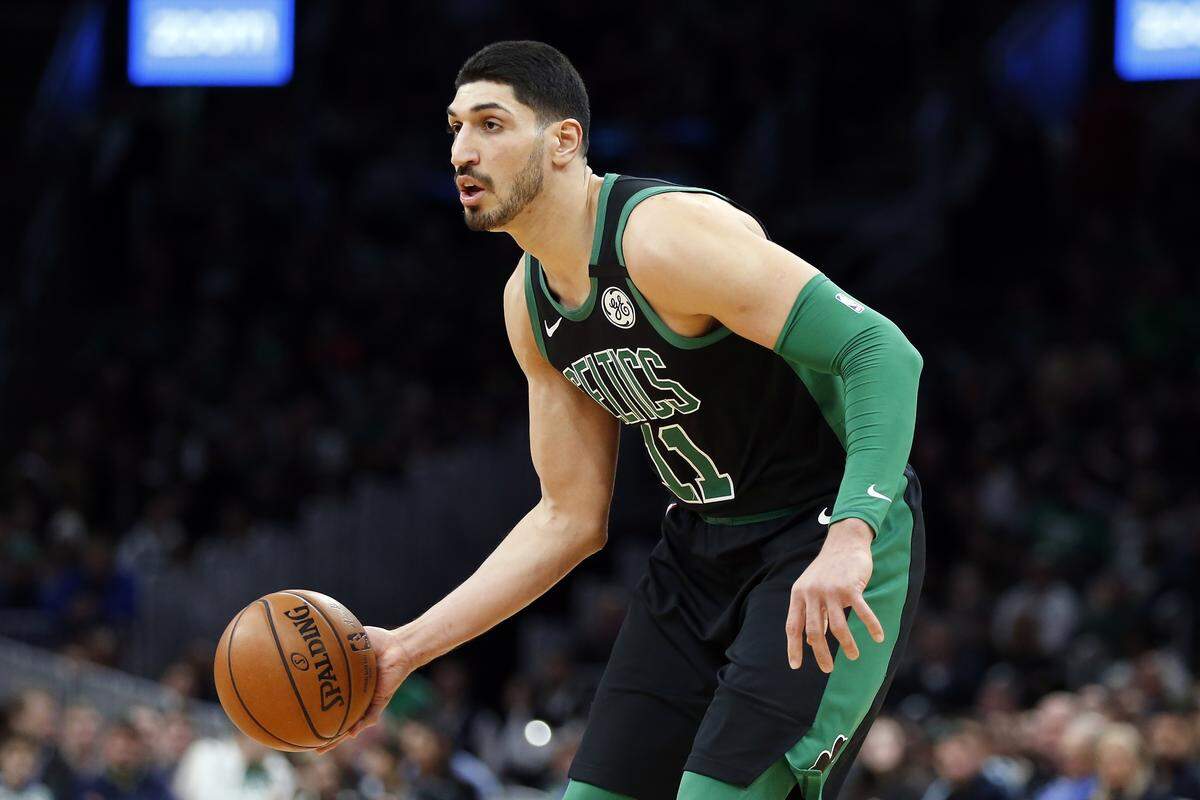
Enes Kanter, who practiced with the UK team in the 2010-11 season, drove from Chicago to Boston to participate in a protest. He was pictured wearing his Celtics jersey while in a crowd chanting, “I can’t breathe.”
“It was a crazy drive,” he was quoted as saying by The New York Times. “It felt terrible. My back was hurting. My shoulder was hurting. But you know what? The results were something good, so it was worth going.”
Sutton remembered
John Calipari opened the May 25 episode of his “Coffee With Cal” Facebook show with a tribute to the late Eddie Sutton.
Calipari’s UMass team played Sutton’s Oklahoma State team in the 1995 NCAA Tournament East Region finals. The winning team would receive 2,500 tickets to the Final Four. The losing team would get four.
Before the game, Sutton suggested the winning coach agree to give the losing coach 10 tickets from the larger allotment. Calipari agreed.
In the handshake line after Oklahoma State won, Calipari asked Sutton, “Who do I call for those tickets?” UMass got the tickets.
“I gave those tickets to people today who’d give a kidney for me …,” Calipari said. “Great guy, and just great for basketball.”
Not everything
Basketball Hall of Famer Jerry Sloan died on May 22 at age 78. He played collegiately for Evansville, then played a prominent role as a Chicago Bulls guard before an acclaimed coaching career.
His obituary in The New York Times included this:
“He was offered the head coaching post at Evansville early in 1977 and agreed to take it. But he changed his mind a few days later, feeling that his future lay in the pro game.
“He was working as an assistant coach with the Bulls that December when a plane carrying the Evansville basketball team, head coach Bobby Watson and his staff crashed on takeoff from the Evansville airport en route to a game at Tennessee, killing everyone aboard.
“‘I had just talked to the team the week before,’” Sloan told Sports Illustrated in 1997. “‘It made me realize that basketball wasn’t everything in life.’”
Commemorative coins
The Naismith Memorial Basketball Hall of Fame began selling commemorative coins as part of a fund-raising effort Thursday. The sale ends July 6.
U.S. Congressman Andy Barr (R-Kentucky) helped get approval for the U.S. Mint to produce the coin. Joining him in the effort were Congressman Richard Neal (D-Massachusetts) and senators Elizabeth Warren (D-Massachusetts) and the late John McCain (R-Arizona).
Coins can be bought online at catalog.usmint.gov/.
Happy birthday
To Barry “Slice” Rohrssen. The former UK assistant coach turned 60 on Saturday. … To Dick Vitale. He turns 81 on Tuesday. … To LaVon Williams. He turns 62 on Wednesday.