The NIL era brings boundless opportunities. There are also potential pitfalls.
No matter what athletics departments did to prepare themselves and their student-athletes for the transition into the name, image and likeness era of college sports, there were bound to be complications. There were sure to be questions.
Even though the debate over NIL reforms has been ongoing for years, the efforts to put new regulations in place have been piecemeal, with different states around the country taking different approaches, and no uniform resolution from the NCAA until just days before July 1, the date that college players could start earning money off their names, images and likenesses.
And even that NCAA action was incomplete, a temporary measure to govern the process until a more permanent set of rules could be put in place.
Amid the confusion, everyone in college sports was just trying to keep up with the changes and look ahead to what might be coming next.
The day before the NIL reforms went into effect, Rachel Baker, a top University of Kentucky athletics official steeped in compliance knowledge, headed a talk with the UK athletes who were already on campus for the coming school year, a group that included the men’s basketball team.
Baker, who has been leading a working group to deal with NIL issues, walked the players through the policies, with guidelines on how to report transactions, trying to hit on common questions that many of them would have about the process.
“But we knew — no matter what we told them — there were going to be issues that came up,” said men’s basketball sports information director Eric Lindsey. “There are going to be issues today. There are going to be issues next week.”
That’s the nature of college sports at the moment.
Most who work in this space are thrilled that players will now have the opportunity to profit off their own names, images and likenesses. But there’s also an acknowledgment of what could go wrong, and what athletics departments and others around the college sports world can do to head off potential pitfalls before they derail an athletic career.
Jim Cavale, the founder and CEO of INFLCR, a service that was developed to give athletes a streamlined approach to brand-building opportunities and is now used by athletics departments to help players navigate the NIL landscape, says education on the process is key to keeping student-athletes in good standing.
“The two places where student-athletes can get in trouble is, number one, not understanding the rules. And, number two, not understanding their responsibility to disclose everything they do,” he said. “That stuff is so important. Compliance is so important in this new era.”
New features to the INFLCR app, which signed the Kentucky men’s basketball program as its first client four years ago and is now used by more than 1,100 college teams, allow players to report their NIL deals to their schools’ compliance departments and manage personal financial information, as well as offer educational resources about NIL restrictions.
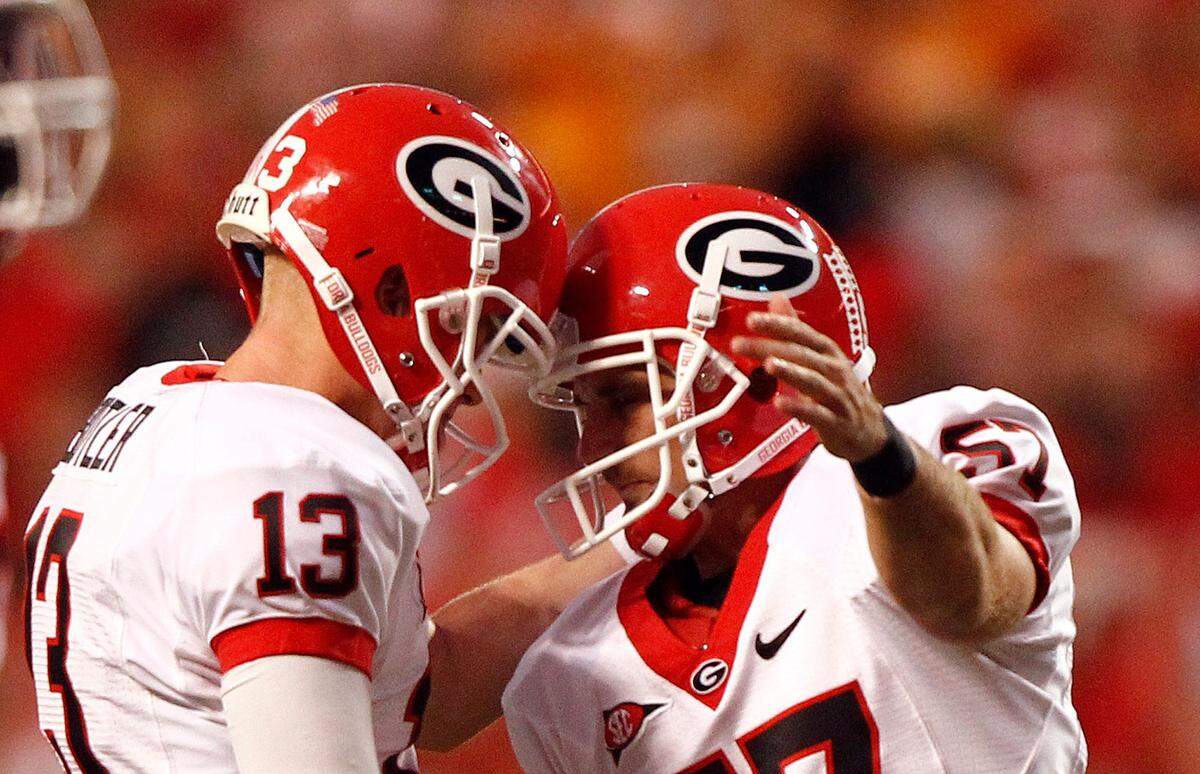
Drew Butler, a former University of Georgia standout and NFL punter, heads up the college division at Icon Source — a company that matches student-athletes with potential business partners — and he, too, stressed education of the rules surrounding NIL as something that should be a primary focus for athletics departments.
“Because this is really a ‘Welcome to the real world’ moment for college athletes,” Butler said. “There is a big learning curve here.”
The early days of NIL
Lindsey said he fielded several questions related to NIL changes from Kentucky’s players on July 1, as the team, which had been on campus for only a few weeks, tried to get their arms around this new era of possibilities. Some of those questions, the UK SID could answer. Some, he needed to send to the UK compliance office for further explanation.
If a question came up more than once, they could send a message to the whole team, explaining this certain issue that others might encounter in the future.
There have been no horror stories yet, and athletics officials are trying to help their players navigate through the process while also stressing the need to keep them — especially the compliance department — informed on what they’re doing.
Kathy Drysdale is a marketing director in the Penn State athletics department. She also happens to be a former college basketball star herself, as well as the mother of Dereck Lively II, one of the top basketball recruits in the country and a major target for John Calipari’s program.
Drysdale, who is 100 percent in favor of players profiting off their names, images and likenesses, said her biggest area of concern is making sure student-athletes are careful with the process.
She mentioned the importance of having a lawyer and/or financial adviser look over any potential deals, noting that if wording in a contract was slightly changed, it could ruin a player’s college career, possibly even extend beyond that, especially for potential pro athletes.
Drysdale said players need to make sure they have the right people in their corner, particularly in the early days of NIL. Obviously, athletics departments and specific teams don’t want to see any of their players enter into a bad deal or do anything to go beyond the NIL rules, which could result in a loss of eligibility. School officials can’t arrange deals for players, but they can offer guidance on the process. Communication will be key for these student-athletes, some of them still teenagers, trying to deal with issues many have never encountered.
“These are business lessons and life lessons that student-athletes need to know,” Butler said. “And when they do the right things, more opportunities will come their way, and they will be better prepared for it.”
The locker room question
“No,” Butler interjected before the question was fully asked.
It’s one he’s heard countless times over the past several months, and it’s one he’s answered before. Could these NIL deals lead to major conflict within a team’s locker room? It’s been one of the more common counters from critics who aren’t too sure about this new era of money in college sports. If one star player is making hundreds of thousands of dollars, and others on the team are making little to nothing, might that derail a squad’s chemistry?
“Not at all. That’s a hypothetical narrative that’s been spread around,” Butler said. “Quite frankly — and I don’t like to be this guy — oftentimes it comes from people who have never played sports before. I’ve talked to my former teammates — not only in the NFL, but in college — and, unanimously, they say, ‘Absolutely not.’ I talk to current student-athletes. They say, ‘No, not at all.’”
Butler pointed to deals he’s already seen that involve a college quarterback joining up with his offensive linemen for an endorsement, other groups of teammates getting joint opportunities. He expects the “locker room narrative” to go away once the games start being played.
Drysdale didn’t give quite as emphatic of a dismissal. Maybe it could happen here or there, she said, but she also pointed out that not all things are equal within any team structure. Some players get more playing time than others. For college athletes who are looking toward a pro career — and that includes every Kentucky basketball player — team roles and salaries and endorsement deals will obviously vary once they reach that level.
Buying into your role, continuing to work hard and supporting your teammates should be the main concern.
“And who knows — one kid could be the ninth, 10th player off the bench, come in and hit two threes to win the game. Or get the game-winning steal. And then all of the sudden, something’s going to happen (with NIL),” she said. “You just have to embrace these opportunities that are in front of you. Do what the expectations are. And look to win the game. And that’s really what the focus is. And then if something comes across from that, great. Go for it.”
Basketball takes a backseat
Another possible area of concern is players spending too much time on NIL opportunities and not enough time on their sport.
Drysdale has noted that NIL shouldn’t be that big of a focus for her son, who is already being talked about as a potential No. 1 pick in the 2023 NBA Draft. Obviously, if Lively gets to that point, anything made through NIL over a few months on a college campus would be a drop in the bucket compared to future earnings. But, to get to that point, he has to continue to grow as a basketball player.
It’s a message that John Calipari is already directing at his players.
“One thing we’ve been very clear with them and Cal has been very clear with them: At the end of the day, the most important thing for their brand is what’s going to happen between the lines,” Lindsey said. “The most important thing for them is the success they have on the basketball court.”
Dontaie Allen, the first UK basketball player to announce an NIL deal on July 1, said he’s actively working on a few other endorsements. He also noted that he has a lifelong family friend helping him navigate the process.
“Honestly, my main focus right now is just getting in the gym before the season,” he said. “I feel like that’s the biggest thing to all of this. I don’t want to put my main focus on everything off the court when my main passion and love is on the court.”
Allen said he understood the importance of balance when it comes to basketball and endorsements. Like all of his teammates, he wants to one day play in the NBA. He’s not currently projected as a future NBA Draft pick, so he knows he needs to continue to develop his game and prove his worth on the basketball court. Not on social media or ad campaigns.
It’s a fine line to walk for a 20-year-old being pulled in multiple directions.
“From an individual standpoint, I think it could be detrimental to people that only focus on that,” Allen said. “If they’re focused on, ‘Deals, deals, deals, deals!’ — then, of course, you’re going to fall into a deep hole where you’re not focused on the most important things, like basketball, being on a team, being with our coaches. The stuff that matters.”
Players who are even a few years younger than Allen are already dealing with NIL issues.
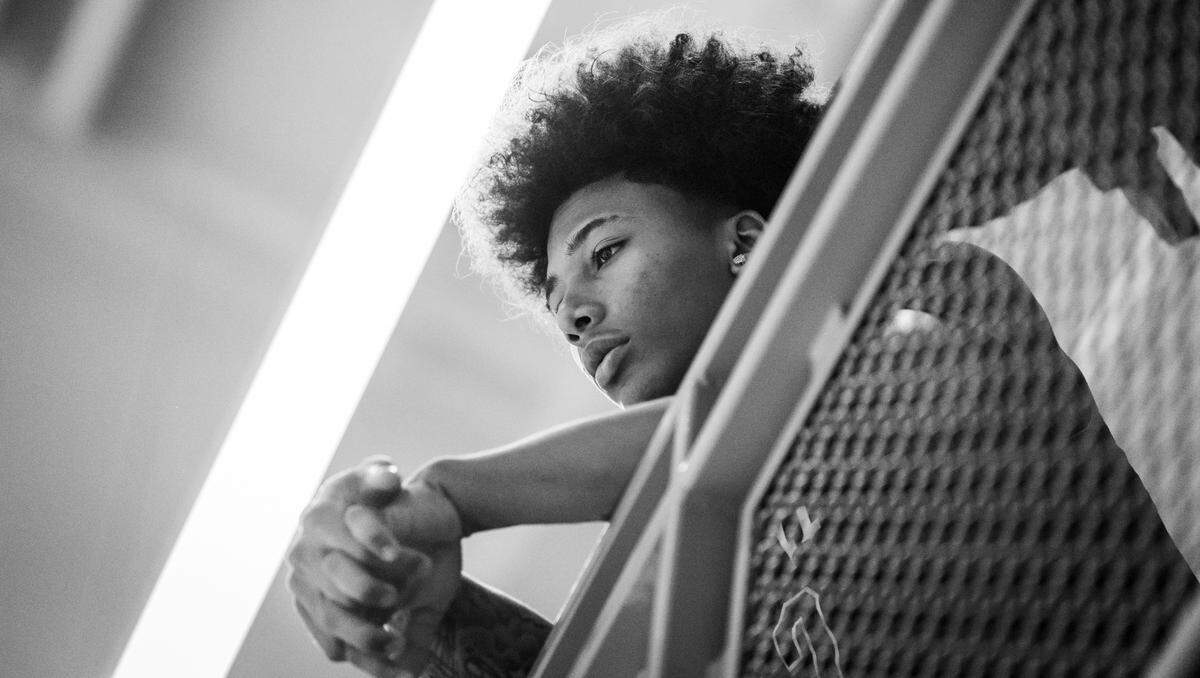
Mikey Williams, who just turned 17 a few weeks ago, still has two more seasons of high school ahead of him, if he sticks in his current 2023 class. Going into the recent July recruiting period, Williams was ranked by 247Sports as the No. 2 prospect nationally in that group. A year ago, MaxPreps.com named him the national freshman of the year. Last month, Williams, who has cultivated a social media presence that includes more than 3 million Instagram followers, signed an NIL deal that could generate millions of dollars in endorsement money.
At the same time, his on-the-court stock has taken a bit of a hit over the past few months, and there are murmurs in recruiting circles that there’s already too much of an emphasis on off-the-court pursuits and not enough on basketball itself.
247Sports national analyst Eric Bossi wrote last month that Williams “is as scrutinized as any player in America,” acknowledging his “massive talent” but also wondering where he’ll end up in the final rankings. Rivals.com pegged Williams as the No. 5 player in 2023 in its initial rankings in January. Even then, there were questions about the 6-foot-1 guard’s overall game and long-term trajectory. By June, that site had dropped him to No. 14 in the class rankings.
During Adidas league play last month, Williams’ team, which also included top-five national recruit Chris Livingston and other high-major prospects, compiled a 3-7 record over two weekends on the court.
A camera crew followed Williams around the gym, chronicling his every move.
NIL in high school
Williams’ NIL deal would not have been possible if he played for a traditional high school.
But the San Diego native will attend Lake Norman Christian School in North Carolina and play this season for the upstart Vertical Academy, a program outside the purview of state high school athletics associations. (So far, California is the only state that allows traditional high school athletes to profit off their names, images and likenesses).
That means the vast majority of high school athletes are still prohibited from making money through NIL, if they want to maintain their playing eligibility at that level. There’s also been some confusion on this subject, even among college basketball coaches figuring out how to go about recruiting players who might be looking to take an early dip into NIL.
An NCAA spokeswoman told the Herald-Leader that, generally speaking, a student-athlete who runs afoul of state high school association rules on NIL would not lose his eligibility at the college level, as long as whatever NIL deals he struck were allowed under NCAA rules.
So, for example, if a five-star basketball recruit playing for a traditional high school wanted to make some money by doing an ad for a local car dealership, that player would lose his eligibility at the high school level. But he wouldn’t lose future eligibility as an NCAA student-athlete.
That same player, however, would have potential money-making opportunities in high school if he transferred to one of the prep schools that operates outside of a state’s athletics association.
NIL is clearly a hot topic of discussion at the high school level.
The New York state high school association will vote on a measure allowing its players to profit on NIL in October. Other states have been following the issue, including Kentucky.
KHSAA Commissioner Julian Tackett brought up NIL reform at the group’s July 23 work session. His comments that day indicated that change could be coming at some point in Kentucky.
“We’re going to need to do something. Our amateurism rule is old school,” Tackett said in the meeting. “And a lot of us liked 1985, but we’re not there anymore. We really need to be looking at what (these changes) might be.”
A few days later, Tackett sent a lengthy statement to all of the KHSAA member schools, explaining that nothing done at the NCAA level impacted the state’s high school amateurism rules. He said in the letter that NIL reform would “be ripe for future discussion,” but, in the meantime, school officials should be “extremely careful about overzealous entrepreneurs who may seek to involve high school students in various enterprises.” And he stressed the importance of educating players that NIL involvement would result in lost eligibility.
“Nothing has changed about any of the requirements for amateurism in high school sports,” Tackett said. “It would be disheartening for a high school student to lose out on the privilege of playing interscholastic sports simply due to a preventable error.”
A balancing act
Those who have been working closely with NIL-related activities over the past few weeks have said that one of the biggest surprises is how many potential deals aren’t getting any response.
It’s an example of just how difficult it might be for athletes to balance sports and business (and all of the other things that go along with college life).
Icon Source, the player-business matchmaking platform, is free to use and optional for athletes. Some who have signed up have let offers sit for days without a response. Butler, who’s in charge of the company’s college division and was an All-America punter during his days at Georgia, knows first-hand the time crunch these players are under. He also knows the importance of acting on good opportunities.
His advice to current athletes: “This is your opportunity to strike while the iron is hot. I’m 32. I have two kids now. I played in the NFL for five years. I’m back in the state of Georgia, where I went to school. You know how many endorsement deals I get offered now? Zero.
“What I tell these student-athletes: ‘When somebody wants to spend money on you. And they see the value in your name and in what you do, respond to them. Have the conversation.’ Sure, you can be selective. But it’s best to strike while the iron’s hot. Because tomorrow is not promised. You could get injured, and your NIL value goes away. In one play.”
Butler noted that — even if an athlete didn’t want to do a particular deal at that moment — any relationships formed now could pay off years down the road.
Cavale, who has spoken to UK’s basketball team in past years and plans to be back in Lexington to address all of the school’s athletes in the near future, offered the same advice. He tells players to take advantage of whatever opportunities come their way. If an alumnus reaches out, respond. If a coach puts you in a room full of influential figures, make a point to meet them, instead of standing off in the corner.
“There are people who want to be around you now, and they will not want to be around you in four or five years,” he says. “Make the most of it.”
At the same time, there are some players who might not want to delve into the NIL world at all. And that’s OK, too. Allen said he would fully understand if a teammate held that point of view, even at the level of Kentucky basketball, which could offer so many lucrative possibilities.
“Everybody has different aspirations and goals,” said the Wildcats guard. “And not everybody wants to get into all of that. Because, honestly, it can be stressful.”
The UK program’s message, Lindsey says is: “You don’t have to do this if you don’t want to. If you just want to play basketball and go to class, that’s fine. … And we’ve been very clear with them, ‘If you’re going to do this right, it’s going to take some work on your end.’”
Twenty-five years ago, Jeff Sheppard was in the same place and a different era.
Sheppard played for two national title teams at UK, leading the 1998 squad in scoring and earning Final Four most outstanding player honors on the way to that year’s championship.
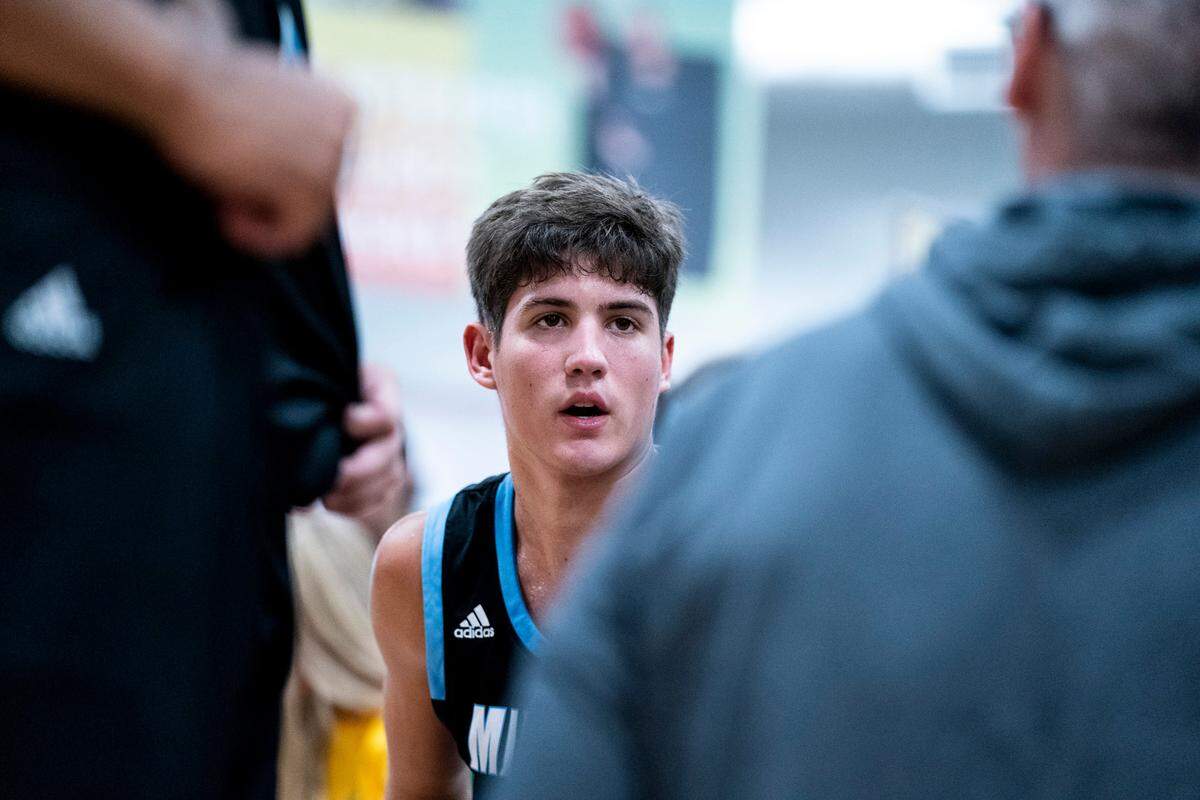
Now, he’s 46 years old, the father of Reed Sheppard, one of the best young basketball prospects in the country and a major Kentucky recruiting target. Reed just turned 17 years old.
Jeff knows that college basketball life for his son — wherever he ends up — is bound to be different than his own playing days. The UK great is fully in favor of NIL reforms. He acknowledged that such possibilities would have been lucrative for he and his teammates on those title teams in the ’90s. And he showed no bitterness that they didn’t have the opportunity.
As he spoke about this new era of college athletics — reflecting on his own UK career and looking ahead to his son’s possible future all at once — Sheppard conveyed a sense of both opportunity and apprehension.
Yes, this is a good and fair thing for college athletes. And, yes, it will change amateur sports forever. Just how it all turns out, he can’t yet say. At this point, nobody can.
“It’s going to be interesting. Things were pretty simple for us. It was really fun. We played basketball. We went to school. We hung out. And we were able to really enjoy being 18-, 19-, 20-, 21-year-old kids. And that’s what I’m hoping. I’m just hoping that the purity of college basketball isn’t lost through this. I’m all for these student-athletes being able to be compensated, and I understand that — over the years — the NCAA has just built an incredible money-making (business). And the product is free. The product doesn’t get a 1099. They’re out producing a lot of special things. But it’s very pure. And it’s very real.
“I’ve made the comment before — as a boy, you dream about playing professional basketball. And when you’re a professional basketball player, you dream about being a little boy playing ball. And I don’t want that to be removed. And, hopefully, the authorities that govern, and the institutions and the coaches that are governing this can help navigate through that. But it’s brand new. Nobody knows. It’s the wild, wild west out there right now.”
Note: This is the third and final installment in a series of stories related to name, image and likeness reforms and the effect on the Kentucky men’s basketball program. The first two stories looked at UK’s preparation for the NIL era and the possible effects on the recruiting trail.