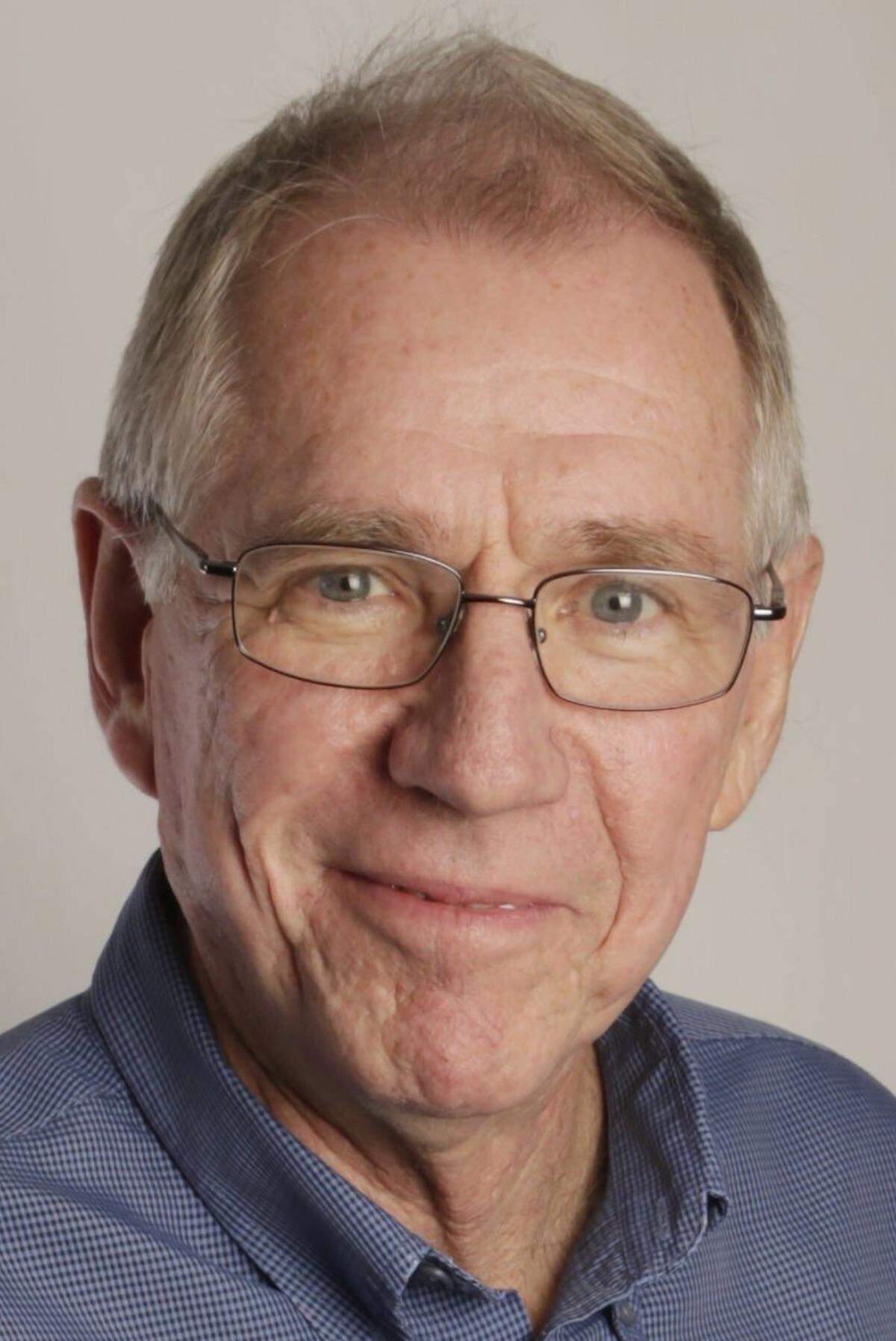
C.M. Newton’s son following father’s footsteps onto NCAA selection committee
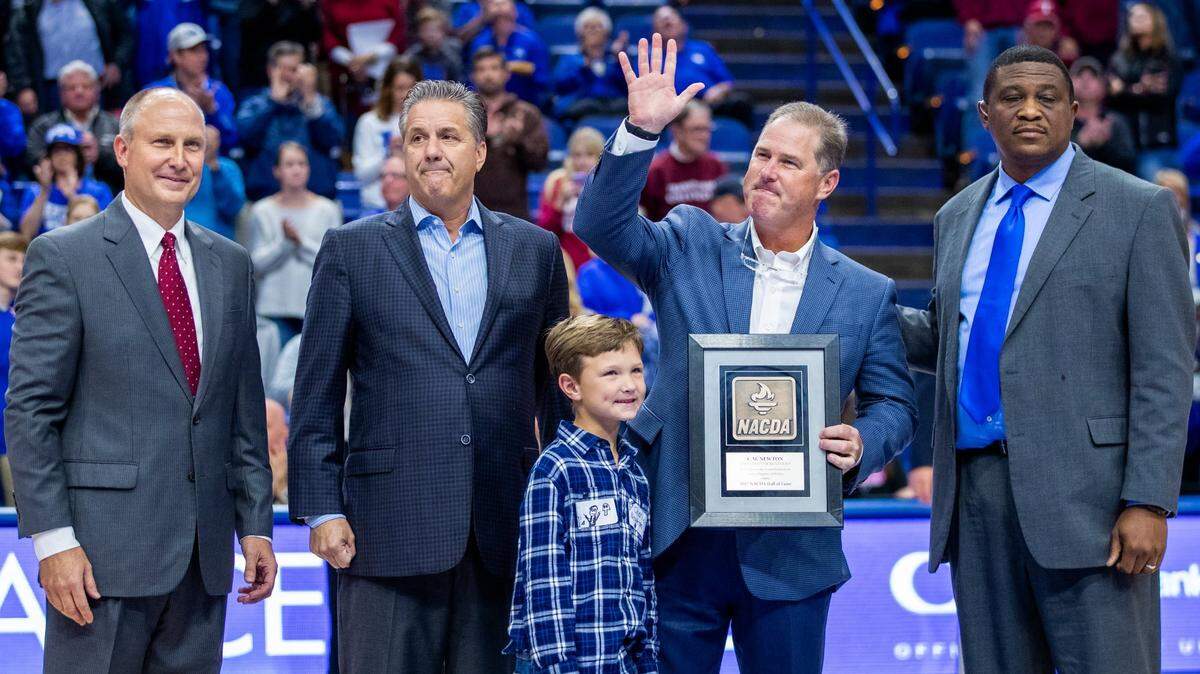
Apparently, there are no limits when it comes to second-guessing the NCAA Division I Men’s Basketball Committee (aka the selection committee).
Martin Newton’s memory of his late father, C.M. Newton, serving on the committee in the 1990s proves the point.
“I can remember one time he came out of the selection (process) and I was, like, ‘C’mon man, how did this team not get in?’” Newton said. “I’m saying, look what they did. They did this. They beat this team.”
The father’s response?
“He said, ‘Hold on a second. Were you in the room?’” the son recalled his father saying. “And I said, no. He said, ‘Do you have all the data?’ I said, no. And he said, ‘Then shut up.’”
The son concluded, “OK, point well-taken.”
Even a son of a committee member might second-guess decisions on bids, seeding and bracketing? “Oh, absolutely,” Martin Newton said.
The son figures to be on the other side of the second-guessing beginning Sept. 1. That’s when he joins the selection committee. His term will end after the 2027 NCAA Tournament.
Martin Newton welcomed the second-guessing to come. If form holds, Kentucky Coach John Calipari will continue to imply that ulterior motives are involved in committee decisions.
“I think that’s part of what makes this such a great tournament,” Newton said of the second-guessing. “There’s so much passion and interest in it. So, it creates great drama going into the tournament.”
Newton has been Samford’s athletics director since 2011. Before going to Samford, he was the director of basketball operations for UK in Calipari’s first two seasons as head coach.
C.M. Newton, who died in 2018, was on the committee from 1992 to 1999.
“It was probably the most enjoyable time of his career,” his son said. Of course, the career included being a UK player, then coaching jobs at Transylvania, Alabama and Vanderbilt before becoming UK’s athletics director.
His father considered his time on the selection committee as “the cherry on top of the sundae,” the son said. “This is what he had been working so hard for all these years: to be able to give back to the game that had been so good to him.”
When asked what his father would think of him joining the committee, the younger Newton said, “I think he’d be really proud. I think it meant so much to him. …
“I think he’d be saying — typical of my dad; he was pragmatic — he would be OK, this is great. Let’s celebrate. But you’ve got a lot of work coming up. And he’d go right into the OK, you’ve got to start doing this. You’ve got to make sure you’ve got synergy on your computer.”
The father-son connection extends to how Martin Newton learned he would be joining the committee. He got the news from NCAA senior vice president of basketball Dan Gavitt, whose father (Dave Gavitt) was on the committee in the early 1980s. Fathers Gavitt and Newton were close friends.
“I got emotional,” Martin Newton said.
There has been at least one other instance of father and then son serving on the selection committee. As West Virginia’s athletics director, Fred Schaus was on the committee from 1985 to 1990. As the athletics director at Ohio, son Jim Schaus was on the committee from 2016 to 2018.
Martin Newton suggested the committee’s work might be more difficult than ever because of “the social media world, where everything is scrutinized a lot more.”
A growing parity between college basketball’s haves and have-nots also makes selection and seeding more challenging, Newton said. Saint Peter’s beating Kentucky could be Exhibit A.
Newton attributed the growing parity to a greater emphasis placed on basketball. He cited the Southeastern Conference as one example.
Plus, “kids are specializing at such an early age,” Newton said. “When I grew up, we played football, basketball and baseball, and went from season to season. Now, kids start specializing at an early age which means there’s a lot more talented players. …
“I think that’s good for the game. But I think it’s really challenging for the selection committee.”
As he thinks ahead to selecting and seeding, Newton suspects the increasing parity will require committee members to rely on the eye test plus metrics (strength of schedules, NET ratings, records in quad 1 games).
Despite the second-guessing, Newton said he was “110 percent” sure that the selection committee makes a good-faith effort to get it “right.”
“The problem is us fans, we’ve got an emotional tie to it,” he said. “So, we can’t see the little warts that may have happened. … Going back to Dad’s days, when you take all the emotion out of it, I think they do a really good job of trying to select and seed the tournament so you have the best sporting event in the world, in my opinion.”
‘Bucket list deal’
When it comes to iconic sports experiences, Deron Feldhaus expanded his portfolio a couple weeks ago.
A 6-foot-7 forward, Feldhaus scored 1,231 points playing for Kentucky from 1988-89 through 1991-92.
Then on the Monday before this year’s Masters, he attended a practice round at the Augusta National Golf Club.
“Everybody needs to go,” he said. “That’s for sure. It’s a bucket list deal.”
Feldhaus won a lottery drawing for a ticket to the practice round. He said he followed Tiger Woods for a few holes. He intends to enter the lottery again.
“I’d give anything to go back,” he said. “I’d love to take my son some day.”
Jake Feldhaus is an eighth-grader and “a decent golfer,” his father said. “He’s growing pretty fast. He’s going to be as tall as me. That’s not good for golf.”
30-30 vision
This year’s NCAA Tournament marked the 30th anniversary of the Christian Laettner shot that enabled Duke to beat Kentucky in the East Regional finals.
For John Pelphrey, who now is the coach at Tennessee Tech, three decades of time hasn’t healed the wound.
“I wish it was a little further (in the past),” he said. “I wish it wasn’t so vivid in my mind.”
Pelphrey has never watched a replay of the game.
“I wish I could sit back and watch it from a technical standpoint (and examine) the quality of play,” he said. “For me, there’s too much emotion. I can do that with every other game that I watch.
“I don’t have any interest in doing that with that one. Maybe in the next 30 years I’ll get there.”
‘I’m a Tar Heel’
Armando Bacot announced Wednesday that he will play as a senior for North Carolina next season.
Bacot had an Oscar Tshiebwe-like 2021-22 season. His rebound average of 13.1 per game was the highest by an ACC player since Tim Duncan’s 14.7 in 1996-97.
Bacot’s 99 rebounds in the NCAA Tournament were the second-highest total ever. Tom Gola had 102 for La Salle in 1954.
“I felt he was the best player in the ACC and the best big man in the country,” UNC Coach Hubert Davis said in a news release.
When Kentucky played North Carolina on Dec. 18, Bacot held his own against Tshiebwe. Bacot had 22 points and 10 rebounds. Tshiebwe had 16 points and 12 rebounds.
Bacot explored his NBA Draft profile a year ago, but not this year.
“My Carolina story isn’t finished just yet,” he said on a video posted on Twitter. “Next season starts right now. My name is Armando Bacot, and I’m a Tar Heel.”
Happy birthday
To new Mississippi State coach Chris Jans. He turned 53 on Tuesday. … To Hall of Famer Kareem Abdul-Jabbar. He turned 75 on Saturday. … To Dwane Casey. He turns 65 on Sunday. … To Derrick Miller. He turns 54 on Monday. … To Michael Bradley. He turns 43 on Monday. … To Nate Knight. He turns 44 on Monday. … To ESPN analyst Seth Greenberg. He turns 66 on Monday. … To Scott Padgett. He turns 46 on Tuesday. … To Ashley Judd. She turns 54 on Tuesday. … To Candace Parker. She turns 36 on Tuesday. … To Allan Houston. He turns 51 on Wednesday.