
Memories of Georgia Dome tornado still vivid as SEC Tournament returns to Atlanta
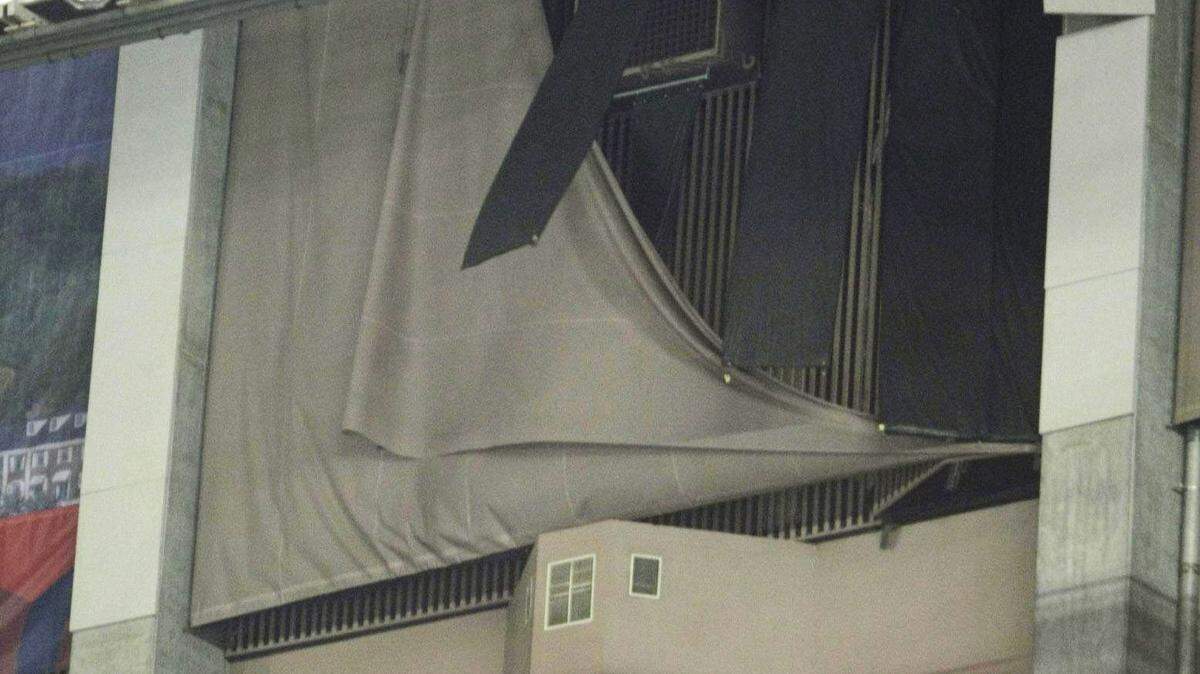
As Alabama and Mississippi State played, a rhythmic thump-thump-thump sound suddenly took attention away from the court.
"I thought a lot of people in the upper part of the arena were stomping their feet," recalled Damon Evans, then the University of Georgia athletics director.
But the thumping sound kept getting louder and louder.
Public address announcer John George wondered about air traffic into Atlanta's Hartsfield International Airport. "Good night," he thought. "Maybe an airplane is coming real close."
Referee Tony Greene heard what he thought sounded like the rumbling of a freight train locomotive. A resident of Atlanta, he knew there were railroad tracks near the Georgia Dome.
"So I look across the court, and here I see all the people in the stands standing up and looking over my shoulder," he remembered. "What in the world is going on? People are standing up, and there's nothing exciting happening on the court."
Tim Brando, the lead announcer for the telecast of this Southeastern Conference Tournament game, knew what was going on.
"I knew this was a tornado," he said. "Just the sound, a freight train kind of sound."
For Brando, that unnerving sound was perversely familiar.
"Shreveport, La., is on the back end of Tornado Alley," he said of his hometown. "It's not like Oklahoma or Kansas, but we have our fair share. We've had tornadoes come over us since I was a kid."
Surely no one wants to relive that frightening night of March 14, 2008. But the return of the Southeastern Conference Men's Basketball Tournament to Atlanta this week evokes an unstoppable flood of memories that include a tornado hitting the Georgia Dome, an all-night scramble to keep the tournament going, a move to nearby Georgia Tech and an unforgettable Cinderella championship run by Tech's archrival, last-place Georgia.
'It shouldn't be swinging'
At the moment the 2008 SEC Tournament started becoming a surreal experience, Robin Keller Hix, a member of the University of Kentucky statistics crew that works the event each year, pointed toward the Georgia Dome ceiling. One portion of the fabric roof had been blown out of its attachment to the beam structure. She told her fellow stat counters to put their shoes on and get under the scorer's table. She sent a text message — "Take cover" — to her fiance, Georgia publicist Tim Hix, who sat with reporters across the court.
Everything hanging from the roof or beam structure was swaying.
"I look up and see the scoreboard swinging," George said. "You think that's got to weigh a couple tons, and it shouldn't be swinging."
UK Athletics Director Mitch Barnhart stood with his son, Scott, at the end of one of the media rows. "A really good-sized bolt," Barnhart said, fell a few feet from Scott.
"We decided at that moment it was time to go," said Barnhart, the memory flushing his face with emotion three years later.
Greene had the same 'I'm-outta-here' idea. He went to the scorer's table to say he'd be in the referees' dressing room. "I do remember laying there on a table and sort of taking a nap," he said.
When asked how he could relax enough at such a moment to sleep, Greene said, "It wasn't a deep sleep."
SEC Associate Commissioner Charles Bloom was in the locker room area under one section of stands. He heard a boom and came to the court. "I could see the scoreboard swaying," he said. "Not going from 3 to 9 o'clock, but 5 to 7 o'clock."
It was 9:40 p.m. There was 2:28 left in overtime and the Alabama and Mississippi State teams were leaving the court.
Before retreating with the players to their locker room, Alabama Coach Mark Gott-fried got his wife and children out of the stands to join the team in safety.
Mississippi State Coach Rick Stansbury, understandably frazzled, went into the stands looking for his family.
"I forgot my two boys had been sitting on our bench," he said. "They were already headed back through the tunnel with the players."
Players for Kentucky and Georgia, who were scheduled to play in the next game, waited in their locker rooms. Rumors swirled.
"I was thinking it could've possibly been a terrorist attack or something!" UK guard Ramel Bradley, now playing in Israel, wrote in a text message.
Mike Griesinger, a meteorologist with the National Weather Service, was sleeping in his Atlanta-area home. Threatening weather was expected the next day. As for that Friday night, there were "two little cells" in northeast Alabama late that afternoon. "Outside of that, there was nothing else out there," he said.
When Griesinger reported to work at 5 a.m. Saturday, one of his co-workers told him he'd just seen the video of the storm hitting the Georgia Dome.
Tornado strength is rated on the Enhanced Fujita Scale, from an EF0 (the mildest winds) to EF5 (most destructive winds). The tornado that hit the Georgia Dome was an EF2. Its winds were in the 111 to 135 mph range.
It touched down just west of the Georgia Dome at 9:38, thus becoming the first tornado to hit Atlanta since records began being kept in the 1880s. It lifted off the ground at the Fulton-DeKalb County line at 9:50. In those 12 minutes, which is a typical length of time for a tornado to be on the ground, this 200-yard-wide twister cut a 6-mile long scar. Damages were estimated at $150 million.
About 100 such storms hit the United States each year.
"If it had not gone where it went, we would have forgotten about it," Griesinger said. "It went through downtown Atlanta. Because of that, it's a memorable tornado."
A life-saving three-pointer?
George, who just completed his 30th season doing the public address announcing for University of Arkansas basketball, was working his second SEC Tournament. At the time of the Gulf War in the early 1990s, he had trained with federal agents and bomb squad experts on how a P.A. man can help crowd control.
"I had to remain calm," he said, "and every two or three minutes, max, I needed to say something similar to what I just said. But not the same thing so the crowd would realize it's not a recording. A crowd of 15,000 to 20,000 can only be fooled for a few minutes. Once they realize the people telling them what to do are not there, they begin to panic again."
Varying word choice and cadence, George confirmed a "weather event" had occurred and advised fans to stay inside the dome. He worked without a script.
"It's really surreal," he said. "I'm sitting there. After 10 or 15 minutes, I look down both sides of stat row. I was the only one sitting there."
The 20,025 in attendance — the largest SEC Tournament crowd in three years — waited.
Any conversation about the 2008 SEC Tournament mentions Alabama guard Mykal Riley. He hit a three-point shot at the buzzer to send the Tide's game with Mississippi State into overtime. Anyone there that night believes if Riley had missed, the game would have been over and fans would have been streaming out of the Georgia Dome when the tornado touched down.
"I really believe that three-pointer saved lives," Gottfried said. "I really do."
One of Riley's teammates, Alonzo Gee, had been fouled just before the tornado hit. The teams waited for more than an hour before resuming the game with Gee shooting free throws. Talk about icing a shooter. "He missed," Gott-fried said.
When asked this week about being iced, Gee said, "It was crazy. But I wasn't even thinking of the free throws. I was really concerned about my family because my family was there."
After Mississippi State beat Alabama 69-67, SEC officials met with Georgia Dome staffers long into the wee hours of the morning. Should the tournament continue? Was the dome safe? Carl Adkins, the general manager of the dome, told the SEC that engineers and designers needed to do a thorough inspection. Coincidentally, those people were on hand to supervise an ongoing renovation, but the dome could not be opened to the public that weekend.
Eventually, damage to the Georgia Dome was estimated at $2.2 million, a pittance compared with the $55 million damage done to the Georgia World Congress Center next door. The dome reopened in little more than a week for an Easter sunrise service held by one of the Atlanta area's mega churches.
A stunning finish
Unlike the other teams who won on Friday, Georgia had no other way of getting an NCAA Tournament bid except to win the SEC Tournament. So when the SEC wondered about canceling, "We really spoke out," Evans said.
But where to play? The tornado did not damage Philips Arena, the home of the Atlanta Hawks. But it was booked Saturday.
Khalil Johnson, the CEO of the dome's governing body, called Paul Griffin, a senior associate athletic director at Georgia Tech. Tech and the dome had collaborated on Atlantic Coast Conference and NCAA tournaments.
Griffin, who was at the ACC Tournament in Charlotte, N.C., had just seen news about the tornado on a television in the media work room.
"If that's serious damage, we need to be prepared to see if we can help," he said to a Tech colleague. "By the time the sun comes up, let's be ready to do everything to help them."
Tech was closed for spring break. So Alexander Memorial Coliseum was available
A frenzy of activity included the UK stats crew and television staffers returning to the dome to dismantle equipment, pack it and install it in Tech's arena.
Locker rooms, training rooms, media work rooms and interview space had to be cleaned and erected.
Griffin left Charlotte at about 4 a.m. and arrived at Alexander Memorial Coliseum at 9. He couldn't believe his eyes. "All the people in blue jackets and blue sweaters and blue coats walking around our facility," he said.
Georgia Tech did not charge the SEC rent. "That's not how you treat family and neighbors in time of need," Griffin said.
At noon, Kentucky played Georgia, which won 60-56 in overtime.
"We would have won that game if it wasn't for that damn storm," Bradley wrote in his e-mail.
For Georgia, it was a second straight overtime victory produced by a last-second shot, in this case an improbable turnaround jumper by freshman Zac Swansey over Ramon Harris.
Later that day, Georgia beat Mississippi State. Then in Sunday's championship game, Georgia beat Arkansas. A team that won four SEC games in the regular season won four in four days, the final three in barely more than 24 hours.
"It was kind of fitting with everything going on around us," Evans said of Georgia's unlikely championship. "I knew anything could happen in a tournament. In that particular year, anything did happen."
This story was originally published March 10, 2011 at 12:00 AM with the headline "Memories of Georgia Dome tornado still vivid as SEC Tournament returns to Atlanta."