‘Don’t get bored with it.’ Why Kenny Brooks thinks Georgia Amoore is better than ever.
Kenny Brooks has said it for years — in his eyes, there’s nobody quite like Georgia Amoore.
Though “she was already a star,” in her four seasons at Virginia Tech, navigating some of the best competition college basketball has to offer while assisting the Hokies to unprecedented program highs (a 2023 Final Four appearance, a 2023-24 ACC regular season title, etc.), Amoore — the on-court architect of a No. 15 Kentucky program on the rise — has still found ways to improve her skill set.
Following her 23-point performance in the Wildcats’ comeback win against Belmont on Dec. 20, Brooks reflected on just how special the All-America graduate point guard — and projected first-round pick in the 2024 WNBA draft — truly is.
“I used to say it to Hokie Nation,” Kentucky’s first-year head coach said. “Don’t get bored with it, all right? Enjoy it. Enjoy every second. It’s not normal. It’s not, you know, and I’ve gotten to the point where I try to appreciate it for what it is, and not just because she’s my player, and I’ve seen it all the time. But nobody works harder than this kid. Nobody wants it more than she does. And she eats, sleeps, drinks it, thinks it.”
You’ve probably often heard a point guard referred to as a “coach on the floor.” An effective playmaker, a leader with high basketball IQ, an expert of the playbook. However, what Brooks and the Wildcats have in Amoore is a little bit more.
Someone who’s capable of assisting in the laying of a new foundation, one that’s already yielded new firsts, an undefeated home record and a return to the national stage and rankings. Someone who’s earning accolades like the U.S. Basketball Writers Association National Player of the Week, or the SEC Player of the Week after guiding Kentucky to double-digit victories against formidable competition like Mississippi State and Vanderbilt.
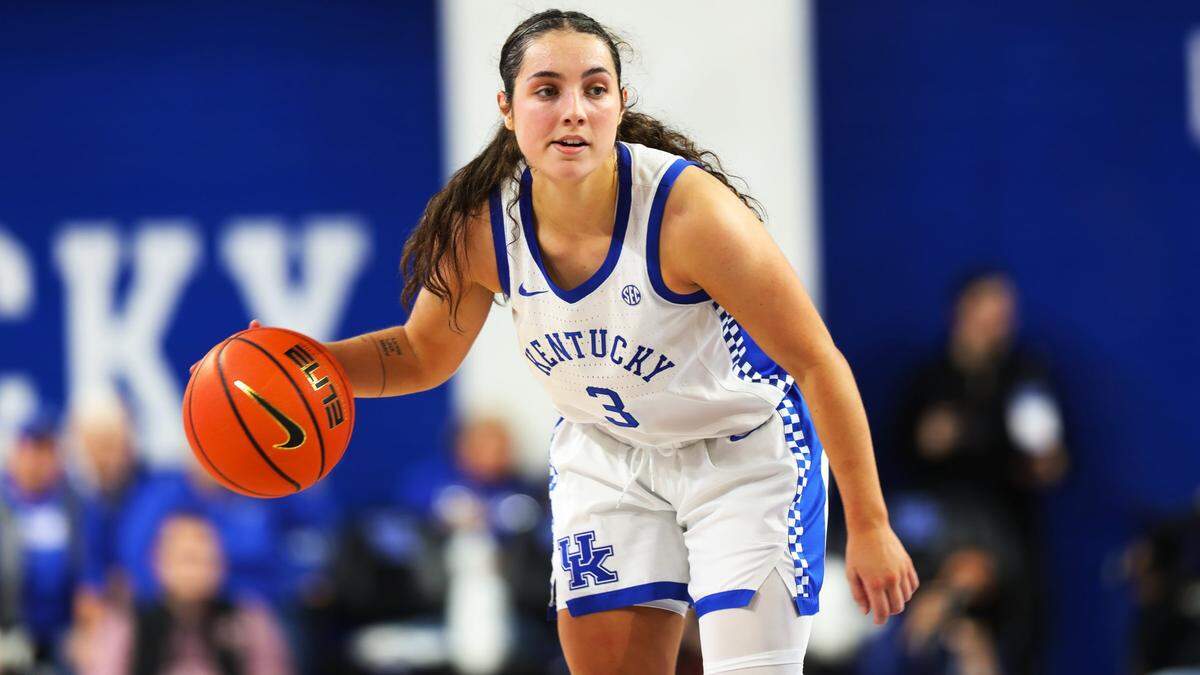
It’s not just that Amoore leads a balanced team in points (17.9) and steals (1.2) through 15 games, or that she’s leading the nation in assists at 7.2 per contest. Amoore, who recently eclipsed both 750 career assists and 2,100 career points, is also the kind of player who wants to one day be a basketball coach in her own right, following in Brooks’ footsteps as a former point guard-turned-head coach.
“She thinks (about the game) as a coach,” Brooks said. “We were watching film as a coaching staff the other day, and the little knucklehead stuck in. And she wants to see it because she wants to be a coach.”
Brooks — who played under the late Lefty Driesell at James Madison before beginning his coaching career as a part-time assistant under Driesell during the 1993-94 season — said Driesell coached him differently from his teammates once he learned Brooks had aspirations of coaching. Driesell would invite Brooks into the coaching process, and allow him a different perspective on the game.
“He coached me differently,” Brooks said. “And I’ve been able to coach (Amoore) differently.”
Much has been written about the father-daughter-esque relationship between Brooks and Amoore, and the deep trust developed between the pair over the years. It’s that type of trust that led to Amoore joining Brooks in Lexington, choosing to take one final opportunity to develop, grow and adapt before the next level.
Even if it means changing her shot during nonconference play.
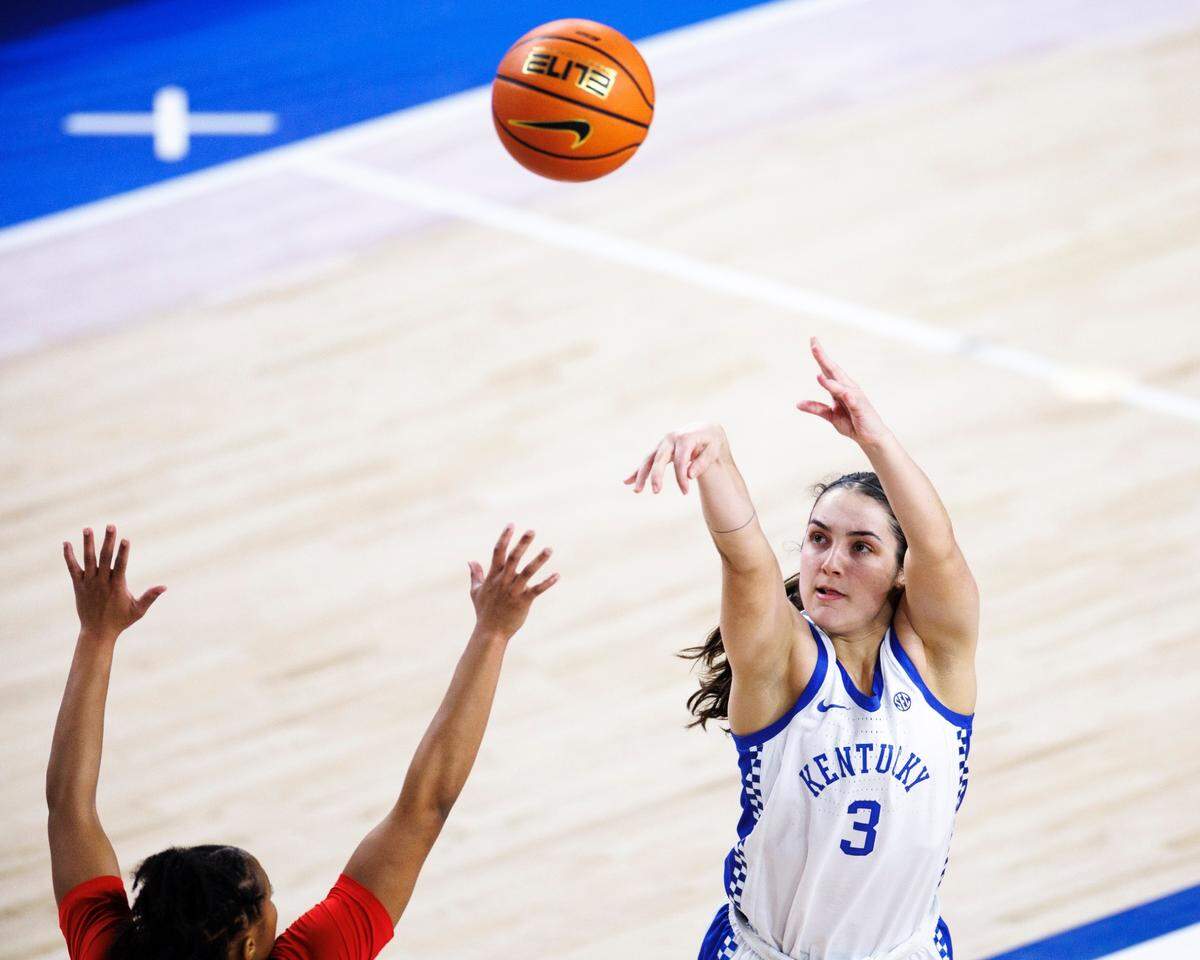
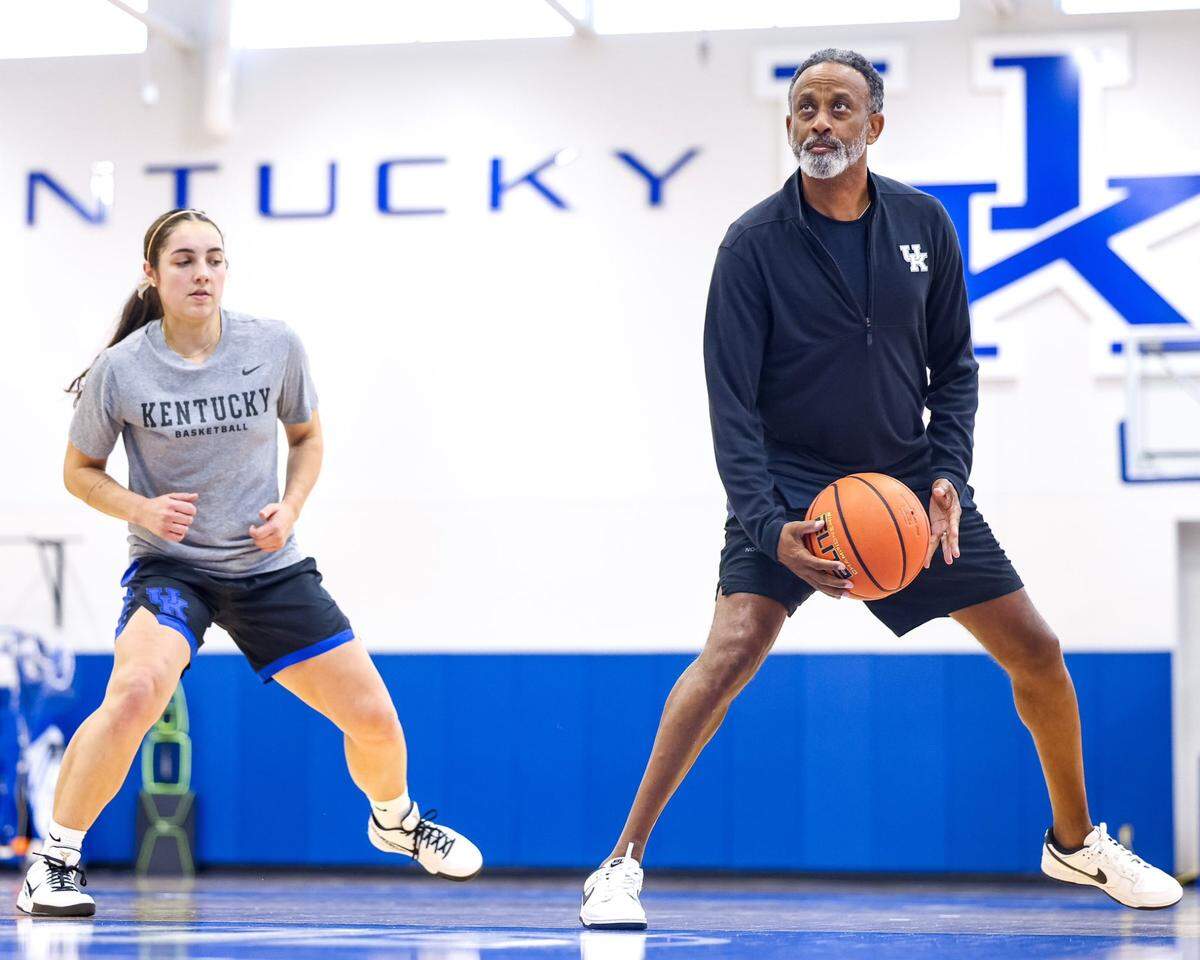
That’s right — Amoore, not even one calendar year after recording the best stats of her career as a senior at Virginia Tech, allowed Brooks to make adjustments to her shot. Even if, at first, she was less than enthused.
“When I changed it,” Brooks said. “If looks could kill, I wouldn’t be here right now. But she didn’t fight me. And she wasn’t comfortable with it, she didn’t like it, she just said it felt funny. And that’s all we did, we simplified some things. She had a lot of movement in her shot. We simplified some things, and we shot, and we shot and we shot.”
That was a couple of weeks before the Belmont game and, since then, Amoore has shot the ball better than she has all season. After UK’s win over Queens (N.C.), the 23-year-old graduate guard strung together six consecutive games with at least 20 points, and recorded at least seven 3-pointers against both Belmont and Mississippi State.
In a media availability Tuesday, Brooks pointed out that, though for years Virginia Tech great Elizabeth Kitley took up much of the real estate in scouting reports, Amoore has had no problem taking center stage; even now that opponents are expending energy preparing for her, she’s stepping up in new ways.
“Just coming here, her role was very different,” Brooks said. “And she did a really good job of just really trying to figure out what was going to be needed of her. And her role is different. She is the one that’s the focal point. You know, we had an All-American last year in Elizabeth Kitley, and, while Georgia is an All-American as well, most defenses were really keyed on the post play. And they tried to do some things to her, but now, you can really see that she is the focal point. And she’s really stepped it up with her leadership ability. She’s like an extension of me out on the floor, which is a luxury for a coach to have.”
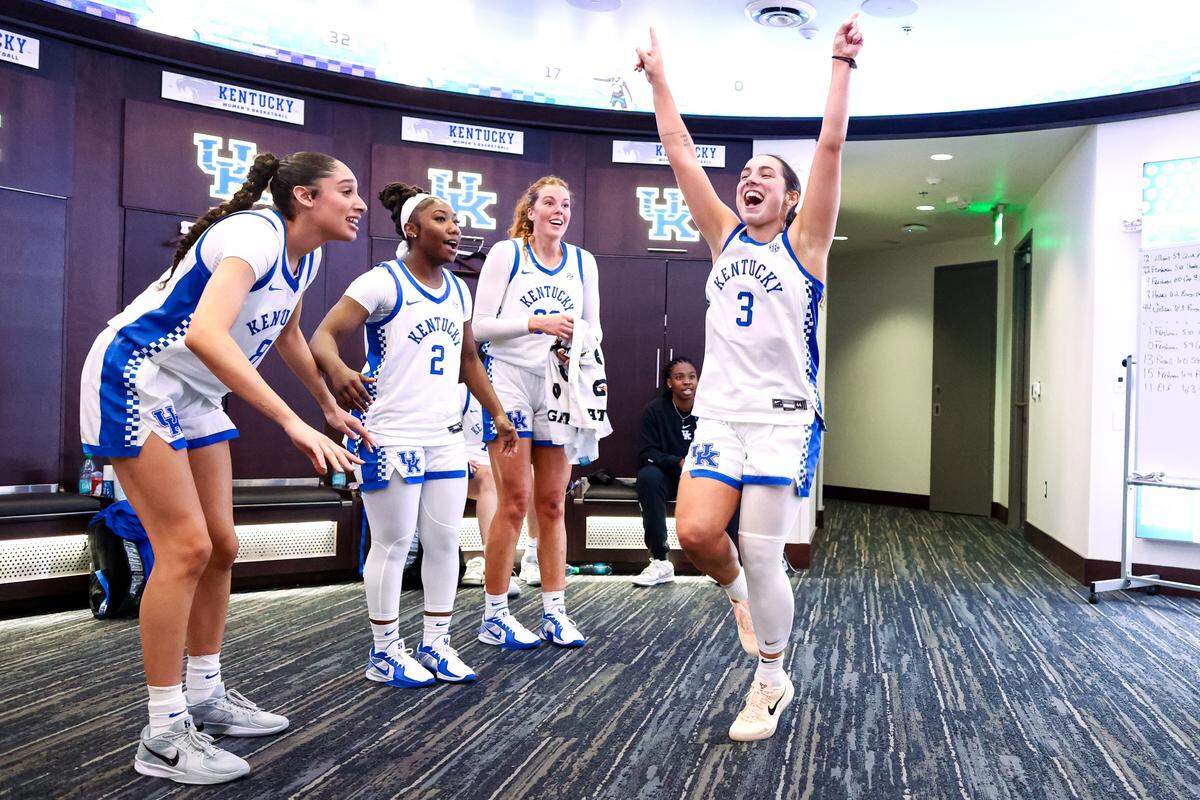
So, when he speaks with WNBA teams, he doesn’t just speak to her records or statistics; he tells them that Amoore is doing all of it, at the highest level, in the wake of change. Which, according to Brooks, is what “really impresses them,” that “she’s come into a brand-new situation, and she’s adapted so quickly and she’s elevated everyone around her.”
“And as for a WNBA program,” Brooks said. “That’s what kids struggle with the most. They’ve been somewhere for three, four years, in some cases five, and then they go to a brand-new situation in that they’re learning to adapt to their new situation, their new surroundings and everything. Well, Georgia has done that a year ahead of time, where she’s come to Kentucky, taking on a team that only won 12 games last year. We have a brand-new squad, new personalities, and she’s helped mold that into a winning culture already. So I think that this will be very appealing to a lot of WNBA teams because they may not need her to come in and be a 20-point-a-game scorer, but what she’s going to be able to do is adapt very quickly to her surroundings and help elevate the teammates around her to get better.”
This story was originally published January 9, 2025 at 12:56 PM.