‘Well beyond her years.’ Inside the mind of Kentucky’s unstoppable Clara Strack
AI-generated summary reviewed by our newsroom.
- Clara Strack became Kentucky's starting center and averaged 15.4 points, 9.7 rebounds.
- Daily coach check-ins and regimented workouts accelerated her development and leadership.
- Strack earned SEC Defensive Player of the Year and leads Kentucky into 2025 season.
Ahead of his first season at the University of Kentucky, women’s basketball coach Kenny Brooks asked his starting center to communicate with him every single day.
In an attempt to better their relationship, the rising sophomore — then a new transfer to UK — would be required to text her head coach or pop into his office on days without an individual workout or a team practice.
The center had spent the majority of the previous season playing as a backup for Brooks at Virginia Tech, and she learned the ropes of college basketball from veteran leaders like All-America upperclassmen Liz Kitley and Georgia Amoore.
Now, it was her time to consistently shoulder some of the responsibility as a significant contributor within Brooks’ system.
Clara Strack needs a routine.
Strack is deeply passionate about the game, and learned long ago that her individual, internal motivator needed a regimented schedule in order to become great. It’s for that reason she can’t remember too many days when she fell short of Brooks’ assignment.
“I need a stern, set-in-place schedule,” Strack said, “to keep me on track with things. My mom always said in school I only excelled under teachers everyone else said were mean because I needed the structure.”
Strack chose to play for Brooks, in part, because of that.
Brooks, himself a point guard and a floor general under the late, strict-but-accomplished Lefty Driesell. Brooks, who’s coached for more than two decades and had nine WNBA Draft picks. Brooks, whose unique system and approach to training separates him from his peers.
Strack described her parents as “not terribly strict,” but disciplined. She shared a story from her youth, when her mother yelled at her and her younger sister, Daisy.

Instead of more traditional child-rearing practices, the sisters were made to run as punishment; running is not one of Strack’s preferred conditioning methods, so the memory stuck.
It’s not revelatory to say most people don’t like to be yelled at, but Strack doesn’t mind. In fact, she said “if someone yells at me, it’s never hurt my feelings.”
“I’ve always just taken that as, if they’re yelling, they care enough to yell at you, like they’re trying to help you in some way,” Strack said. “…The hardness, it gives you a little ‘Oh, I have to listen.’ Just knowing the place it comes from, it’s a place of wanting me to succeed and wanting me to do better.”
Since Strack’s freshman year, Brooks doesn’t yell much at the Buffalo native — despite joking about the time Strack’s father told him he could yell at her whenever he wanted — but he’s found himself challenged as a coach by the way Strack operates.
“I always tell them if they want to be great, you have to meet me halfway,” Brooks said. “And this kid, she’s done everything that I’ve asked her to do in a short amount of time. And even though we put so much pressure on her — and rightfully so because she deserves it — she’s earned it. But sometimes I have to reel myself in and say, ‘Hey, look, she’s still 19 years old.’”
As Prodigy declared in iconic New York hip-hop duo Mobb Deep’s classic “Shook Ones, Pt. II,” — “I’m only nineteen, but my mind is old.”
Brooks called Strack “well beyond her years,” and praised her relentless chase for self-improvement.
“Every day it’s like, ‘OK, can we get an extra workout?’” Brooks said. “‘Can we get extra shots? Can we do this?’ I don’t ever have to ask her, and she’s really compliant in that because she wants to be great. She’s a fierce competitor. She’s gotten better.”
Through those daily check-ins, now two seasons of relationship-building under their belt and a never-ending quest to “be great,” Strack has developed into a face of the program.
She aims to one day reach the WNBA, but confidently said her main focus right now is improving game to game.
As a sophomore with the Wildcats, Strack started in each of the team’s 31 games, averaging 15.4 points, 9.7 rebounds, 2.5 assists, 2.4 blocks and 0.8 steals per contest and helping UK return to the national conversation.
Strack was named the SEC Defensive Player of the Year and an All-SEC Second-Team selection, and she set Kentucky’s single-season program records in total blocks (73) and blocks per game.
Brooks has held to his continued promise, Strack said, “to coach me to be the best because he thinks that I can be.”
The rising junior — named earlier this week among 50 top players on the preseason watch list for the 2025-26 Ann Meyers Drysdale Award, presented each year to the best player in women’s college basketball by the U.S. Basketball Writers Association — doesn’t yet trust herself enough to stand on her own.
“I’ve always felt like if someone’s not on me, then I’m just gonna slack off and do something random, I’m gonna stand around,” Strack said. “But I think having someone on me helps me get there.”
The people who push her — Brooks, his staff, her teammates, her high school coaches and so many others — would push back on the notion that Strack needs a push.
Though they love to support her, they say Strack doesn’t actually need someone “on her” at all, that her ongoing evolution is a product of being both a self-starter and an incredibly hard worker.
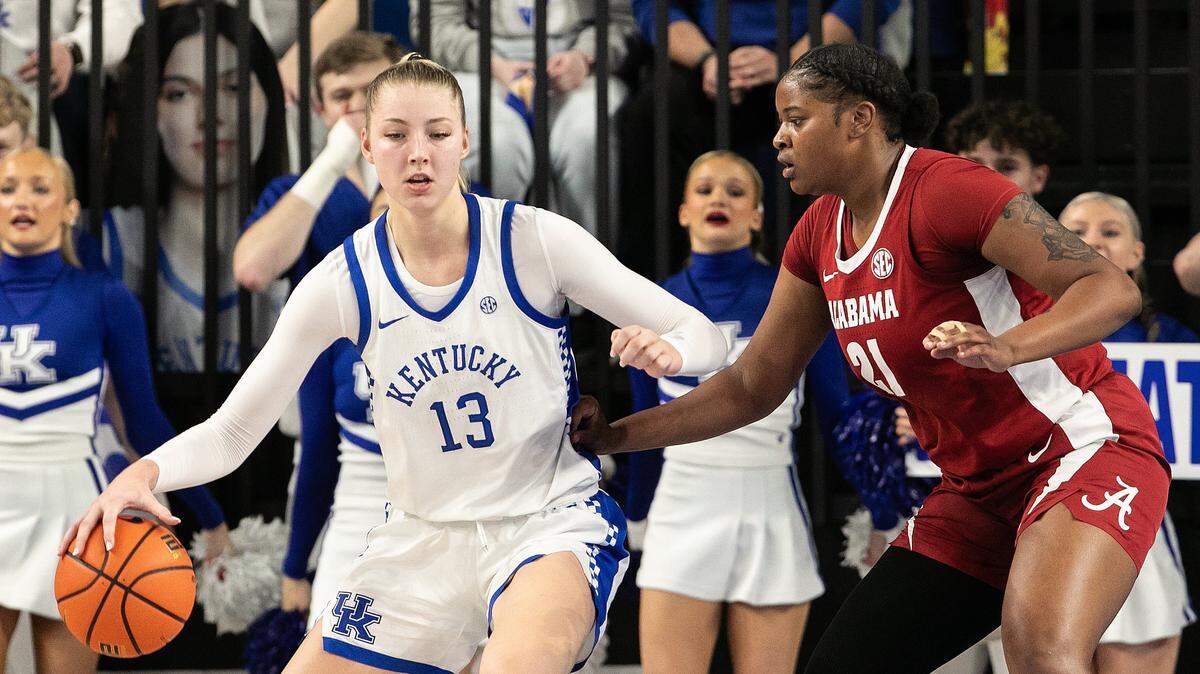
On Sunday afternoon, for the first time in years, Strack will have the opportunity to play in front of “a lot” of those believers, when No. 24 Kentucky plays Buffalo at the Bulls’ home court in New York; it’s a matchup she called “super cool.”
“I haven’t played in Buffalo in a long time,” Strack said. “So I think it’ll be cool to see. And I know there’s a lot of people there who watch our games and support us. So I think it’ll be cool to have them be able to come and watch.”
Clara Strack’s path to Kentucky
In sixth grade, Strack was very quiet, and far from 6-foot-5.
Still, she was taller than several of her teammates — despite being among the youngest in her class — and had spent plenty of time playing in the frontcourt. One of her coaches regularly barked at the taller players, demanding versatility with a threat of fading into obscurity.
“Bigs now are gonna have to handle the ball!” he would yell.
“So he made us do a lot of that,” Strack said. “They told me that I wasn’t going to be a big center in college because I was too small. So I did a lot of ballhandling with my trainers, and then, throughout high school, we had another post player on my team, so I kind of was more of a ballhandler out there. I got to experiment with that a little bit. It was fun.”
In the seventh grade, Strack first met Hamburg High School girls basketball coach Amy Steger, who told the Herald-Leader “I felt like every time I saw her, she got taller and taller.”
Strack’s height, ballhandling skills and, per Steger, “nice, soft touch on the ball,” stood out to the Bulldogs’ coaching staff, though the Buffalo native didn’t necessarily separate herself as a future WNBA Draft pick.
“But I knew she was going to be good because she was a star,” Steger said. “...It was very apparent that Clara was going to be special.”
Entering her freshman season of high school, Strack played behind older, more experienced bigs on varsity.
“Clara was going to come off the bench,” Steger said. “But we quickly realized that we needed her starting games to win games.”
Strack attracted attention from Division II schools and smaller Division I programs. Her mother, Betsy, suggested they take a look at those interested, urging the ambitious Strack “not to get too ahead” of herself.
“And I was like, ‘No. I want to go bigger,’” Strack said.
Strack’s first scholarship offer — from the University of Buffalo — came around her freshman year of high school in 2019-20.
“I was like, ‘OK, maybe I can actually do something,’” Strack said.
Strack is a born-and-bred Western New Yorker and a lifelong lover of the Buffalo Bills — “I love Josh Allen,” she said, calling him “the greatest NFL player ever” — but the scholarship offer wasn’t the Power Conference ticket she foresaw for herself.
It did, however, give Strack a glimpse into what might be possible; a Division I program saw potential in her. Where could this lead?
Strack is the first-ever girls basketball player out of Hamburg High School to go Division I, Steger said, “let alone playing at Kentucky.”
“Hamburg girls basketball program’s never, in school history, has had a Clara Strack,” Steger said. “We were literally honoring Clara at every basketball game. She just continued to break records for Hamburg because we’ve never had somebody like her. And it was just unreal because she would come back every year even better. And it was like, ‘There’s no ceiling for this girl. She wants it.’”
Strack remains the Bulldogs’ all-time leading scorer, regardless of gender, despite the occasional injury and the fact that her freshman season only lasted 14 games due to the COVID-19 pandemic. Steger doesn’t foresee any of Strack’s records being broken “for a long time.”
Strack wasn’t just excelling for Hamburg. She was working with personal trainers and regularly traveling to New York City with her family in order to play against top-tier competition.
Both Steger and Hamburg junior varsity coach Erin Ryan, who first met Strack when she was nine years old, noted the center’s commitment and sacrifice in the name of getting to the next level — all the while not wanting attention on herself, preferring others to receive the praise.
“She hates it,” Steger said. “She wants to come in and get the job done, and she doesn’t want any of that spotlight.”
It’s not shocking, then, that Strack chose to play college basketball for a coach who once told the Herald-Leader he doesn’t “covet attention.”
Brooks entered the equation during Strack’s sophomore year of high school, and she’d committed to his staff at Virginia Tech before the end of July 2022, ahead of her senior season.
“I wanted to commit before the summer continued,” Strack said. “Because I didn’t want to wait forever. And then, when I visited there, I just kind of fell in love with the program, the people.”
Strack was convinced by the way Brooks cultivates relationships with his athletes — a cornerstone of his coaching philosophy — and his resumé for developing dynamic post players like Kitley, a three-time ACC Player of the Year, All-America honoree and 2023 WNBA second-round draft pick who would become a valuable teacher for Strack.
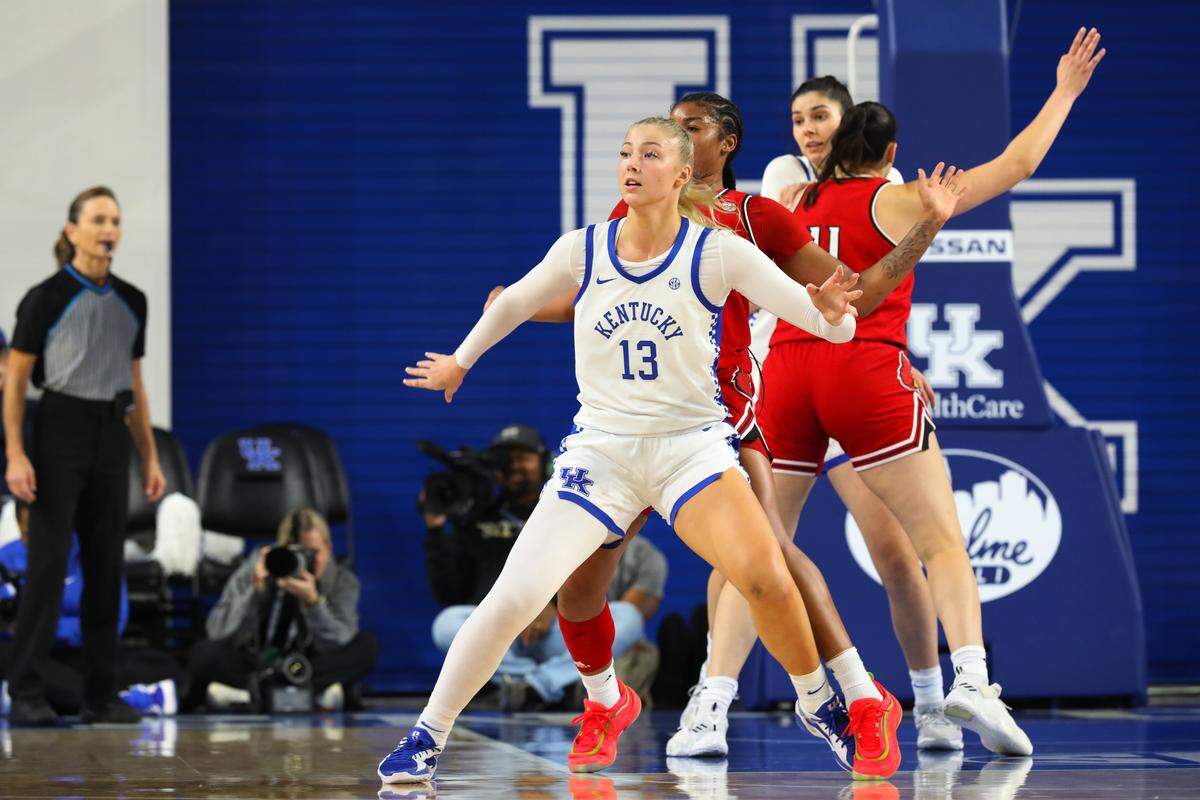
Strack arrived as a 17-year-old in Blacksburg, Virginia. In 2023, months after debuting on espnW’s class rankings at No. 95 overall; Strack said she didn’t really pop on the national stage until her final summer playing with AAU program XGEN Elite, so she never really thought too much about the rankings.
“And then right at the end is when they put me on it,” Strack said. “I honestly just thought it was cool to be on the list.”
The freshman didn’t expect to play much, but she tried to learn from the decorated Kitley, who had opted to return for a fifth season in hopes of continuing the momentum of the Hokies’ impressive Final Four run in the spring.
“I think anyone coming into their freshman year, it’s difficult,” Strack said. “I had a lot of ups and downs throughout that year, but I never thought I should be playing over Liz or anything like that. I didn’t think like that, but I knew I was learning a lot from her and getting to play with her a little bit. I enjoyed that.”
The lack of significant playing time — she avearged 13.8 minutes per contest — didn’t matter as much to Strack. The difficult part, rather, was adjusting to Brooks’ style and the speed of the college game.
“I don’t think not playing was as big,” Strack said. “I think it was more motivation to continue to work and practice.”
Strack’s freshman year statistics are somewhat deceiving, as she didn’t clock more than 10 minutes against a power conference foe until late January and wasn’t a relied-upon piece in Brooks’ system until Kitley went down with a torn ACL in Virginia Tech’s March 3 regular-season finale against Virginia.
Suddenly, Strack was playing close to 30 minutes a game.
Virginia Tech, which had won the 2024 regular-season title with Kitley and Amoore leading the way, fell in the conference tournament semifinal to eventual champion Notre Dame without Kitley anchoring the frontcourt.
Strack earned her first career start in the Hokies’ NCAA Tournament opener, a 92-49 rout of 13-seed Marshall in which the freshman recorded 17 points on 7-for-7 shooting (including a much-celebrated three-pointer), plus five rebounds, two assists, one steal and four blocks.
Ask those who saw Strack’s first season to sum it up, and many of them would tell you about a moment from Virginia Tech’s round-of-32 loss to No. 5 seed Baylor, a 75-72 heartbreaker on the Hokies’ home floor.
Strack, fouled by Baylor’s Aijha Blackwell, sank a pair of free throws to tie the game at 38 with 6:46 remaining in the third quarter. Brooks subbed out the freshman, who had three fouls, and Strack ran down the bench to Kitley, who sat away from the team, waiting in her street clothes.
The pair clasped hands, and Strack bent down to listen to the notes of encouragement the senior leader had for her. It was heralded as a picture of mentorship, but it reflected the relationship the two had forged over Strack’s up-and-down first year — and served as a passing of the torch from Brooks’ last great post to his next.
“I learned a ton from her,” Strack said. “A lot of qualities on and off the court, like the way to handle yourself and the way to carry yourself. But I think it was great because she was always, I mean, she was hard on me. I was the freshman coming in. But she also was always encouraging to me and helping me out.”
Though the Bears ended the Hokies’ season, Strack recorded her first career double-double: 18 points on 6-of-8 shooting with 10 rebounds, two assists and two blocks in 24 minutes on the floor.
The loss didn’t just end Virginia Tech’s season but also wound up being the final game Brooks would coach the program. There were rumors swirling of Brooks’ departure ahead of the matchup, but Strack said the team focused on the task at hand.
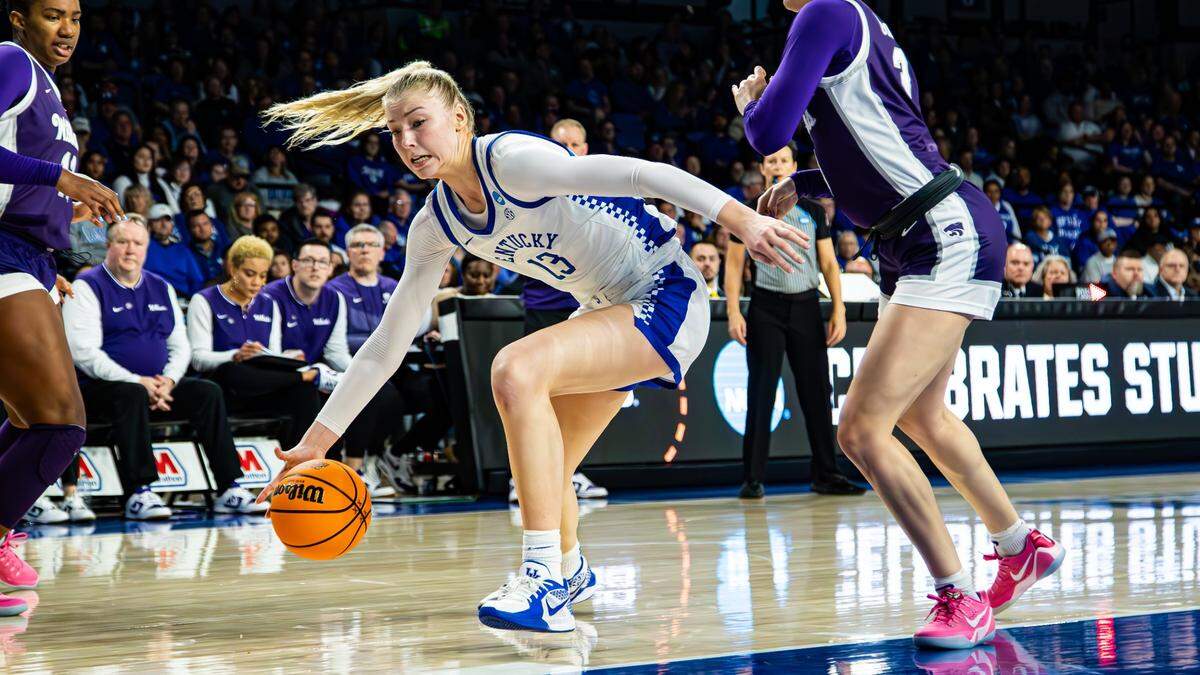
Soon after, Brooks called Strack in for a meeting. She went in with a plan — if, indeed, Brooks was taking the Kentucky job, she was going to go with him. That is, if he wanted her to be part of his next chapter in Lexington.
“He told me that he did take the job,” Strack said. “...I think I told him right away, ‘Yeah, I’m coming. There’s no negotiation here.’”
Why?
“I think I just trusted his plan that he had in his head for me,” Strack said. “Seeing how it adapted throughout my freshman year. I trusted the rest of the coaching staff, and I was just excited for a new place, new things.”
Different conference, different school, different role, different major.
Strack, now a public health major, said she had entered her freshman year as a biology major before finding that “it was a bit much right away,” and switched to the Department of Human Nutrition, Foods and Exercise.
Both of Strack’s parents — Betsy, a physician assistant, and Ron, an engineer — were in the Air Force before retiring to pursue other occupations and raising Clara and her sister. Daisy, now a senior and a basketball player at Hamburg High School, also plans to join the Air Force after graduation.
Though Strack’s decision to pursue public health at Kentucky and consider a career in the medical field was inspired, in part, by Betsy’s career, the talented center never felt compelled to follow in her parents’ footsteps and join the military herself.
“I can’t lie,” Strack laughed. “They always talked about it, and my mom talked about how that’s always an option, but I never really saw myself like that. I think I just knew I wanted to play something in college. I thought that was a lot to go there, basic training and stuff like that, but I knew that could be an option for me if things didn’t work out.”
Amid all the changes brought forth by the transfer to UK, much stayed the same. Brooks, of course, and his assistant coaches Lindsey Hicks and Rad Autukaite; special assistant and chief of staff Tim Clark; and former support staffers Will Sims and Kendall Dillard.
Strack also benefited from the transfer of Brooks’ youngest daughter, Gabby, one of her closest friends — and now her roommate — to help maintain stability in her life.
“We’re the same major,” Strack said. “So we have every single class together. Kind of crazy. We don’t ever leave each other’s side during the day. We live together, and then we have every class together, and then we have practice together, then we go home together. It’s great to have Gabby there.”
On the court, Strack picked up right where she’d left off at Virginia Tech — a starter following Amoore’s lead, working within the same system.
Now, as a junior in the absence of both Amoore and graduate guard Dazia Lawrence, Strack’s next level-up won’t be limited to the court; alongside fellow returning starters Teonni Key and Amelia Hassett, Strack must embrace leadership.
Grow as you go
Strack’s favorite thing about herself is her ability to empathize with others.
“Well, sometimes it’s a flaw,” Strack said. “But I think it’s usually a good thing.”
When asked to elaborate, Strack described a tendency to sometimes “care too much about things.”
“I just gotta let them go,” Strack said. “I think it goes for basketball, too. Sometimes I’m too passionate, and I need to learn to not be so emotional on the court. Aggressive, things like that.”
At only 19, Strack’s empathy is a point of pride — for herself, and for those who love her.
It’s from that place within her that drives her to be a helpful teammate, a dutiful student of the game and a proud friend.
Kentucky assistant coach Josh Petersen, who works primarily with the bigs, said Strack exemplifies the importance of investment, “and she does the small things to put herself in a position to be great.”
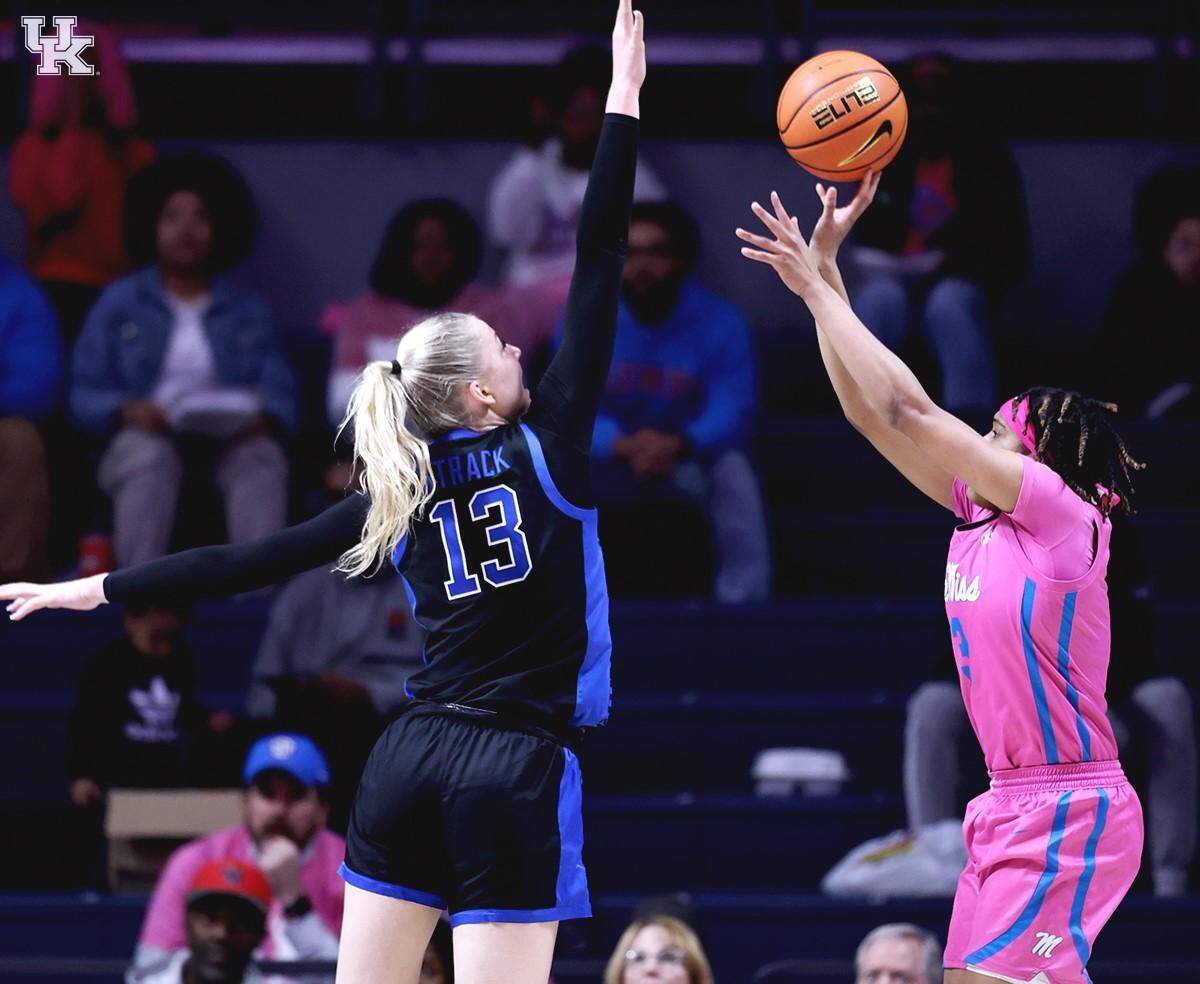
“Her attitude and approach to the game is very mature,” Petersen said. “In the way she is dedicated to it every day. I mean, I think she’s thinking about how good she can be, and now is really believing.”
Setting a strong example for those around her is of no concern. And, really, the issue was never whether Strack could lead a team; it was simply a matter of learning how she could do it best.
Ryan, who called Strack “very quiet,” said the center wasn’t ever one to yell, or even use her voice to lead, unless there was a moment which absolutely necessitated it.
“I speak to her being quiet,” Ryan said. “I think she’s one of those individuals that, you know, when something needs to be said or done, she does use her voice and vocalize it. It’s just picking the right time for her to do so.”
Strack herself admitted that, even when she began college, “I didn’t talk at all,” but that watching Kitley and Amoore helped her find more of a voice.
“I think I’ve been out of my shell a lot more,” Strack said.
When Brooks tasked Strack with daily communication, she gained a better understanding of who he is, what he wants and how he likes to coach — similar to the comfort and expertise Kitley and Amoore developed as a result of their years spent with Brooks.
“I think the best gift you can give any player, whether it’s on the court or leadership, is who’s an example in front of you,” Petersen said. “And if you don’t have those examples, sometimes it’s like trying to paint a picture and you have no idea what the other person’s talking about.”
Strack is still growing into the leader, and the athlete, she’ll one day become. But her increasing confidence, paired with her desire to be for others what leaders were to her, is already leaving a mark on this year’s Kentucky freshmen.
When asked for her ‘Welcome to College Basketball’ moment, a time when she found herself knocked down by the difficulty or power of the next level, she spoke of the team’s 96-78 road win at Vanderbilt.
It was Jan. 5, just the second conference game for UK. Strack played more than 37 minutes and posted 17 points, 15 rebounds, three assists and two blocks.
“After the game,” Strack said, “I was just sitting there, and I was like ‘Damn.’ I was so exhausted. I was like, ‘This is how it’s gonna be every game. This is crazy.’”
Her preparedness — a product of her journey — to step up this season encourages her to help.
“Being able to share that with the people who are going through that transition,” Strack said.
Former five-star forward Kaelyn Carroll named Strack as the player most like a mentor to her. Someone who shows up when Carroll exhibits what Brooks calls “freshman moments.”
“She reaches out a lot,” Carroll said. “After those bad days, she’s texting me. Asking if I want to hang out or whatever. The biggest mentor I have on the team right now.”
Swedish freshman center Elsa Vadfors, a late arrival on campus, called Strack a good teacher, and said she appreciates all she learns from the junior.
“I think it’s really nice, because I can learn a lot of new things from her,” Vadfors said. “She’s just a very good player, and it’s amazing to see her work every day.”
Though one would be hard-pressed to find someone along Strack’s path who didn’t believe in her, even Brooks will admit that Strack, whose determination he’s compared to that of Kobe Bryant or Michael Jordan, has surprised him.
“Her attitude is infectious,” Brooks said. “And she’s becoming one of our leaders on the team. And that’s something that I never would have considered maybe a year ago, and that’s just how far she’s grown as a person and a player.”
Strack knows that, unlike last year, she’s not going to sneak up on anyone. She’s aware that she’ll be at the top of every team’s scouting report, that she is part of opposing coaches’ game plans to defeat the Wildcats.
“But obviously,” Strack said. “You figure it out, and you keep getting through it.”
It just so happens that the only person who can stop Clara Strack is herself.
This story was originally published November 7, 2025 at 6:00 AM.