How the NCAA’s shifting eligibility rules could impact Kentucky’s Ajša Sivka
AI-generated summary reviewed by our newsroom.
- Ajša Sivka signed with Kentucky and the NCAA has not yet designated her eligibility.
- Kentucky lists Sivka as a freshman; UK Athletics calls that labeling an internal error.
- The Division I Cabinet discussed a possible age‑based five‑year eligibility window.
Though international recruiting has long been used to provide a competitive edge in college basketball, there is no exact formula to determining how much eligibility a signee may be awarded by the NCAA — especially in May 2026, when there isn’t a consensus as to who is allowed to participate in college athletics, or for how long.
The NCAA does not comment on specific cases, but Kentucky fans have seen their fair share of international prospects, even under the current, young administrations at the helm of the men’s and women’s basketball programs.
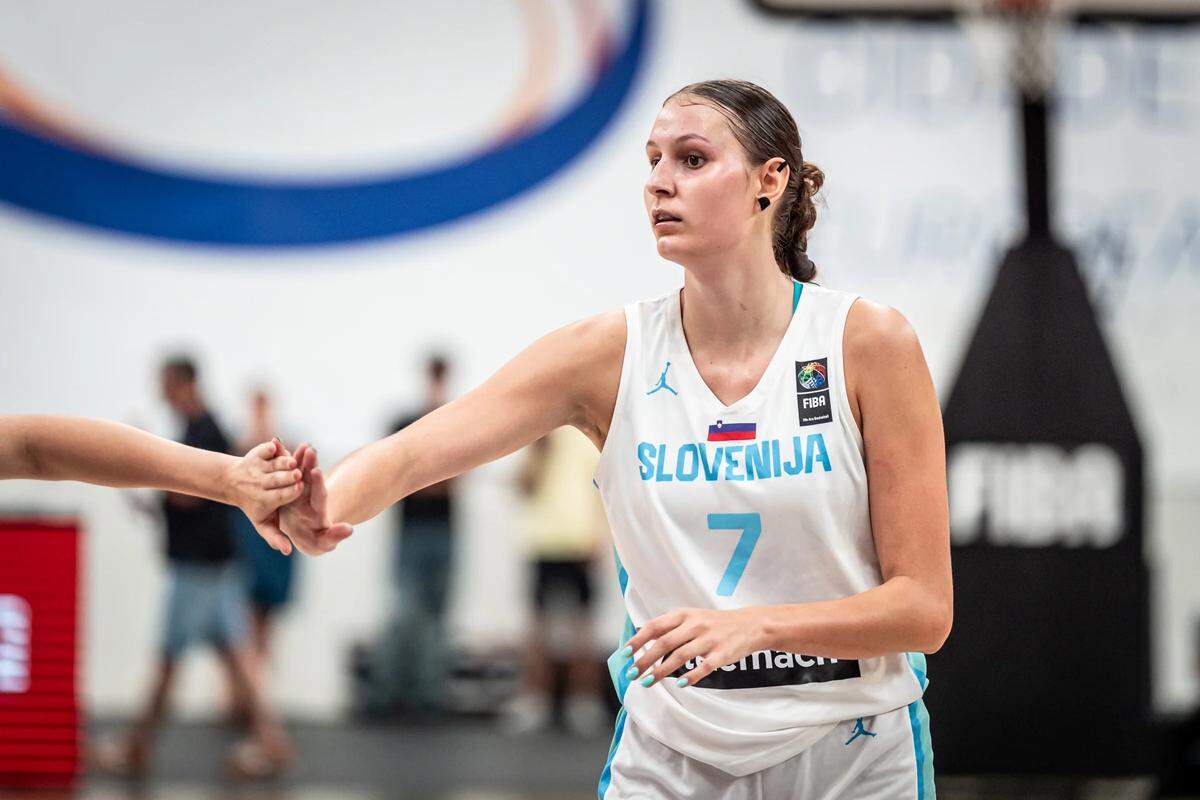
The most recent is UK women’s basketball signee Ajša Sivka, a star in her native Slovenia and the No. 10 pick in the 2025 WNBA draft, who has yet to receive any official designation by the NCAA despite signing with Brooks and his staff in early May.
Estonian guard Kerr Kriisa, who played professionally for both Prienai CBet and Zalgiris II Kaunas in Lithuania ahead of his freshman season at Arizona in 2020-21 and spent the 2024-25 campaign in Lexington during Mark Pope’s first year, played in just eight games his freshman season due to the NCAA not clearing him until early February.
Following the additional year of eligibility granted to all athletes impacted by the COVID-19 pandemic and an unfortunate injury sustained at UK leading to a medical redshirt, Kriisa spent his sixth and final season of eligibility with Cincinnati, his fourth school.
Kenny Brooks successfully flipped Portuguese center Clara Silva’s commitment from Virginia Tech to Kentucky ahead of his debut season in 2024-25. Though Silva played three seasons professionally for Unicaja in Spain’s Liga Femenina Challenge league, she was deemed by the NCAA as a freshman with four seasons of eligibility. She’ll enter her junior year at TCU this season.
Andrija Jelavić spent his first-ever season of college basketball last year with Kentucky, but, due to his professional experience in Europe was designated as a sophomore with three seasons of eligibility. Jelavić will enter his junior campaign with Ohio State this year.
It’s unlikely that any of these specific cases shed light on what may happen with Sivka.
Sivka never signed a contract with the organization or participated in any practices or other team events, so she isn’t at risk of violating any NCAA legislation that traditionally prevents the return of those who’ve renounced their eligibility in favor of turning pro.
Where Sivka’s case gets interesting, however, is the professional experience she’s gained across Europe since she first joined Slovenia-based club Konjice for the 2020-21 season.
On Kentucky’s 2026-27 roster, Sivka is not only present, but is listed as a freshman. UK Athletics confirmed that the program has not yet received word on Sivka’s eligibility, and that the site labeling her as a freshman is an internal system issue.
However, Brooks recently told the Courier Journal that he wasn’t worried about Sivka’s eligibility, and that the program is “very confident” she’ll be allowed to play.
“We’re still in the process of making sure all our paperwork is good,” Brooks said. “We feel very confident in doing so, because being professional on the women’s side in Europe is a little bit different than being a professional on the men’s side in Europe.”
Similar situations within the SEC indicate there shouldn’t be much concern Sivka will be deemed ineligible; Dawn Staley and South Carolina have signed two French players with professional experience since December.
Alicia Tournebize, who joined the Gamecocks midway through the 2025-26 season, was immediately eligible to play and made 20 appearances during what the NCAA declared her freshman year. Justine Loubens, who will join for the 2026-27 campaign, was listed in the official press release as immediately eligible with four seasons of eligibility.
The WNBA’s collective bargaining agreement defines an international player as one “born and residing outside the United States who participates in the game of basketball as an amateur or a professional.” WNBA eligibility for international players is only dictated by whether they will be at least 20 years of age at some point during the year of their respective draft.
That said, Sivka never had to declare for the WNBA Draft — because she turned 20 in November 2025, seven months after she was drafted by the Sky, she was automatically eligible.
What are NCAA eligibility rules for foreign players?
NCAA President Charlie Baker directly addressed eligibility and what he deemed the potential “disadvantage” faced by American basketball players compared to international student-athletes in a Dec. 30, 2025, statement.
“The NCAA has not and will not grant eligibility to any prospective or returning student-athletes who have signed an NBA contract (including a two-way contract),” Baker wrote. “As schools are increasingly recruiting individuals with international league experience, the NCAA is exercising discretion in applying the actual and necessary expenses bylaw to ensure that prospective student-athletes with experience in American basketball leagues are not at a disadvantage compared to their international counterparts. Rules have long permitted schools to enroll and play individuals with no prior collegiate experience midyear.
“While the NCAA has prevailed on the vast majority of eligibility-related lawsuits, recent outlier decisions enjoining the NCAA on a nationwide basis from enforcing rules that have been on the books for decades — without even having a trial — are wildly destabilizing. I will be working with DI leaders in the weeks ahead to protect college basketball from these misguided attempts to destroy this American institution.”
While his statement specifically spoke to men’s college basketball, it was one of many indicators that eligibility will remain a heavily debated issue.
The current eligibility rules provide an exception which states that “before initial full-time collegiate enrollment, an individual may enter into an agreement to compete on a professional team, provided the agreement does not guarantee or promise payment (at any time) in excess of actual and necessary expenses to participate on the team.”
Per Bylaw 12.02.1 “Actual and Necessary Expenses,” the NCAA defines these expenses as meals, lodging, apparel, equipment and supplies, coaching and instruction, medical insurance and expenses, team-related transportation, facility usage, entry fees and “Other reasonable expenses (e.g., entertainment).”
On April 15, the NCAA announced that its Division I Cabinet adopted several changes to the preenrollment eligibility rules.
Jon Steinbrecher, Mid-American Conference commissioner and vice chair of the Division I Cabinet, said “Division I is currently undergoing an extensive review of all eligibility rules to determine what makes the most sense in the current era of college sports,” and that said changes were just the “first phase” of the process, with additional “work on broader eligibility discussions in the coming months.”
These changes included the freedom of DI prospects to sign with a professional agent prior to enrollment, the permission to accept prize money within their sports without affecting eligibility and the new requirement to officially withdraw from “opt-in professional league drafts, including the NBA Draft, by legislated deadlines.” Leagues such as Major League Baseball and the NHL, which do not require an opt-in, aren’t impacted by this shift.
Does it matter that Ajša Sivka is 20 years old?
It could. You may have heard about an age-based approach to eligibility, which would implement a five-year window of DI eligibility beginning with a student-athlete’s high school graduation date or their 19th birthday, whichever comes first.
Eligibility conversations are happening now, with the NCAA announcing May 22 that the Division I Cabinet discussed the “possible implementation of” this age-based approach. A vote on the approach would be considered at the DI Cabinet’s June meeting.
What would that look like in Sivka’s case?
In the event the model is both voted upon and approved, it would be in effect for the 2026-27 athletic year; Sivka’s case as an international student would likely be determined by her 19th birthday. How Sivka’s turning 21 in November would be weighed alongside her professional career is yet to be determined.
Michael Sauls of The State contributed to this report.