
Can Matt Ponatoski manage football and baseball at UK? These two Wildcats did
Southeastern Conference athletes are not exactly blessed with an abundance of free time in any sport.
But for the brave few who attempt to play multiple sports in college, the time crunch becomes even more intense. For class of 2026 Kentucky four-star quarterback commitment Matt Ponatoski, who plans to play both football and baseball in college, the spring schedule will be particularly daunting as he works to balance the baseball season with spring football practice.
The last two Wildcats football players to attempt that double have no trouble recalling the feeling of fatigue prevalent through March and April.
“When I think back on it, I had some very long days,” former UK quarterback and right-handed pitcher Shane Boyd said with a laugh when reached by phone last week.
Boyd signed with Kentucky as a highly touted quarterback recruit in 2000. Nine years later, Georgia prep star Brian Adams signed with the Wildcats as a three-star wide receiver. Both Boyd and Adams were picked in the MLB draft after their high school senior years, and while they turned down the chance to start a professional baseball career immediately, they arrived at UK with the plan to continue to play both sports.
Both former Wildcats spoke with the Herald-Leader to offer a look at the challenge Ponatoski will face if he follows through on the plan to play football and baseball at UK.
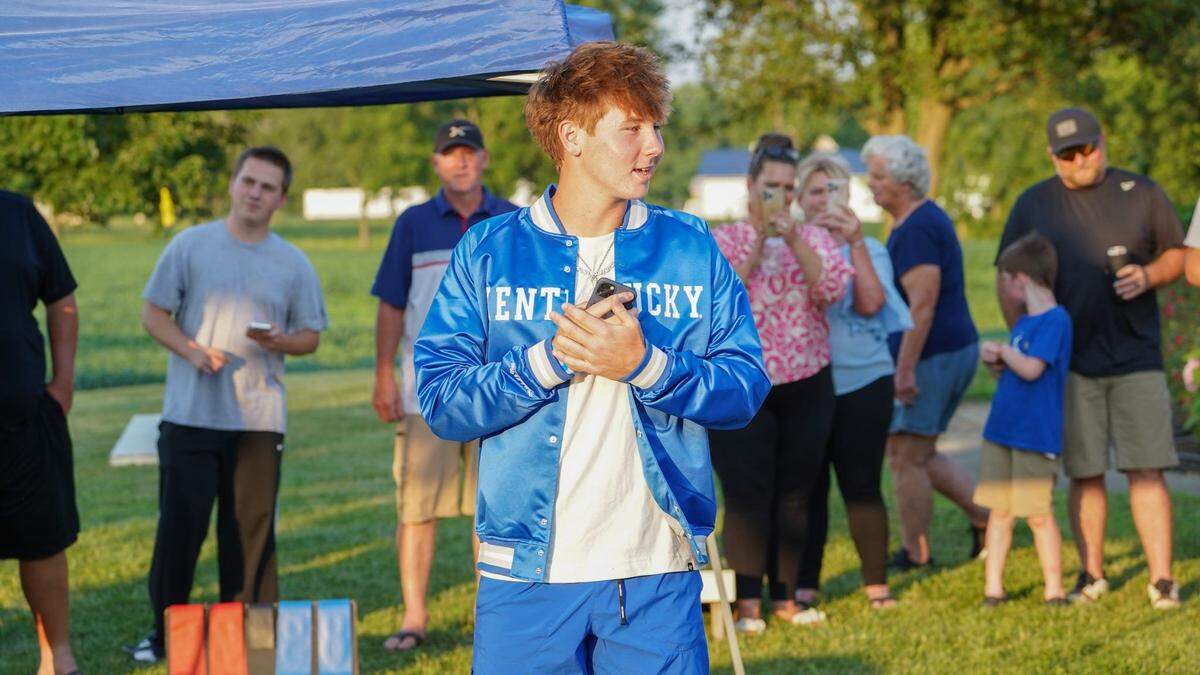
How Matt Ponatoski could play both sports at UK
A typical spring day for Boyd and Adams included football practice in the morning, followed by classes and baseball practice or games in the afternoon.
Boyd remembered a car waiting for him to drive to Knoxville after one Saturday football practice, so he could make a night baseball game at Tennessee. After catching seven passes for 121 yards and two touchdowns in the 2011 football spring game, Adams made the short trip to Cliff Hagan Stadium for a baseball game against a ranked Arkansas team in which he played all nine innings in center field.
“Incredibly helpful for my career now, and just understanding kind of how to maintain schedules and juggle multiple balls at once,” said Adams, who is now an attorney in Nashville. “But from my standpoint, I think it’s just critical to have staff that’s supportive of that, and an athletic department to be supportive of that. Otherwise, it just doesn’t work.”
Ponatoski brings more recruiting hype than either Boyd or Adams did as high school seniors.
The 247Sports Composite ranks him as the No. 22 quarterback in the high school class of 2026. Baseball America ranks him as the No. 15 high school prospect in the 2026 MLB draft, projecting him to play shortstop as a professional. As a junior, he was named Ohio Gatorade Player of the Year in both baseball and football.
“Honestly, I don’t even know if he’s even going to get to campus,” Boyd said after reviewing Ponatoski’s highlights. “He’s amazing on the baseball field.”
Assuming his progress continues during his senior year at Moeller High School in Cincinnati, Ponatoski is expected to be in contention for an early round MLB draft pick next summer. Such a selection would come with a multi-million dollar signing bonus, but he might be able to exceed that total in earnings through revenue sharing and name, image and likeness payments across the three years playing football at Kentucky before he would be eligible for the MLB draft again.
In interviews since his commitment to Kentucky on July 6, Ponatoski has insisted he plans to not only attend UK, but play both baseball and football when he gets there.
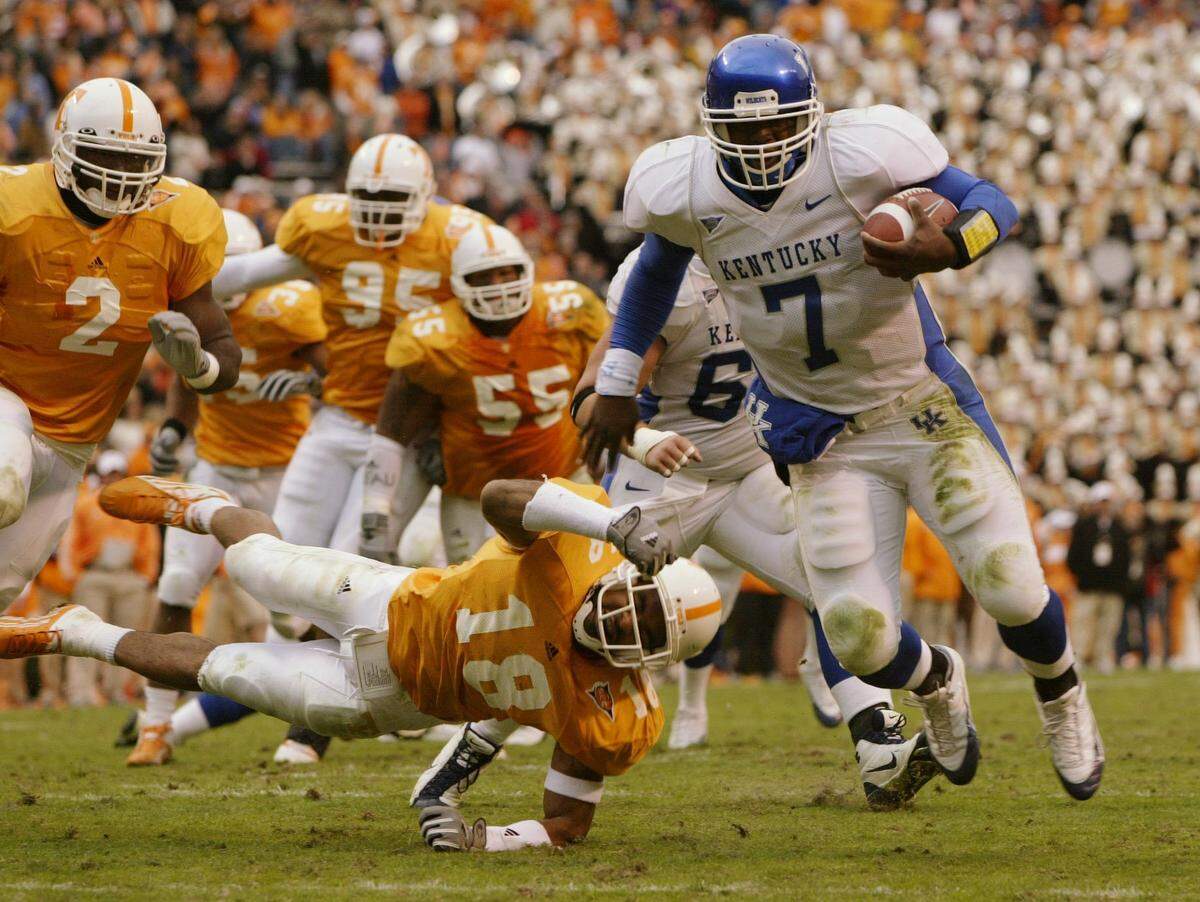
That’s a decision that both Boyd and Adams support.
“There’s going to be a lot of people that question, are you doing it the right way, would you be better if you did one or the other?’” Adams said. “At the end of the day, it’s not them that’s doing it. It’s you. They have a right to question that. Your thing is you can do something pretty neat and realize how special that is. To be at a program like Kentucky and have an opportunity to do both, it’s just pretty rare.”
While Boyd and Adams both arrived at Kentucky as football recruits who also played baseball, they left pursuing different sports.
Boyd spent most of his career as a backup quarterback for Kentucky before winning the starting job as a senior in 2004. He pitched only sparingly for the baseball team, totaling 19⅓ innings across three seasons before electing to forgo his final season of baseball eligibility to prepare for the NFL draft. Boyd went undrafted by the NFL — he was drafted one more time by the Twins — but spent parts of four years on NFL rosters without appearing in a game before going on to a productive career in the Arena Football League.
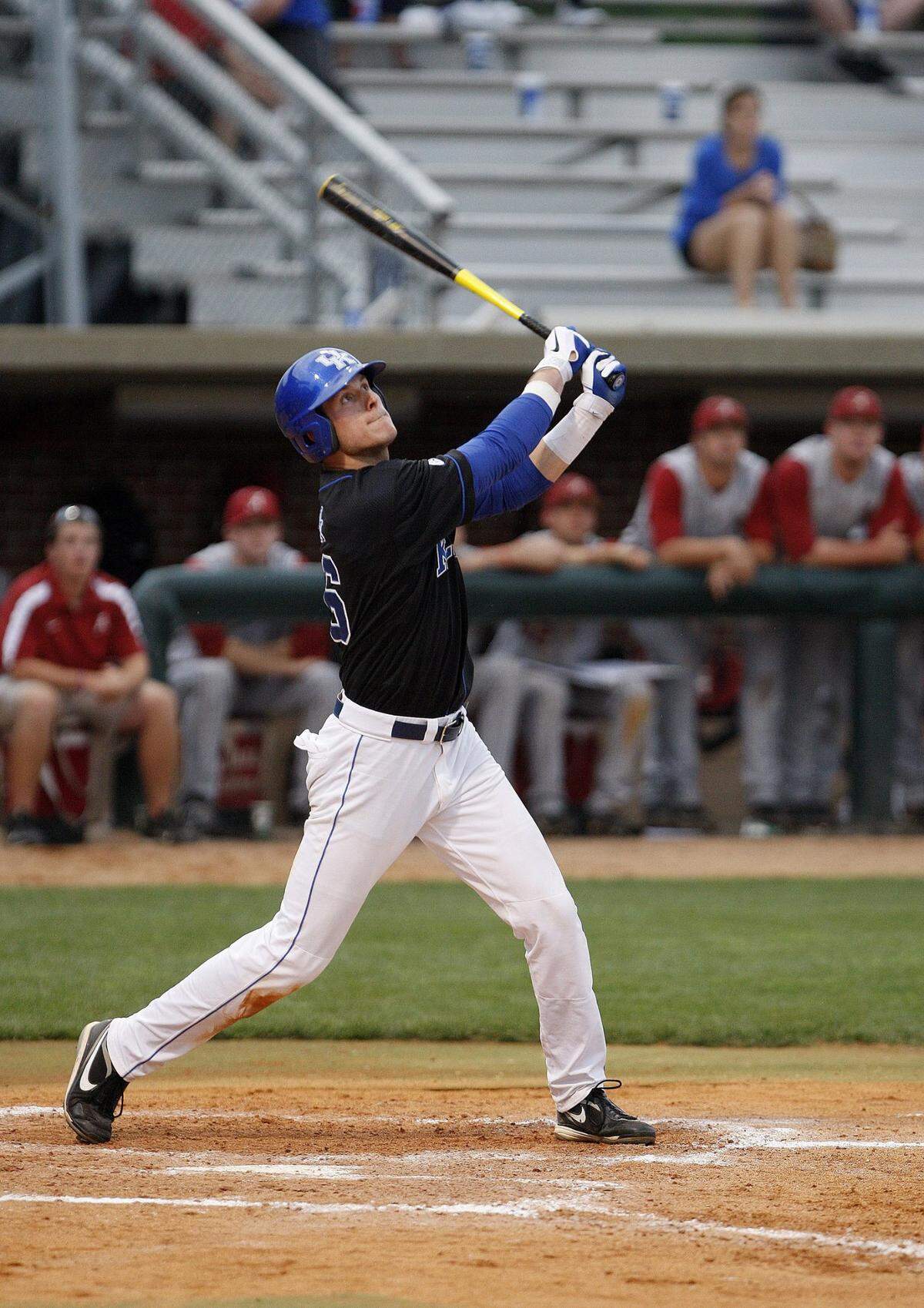
Adams caught eight passes across two seasons for the football team in 2010 and 2011. With the MLB draft looming again and his football career yet to take off, Adams elected to skip spring football practice in 2012 to focus full-time on baseball. That decision paid off with an eighth-round selection by the San Diego Padres. He spent two years in Minor League Baseball before a series of injuries led him to retire.
“I really didn’t still know what I wanted to do (at Kentucky),” Boyd said. “I just knew I still wanted to play sports, and multiple sports at that, and then ultimately I wound up putting baseball down because I figured out what I wanted to do. What I wanted to do was play football.”
Could Matt Ponatoski follow Russell Wilson, Kyler Murray?
There are examples elsewhere of high level quarterbacks who played both sports in college.
Russell Wilson played three seasons of baseball and football at N.C. State before transferring to Wisconsin for his final season of football eligibility and starting a professional baseball career as a Colorado Rockies draft pick. After playing one season of football at Texas A&M, Kyler Murray transferred to Oklahoma, where he played two seasons of baseball and football before being picked in the first round of both the MLB and NFL drafts.
While both Wilson and Murray ultimately elected to focus on football as professionals, the debate over how they split time between the two sports was prevalent throughout their college careers.
“The quarterback position is different,” Boyd said. “It’s nothing against another position — a receiver, a tight end, certain different things — but when you’re the quarterback, you’re the guy. You need to be around. You’re the pulse of the team. You have to understand what’s going on on the offensive side and the defensive side. You’re the beacon for the whole team.”
Even before the NCAA moved to allow players to profit off their name, image and likeness, rules allowed athletes who signed an MLB contract to continue to play college football.
Wilson’s transfer from N.C. State to Wisconsin came after N.C. State football coach Tom O’Brien picked a new starting quarterback during spring practice while Wilson was playing minor league baseball. After Murray signed with the Oakland Athletics in 2018, agent Scott Boras told The Athletic that Murray would play one more season of college football before giving up the sport. Instead, Murray won the Heisman Trophy in 2018 and declared for the 2019 NFL draft, where he was taken with the No. 1 pick by the Arizona Cardinals.
Former MLB pitcher Jeff Samardzija played one more season of college football at Notre Dame after being drafted by the Chicago Cubs. Former Philadelphia Eagles wide receiver Riley Cooper signed a baseball contract with the Texas Rangers after two seasons of college baseball at Florida but returned to Gainesville for one more season of football before ultimately deciding to pursue an NFL career.
Ponatoski could theoretically choose to sign a professional baseball contract next summer and still play football for Kentucky, but the logistics of such an arrangement would be difficult in reality with whatever MLB team that drafts him sure to be reluctant to expose him to additional injury risk on the football field. For instance, four-star quarterback recruit Bubba Chandler elected to sign with the Pittsburgh Pirates after being picked in the 2021 MLB draft despite having already enrolled at Clemson that summer. Instead of trying to continue to pursue college football, Chandler elected to focus on his professional baseball career and is now considered one of the top pitching prospects in the sport.
Boyd initially planned to sign a baseball contract after the Minnesota Twins drafted him in the 13th round after his senior year at Henry Clay, but the two sides could not agree on contractual language that would guarantee him the ability to continue to play football at UK. Adams’ clear desire was to play college football too, so he set a high signing bonus target it would take for the Cincinnati Reds to sign him as a 45th-round pick out of high school. When the Reds failed to meet that number, he moved ahead with his plan to play football.
“I’m a big proponent of doing both as long as you can,” Adams said. “And so to the extent that that’s possible at the college level, I’m all for it, and I don’t think it is damaging to your career. Some people will think it is, but I had a good amount of success doing both, and didn’t really feel like it impeded me.
“... But of course, if you spend more time with one thing, there’s a good chance you’ll probably be better at it, and if you spend less so, it kind of cuts both ways.”
The best-case scenario for the Wildcats football program would be current redshirt freshman quarterback Cutter Boley showing enough progress this fall that the staff is confident in his status as the projected starter for 2026. Boley shining would give Ponatoski time to develop before he is counted on to play in games and decrease the pressure on him to pick a sport to focus on early in his career.
But what the best outcome for Ponatoski ultimately becomes depends largely on his personal preference. Asked for their advice to Ponatoski, both Boyd and Adams pointed to that distinction as being of utmost importance.
“Nobody needs to sway you to do anything right now,” Boyd said. “And the people that are (trying to), that’s who you don’t need to be connected to them. And that’s whether that’s at Kentucky, whether that’s in the MLB, whether that’s people around him in his circle.
“Make sure that his circle is tight with people who want his best interest. Not what he can do or what he’s headed for, but his best interest in what he wants to do. Because he can write his own ticket, the way I look at him. … We don’t know if he’s going to be a star in the MLB. We don’t know if he’s going to be a star in the NFL. We don’t know if he’s even going to be a star at the collegiate level, but just enjoy it and then it will work itself out.”