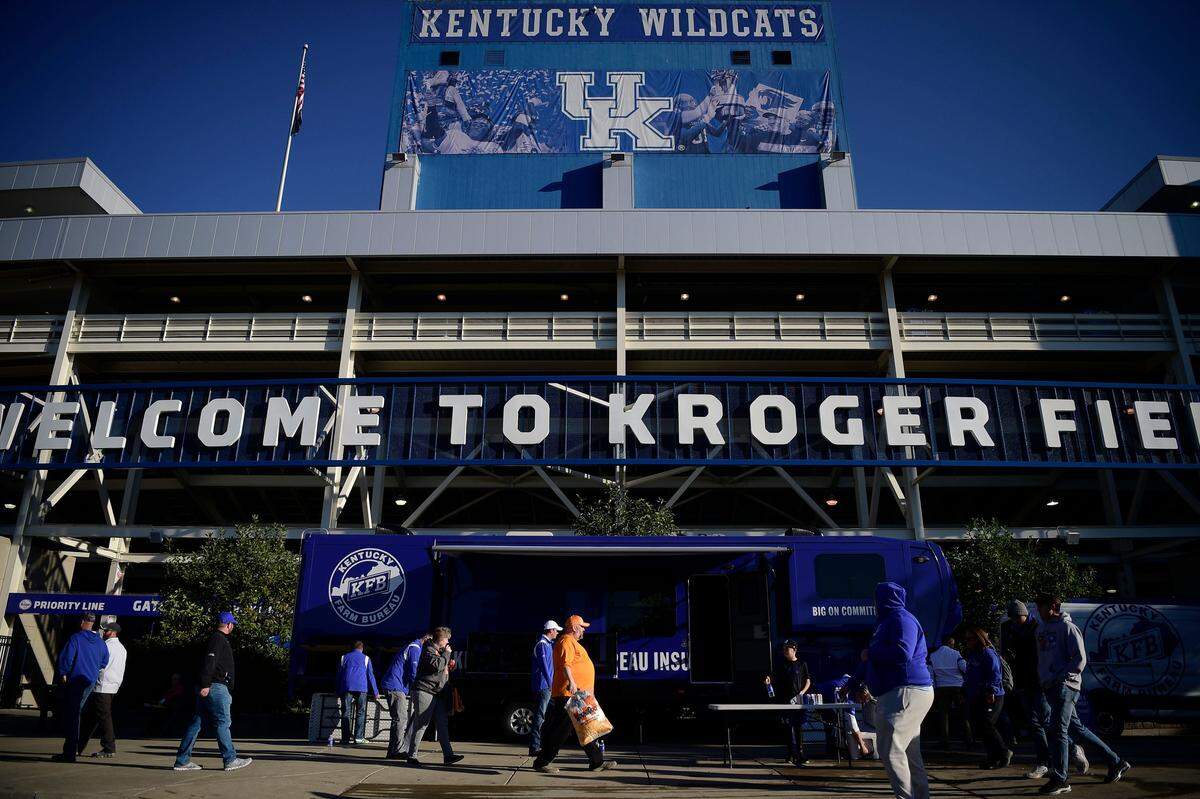
In revenue sharing era, success of football more important than ever for UK
AI-generated summary reviewed by our newsroom.
- Football revenue remains vital as UK Athletics faces new direct athlete payments.
- UK plans facility upgrades, including luxury suites, to boost ticket-driven income.
- There are efforts to diversify Kroger Field's year-round use.
In case there were any lingering doubts about the financial importance of football success even at a basketball powerhouse like Kentucky, a series of moves by the UK athletic department over the spring and summer should have eliminated any uncertainty.
In the first meeting of the board of governors for Champions Blue, the new nonprofit LLC created to oversee the athletic department, executive associate athletic director and chief financial officer Melissa Gleason outlined the financial landscape for the department following the approval of the NCAA’s House legal settlement. The picture was not pretty but came with a bit of optimism with the projection the department could be financially self-sufficient again within three years.
“That is driven primarily by our investment in the property that we have,” Gleason told the board. “We’re making the fan experience better so that we have more ticket sales, more fans in the seats.”
Schools gained approval beginning July 1 to distribute up to $20.5 million over the next year directly to athletes.
But that new expense came without any additional revenue. To cover a projected two-year financial shortfall, the athletic department accepted a $31 million internal loan from the academic side of the university. A separate $110 million internal loan will be used to provide upfront cash for five facility improvements.
Chief among those are renovations to the 40 corner luxury suites first opened in 1999 at Kroger Field, the construction of a new luxury club space in the west end zone of the football stadium and Wi-Fi access throughout the stadium.
“We got to continue to raise additional philanthropy, but the vast majority of that (revenue) is going to be driven by the new seating strategy and the new seating area within Kroger,” said Eric Monday, UK’s executive vice president for finance and administration.
Football is the only profitable sport at many colleges across the country. Kentucky has the added boost of a profitable men’s basketball program, but even at UK the football program creates more revenue, which directly supports the other sports in the department.
Nationally, conversations about new massive television contracts and conference realignment are being driven by football and the financial boon that could come from an expanded playoff format.
When UK extended its apparel contract with Nike in July, the new deal for the first time included a greater penalty if the football program were prohibited from television broadcasts due to NCAA probation than if the men’s basketball team was handed the same punishment. Kentucky’s illustrious basketball history was not enough to bring the size of that contract (10 years, at least $76.5 million) into the range of the deal Nike signed with football power Ohio State (15 years, $252 million) nine years ago.
“For 22 years, we’ve stood up and given money (to the university),” UK athletics director Mitch Barnhart said. “We’ve stood up and done things that they’ve asked, been asked to do, and we wanted to do. It’s been important.
“Now, on the backside of that, we need a little help, and I’m thankful we got an administration that wants to help us, help us do it, and recognizes how important it is.”
But what happens if the football team does not bounce back from a 4-8 2024 season? Can the department really assume premium ticket sales when the new end zone club opens in 2027 will be enough to deliver the projected revenue boost?
While football season ticket renewals fell 12.7% following the 4-8 2024 season, the limited supply of premium seats might make their sales less dependent on team success compared to seating in the general bowl. The athletic department is also actively looking to expand its revenue sources beyond the traditional model for college sports, making it less dependent on ticket sales.
That is why UK is looking for more ways to use Kroger Field outside of football season. The athletic department has begun the process of soliciting design proposals for a fan entertainment district outside the stadium that could include restaurants and hotels.
But the projections certainly would seem more stable if Mark Stoops and his team can prove the end of the program’s eight-year bowl streak was a blip and not a signal the Wildcats are about to return to their traditional spot at the bottom of the SEC standings on a long-term basis.
“It’s going to be hard,” Barnhart said of the path back to financial independence. “You can go write numbers down all you want, but unless you are able to implement them and actually make them work, those are really just really pretty pictures. We want to do more than just have pretty pictures. We got to go to work, and our staff has got to be ready to dial into it.”