The G League is changing the recruiting game. What does it mean for Kentucky basketball?
In the fall of 2018, the G League announced that it would be offering “Select Contracts” to elite basketball players too young to enter the NBA Draft but — for whatever reasons — not intent on going to college.
The contracts were set at $125,000 to play a five-month season in the developmental league, with additional support and training to encourage professional growth.
Not one player took the G League up on its offer.
Around the same time those contracts were announced, the league hired Rod Strickland — a longtime NBA point guard and former Kentucky assistant coach — to spearhead its “professional path” initiative. Within a month of Strickland’s hire, the G League named former NBA all-star Shareef Abdur-Rahim its new president.
Abdur-Rahim and Strickland — undeterred by striking out with the 2019 recruiting class — set their sights on the next wave of young prospects. Strickland became a mainstay at the biggest grassroots basketball events. He was spotted at USA Basketball camps and the major shoe company events — sitting in the bleachers, standing on the sidelines, chatting up parents, coaches, and others in the inner circles of the country’s top recruits.
Strickland was gathering intel on which elite prospects might be best suited for the G League’s initiative, which, at that point, was already growing in scope, evolving well beyond the $125,000 contracts.
Last week, he struck for the first time.
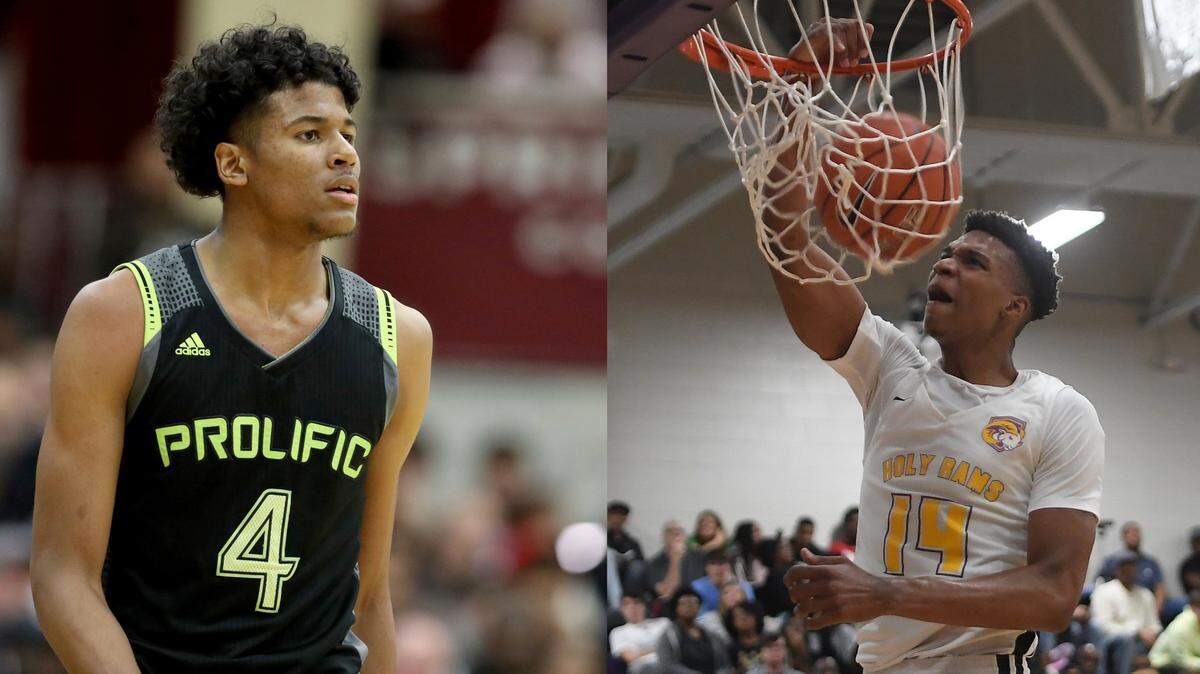
Jalen Green, the No. 3 overall player in the 2020 composite rankings, announced that he would bypass college to join a new G League program that would place elite recruits on their own team — alongside veteran players in mentor roles — based in southern California and focused on development for the next year’s NBA Draft. Green’s deal is also worth far more than the original select contracts. He’s expected to earn at least $500,000, with additional room for endorsements.
A couple of days after Green announced his move, the G League confirmed that Isaiah Todd — the No. 13 recruit in the 2020 class — would join him in the same program.
More could follow in the coming weeks.
“The $125,000 number, in my opinion, was going to be tough for an elite high school player to take,” 247Sports recruiting analyst Evan Daniels told the Herald-Leader. “But when the number extends, I think it becomes a much more viable option. … I wouldn’t be surprised if multiple players ended up taking it, and then the G League circles back with other guys.”
Another player who engaged in talks with the G League is Kentucky signee Terrence Clarke, the No. 4 recruit and highest-rated player in UK’s No. 1-ranked recruiting class.
Clarke and John Calipari released statements last week reassuring Kentucky fans that the top-five prospect would be in Lexington for next season. The Wildcats might have dodged a bullet in this recruiting cycle, but the recruiting landscape is clearly changing.
“I think we could end up seeing 2-4 guys do it a year. That wouldn’t surprise me at all,” Daniels said. “I really think the elite players that think they’re going to have NBA careers are more focused on that than trying to pursue an education. I think the elite-level players value education less, really, than they ever have.”
What does that mean for Kentucky’s recruiting efforts, and college basketball, in general?
The RJ Hampton Effect
Most of those contacted by the Herald-Leader — at all levels of basketball, from high school to the NBA — acknowledged that the G League’s newest efforts, in part, were a response to the decision made by five-star point guard RJ Hampton a year ago.
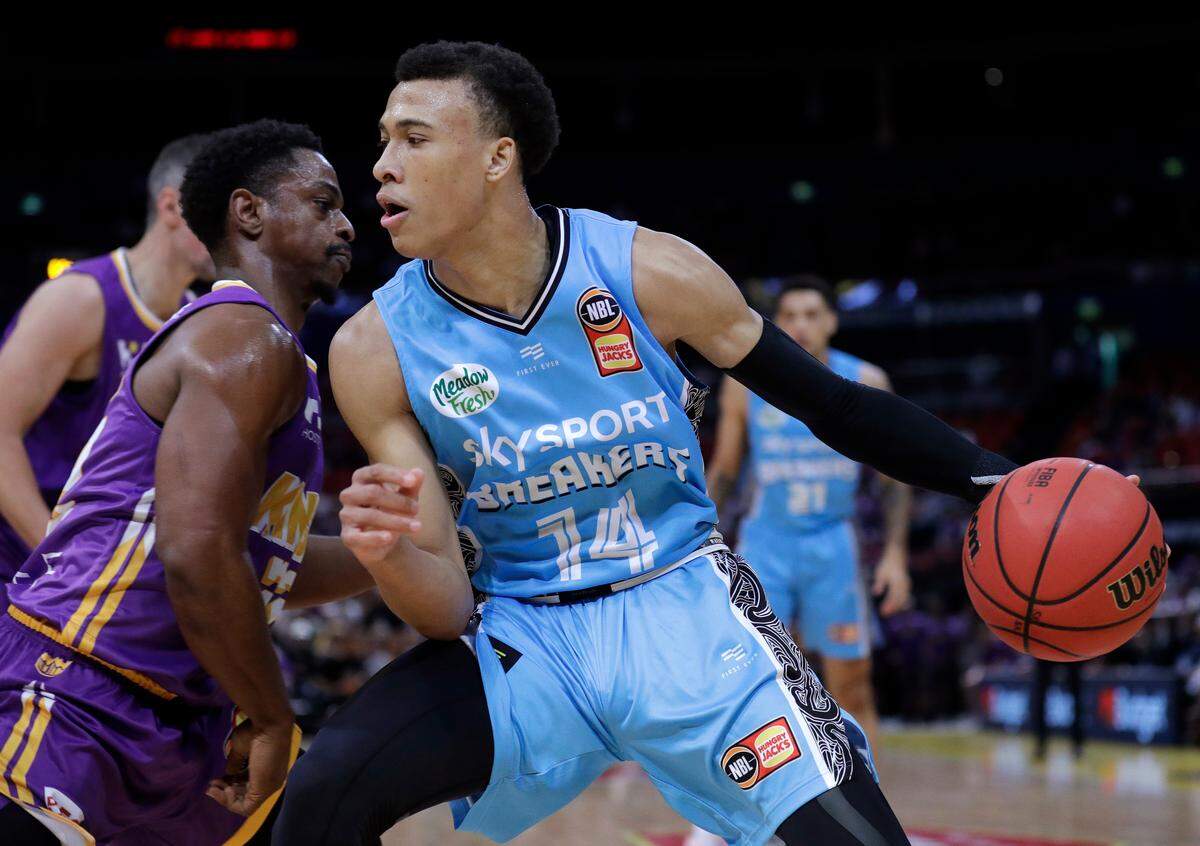
Hampton — the No. 5 player in the 2019 recruiting class — had scholarship offers from the biggest names in college basketball, and he turned down those opportunities to play for the New Zealand Breakers of the Australia-based NBL.
Rod Hampton, RJ’s father, told the Herald-Leader that he had discussions with Strickland and Abdur-Rahim about the G League path prior to the family’s decision to go overseas. The offer simply couldn’t come close to matching the far more lucrative deal Hampton would receive in Australia. It served as a wake-up call for the NBA.
“I don’t think that they envisioned this program until they were like, ‘Woah, we can’t have guys like RJ going out of the country, playing ball. We have to find something to do here,’” Rod Hampton said.
At 18 years old, RJ Hampton played alongside and against older professionals — many of them Americans — and naturally carved out a role with the Breakers. The 6-foot-5 point guard averaged 8.8 points, 3.8 rebounds and 2.4 assists in 20.5 minutes per game. His father said he became a better player, grew even more as a person — Hampton was already mature beyond his years as a recruit — and is still projected as a lottery pick in this year’s draft.
Joining Hampton in the NBL last season was LaMelo Ball, who had an unorthodox high school career that included playing for a professional team in Lithuania. Ball, unlike Hampton, wasn’t likely to ever be granted eligibility to play college basketball. He also thrived in Australia, and he’s now considered a top-five pick in this year’s draft.
And both players will head to the NBA next season with plenty of financial security.
“People are on the Internet contemplating what RJ and LaMelo made — believe me, both of them made a lot of money,” Hampton’s father said. “RJ has a five-year shoe deal. He’s fine.”
While playing overseas, Hampton heard from many of his high school basketball friends back in the United States. Jalen Green was one of those in regular contact. They wanted to know what it was like — if it was worth it — to bypass college ball and go the preps-to-pros route.
It’s obviously something that’s on the minds of many young recruits. But how many can actually do it?
“Let’s make it clear: there are only going to be (a few) guys every year that qualify for this kind of deal,” Hampton said. “People are saying they’re reaching out to 12-13 kids — there’s not 12-13 kids coming out of high school each year that could qualify for this. Jalen is special. I think RJ is special. LaMelo was special. … Doing something like that, I think it takes more mental (toughness) than physical. We know Jalen’s body is going to come around. RJ has gained 17 pounds since he left last year. He’s at 192, and he’s going to be ready for any NBA camp that he goes to.”
In the hours after Green announced his decision, social media was littered with reports of other players in the 2020 class who turned down the G League’s offer to go to college.
“Some of these kids that are saying they declined the G League are not telling the truth,” Rivals.com analyst Corey Evans told the Herald-Leader. “So, on paper, it looks bad, because you’re seeing more than a dozen kids saying they’ve declined that opportunity and they’re going to college — some might be telling the truth, and some are not. That’s not reflective on what the G League is trying to do this year. I think it’s between three to seven guys that are going to be a part of this. I think they’re comfortable with it just being Isaiah Todd and Jalen Green. Now, if they can get a Greg Brown or a Jalen Suggs as well, then so be it. But, the first year or two, they’re going to make sure it’s more about quality than quantity.”
Suggs, a Gonzaga signee, has often come up as a possibility to take this route. Brown, the only uncommitted recruit in the 2020 class with a UK scholarship offer, is expected to announce his future plans Friday. (Kentucky is not expected to be his destination).
The origin of this “professional path” program was to identify players who didn’t want to go to college and give those players an alternative. Even if the current iteration was simply meant as a way to combat players like Hampton from going overseas, the results could be more far-reaching.
“I think when it was created, it was more to keep these top prospects in the States instead of Australia,” Evans said. “But the more I find out about what all is being offered and how great of a package it is, it’s going to go from, ‘OK, let’s make sure they don’t go to the NBL,’ to these kids and the people in their circles actually reaching out to Rod and Shareef, because they’re so interested by it. ‘You’re telling me I can make $500,000 and only play 15 or 20 games and have it all be about development?’ This could definitely be of a greater risk to (recruiting) the guys that — if this wasn’t around — weren’t even thinking about playing professionally.”
UK’s changing approach
In a preseason interview session with a small group of local reporters last fall, John Calipari went on a lengthy diatribe about how he didn’t want Kentucky to be “a hat on the table” in recruiting any longer.
The UK coach was tired of top prospects — and their inner circles — who had little interest in playing for the Cats stringing along his coaching staff, wasting their time on the recruiting trail. He tasked his assistants with separating those using a UK offer as a status symbol — or as leverage with other schools — from those genuinely interested in playing for Kentucky.
“By us recruiting (players), they think that verifies that they’re a professional player,” Calipari said. “We’re like Hawaii. Everybody wants to visit. They’re just not coming here. And I get it and I understand it. But it’s our job and my job to really get to the what-is-this?
“The issue is, … how much of my time and (the program’s) money did we spend recruiting kids that wanted to be told stuff that I’m not willing to say?”
Kentucky was already headed in this direction. Calipari had cut ties early with a handful of players in previous classes that he felt were probably headed to Duke or other top schools. But a more widespread implementation of this plan was obviously on Calipari’s mind last summer.
UK, seemingly, benefited from the approach. Jalen Green and Isaiah Todd — this time last year — were two of the Cats’ biggest targets. By last fall, Kentucky had stopped recruiting both of them completely, mostly out of the understanding that they might go pro straight out of high school.
Not long after Calipari’s “hat on the table” monologue, his assistant coaches answered questions from the Herald-Leader about how they avoid getting put in that situation.
“You just have to do your due diligence in the recruiting cycle,” Tony Barbee said. “You try to develop relationships early, so you can get some honest feedback. Just like we’re honest with the families and the recruits, hopefully they’re honest with us, too, and there’s sincere interest. Because we’ve made it known that — when we’re interested in you — we’re coming after you.”
Kenny Payne said that connecting with the parents — figuring out their motives — is also key.
“If you build relationships with their parents first, and you realize, ‘Well, they ain’t gonna fall too far from the tree.’ … So I think you start there and you just try to build a genuine relationship,” he said. “And you explain to them that it’s not just about Kentucky. It’s about a relationship with Coach Cal, a relationship with our staff, a relationship that you can trust us to get you where you need to go. And, in the meantime, this program is about championships and your dreams. Not just a championship.”
All of this is important in how Kentucky moves forward in this new “G League is an option” environment. It’s long been expected in college basketball circles that the NBA would rescind its one-and-done rule by 2022, allowing recruits in that class to jump straight to the draft. Whether that happens or not, the immediate future should serve as a dry run for whenever the end of one-and-done comes.
Coaches at UK and other programs that recruit the best of the best must figure out, early on, who really wants to play college basketball and who doesn’t. And that might mean taking relatively lower-rated players to help avoid getting burned late in the process.
Kentucky and Duke have already been doing this, to an extent. The Cats and Blue Devils have the No. 1 and No. 2 recruiting classes in the country, respectively, but both groups include several signees ranked outside of five-star range.
“I think, in ’21, you might see the Dukes and Kentuckys recruiting even more of these multi-year guys that might be able to pitch in immediately but also aren’t those one-and-done-type guys,” Evans said. “I just think that this has fast-forwarded that approach by a couple of years.”
End of one-and-done?
The widely accepted time frame of an end to the NBA’s “one-and-done” rule by 2022 is beginning to see some pushback.
ESPN analyst Jonathan Givony, who has done much of the original reporting on the G League’s new initiative, has floated the possibility that the NBA might not have a resolution on one-and-done until the league’s current collective bargaining agreement expires in 2025.
While some within the league — including Commissioner Adam Silver — have voiced support for ending one-and-done before that, Givony noted that there seems to be a misconception that everyone at all levels of the NBA is on the same page. Silver can’t change the rule all by himself, and many others in positions of power aren’t sure a change is necessary.
“You have to make a distinction between the league office and the NBA itself and NBA owners and then the scouts and executives and GMs and presidents,” Givony told the Herald-Leader. “These are all separate entities, and they’re all going to have their own wishes and interests. I don’t think that they’re perfectly aligned on that. I think that if you talk to the executives, they’ll tell you that they have a pretty good system in place. College basketball is proven. And they know what it means.
“Whereas, with this (G League program), we’re talking about a complete unknown. What are they playing for? And what’s the level of competition going to look like? It’s exciting. It’s interesting. I mean, we’ll be watching it very closely. But if you ask NBA teams where they would like to have Jalen Green — I don’t know, some of them might say they’d rather see him at Auburn or Memphis. … I just think there are a lot of unknowns. We don’t know how this is going to play out.”
Rod Hampton voiced similar hesitations with the structure of the situation Green will be playing in next season. The G League’s team designated for top recruits is expected to play games against other squads in the league that would not count in the standings, as well as games against international teams.
“That’s my only caveat about what they’re doing this year — they’re not putting them on a G League team,” Hampton said. “They’re creating a team for them, and they’re playing against competition that they set up for them. Every game RJ and LaMelo played, nothing was set up. Bryce Cotton, Casper Ware, Andrew Bogut — they came with an NBA-type mentality. Even our exhibition games were against NBL teams.”
Hampton praised Green for taking his own path — and said he thinks he’ll be mentally strong enough to do it — but there will be challenges in such an unnatural environment of competition, on and off the court, alongside players making less than $100,000 a year.
“And then you’ve got this one kid — that everybody wants to succeed — making a half a million. You can say what you want, there’s gotta be some animosity there,” he said. “They’re not going to go easy. And then they go back to their apartment, while Jalen jumps in a Range Rover?”
Givony said that — in addition to Hampton’s chosen path — the NBA was forced to build up some type of minor-league program for top recruits due to the NCAA’s own actions. The Commission on College Basketball — a group led by Condoleezza Rice and formed in response to the federal investigation into corruption in the sport — released its recommendations on how to clean up the college game in 2018, and one-and-done was front and center.
“One-and-done has played a significant role in corrupting and destabilizing college basketball, restricting the freedom of choice of players, and undermining the relationship of college basketball to the mission of higher education,” the Commission said in its report.
That was seen as out of touch — or simply disingenuous — by many in basketball circles, who pointed out that only a handful of players in each recruiting class jumped directly to the pros when the opportunity was there in the past, and that some college players — and not just hot-shot freshmen — were being paid long before the debate over one-and-done. “Sophomores get paid. Juniors get paid. Seniors get paid. Mid-major kids get paid,” Givony said. “If it’s not one guy, then they’re just going to move on to the next guy to find someone to pay.”
He said the latest plan by the NBA, which has already set up basketball academies around the globe to promote the league and the growth of international players, is a logical reaction to the NCAA’s on-the-record disdain for one-and-done.
“There was a call to action from Condoleezza Rice and (NCAA President) Mark Emmert, and they said, ‘One-and-done has to go. One-and-done has no place in our game.’ And they took that to heart. And because they’re not able to eliminate the age limit right now, this is probably the next best thing,” Givony said. “They’ve long tried to have some kind of connection with grassroots basketball, to have some type of influence to make sure that these guys are as polished as possible when they do get into their league. So, I think this is just a natural extension for them.”
College basketball’s next step
“There’s no question that if Jalen Green could sign a sneaker deal and then go to Memphis or Auburn, then he would do that,” Givony said. “He’d be playing college basketball next season. That’s a ton of money right there. And I think the NBA would be fine with that. They’re not trying to compete with college basketball. They just realize that college basketball is not going to change, so they needed to act. That’s the reality of the situation.”
An overwhelming narrative in college basketball circles in recent days has been that this new G League option is not the end of the sport as we know it. An extension of that argument is that college basketball will be just fine if players like Zion Williamson decided to jump to the pros straight from high school, like other top stars have in the past.
Givony, who founded DraftExpress.com and covered grassroots basketball for nearly 15 years before moving to ESPN, conceded that first point — “It’s not going to be the end of college basketball” — but he chuckled incredulously at the notion that the game is just as good without players like Williamson.
“It’s not a positive,” he said with a laugh. “Not having Zion Williamson doesn’t kill you, but the guy carried the sport for an entire season. He moved the needle for us at ESPN more than any player has in my three years being there. That is important. That draws eyeballs. That makes people a lot of money. So I don’t know why you would voluntarily give up on that. That doesn’t make any business sense to me. And if you could just make some minor tweaks to your outdated model and fix that, then I think you have to look at that.”
The NCAA changing its stance on “name, likeness and image” — in other words, giving college players the ability to profit while retaining their “amateur” status — would probably go a long way toward keeping the game’s top young stars under the college basketball umbrella.
There’s been plenty of talk in recent months of the NCAA changing its model to allow for that to happen, but there have been no signs of progress yet. And there’s no timetable for such a change to become reality. Givony is skeptical that change is coming.
“They have their pie — their certain amount of money — and they want to keep it for themselves. That’s pretty clear,” he said. “It’s not about amateurism. They move the goalposts on what amateurism means, like, every year. It’s their money and they don’t want to share it. That’s it.”
The college game does have its own advantages, of course. In addition to the support system players get at places like Kentucky and Duke, there’s also the experienced and proven coaching that comes with playing for Hall of Famers like John Calipari and Mike Krzyzewski. The G League has promised top instruction for its new acquisitions — former NBA coach of the year Sam Mitchell has been mentioned as a possibility — but the coaching details of this new program have not yet been made clear.
There’s another major variable that college basketball can deliver — one the G League will likely struggle to match.
“It’s, ‘How are we going to market you?’ That’s one of the biggest things,” Rivals.com’s Corey Evans said. “The ‘brand’ is so big anymore with these kids, and if you can’t help that kid develop that brand, then you have no chance.”
The best recent example of brand-building is Williamson, who was an Internet sensation well before he arrived in college but became a genuine superstar while playing for Duke. Williamson made a lot of future money for himself by spending just a few months on a college campus. Plenty of others have raised their profiles — and gained lifelong fans — by excelling in a college uniform.
The G League won’t deliver that.
“There is definitely still a what-if factor, right? The platform still is not there, when it comes to playing on the biggest stage,” Evans said. “I know some eyes will be placed on the G League when these kids play, but it’s still not going to be Kentucky-Louisville or Kentucky-Florida or Duke-UNC. I know there’s talk about, ‘Let’s make sure that we can market these guys the proper way,’ but at the end of the day, there’s free marketing with college basketball. Especially with these brand names that are Kentucky and Duke. No matter what, the casual fan every February is going to tune in for Florida-Kentucky and Duke-UNC.
“And I know Jalen Green and Isaiah Todd are on everyone’s tongues right now, but they might also be forgotten some during the winter months.”
In other words, John Wall brought a lot more John Wall fans with him to the NBA by spending one season at Kentucky than Jalen Green will bring Jalen Green fans by going his route.
“Exactly,” Evans agreed. “That’s exactly right.”
Givony said that argument can cut both ways, adding that not going to college didn’t do anything to hurt the brands of LeBron James or Kobe Bryant or Kevin Garnett or Giannis Antetokounmpo.
“Those guys built up pretty good brands and made pretty good money themselves,” he said. “If Giannis went to Kentucky? I don’t know. Maybe he would have gone higher or he would have got a bigger sneaker deal right off the bat? Who knows? Everybody’s got their own path, and it’s hard to second-guess, in hindsight. Yeah, there’s a great argument that Duke did a lot for Zion. And I agree with that. But, who knows what would have happened had he been able to go straight to the NBA out of high school.”
There are, indeed, ways to get creative with endorsements to maximize earning potential. Givony pointed out that Dallas Mavericks star Luka Doncic came to the NBA from Europe two years ago in the final year of his shoe deal. He turned into a superstar in what was basically a “contract year” for endorsements and parlayed that into a major, multi-year deal with Jordan Brand. High school recruits taking the G League path could do the same, accepting a shorter-term deal that brings immediate financial security while leaving open the opportunity for a Zion- or Luka-type deal a year or two down the road.
And the draw of that quick money — especially in a more player-friendly environment than what the G League was previously offering — will make top recruits think twice about college. The type of support system a player finds at Kentucky or Duke might not look as enticing as it once did.
“I don’t know if a lot of these dudes care, to be honest with you,” 247Sports’ Evan Daniels said. “I think the one thing on these kids’ minds, and the people around them is, ‘Let’s get to the money, and let’s get there as quickly as possible.’ What should be on their mind is, ‘What is going to get me to the NBA and be the most prepared to have a longstanding, lasting career.’ It obviously varies, situation to situation. … Every decision-making circle is different. And what matters and is valued by that circle is different.”
The Kentucky effect
So, what effect will all of this really have on Kentucky basketball?
A lot will depend on John Calipari and how willing he is to tweak his recruiting model.
Calipari’s pitch for the last decade has been that UK is the best place for an aspiring young player to realize his professional dreams in a short amount of time. He’s backed that up with draft class after draft class featuring multiple first-round selections (along with three No. 1 overall picks at Kentucky alone).
The emphasis on creating and building relationships early in the recruiting process — and staying away from players with one eye on a non-college route — should continue to help Kentucky steer clear of surprises late in recruiting cycles, but surprises will still surely come.
The G League obviously identified Terrence Clarke as a fit for its new model. Some basketball insiders the Herald-Leader spoke with over the past few days were adamant that the league is leaving the door open for Clarke to change his mind and take the pro path. The lesson in this recruiting cycle — even if everything goes according to UK’s plan — is that the Kentucky coaching staff won’t be able to take anything for granted moving forward. Even if they get an early commitment from a top player, the Cats will have to stay on him and his family and remain wary of other, outside influences. If UK takes a lower-ranked recruit and that player has a breakthrough senior season, the G League could still come calling in the spring.
Strickland worked for Calipari over eight seasons at both Memphis and Kentucky — and the UK coach called him “a great friend” in a tweet last week — but fans should not count on that friendship to keep the G League from coming after Kentucky recruits in the future.
The expected argument from Calipari, other top college coaches and their various defenders — that college basketball, in particular Kentucky basketball, is still a proven entity, whereas the G League is, for now, just an experiment — could also backfire.
“That’s something that they could say,” Givony acknowledged. “But if you go to Kentucky or Duke, there’s nothing guaranteed, either. You could be Isaiah Briscoe or Kahlil Whitney or Wenyen Gabriel or Trevon Duval. There’s a lot of outcomes. Or you could be Shai Gilgeous-Alexander or Devin Booker or Zion Williamson. You could definitely make the argument both ways — college can be amazing for the right guy, and it can also be a total disaster for others. It’s not a one-stop shop.”
Rod Hampton agreed.
“You couldn’t have told anybody that when Kahlil Whitney stepped on UK’s campus he wasn’t going to be a first-round draft choice. Now look what happened,” he said, referring to the five-star Kentucky freshman who saw his playing time dwindle and quit the team midseason. “And it’s not just him. It could happen to anybody. Wendell Moore thought he was one-and-done. Matthew Hurt thought he was one-and-done.
“College is so uncertain, but when you sign a contract and you sign a shoe deal, that’s certain. And guess what? All you gotta do now is play ball.”
Hampton is in a unique spot of having seen this landscape evolve from just about every side.
A former college basketball player himself, Hampton was an AAU coach at the highest levels and the father of a player who was coveted by just about everyone before deciding to turn pro. Kansas’ Bill Self and Memphis’ Penny Hardaway were getting all the attention in RJ Hampton’s recruitment by the end, but Kentucky was along for most of the ride. He took an official visit to Lexington. The Hampton family had an in-home recruiting visit with Calipari just a few weeks before RJ made his final decision. Hampton’s dad is well-versed in Kentucky basketball.
What will Calipari’s pitch look like in the future?
“Cal is gonna shoot ’em straight, just like he always does,” Hampton said. “He’s gonna say, ‘Son, we want you at Kentucky. You can become a pro here and you can have a great college career.’ And he’s going to be honest with them if he doesn’t think they’re ready for that step.
“And what people fail to realize is that Coach Cal is a really good college coach. A really good college coach. So he’s going to coach you. He’s going to coach ’em up.”
Hampton has talked to plenty of other players and parents. He said that the Kentucky coaching staff excels at building genuine relationships. He also promised that coaches like Calipari saw this whole G League thing coming, in one form or another, and have been accounting for its arrival.
The Caliparis will survive and adapt, just like they always have, in a college basketball world that has never really been all about the kids out on the court.
“They’re gonna be fine,” Hampton said. “What’s going to happen is they’re gonna get even more attention as college coaches. College is about the fans and the coaches — those are the mainstays. If you’re a good coach, you’re gonna stay at a school for 10-15 years. Fans get older, but they stay fans. The players change. So now, you’re gonna fall in love with Coach Cal all over again. Coach Self all over again. Penny. And the fans are gonna keep coming. But you’re also still gonna get that top player, because all your top players aren’t ready to be pros.”
Hampton, whose son was actually in the 2020 class before he graduated early and went pro, listed some top players in that group to illustrate the stake the NBA has in their futures, and to applaud the latest development in the world of basketball recruiting.
“If I’ve got Jalen Green, Cade Cunningham, Josh Christopher and Scottie Barnes, I want to make sure — as the best league in the world — I give those top guys options. Options,” he said. “Adam Silver and these scouts, they know that — more than likely — those four guys are gonna be in the NBA at some point. But just give them options to get there. College is an option. Overseas is an option. And, now, G League is an option. That’s what you want. And you have to sit down with your circle and make an educated decision on your option. Don’t let anybody else make that decision for you. You sit down with people you trust, people you love, and, ‘Out of these four or five options, this is what we’re gonna do.’ And you gotta be willing to ride or die with that option. And that’s what we did as a family.”
For some of these top players — even some that might have gone to Kentucky or Duke a few years ago — the G League might now be the best option. But for many — the vast majority, in fact — college basketball will still win out.
“That’s what I’m saying! College might be the right option,” Hampton said. “Go to Duke and fall in love with the Cameron Crazies. You’re only gonna be there for six months anyway. But, if things change up midstream, you can’t be mad at it. Because you made that decision.”
This story was originally published April 21, 2020 at 7:42 AM.