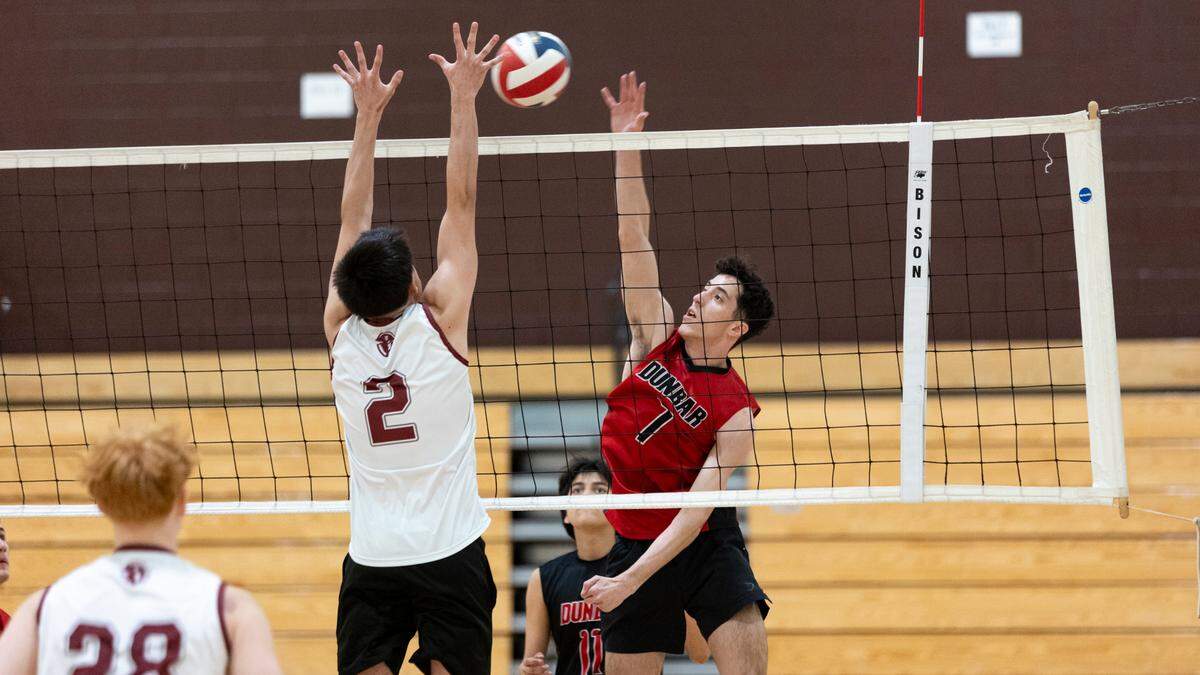
Boys volleyball growing as spring sport in first year of KHSAA sanctioning
Boys high school volleyball, once a fledgling club sport available at only a handful of schools, has quickly evolved into a KHSAA-sanctioned statewide league with more than 50 teams spread across eight regions.
That means schedules, stats, records and rankings are readily accessible and, perhaps more importantly, the games matter — even if it’s just the first year of sanctioned play.
“I like seeing the sport grow. I’d say it needs to get recognized more within the schools,” said Paul Laurence Dunbar senior William Naehr, who was part of the Bulldogs’ state runner-up club team a year ago. “I want more people coming out to the games and stuff like that.”
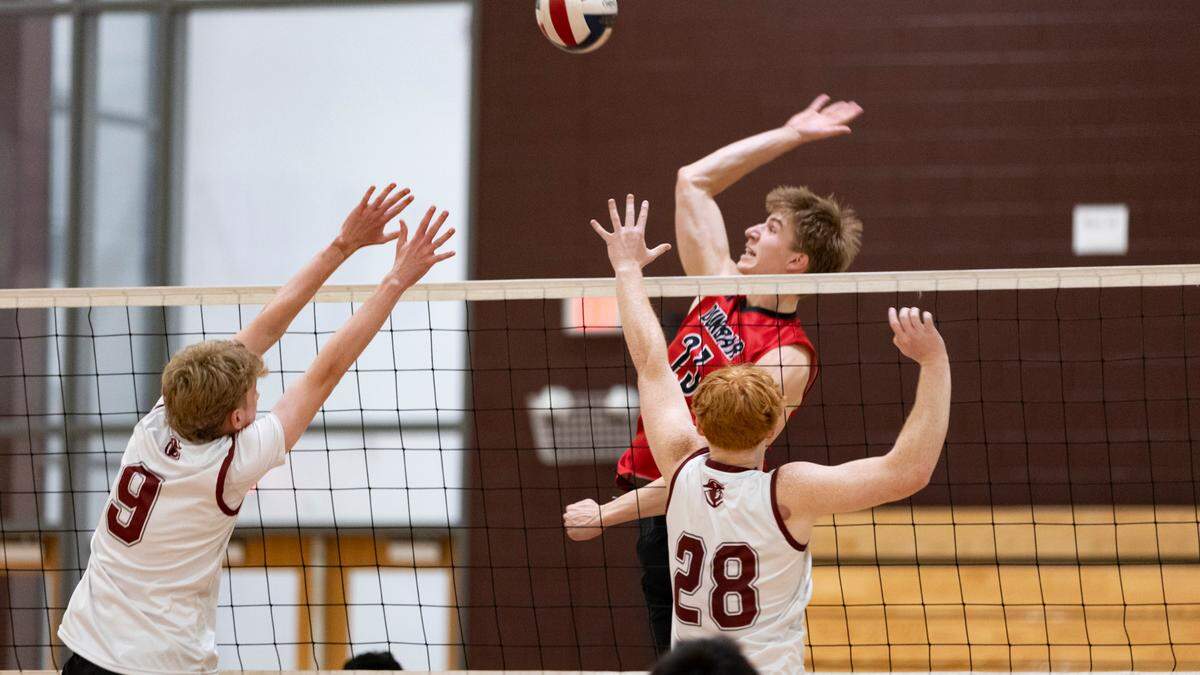
Dunbar, ranked No. 6 in the latest statewide Kentucky Volleyball Coaches Association poll, took down No. 10 Tates Creek in straight sets Thursday to improve to 6-5 overall and 3-3 in the nine-team 7th Region that also includes No. 5 Henry Clay and No. 7 Lafayette.
Henry Clay rates as the top team in the 7th with a 13-5 overall record and a 5-0 mark within the region. The Blue Devils’ five losses include setbacks against No. 1 St. Xavier, No. 2 Trinity and No. 4 DeSales, private Louisville Catholic schools who’ve each had competitive boys volleyball teams for many years and thus have a head start on KHSAA play.
Dunbar stunned Trinity in the KVCA’s non-sanctioned state semifinals last year before falling to St. X in the title game. That Bulldogs team had 10 seniors, most of whom were multi-sport athletes.
“They were pretty much our whole, entire varsity team,” Naehr said. “This year, I’d say we only have two varsity players from last year. It’s basically a whole new team. But we’ve worked really well together, and we’re succeeding.”
Naehr ranks fourth in the state in kills with 3.39 per game. Teammates Esteban and Zahid Diaz also rank among the top 30 in that category.
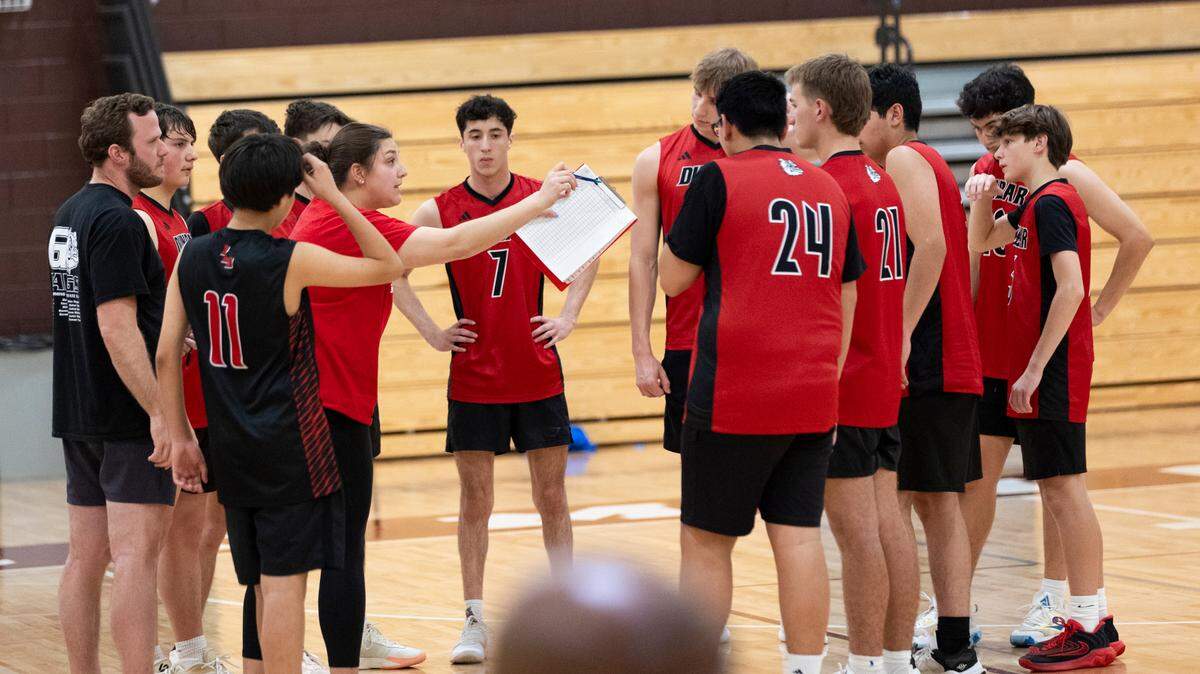
For Dunbar coach Abigail Shafer, the biggest differences sanctioning brought have been support from the community and the quality of officiating.
“It’s nice to have actual refs assigned to games and in control of the game a little bit more,” Shafer said. “It tends to be a little bit cleaner than it was last year.”
Tates Creek coach Morgan Contino agreed, noting consistent officiating not only helps the flow of the game, it also helps the players learn the game.
“The fact that it’s sanctioned helps with the flow of the game, the teaching of the game and also the recruiting of new schools to make teams,” Contino said.
Shafer and Contino are the only female head coaches in the 7th Region, but women make up roughly half the boys volleyball head coaching ranks across the state. That’s largely due to girls volleyball’s spread to nearly every high school in Kentucky over the last few decades. Its proliferation as a fall sport has fostered a vast pool of female volleyball coaches to tap for the new boys league and created a dynamic that simply does not exist in other sports.
“It’s fun to be a Dunbar Bulldog and it’s fun to coach against my friends,” said Shafer, who is an assistant coach on the girls team. “Watching strong, powerful women coach is something to look up to.”
Naehr said the female coaches he’s played for pull no punches.
“They do great,” he said. “They know the sport well and they definitely get on us about technique. They don’t go easy on us.”
Dunbar has four region games remaining, beginning with a road game at Lafayette on Tuesday. The boys volleyball postseason begins with region tournaments on May 9.
Shafer said she’s had to be patient with her young squad this season, but she likes how they’ve progressed.
“They roll with the punches. They show up every day. They compete in every game. They’re super scrappy,” she said. “Boys volleyball has a lot of brute power, but if you’re smarter, you can prevail. I think this year’s team wasn’t prepared for the fast offense that Henry Clay, Trinity and St. X have. But we’re wide awake now.”