From the Triple Crown to broke: Even American Pharoah couldn’t save Ahmed Zayat
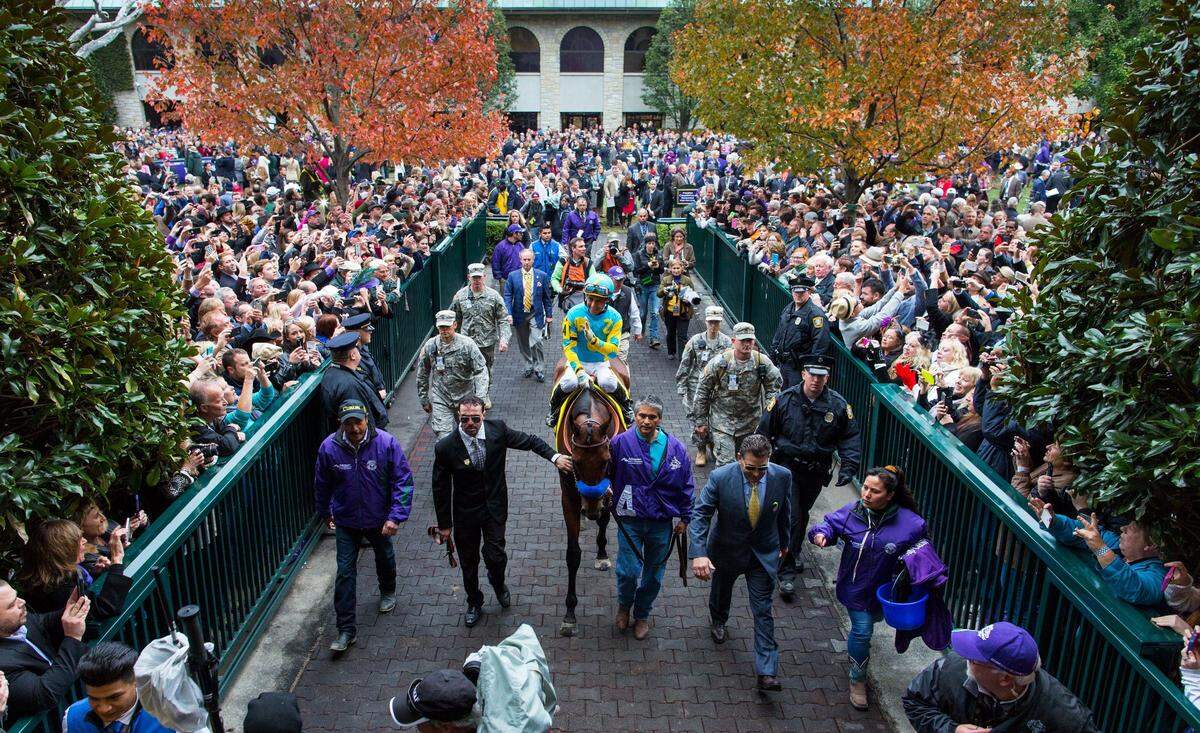
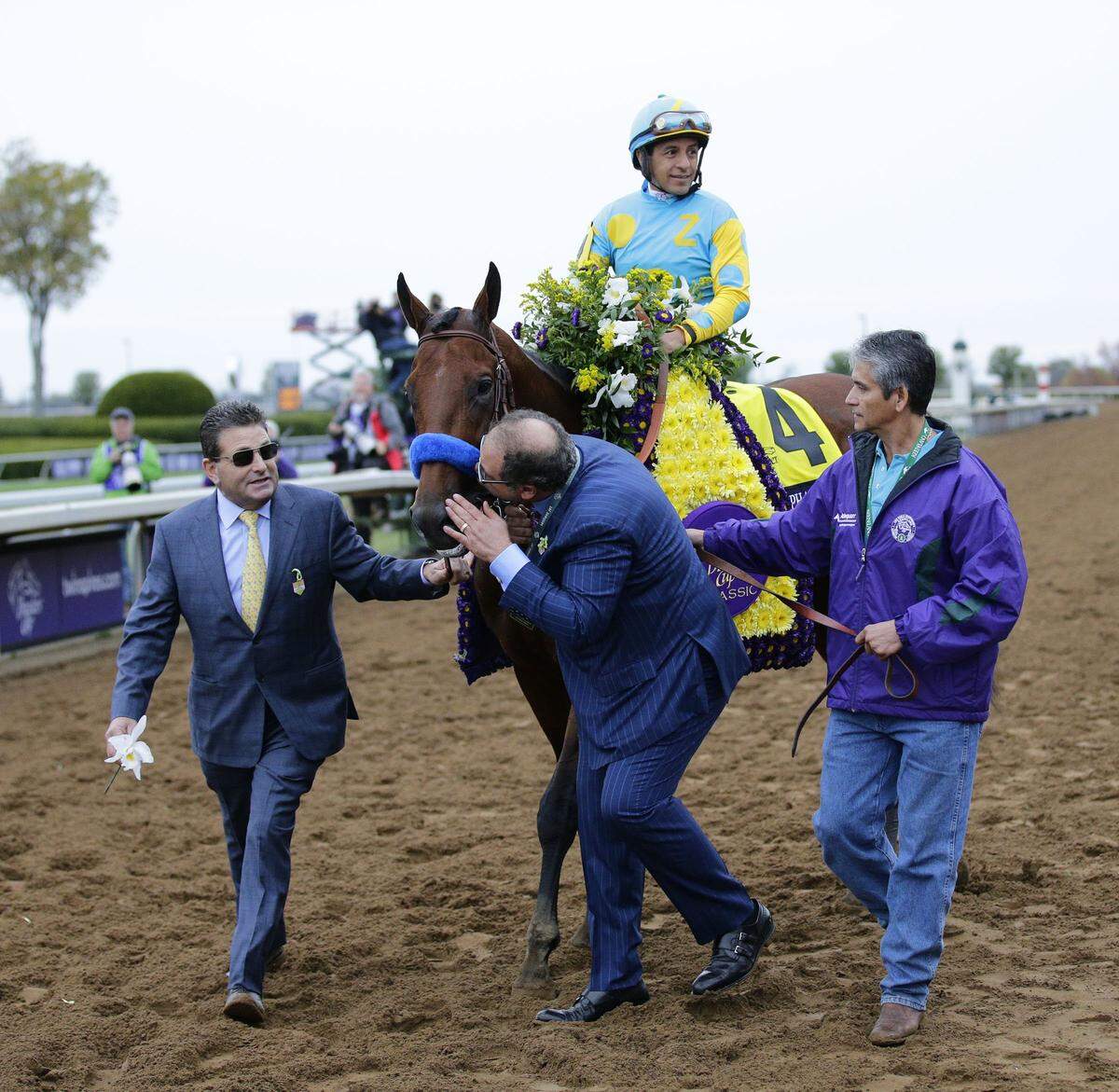
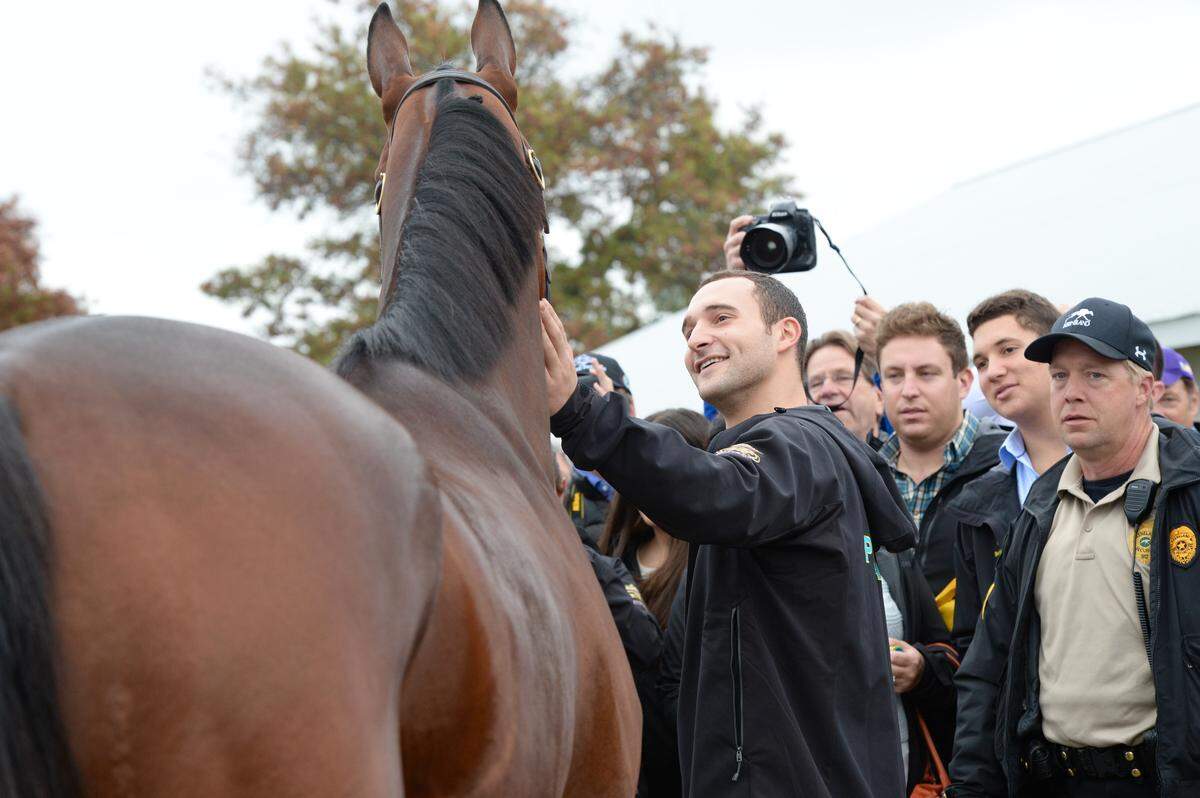
In 2016, racehorse owner Ahmed Zayat was riding high: His homebred champion American Pharoah had just given horse racing its first Triple Crown winner in 37 years and then won the Breeders’ Cup Classic, something no other horse had ever done.
He had climbed to the top of racing and he did it after pulling his Zayat Stables out of financial collapse.
Now the stables are again in crisis: He has been sued for $23 million, the stables are in the hands of a court-appointed receiver and he is, by his own admission, on the brink of financial collapse, according to court documents filed this week in Lexington.
Neither Zayat or his son, Justin, responded to requests for comment. The Zayats have not yet filed a response to the lawsuit and appeared to have no one in court on Wednesday for the emergency hearing that ordered Zayat Stables turned over to a receiver.
But the documents filed in the lawsuit make it clear: Even a Triple Crown wasn’t enough to save the man who would be king of the Sport of Kings.
“I have exhausted my personal bank accounts, my savings,” Zayat said in an Jan. 12 email to New York investment firm MGG, who accused him of defrauding his investors. “I am late on my own personal bills, I have borrowed money from not only friends but have even gone to Cash Advance lenders and borrowed money at ridiculous 30-60% interest rate to fund Zayat Stables.”
Ahmed Zayat at the top
Four years ago, American Pharoah was named Horse of the Year and the top 3-year-old male at the Eclipse Awards in January 2016, while Zayat Stables won Outstanding Owner and Outstanding Breeder.
And Zayat was cashing in.
In 2015, his horse won the Kentucky Derby, the Preakness and the Belmont, plus the Breeders’ Cup Classic and four other top races, earning almost $9 million on the track.
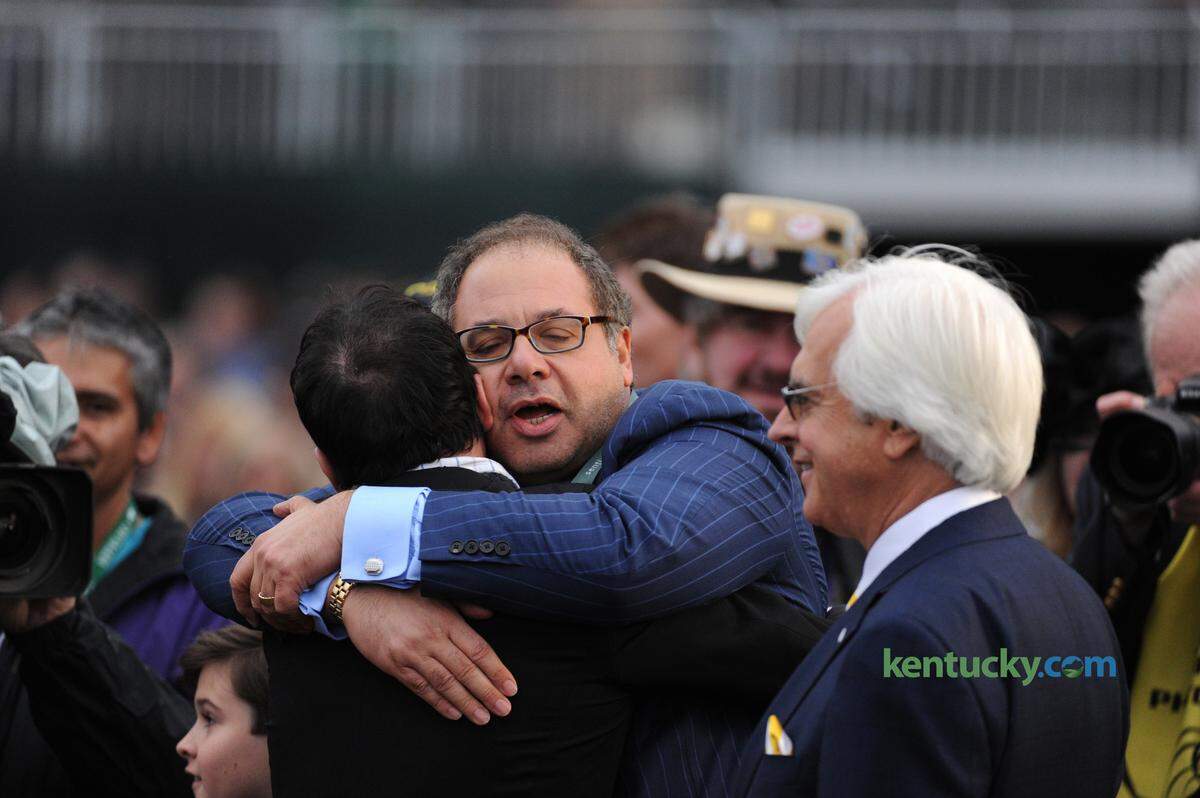
Zayat had sold American Pharoah for $23 million to Coolmore’s global bloodstock empire to stand at stud. After the horse finished racing, Zayat would get nine lifetime breeding rights (the right to send one Thoroughbred mare each year to the stallion to create a valuable foal) with an estimated value of $14 million, according to Zayat in the court filings.
Endorsements and merchandising deals also were rolling in:
▪ Premium Kentucky bourbon Maker’s Mark paid Zayat Stables $100,000 to put the distinctive teal and yellow silks on a commemorative bottle, for which Zayat would get $6 per bottle;
▪ Oaklawn Park racetrack, where American Pharoah won the Arkansas Derby the year before, wanted to give fans an bobble head of the horse to raise money for the Arkansas Racetrack Chaplaincy, for which Zayat also would get $2 each;
▪ Monster energy drink paid $1 million for an exclusive sponsorship;
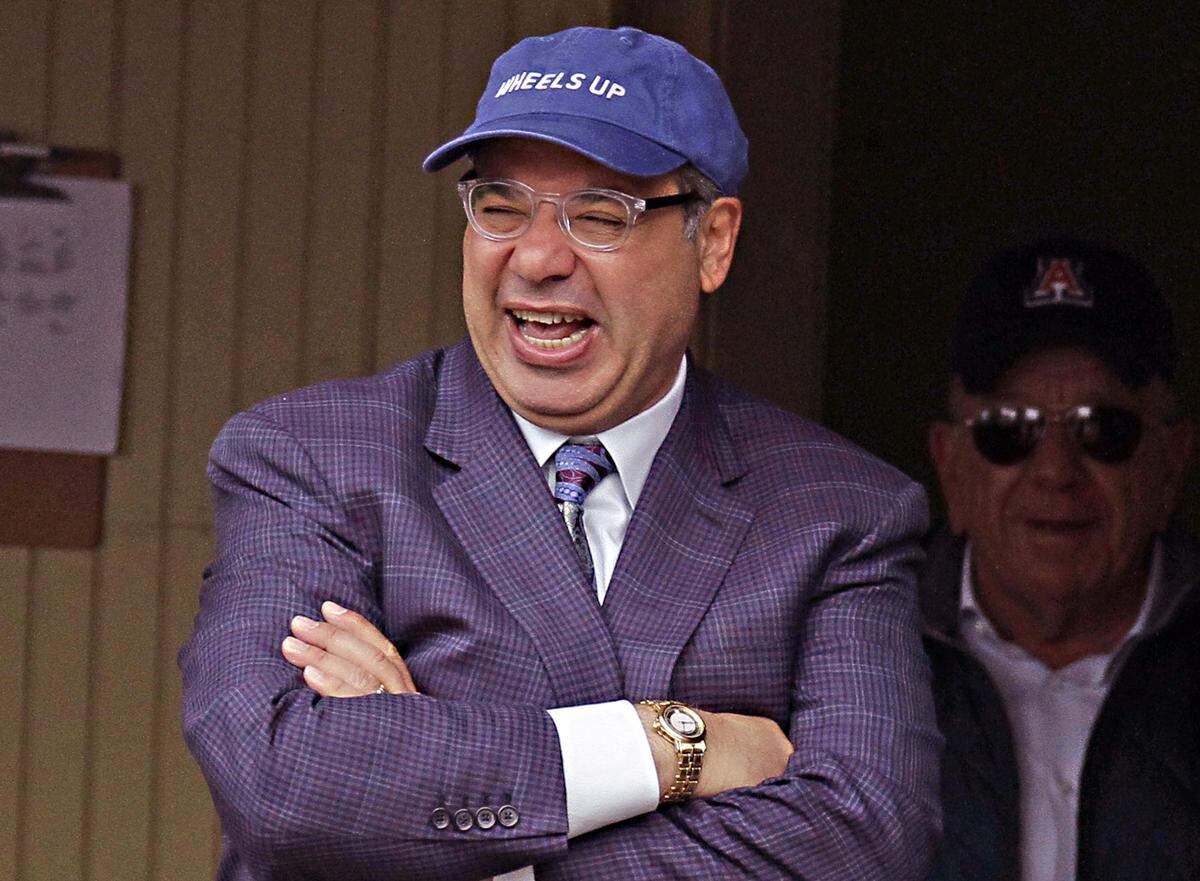
▪ Wheels Up aviation, a charter flight service, paid Zayat $200,000 and gave him eight private charter round trips from Teeterboro Airport to San Diego, in exchange for a sponsorship (Zayat wore their hat in the Belmont winners circle);
▪ Breyer Horses, which wanted to sell a resin Breyer Horse of American Pharoah for $99 each, made a deal for percentage of sales. So did several painters, sculptors and other artists.
▪ All Pro and Fanatics also signed merchandise licensing deals worth more than $35,000 and $20,000 respectively for goods, including autographs.
But in early 2016 Zayat decided to refinance his operation, which he had rescued from bankruptcy and a $34 million loan default once before. In 2010, Zayat filed for bankruptcy in Newark, N.J., to stop Fifth Third Bank from taking over his stable with a receiver. Later that year, a New Jersey federal court allowed for the reorganization of Zayat Stables.
In July 2016, he made a deal with New York investment firm MGG, which agreed to loan him up to $35 million, to be paid back over the next four years, if he signed over all of his and the stables’ assets.
American Pharoah breeding rights
MGG specifically mandated that Zayat had to include the American Pharoah breeding rights, which had been assigned to his family, according to court documents. Zayat agreed; he and Coolmore provided proof that the nine shares had been transferred from his family back to Zayat Stables.
Zayat apparently used the money to keep his stable afloat and continued buying and selling millions of dollars in horses. According to industry publications, between 2016 and late 2019, he bought more than $25 million in young horses, some of which were later re-sold.
But his stable stumbled, with some of his top 2-year-olds suffering injuries. Earnings plummeted from $10 million in 2015 to just over $1.2 million in 2019, according to Paulickreport.com. And by the fall of 2019, Zayat was facing a lien from one of his trainers for more than $600,000.
In September of 2019, Zayat warned MGG that he would miss an upcoming loan payment. He and his son, Justin Zayat met with them in New York to lay out a plan for recovery. And Ahmed Zayat sent a proposed “liquidation plan” for horses and assets to sell, including the American Pharoah breeding rights. He estimated the portfolio at more than $45 million, with the breeding rights nearly a third of that, $14 million.
On the liquidation plan is a notation next to the stallions section that says: “As requested by MGG, these will be the last assets to be sold. We agree on that plan.”
What Zayat did not tell MGG, the firm now alleges, is that the Zayats had already secretly sold those assets as well as many others.
According to the lawsuit that MGG Investment Group filed in Fayette Circuit Court on Tuesday, they had discovered that more than a year earlier the Zayats began selling off the nine shares of American Pharoah breeding rights and for well below the approximately $1.56 million that Zayat told them each was possibly worth.
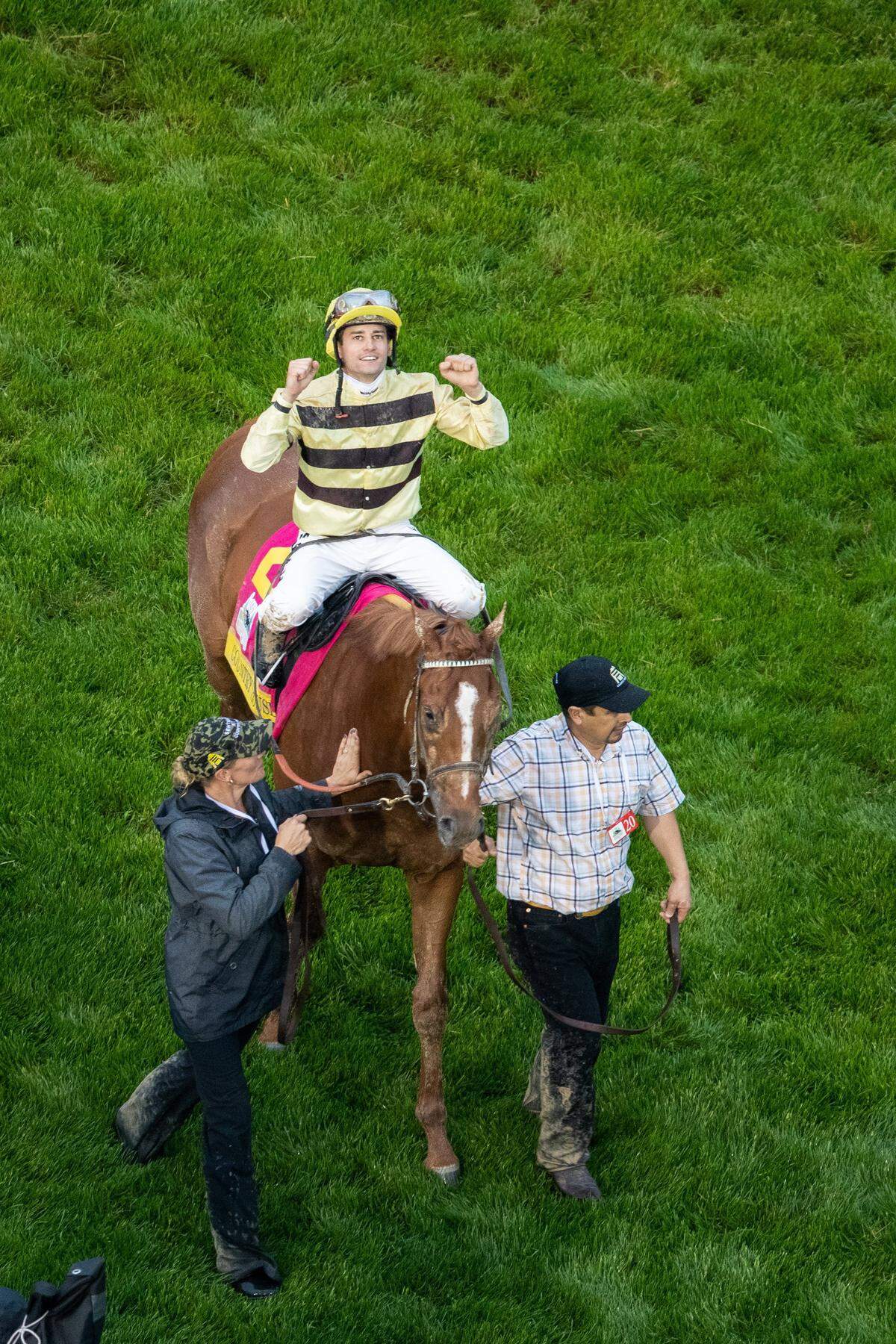
In December 2018, two shares were sold for $375,000 each to LNJ Foxwoods, the stable of Larry, Nanci and Jaime Roth, who are also partners in controversial 2019 Kentucky Derby winner Country House as well as 2019 Breeders’ Cup Filly & Mare Sprint winner Covfefe.
In April 2019, four more shares were sold to Coolmore; two for $400,000 each and two for $350,000 each. In May, Coolmore paid $350,000 for another share; then in June, $350,000 for two more.
In all, the shares were sold for $3.3 million, which MGG accuses Zayat of improperly pocketing.
‘I did not want you to panic’
MGG said in court documents that they confronted Zayat, who was on a fundraising “roadshow” in Asia, with their findings. Zayat apparently at first attempted to deny the sales.
Then, on Jan. 12, Zayat apparently sent an extraordinary email to MGG admitting to the sales, saying the money was used to make previous payments to MGG and another lender, Cedarview, and to keep the stable afloat.
“I haven’t taken a nickel out even though our security agreement allows me to pay my taxes and other obligations. I haven’t even paid my employees for months. My son goes 4 months without being paid.”
In the email Zayat told MGG that he had also taken a loan against his house from a rabbi he knew in an effort to make ends meet. He begged for time; time for his injured horses to heal and time to lure in new Chinese investors.
“I have used every trick in the book to find money / Borrow money,” Zayat wrote in the email. “Just so I can operate Zayat Stables and float it for the last 15 months to allow myself the chance to get a partner that would make my company financially stronger. If I failed to inform you of sales, it was not because I was acting in bad faith or not disclosing to. I did not want you to panic knowing that I still have a chance to save the day, save the company, get you paid out IN FULL and MAYBE Zayat Stables to get a partner and allow my family and me the 10’s of millions of dollars I’ve invested in the company.”
He urged MGG to let him set up a dispersal sale with Fasig-Tipton, rather than file legal action that would prompt a fire sale, driving down the value of his horses.
But MGG apparently felt the stables were in such jeopardy that they had no choice. In Wednesday’s emergency hearing, the company asked for, and got, control of the stables’ assets, including horses. The stable was turned over to a receiver, Elizabeth Woodward of Dean Dorton, a CPA firm in Lexington. She will work with bloodstock expert Gatewood Bell, the company said in its filings, to sort out how to protect the remaining assets.
MGG accuses Zayat and Zayat Stables of secretly selling off other assets as well. Starting in December of 2018, Zayat and his business sold interests or rights to at least 15 thoroughbreds, including Bodemiester, Eskenderaya, Zensational and American Cleopatra, reportedly for more than $1.3 million, the lawsuit alleges.
MGG does not believe they know about all of Zayat’s “deceptive actions,” but had found millions in collateral interests that he had sold “out from under” MGG’s security interests, according to a statement filed in the lawsuit.
What comes next
In a memorandum filed in the case, MGG’s attorneys indicate that the investment firm may pursue the claims it has to the breeding rights sold to LNJFoxwoods and to Coolmore.
“To be clear, MGG does not believe that Zayat’s purported sales extinguish its lien in those breeding rights. However, the fact that Zayat attempted to sell Collateral that he had no right to dispose of – and then pocketed $3.3 million dollars from third parties as a result – clearly demonstrates his bad faith and fraud.”
That could mean that Coolmore, LNJ Foxwoods and others in the horse industry, including some of the biggest names in breeding, may be sucked into the Zayat legal whirlpool.
That’s because American Pharoah, who stands for a reported $200,000 at Coolmore’s Ashford Stud in Woodford County, has turned out to be quite a stallion.
In 2019, he was the top First Crop sire, according to The Bloodhorse Stallion Register, with 72 runners, 27 winners and his progeny have already earned more than $2.7 million on the track.
At the auctions, he is proving even more valuable: In 2017, when his first babies were coming up for sale, a weanling filly by American Pharoah sold for $1 million and celebrity chef and restaurateur Bobby Flay bought a broodmare carrying an American Pharoah baby for $1.25 million.
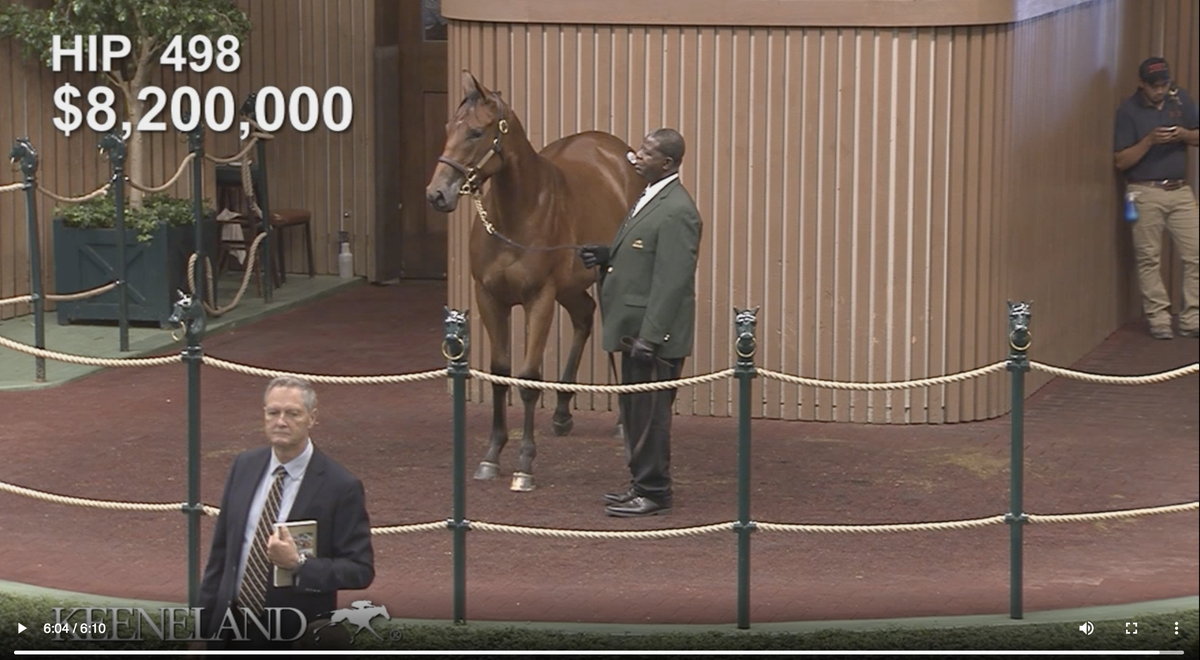
But that was nothing: Last September, a yearling filly sired by American Pharoah sold for $8.2 million, the highest price ever paid for a filly at Keeneland and one of the highest prices ever. In 2019 alone, according to The Bloodhorse, his progeny (including broodmares carrying his foals) generated about $49 million in auction sales.
Coolmore had no immediate comment on the lawsuit.