
Thoroughbreds and Warmbloods reign at Games
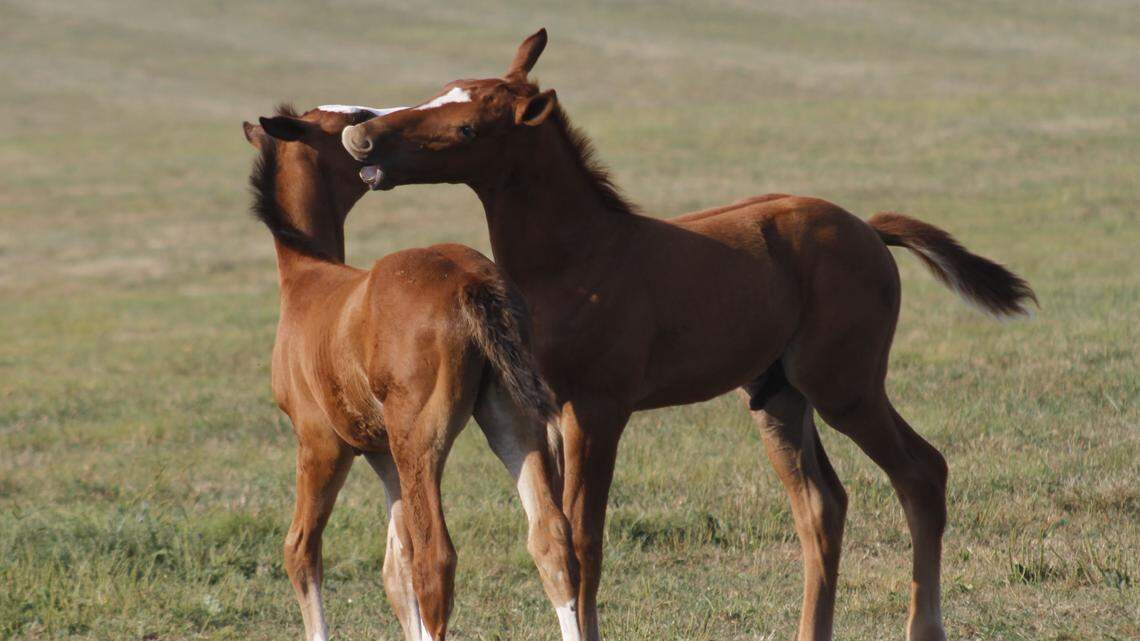
Although there are many fine equine athletes that qualify as sport horses, there will be little doubt by the end of the Alltech FEI World Equestrian Games' two-week run why Thoroughbreds and Warmbloods reign supreme as the horses of choice among competitors.
Whether you are watching the power of show jumping, the grace of dressage, or the all-encompassing skill that is three-day eventing, you are witnessing a showcase of the various attributes that Thoroughbreds and Warmbloods possess.
Already during the Games, the brilliant Dutch Warmblood stallion Moorlands Totilas won three gold medals in dressage, the United States' Ravel, another Dutch Warmblood, earned two individual dressage bronze medals, and Cool Mountain, a British-bred Thoroughbred, was among early leaders in the eventing competition for England's William Fox-Pitt.
Inherently bred for racing, the hot-blooded Thoroughbreds boast long, lean muscles, ample stamina, and natural athletic ability.
The term Warmblood actually encompasses a variety of breeds, including the Hanoverian, Selle Francais and Trakehners, that are heavier, more muscular horses with ample bone on their frames and, generally speaking, quieter temperaments.
"I think there are terrific attributes to both breeds," said Lisa Lourie, owner of the Lexington-based Spy Coast Farm, a breeder of Warmbloods. "In show jumping, which is my world, I guess Warmbloods win out because they have a little heavier bone and they seem to be a little bit better suited for it. But if you get the appropriate Thoroughbred in the ring, there is nothing better.
Like Thoroughbreds, good Warmbloods don't come cheap, usually starting at $50,000. Top performers command top prices, depending on how well-trained and successful a show jumper or dressage horse is, said Mason Phelps, chairman of the National Horse Show. "Without naming names, there are a handful that have sold for $3 [million] to $4 million," Phelps said.
In 2006, a Hanoverian stallion named Londontime set a record with an auction price of 510,000 euros (about $660,000) in Germany.
Marathon versus sprint
Comparing Thoroughbreds to Warmbloods is a little like comparing a marathon runner to a 100-meter sprinter, according to star U.S. eventer Buck Davidson.
"In a Thoroughbred, you really have it all, in my opinion," said Davidson, who counts both Thoroughbreds and Warmbloods among his mounts. "There is nothing better than getting to eight minutes on the course and you still have four more and they run right on. Whereas with a Warmblood, you better not get behind the clock.
"In the dressage and in the show jumping, it is more of a power game; there is no speed involved really," Davidson continued. "For jumping, you need that real power."
Each breed has its share of challenges that riders and trainers must help them overcome.
"Certainly if you have a Thoroughbred, especially one that has raced, there is a base of fitness there you don't have to worry about, where with Warmbloods, to a degree, you really have to establish that fitness for them," said Olympic gold medal eventer Phillip Dutton.
"But a Thoroughbred can be a bit more high-strung and it can take some time to get them used to going through a competition and not expecting to race. So there is some retraining there."
Bluegrass king
Though both Thoroughbreds and Warmbloods get top billing in the realm of sport horses, it is the former that is the undeniable king of the Bluegrass.
While the Warmbloods certainly won't overtake that title anytime soon, their popularity is growing in the area. However, one thing breeders warn must be taken into consideration when bringing Warmbloods into the state is that they don't benefit from the famed bluegrass the way Thoroughbreds do.
"The bluegrass is so rich it can almost be toxic to the Warmbloods," Lourie said. "The Thoroughbreds seem to be able to tolerate it more with their higher metabolism. ...
Ultimately, when it comes down to it, any horse that has made it to the World Equestrian Games has proven its worth, no matter what the breed.
"At the end of the day, I'll ride any good horse. It doesn't matter what breed it is," Dutton said.
This story was originally published October 3, 2010 at 3:57 PM with the headline "Thoroughbreds and Warmbloods reign at Games."