
John Clay: Pimlico's problems louder than Preakness fanfare
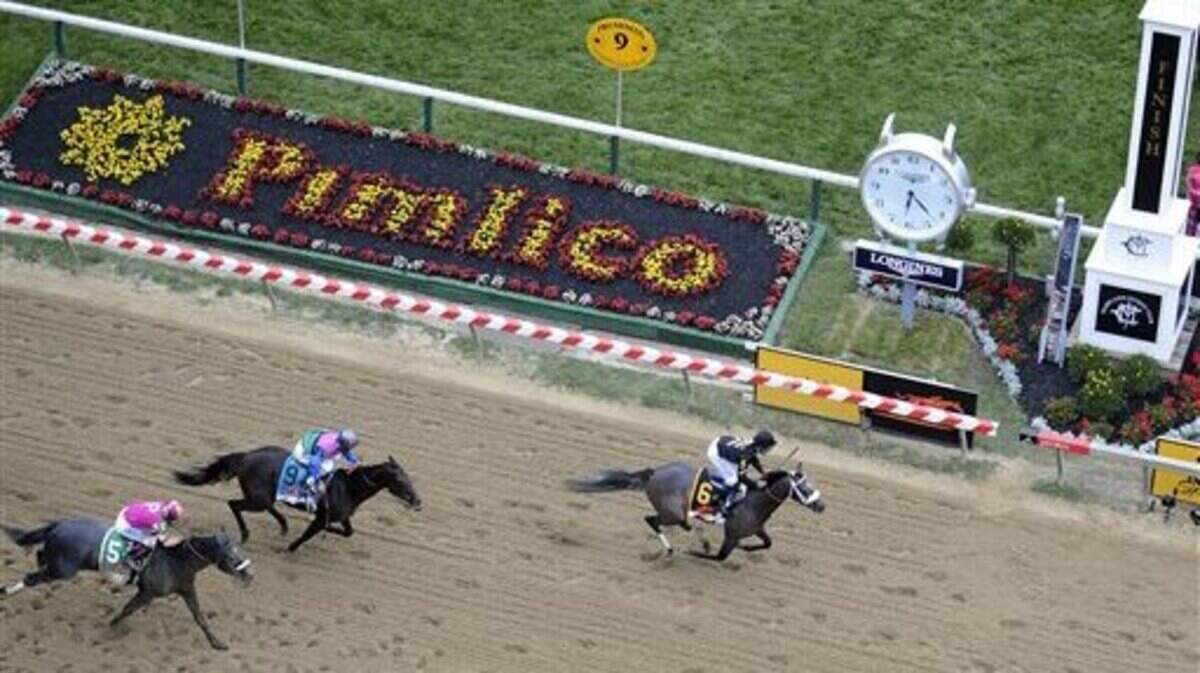
BALTIMORE — On the eve of the Preakness Stakes, it was very quiet around the Stakes Barn at Pimlico Race Course on Friday morning.
"I think Art Sherman got more action last year," joked Bob Baffert.
That's because as the trainer of last year's Kentucky Derby winner California Chrome, Sherman was a new commodity, a fresh face. Baffert is old hat, even if he rarely wears one. Baffert has won the Preakness five times, including three-for-three when bringing a Kentucky Derby winner to Old Hilltop.
Saturday, the 62-year-old trainer will attempt to go four-for-four when he saddles Derby winner American Pharoah in an eight-horse field, the race's smallest in 15 years.
If it was all quiet at the track, however, maybe that's because the real action around these parts is going on behind the scenes where changes, maybe even big changes, could be coming.
Frank Stronach is the 82-year-old owner of Magna Entertainment, which since 2002 has operated Maryland's two major thoroughbred racing facilities, Pimlico and Laurel, situated just 28 miles apart between Baltimore and Washington.
And after years of standing pat with his racing interests here, Stronach has sent Tim Ritvo, president of Stronach's successful Gulfstream Park in Florida, north to figure out how Magna's Maryland fortunes can be improved.
For starters, Stronach sees the racing climate here is much better than in previous years. Casino money has helped subsidize and strengthen Maryland racing. Track management has signed a financial agreement with horsemen that has finally quelled a long-standing feud between the two.
So if the time is right for financing improvements, there is the question of where can Magna get the biggest bang for its investment buck?
The problem is Pimlico.
The track is an old, run-down eyesore in a bad neighborhood that was in need of major upgrades long ago. Yet many believe Pimlico is past the point of even a major renovation and instead would need a total tear-down and rebuild to rise from the ashes on the same spot of ground.
Given its location, however, and its poor access to major Maryland parkways, it's doubtful Pimlico could ever become the major entertainment complex Stronach and Ritvo have built at Gulfstream.
Laurel possesses attributes Pimlico lacks. It is in a nice area, sitting on 310 acres just off the Baltimore-Washington Parkway. There is a reason the Maryland Jockey Club awarded 112 racing dates in 2015 to Laurel compared to just 37 for Pimlico.
Wouldn't it make more sense for Magna to consolidate its efforts and expenditures into one track?
That would mean the end of the Preakness in Baltimore, however, and the city's political leaders aren't likely to stand for that without a fight.
Given the negative publicity the city received in wake of the Freddie Gray death and subsequent riots, losing the Preakness would hand Baltimore's image another blow.
In previous years, whenever there were rumblings about a possible Preakness move, legislative leaders rose up to shoot down the idea.
The Pimlico problem is going to have be addressed at some point, however. A move to Laurel could be best for all concerned.
"If Stronach, at age 82, is willing to spend his money to make Laurel a suitable home for the Preakness and to give the sport a sensible model for the future," wrote legendary Washington Post racing columnist Andy Beyer this week, "industry leaders and politicians should recognize they are getting an offer they may never see again."
Ritvo even told the Blood-Horse that Magna would consider moving the Preakness from Saturday to Sunday, with Saturday being Black-Eyed-Susans Day and Sunday being Preakness Day.
"It's something we've been looking at for awhile," Ritvo told the magazine.
After years of quiet, Magna appears ready to make some noise.
This story was originally published May 15, 2015 at 4:30 PM with the headline "John Clay: Pimlico's problems louder than Preakness fanfare."