Tiz the Law is one of the biggest Derby favorites in decades. It doesn’t mean he’ll win.
The prolonged prep schedule leading up to this year’s Kentucky Derby has given horseplayers an extra four months to consider the options and construct their wagering plans.
The first Saturday in May has been replaced by the first Saturday in September, but all that added time has only solidified top billing for this 2020 Derby.
Tiz the Law — winner of the Florida Derby in March, the Belmont Stakes in June and the Travers Stakes in August — will be one of the biggest Kentucky Derby favorites in recent memory.
Only one Derby favorite in the past 25 years has gone off at shorter than 2-1 odds. That was Point Given, who was the 9-5 betting choice in 2001. He finished fifth. Only five Derby favorites in the past 50 years have gone off at even odds or shorter, none since 1992. Three of those heavy betting favorites lost, too.
Tiz the Law has the advantage of already proving himself at the Derby distance of 1¼ miles — he was a marvel going that far in his Travers romp — but things don’t always go as planned on Derby Day, and we’ll see Saturday if that holds as true in September as it has in May.
By then, Tiz the Law will either be the Kentucky Derby champion, or he’ll join this list of the biggest Derby favorites in the past 50 years to miss out on the winner’s circle, one more reminder of how difficult this race can be.
1976 — Honest Pleasure
The reigning 2-year-old champ following a dazzling juvenile campaign that featured several major stakes victories — including a 7-length romp in the Champagne Stakes — Honest Pleasure won the Florida Derby and Blue Grass Stakes on his way to Churchill Downs.
In Louisville, he met Wood Memorial winner Bold Forbes, who began his career as a 2-year-old in Puerto Rico before shipping to New York for a couple of victories late that season.
Honest Pleasure went off as the 2-5 Derby favorite, with Bold Forbes the 3-1 second choice.
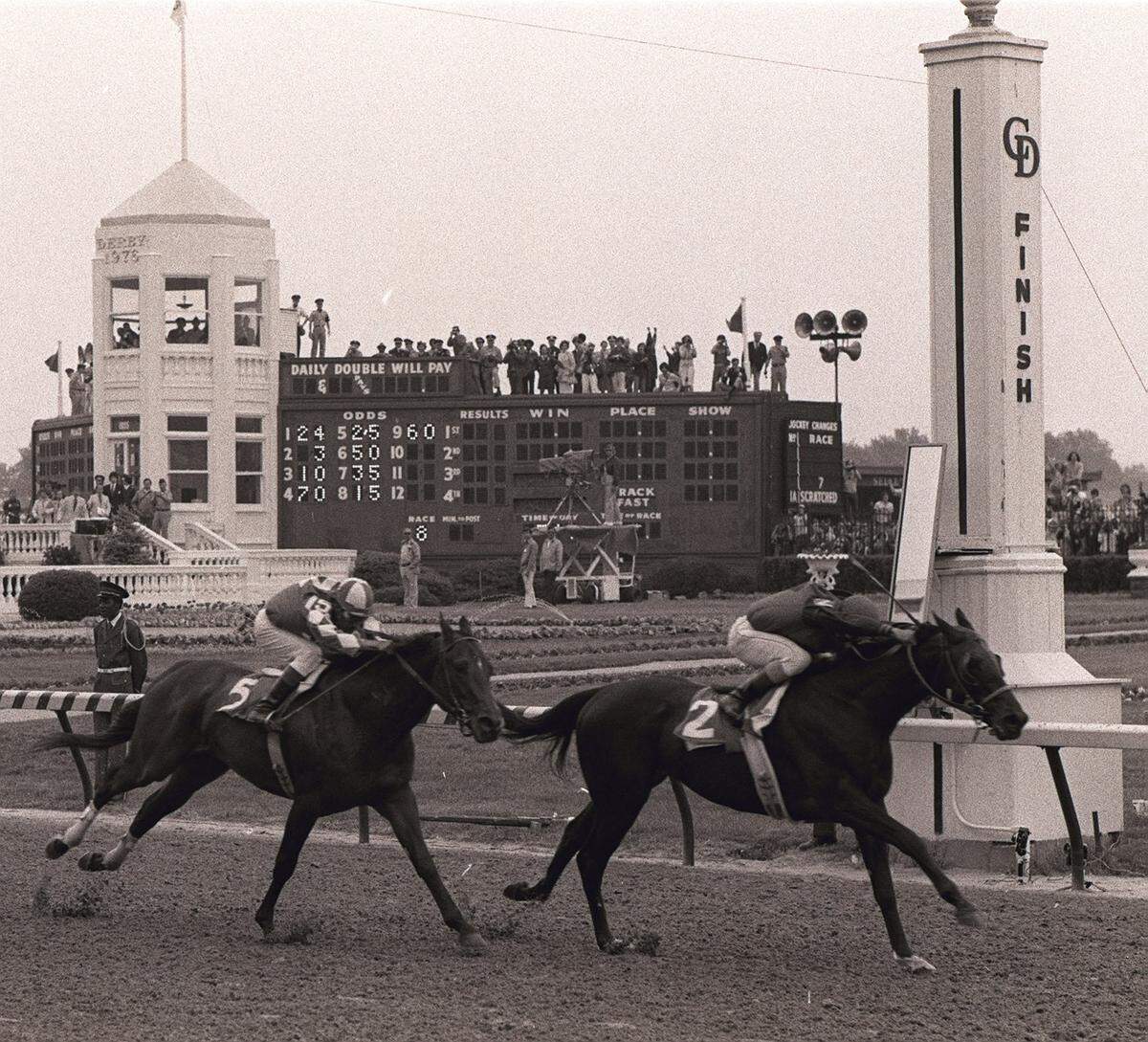
Typically a front-running colt, Honest Pleasure stayed off the pace as Bold Forbes took the early lead, widening his margin to 5 lengths a half-mile into the race. Honest Pleasure, running second all the way, cut into his rival’s lead on the far turn and nearly drew even with him in the stretch, but he never got past him. Bold Forbes won by a length.
Two weeks later, they ran 1-2 all the way around in the Preakness, too, before both tired from the battle, with Bold Forbes finishing third and Honest Pleasure fifth as the 9-10 favorite. Honest Pleasure skipped the Belmont Stakes — a race won by Bold Forbes — but later that year returned to the winner’s circle in the Travers Stakes. He was retired the following year.
Honest Pleasure still ranks as the biggest Derby favorite since 1948.
1978 — Alydar
Alydar and Affirmed had faced off six times as 2-year-olds, with Affirmed winning four of those races — along with 2-year-champion honors — and Alydar the other two. The rivals went their separate ways during Derby prep season. Affirmed stayed on the West Coast, where he won the Santa Anita Derby and was a perfect 4-for-4 going into Churchill Downs. Alydar conditioned in the east, winning the Florida Derby and Blue Grass Stakes and also taking a 4-for-4 record as a 3-year-old into Derby Day.
Despite Affirmed winning the series with Alydar the year before, the betting public sided with Calumet Farm’s Alydar for the Derby. He was the 6-5 favorite. Affirmed was the 9-5 second choice. The battle was on.
Affirmed raced close to the leaders in the early going and made his move on the far turn at Churchill, while Alydar settled in near the back of the pack. Affirmed drew clear in the stretch and a late run by Alydar yielded only a runner-up finish. The favorite never looked a true threat to win the Derby — ultimately beaten by 1½ lengths — but this was just the beginning.
Two weeks later, Affirmed won the Preakness by a neck over Alydar. Three weeks after that, the two rivals delivered one of the most thrilling races in the history of the sport, linking up on the backstretch and running side by side all the way home, with Affirmed just getting the edge at the wire to become a Triple Crown champion.
They met once more — at the Travers Stakes later that year — in a race that saw Affirmed cross the finish line first, but only after interfering with Alydar on the backstretch, according to the stewards, who placed Alydar above Affirmed in their 10th and final battle.
In 1990, Alydar’s leg was broken under mysterious circumstances at Calumet Farm, and he was euthanized two days later.
1985 — Chief’s Crown
The 2-year-old champion and inaugural Breeders’ Cup Juvenile winner in 1984, Chief’s Crown was the clear favorite for the following year’s Derby, going off as a 6-5 betting choice. He entered that race after winning all three of his starts as a 3-year-old, including victories in the Grade 1 Blue Grass Stakes and Flamingo Stakes.
The second choice that day was 4-1 Spend a Buck, who had run third to Chief’s Crown in the Juvenile before starting his 3-year-old campaign with a third-place finish in the Bay Shore Stakes and later earning two victories at Garden State Park in New Jersey.
A duel between these two never materialized.
Spend a Buck went to the front and opened up a lead of several lengths on the backstretch with Chief’s Crown running second for most of the race. The favorite never closed the gap, however, and was caught late in the stretch to finish third as Spend a Buck romped to a 5¼-length victory. At the time, it was the seventh-largest winning margin in Derby history.
Chief’s Crown went on to finish second in the Preakness and third in the Belmont Stakes. He did win the Travers Stakes later in the year, but he finished fourth in the Breeders’ Cup Classic and was retired at 3 after that race.
1989 — Easy Goer
The champion 2-year-old in 1988 despite finishing third over a muddy Churchill Downs track in the Breeders’ Cup Juvenile, Easy Goer was 3-for-3 as a 3-year-old heading into Derby Day. His accomplishments early that year included a victory in the Wood Memorial and a 13-length domination in the Gotham Stakes, where he bested Secretariat’s record time by a full second.
Clearly, he was the horse to beat in Louisville, and his designation as a coupled entry with stablemate Awe Inspiring, another Grade 1 winner, only shortened his odds. Easy Goer went off as the 4-5 favorite. Santa Anita Derby winner Sunday Silence was the 3-1 second betting choice. Sunday Silence, relatively lightly raced as a 2-year-old, also had four weeks off between his final prep and the Derby, while Easy Goer was coming into the race just two weeks after his Wood Memorial win.
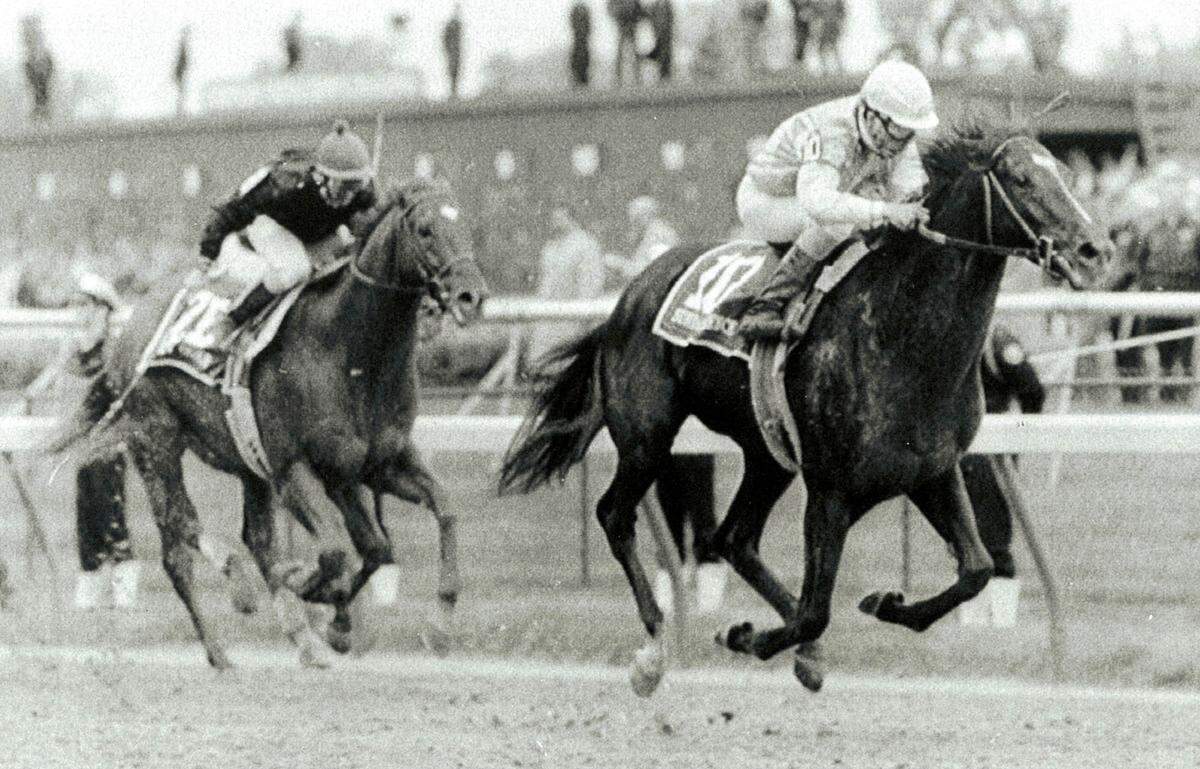
This would become one of the sport’s great rivalries, but the Derby wasn’t much of a contest.
Sunday Silence ran in fourth for much of the race before taking over at the top of the stretch and — despite weaving for much of the way home — winning by 2½ lengths. Easy Goer had somewhat of a troubled trip and again seemed to struggle over the muddy Churchill surface. He caught some others late in the stretch and finished second, but he never looked like a threat to catch the winner.
Sunday Silence was victorious two weeks later after a thrilling stretch duel with Easy Goer, who turned the tables three weeks after that with a commanding victory in the Belmont Stakes, taking that race by 8 lengths over runner-up Sunday Silence in what is still the second-fastest winning time, trailing only Secretariat’s iconic performance 16 years earlier.
Five months later, they met one last time, with Sunday Silence finishing first and Easy Goer second in the Breeders’ Cup Classic.
1992 — Arazi
The Kentucky Derby hadn’t seen anything quite like Arazi, and the hype had built for months.
Arazi had won six consecutive races — including three Group 1 victories — in France before shipping to Louisville for the 1991 Breeders’ Cup Juvenile. There, he unleashed a stunning move from the back of the pack, weaving his way through traffic before exploding to the lead on the far turn. In the stretch, the 2-year-old colt looked like another breed of animal altogether.
“Here, indeed, is a superstar!” exclaimed race announcer Tom Durkin as Arazi coasted to the wire.
Then, things got really interesting.
Immediately after the Juvenile victory, Arazi underwent knee surgery in what was called a “preventative measure” that would not impact his 3-year-old campaign.
By early February, with Arazi back home in Europe, owner Allen Paulson said his star colt was in “perfect” condition and would race just once before returning to Churchill Downs on Derby Day. In late March, Dr. Larry Bramlage, who had performed the surgery in November, said Arazi was in “phenomenal” shape and added that he planned to place a wager on him on the first Saturday in May.
On April 7, his one Derby prep came. In France. On grass. At just 1 mile.
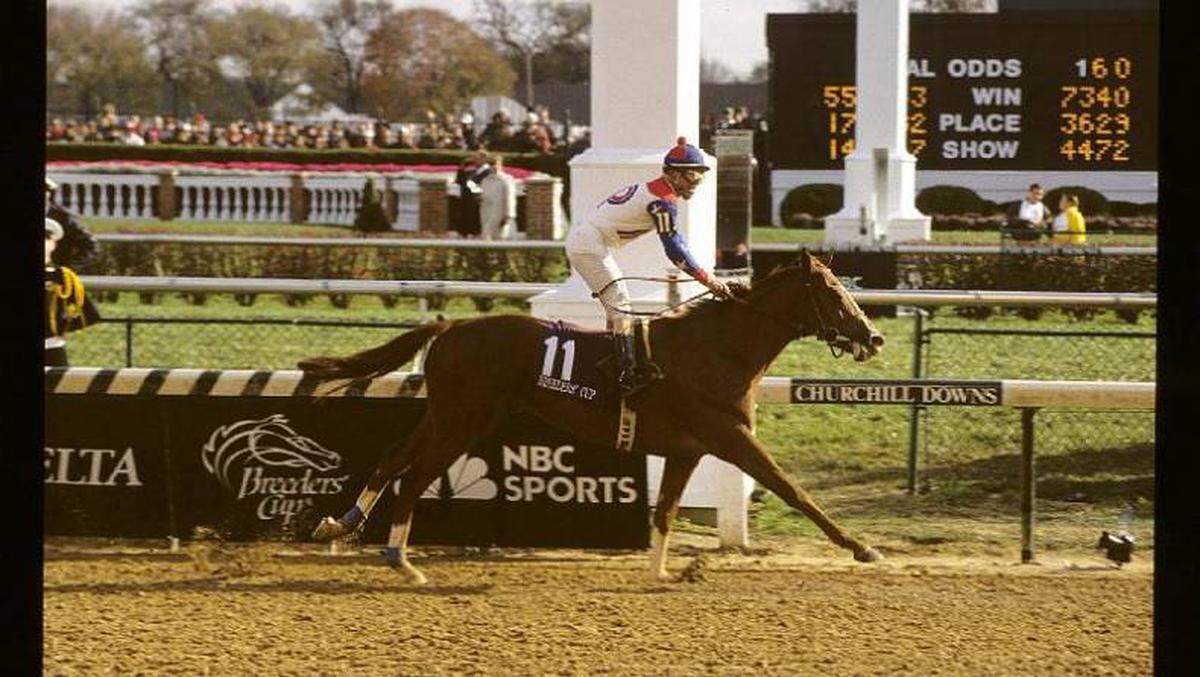
Arazi romped, of course, and the leadup to the ’92 Derby turned into an Arazi-centric circus as soon as he arrived in Louisville six days before the race. He was followed by throngs of onlookers everywhere he went.
Even Secretariat’s trainer, Lucien Laurin, who had not been to the Churchill stables since he won the Derby nearly two decades earlier, flew in from Florida just to get a glimpse at what all the fuss was about.
“I wanted to see the horse, what he looked like compared to Secretariat,” Laurin said. “He might be as good as Secretariat. … Wait till he runs the race, and we’ll see.”
Arazi drew a far outside post, but it made no matter to the betting public, which sent him off as the 9-10 favorite, odds that were surely shorter thanks to the scratch earlier that day of Santa Anita Derby winner A.P. Indy, who had been the 7-2 second choice on the morning line.
The race began, and Arazi took his customary spot near the back of the pack. On the backstretch, he unleashed another furious run under jockey Pat Valenzuela, at one point passing a total of 11 horses in just 10 seconds. As they came off the final turn, Arazi had more or less reached even terms with pace-setter Dance Floor and eventual runner-up Casual Lies.
“I got right to the leaders,” Valenzuela said after the race. “… I thought I was going to inhale them.”
That’s as far as they got. Arazi never took the lead, faltering in the stretch to finish eighth. As the favorite fought on, 16-1 shot Lil E. Tee — with Pat Day aboard for his only Derby victory — barreled past him on the way to a major upset.
The second-guessing began immediately.
An unnecessary surgery, an unorthodox prep schedule, general overconfidence, and overblown media hysteria were among the many reasons cited for Arazi’s flop. Whatever happened to the favorite, it served as yet another reminder: things rarely come easy on Derby Day.
Saturday
Kentucky Derby
Post time: 7:01 p.m.
TV: NBC-18
This story was originally published August 31, 2020 at 7:24 AM.