
Chief steward, peers defend Espinoza's use of whip in Derby
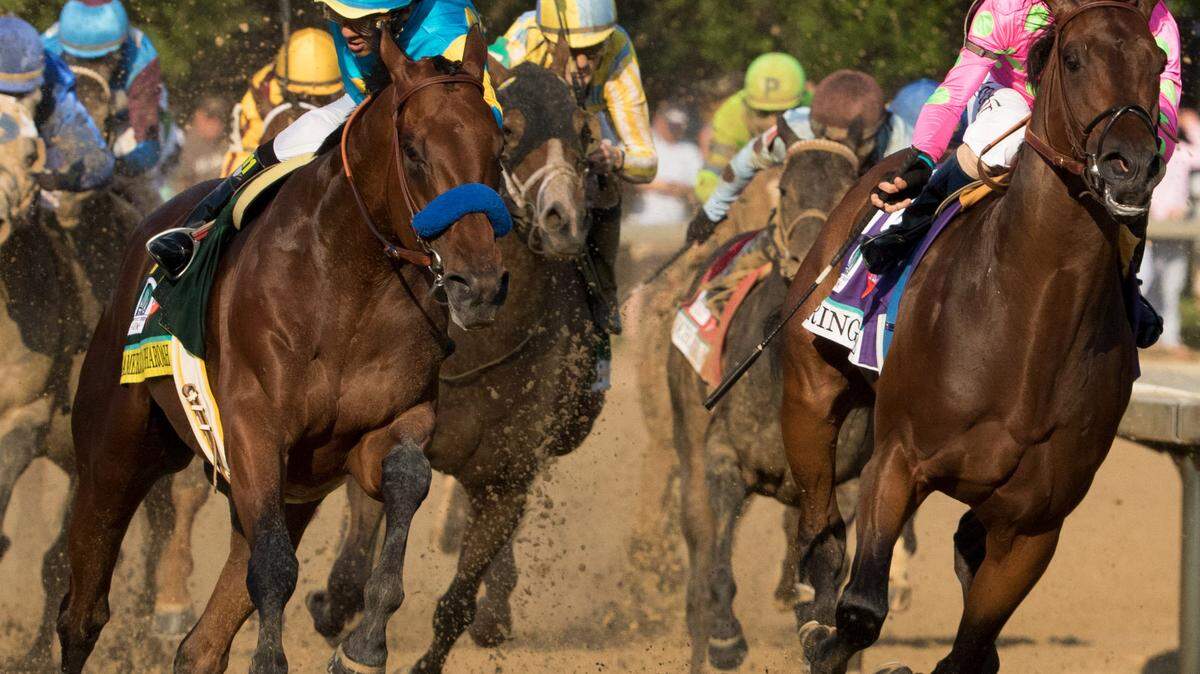
Victor Espinoza thrust his right arm in the air just past the Churchill Downs finish line, an instinctive reaction to the jubilation washing over him having just notched his third career triumph in the Kentucky Derby.
In the days that followed Espinoza's victorious ride aboard American Pharoah, the shock-absorbing stick he raised became a subject of debate.
While Espinoza's job was to do all he legally could to get his colt home first, he has received criticism from some outlets and in social media for how much he struck American Pharoah with his crop (reportedly 32 times) down the stretch.
Kentucky chief state steward Barbara Borden said none of the 12 state veterinarians at the Derby found any welts or marks on American Pharoah in the initial moments following the race, nor in the hour-plus he was observed after.
In an interview with the Herald-Leader on Friday, Borden added that after reviewing the race again in the wake of public scrutiny, the stewards felt Espinoza's use of the crop "fell within our regulations and felt no disciplinary action was warranted.
"Honestly, nobody called us about it or anything. We just started hearing about it," Borden said. "We have (reviewed the ride again) and we have the same feeling we had after the race was over: It's within the boundaries of our regulations. He did hit the horse quite a few times but it was all within the rules of the state."
Perception can be just as important as any regulations in Thoroughbred racing. Since 2009, however, Kentucky has been among the states trying to satisfy both parts of that equation in mandating the use of lighter, padded, shock-absorbing riding crops, designed to be less severe than the old, leather ones.
Where previous crops had little surface area to them and a more severe leather "popper" on the end, the safety crop has a smooth contact area throughout the shaft and "is covered by shock absorbing material, according to standards set by the Association of Racing Commissioners International.
The safety crops, which can have a maximum weight of eight ounces, cause more of a noise-making effect than anything, according to some jockeys — who add it would take some exceptionally aggressive riding to cause physical harm with those sticks.
"I like the new whips," jockey Channing Hill said from Churchill Downs this past week. "It does make quite a bit more noise than the old ones did. The new ones, you hit and it has an oomph sound to it, but you know you're not getting too far into them.
"It's nice, because even when you hit them on the shoulder, they hear that and they're responding a lot more to that noise than the actually whipping part of it. You can whack yourself pretty good with them on your leg and it doesn't bother you at all. Even the hardest-hitting guy in the jockeys' rooms ... you're not going to see lesions or anything. If you use the olds whips, I guarantee you would have seen some markings from the old whips from the whip use."
Jockey Calvin Borel has been where Espinoza is in terms of facing criticism for his efforts during a high-profile race. Borel faced heat over his whip use on champion filly Rachel Alexandra during her victory over Macho Again in the 2009 Grade I Woodward Stakes. It was reported he had gone to the stick more than 20 times.
Borel was using a safety crop that day as well and said that, in his opinion, the because of the design of the padded crops, jockeys might have to use it more than they would the old whips.
"You have to hit them six times to one times to the old crop; that's what it amounts to, because they really don't feel it," Borel said. "With that kind of crop, you have to — not hit them hard — but keep popping them.
"Riders hit them more often probably because of the pop, pop, pop; it keeps making noise. And it probably looks worse. With the regular whip, you get their attention when you hit them one time. But this one, you have to keep their attention."
When asked about Espinoza's use of the crop during a national teleconference last week, American Pharoah's trainer, Bob Baffert, said he thought his rider was keeping the champion colt — who had won his previous four starts by a combined 221/4 lengths — to task in what was the first real stretch battle of his career.
"First of all, the whips they use now, they're so light and ... he was just keeping him busy because I think the horse was not responding when he turned for home," said Baffert, who added that American Pharoah also wears earplugs in his races. "I remember he said in Arkansas when he turned for home, he sort of threw his head up like he could feel him hitting the brakes, and he just had to tap him on the shoulder to keep him going.
"He was hitting him, but he hits him on the saddle towel. He doesn't really hit that hard, so he was just keeping him busy."
Espinoza's use of the crop did draw disciplinary action recently in other another race. Blood-Horse.com reported Friday that Santa Anita Park stewards were fining Espinoza $300 for "causing a break in the skin" with his whip on Stellar Wind during her 51/4-length victory in the Grade I Santa Anita Oaks on April 4.
The Santa Anita stewards told Blood-Horse the break in the skin was noticed in the test barn, but John Sadler, trainer of Stellar Wind, later told the publication, "This is the first I've heard of it, and I don't remember noticing any marks on the horse then."
A rule that will not allow jockeys to strike a horse more than three consecutive times without giving the horse a chance to respond is set to be enforced in California starting July 1. Though Kentucky does not have that rule, Borden said, Espinoza's ride on American Pharoah actually did follow those guidelines.
As a fellow rider, Hill wonders what criticism would be leveled had Espinoza not done all he could to win the Kentucky Derby.
"Let's just say, hypothetically, he hits him twice and he gets beat. It would have been a much bigger story than if he hit him 30 times and wins," Hill said. "I think a lot of people's assumption is the whips they see are like at a cattle yard, just a straight piece ... with whip action at the end. And that's just not the case. Now these things are so soft, half the time you are wishing you had a little bit more, like with colts who are being lazy with you."
This story was originally published May 10, 2015 at 7:43 PM.