
Can the Lexington Legends be saved? Task force of mayors steps into feud with MLB.
Dozens of mayors from across the United States have formed a task force opposing a proposal by Major League Baseball to eliminate 42 affiliated minor league franchises for the 2021 season.
The coalition launched Tuesday with three leaders and was up to 30 members by the end of Wednesday, ranging from Chattanooga, Tennessee, to Hillsboro, Oregon.
“All of us understand this plan is a major league error,” Chattanooga Mayor Andy Berke said.
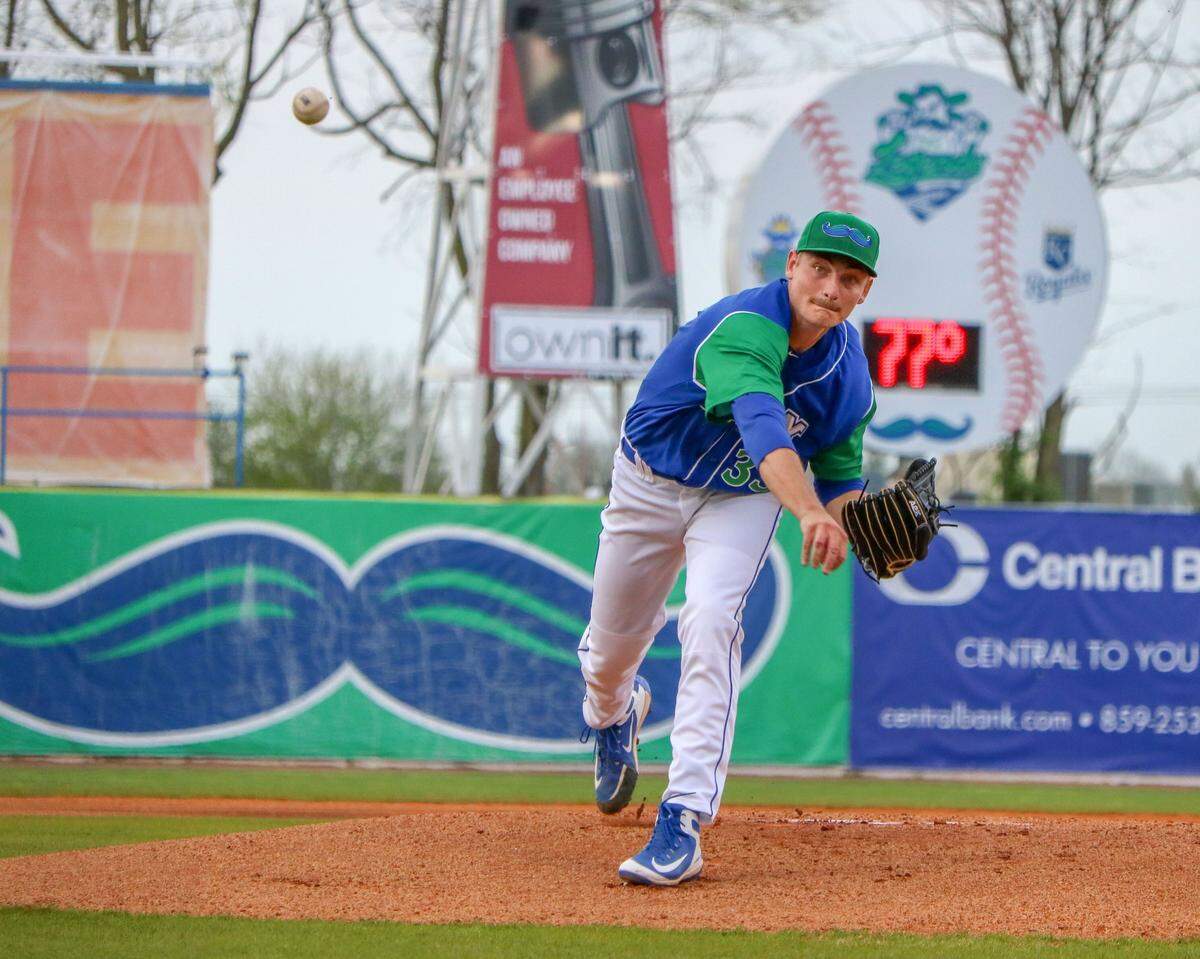
The Lexington Legends are among the 42 teams the MLB has reportedly targeted for elimination.
As of Thursday afternoon, Lexington Mayor Linda Gorton was not yet part of the task force but was ready to join up. In November, she sent a letter to the MLB commissioner’s office in support of the Legends, who will be celebrating their 20th anniversary this season and have won back-to-back South Atlantic League championships.
Her letter said, in part, “I strongly urge you to reconsider any such action. (The Legends) are very successful, both on the field and off. ... The Legends have strong family ownership and management, and are a great example of private sector leadership and investment. Moreover, they are excellent representatives of the fine tradition of minor league baseball.”
MLB and the National Association of Professional Baseball Leagues are negotiating a minor league agreement to replace the contract expiring after the 2020 season. MLB has proposed cutting more than a quarter of its 160 affiliates, citing concerns over the quality of facilities, travel and player salaries.
Politicians have pummeled MLB over the plan. A bipartisan congressional task force formed last month and Democratic presidential candidate Bernie Sanders have criticized baseball Commissioner Rob Manfred over the proposed cuts.
“We just learned of this task force this week and monitored a telephone news conference they held yesterday,” Susan Straub, a spokeswoman for Gorton, said in an email Thursday. “The mayor hopes to join this task force. She is interested in supporting the Legends in any way she can.”
Mayors at a news conference Wednesday in New York City were frustrated to have been left in the dark on the MLB-NAPBL negotiations despite having provided public money for stadiums in exchange for franchises that play a major role in their communities.
Rosalynn Bliss, mayor of Grand Rapids, Michigan, estimated the West Michigan Whitecaps generate $15 million annually for her city’s economy. Others pointed to the social positive of relatively inexpensive, family-friendly entertainment in small-to-midsized cities.
“We feel like there is plenty of opportunities for us to change the course of these discussions,” Berke said. “That’s why we’re speaking out now.”
Many minor league facilities are either publicly owned or have been supported by tax dollars. Asked about publicly financing upgrades to avoid contraction, Andy Schor, the mayor of Lansing, Michigan, said “we’ve been doing a lot of that partnership for years.” He pointed to efforts last year to extend netting along the foul lines to protect fans at city-owned Cooley Law School Stadium at MLB’s request and the city’s expense.
Berke, who said he was “shocked and appalled” to see the Double-A Chattanooga Lookouts on MLB’s chopping block, said the proposal may “disincentive” the city from using public money to support renovations at the team’s privately owned stadium.
“When you build something of this size, you need decades of return to see it make sense,” he said. “Right now, all of us I think have very little confidence in what the future holds, which is a recipe for disinvestment.”
The leaders for the task force are Berke; Nan Whaley from Dayton, Ohio; and Steve Benjamin from Columbia, South Carolina. The teams from Dayton and Columbia were not listed in MLB’s proposal.
The trio met with MLB last week and formally launched the task force Tuesday at the U.S. Conference of Mayors in Washington, D.C.
The mayors hope to work closely with the congressional task force, as well as partners with ties to MLB and minor league baseball, to pressure the league into giving them a say in MLB-NAPBL talks. That might be a tall order. While Congress has control over MLB’s anti-trust exemption, the league’s exclusion from federal minimum wage laws and oversight of visa rules, the mayors acknowledged lacking such leverage.
“No, we don’t have those powers, but we do have honestly, the power of the people,” Schor said.
MLB has also cited a desire to improve salaries for minor leaguers, who make as little as $1,100 per month over the five-month season, paid entirely by their major league affiliate. MLB successfully lobbied Congress to exempt minor leaguers from federal minimum wage laws in 2018.
By comparison, the major league minimum is $563,500 next year, and top players make more than $30 million annually.
Manfred has suggested that minor league teams could supplement those incomes, saying last month “I think the question there becomes who should bear all of the costs associated with the player-related improvements that we think need to be made in the minor league system.”
“I don’t think it’s an either-or assumption for us,” Whaley said. “I think Major League Baseball is doing very, very well. Considering the mention before of what Congress has allowed them to have regarding anti-trust laws, etc., we are, I know I am, in favor of ballplayers getting paid better. That’s not the question here.
“Really, the person that has all the money is major league ball,” she added.
This story was originally published January 23, 2020 at 5:08 PM.