Calipari’s Cats are getting a turbo-charge from an old-school UK basketball strategy
If, like me, you were watching the ESPN telecast of Kentucky’s come-from-behind, 78-69 win at Georgia on Tuesday night, you heard game analyst Jay Bilas offer a definitive opinion on UK’s best lineup.
As UK was turning a 37-31 halftime deficit into a test-of-wills victory, Bilas opined that Kentucky’s most-effective unit featured center Nick Richards, grad transfer power forward Nate Sestina — and the three-headed backcourt of Ashton Hagans, Tyrese Maxey and Immanuel Quickley.
Is Bilas right?
For all the positive Sestina brings on the offensive end, the jury is still out on whether the former Bucknell standout can defend well enough against the caliber of athletes Kentucky faces to be UK’s full-time four man.
However, I am fully on board with the Wildcats going all in on a three-guard attack.
John Calipari used the three-guard look with Hagans, Maxey and Quickley extensively in UK’s 78-70 overtime victory over then-No. 3 Louisville late last month.
It was with that backcourt trio on the floor after halftime Tuesday night that Kentucky played its best half of the season at Georgia in what was UK’s first true road game of 2019-20.
In college basketball, where guard play so often is everything, having an extra backcourt player on the court has always seemed a wise way to play.
Some of the best — and most entertaining — teams in Kentucky’s regal basketball history have started three guards.
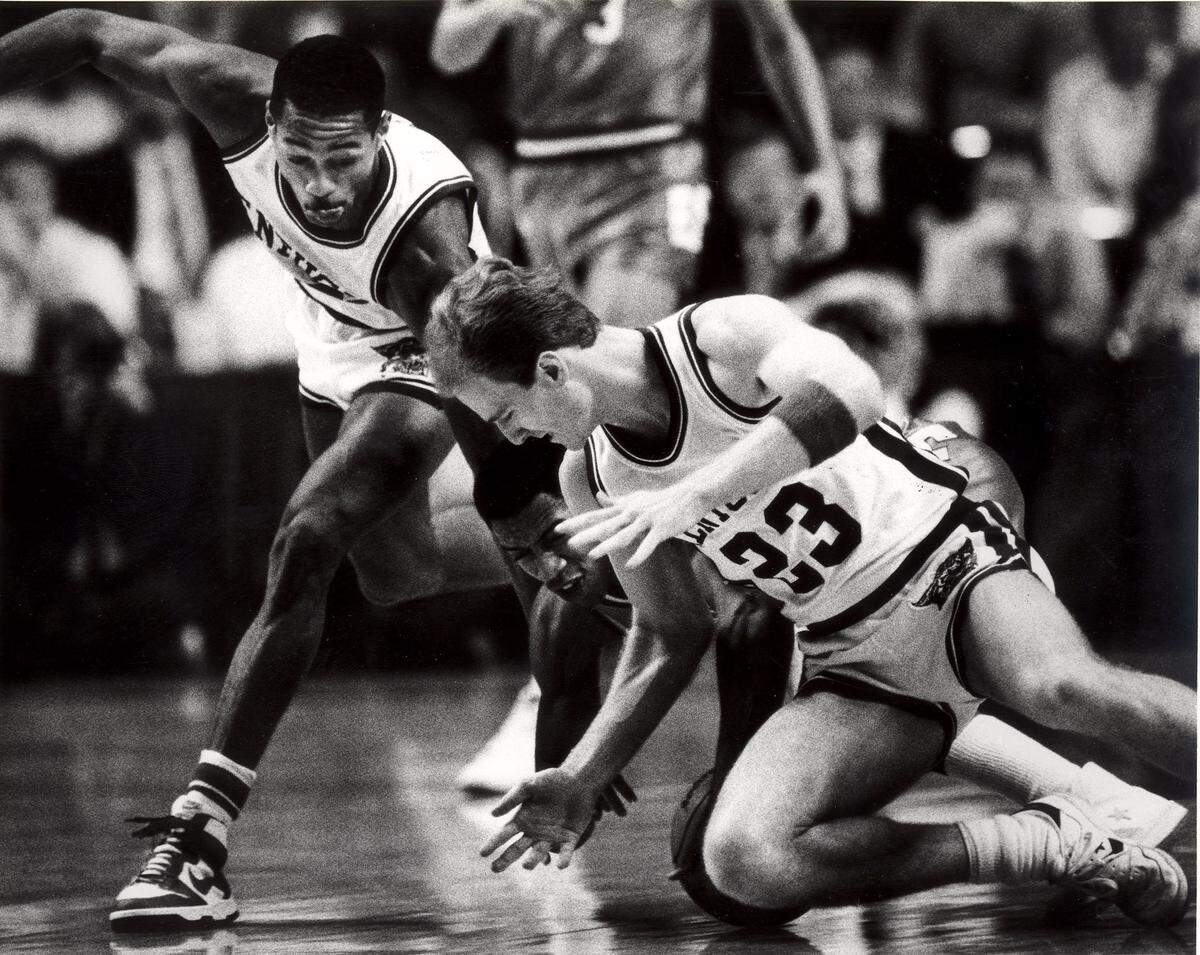
▪ 1985-86. Eddie Sutton’s first UK team finished 32-4 and was one agonizing loss to LSU from making it to the Final Four. That smallish unit started forwards Kenny Walker and Winston Bennett surrounded by guards James Blackmon, Ed Davender and Roger Harden.
Harden ran the show (6.4 assists per game) and hit clutch shots; Davender (11.5 ppg) was the primary perimeter scorer; and Blackmon was an all-around contributor (9.4 ppg, 2.1 apg).
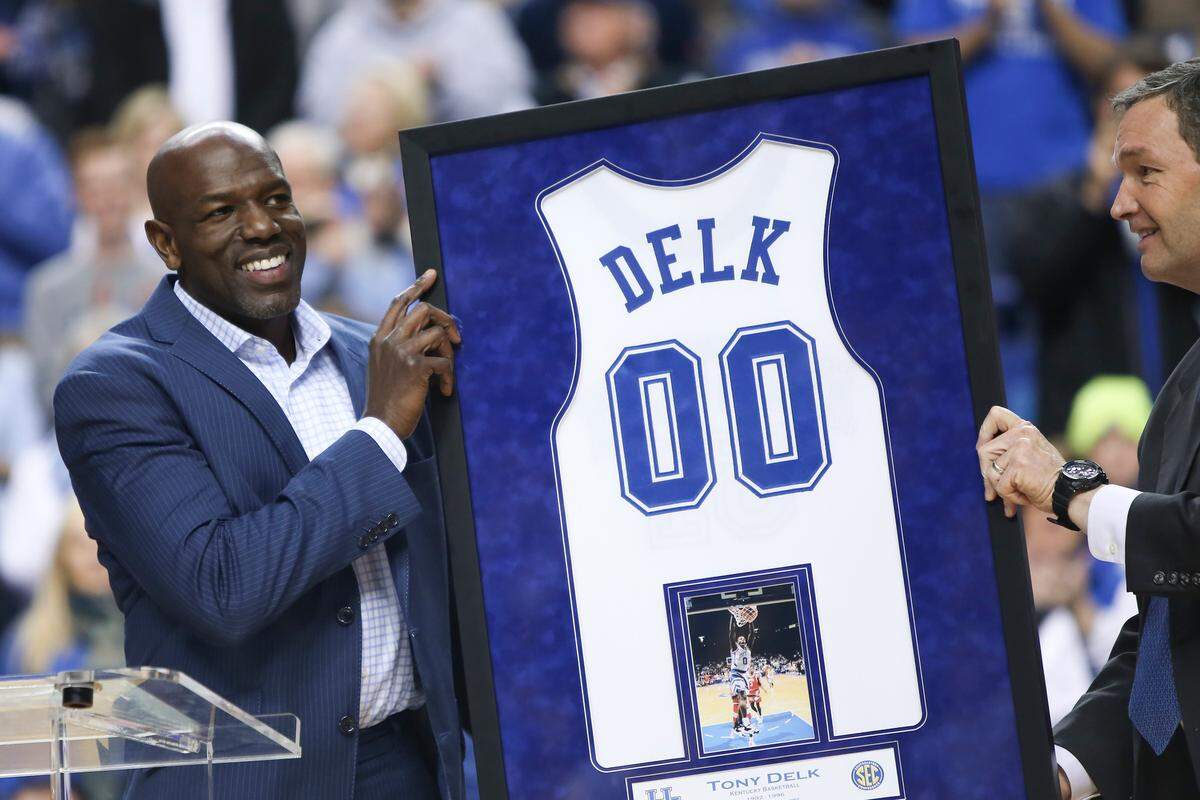
▪ 1995-96. The best Kentucky team of my lifetime (34-2) gave Rick Pitino the 1996 national title behind a starting lineup that featured guards Derek Anderson, Tony Delk and Anthony Epps.
Delk was the team’s primary scorer (17.8 ppg); Anderson (9.4 ppg, 1.7 steals) had star ability but accepted a complementary role; and Epps (6.7 ppg, 4.9 apg) got the ball where it needed to go.
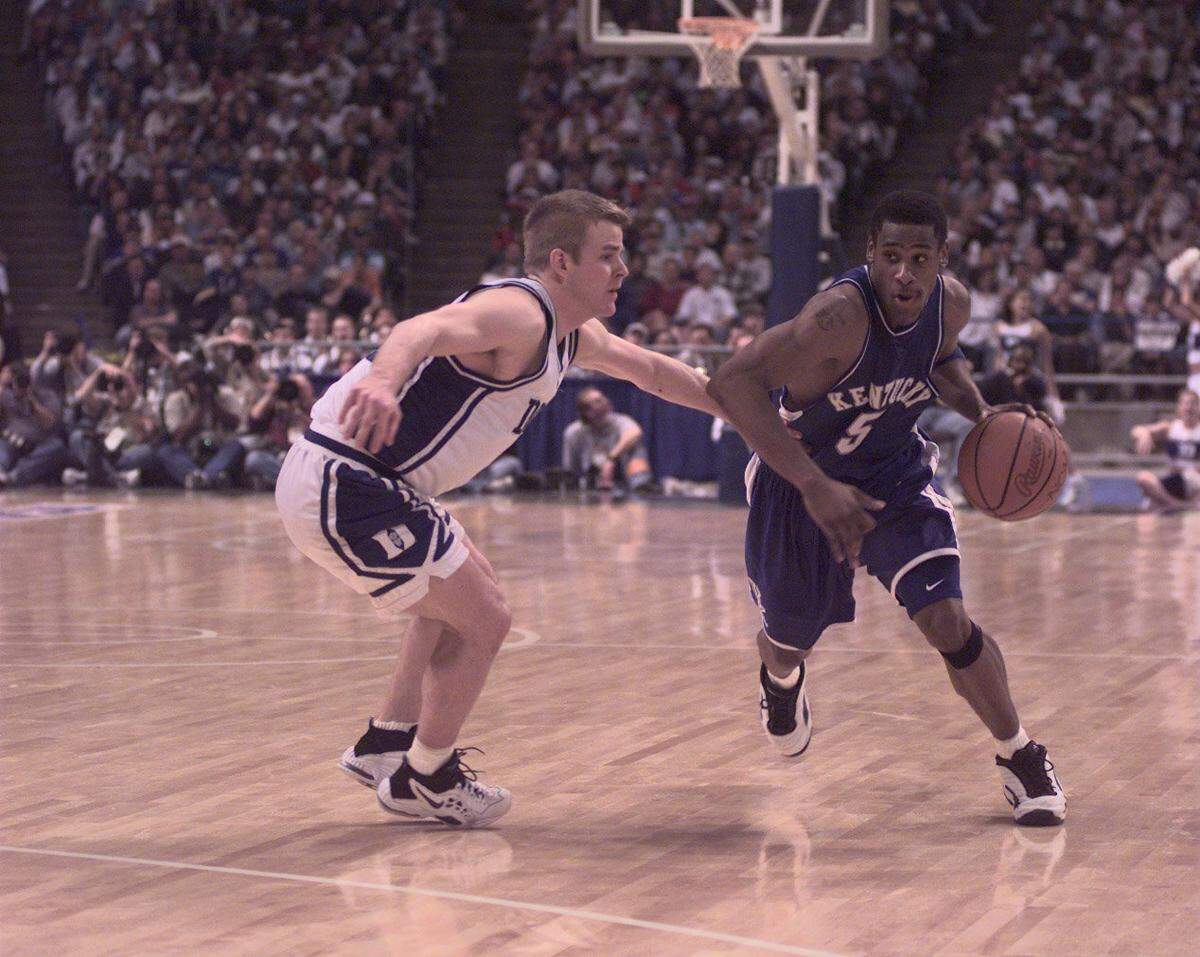
▪ 1997-98. Two years later, first-year Kentucky coach Tubby Smith earned UK’s seventh NCAA title (with a 35-4 record) behind another three-guard lineup.
Jeff Sheppard (13.7 ppg, 4 rpg) emerged as a star down the stretch of his senior year; Allen Edwards (9.2 ppg, 3.2 rpg, 3.3 apg) was the jack of all trades; point guard Wayne Turner (9.3 ppg, 3.1 rpg, 4.4 apg) played consistently down hill.
▪ 2016-17. Perhaps the most entertaining Kentucky team (32-6) of the Calipari coaching era featured the dynamic three-headed backcourt of De’Aaron Fox, Malik Monk and Isaiah Briscoe. Those Cats came up a Luke Maye buzzer beater short of the Final Four but were oodles of fun to watch.
Monk (19.8 ppg) was one of the most explosive scorers to wear Kentucky blue; Fox was an attacking point guard with a versatile game (16.7 ppg, 4.6 apg); Briscoe (12.1 ppg, 4.2 apg) did the things that every winning team needs done.
▪ 2019-20. Through 14 games (11-3), Maxey (14 ppg) has emerged as UK’s big-game, go-to scorer; Hagans (12.9 ppg, 7.1 apg, 2.1 steals) sets up shots for others and is UK’s defensive alpha-dog; Quickley (12.8 ppg) has, over the past three games (9-of-17 treys), become the reliable perimeter threat for whom the Cats have been desperate.
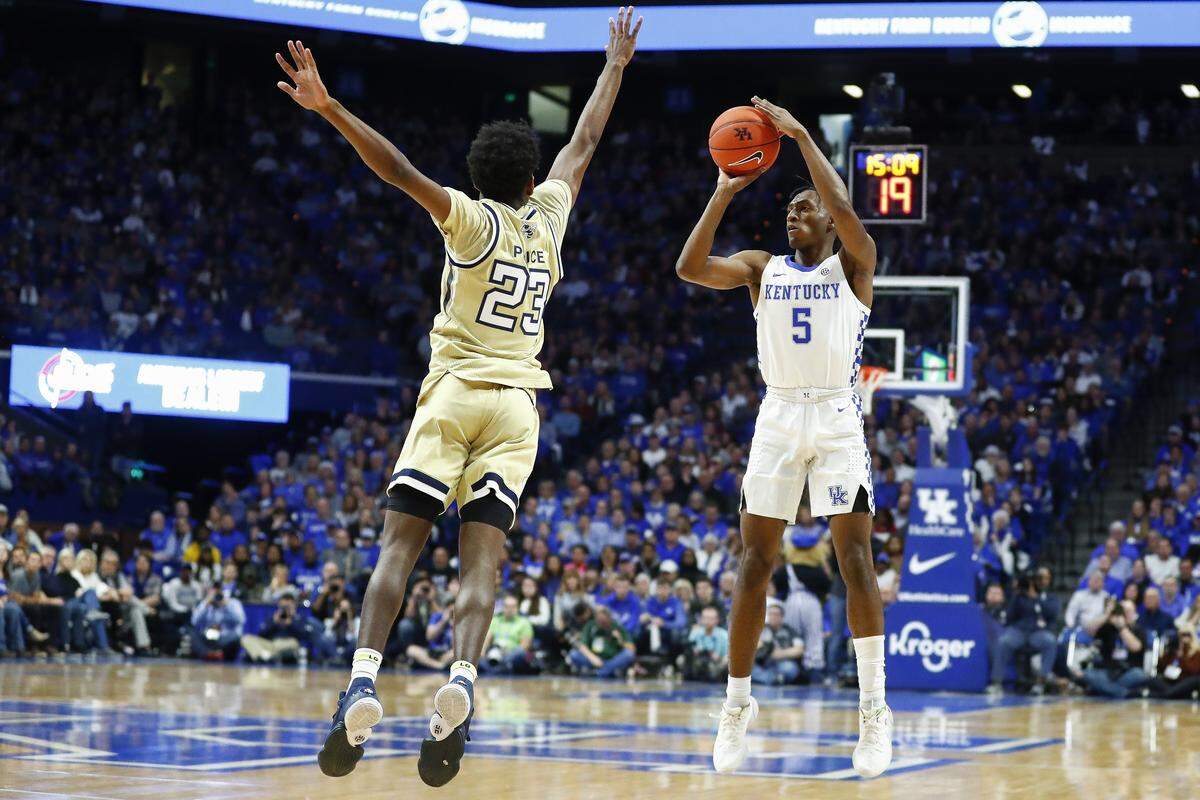
Ultimately, two areas will determine whether the current Kentucky three-headed backcourt can take the Wildcats to the heights produced by some of the best of the prior three-guard lineups.
UK history shows that, to make three guards work, the backcourt has to make a commitment to rebounding.
In 1985-86, Blackmon averaged four boards a game. For the ‘95-96 national title-team, Delk contributed 4.2 rebounds a game, Anderson 3.4. The 1998 national champions got 4 rebounds a game from Sheppard, 3.2 from Edwards. Three seasons ago, Briscoe averaged 5.4 boards and Fox four.
So far this season, Maxey (4.3 rpg), Hagans (3.9) and Quickley (3.5) are all making a meaningful contribution on the glass.
The other thing it takes for a three-guard lineup to thrive is an accompanying low-post threat that keeps opponents honest.
In ‘85-86, Kentucky had Kenny Walker (20 ppg). For ‘95-96, it was Antoine Walker (15.2 ppg). Two seasons later, Nazr Mohammed (12 ppg) filled that role. The 2016-17 Cats had Bam Adebayo (13 ppg) on the block.
So if you want Kentucky to commit fully to playing its three-guard lineup for the rest of 2019-20, the one guy whose play will have the largest say in whether that happens is Nick Richards (13 ppg, 7.5 rpg) — all 6-foot-11 of him.
Next game
Alabama at No. 14 Kentucky
When: Noon Saturday
TV: ESPN
Radio: WLAP-AM 630, WBUL-FM 98.1
Records: Alabama 8-6 (1-1 SEC), Kentucky 11-3 (2-0)
Series: Kentucky leads 113-38
Last meeting: Kentucky won 73-55 on March 15, 2019, in the SEC Tournament quarterfinals at Nashville, Tenn.