Corporate downsizing hit the Kentucky sports media hard last week
On Monday, the National Sports Media Association announced that legendary University of Kentucky radio play-by-play announcer Cawood Ledford had posthumously been elected into its Hall of Fame.
The following day, Ledford protégé Paul Rogers, who was hired to work at WHAS radio and TV in 1973 by Cawood himself, was laid off by iHeart Media as part of a nationwide “restructuring.”
“I hadn’t even made that connection,” Rogers said Thursday of the asymmetry of his job loss and Ledford’s honor. “That just shows you the way of the world and how the (radio) business has changed.”
The iHeart job reductions hit the Kentucky sports media hard.
Lexington lost a sports talk show. “The Sunday Morning Sports Talk” program on WLAP-AM 630 that featured ex-UK football player Anthony White, veteran Kentucky sportswriter Larry Vaught and which was helmed by host Mark Buerger is no more.
Louisville lost a sports talk show. The pro-University of Louisville “Ramsey and Rutherford Show” on WKRD-AM 790 also saw its hosts, Derby City television personality John Ramsey and Card Chronicle’s Mike Rutherford, let go by iHeart.
But the most poignant job casualty of iHeart’s downsizing, at least among Kentucky sports figures, was Rogers, 68. The longtime U of L football and men’s basketball radio play-by-play announcer and morning sports announcer at WHAS-AM 840 is in the Kentucky Sports Hall of Fame.
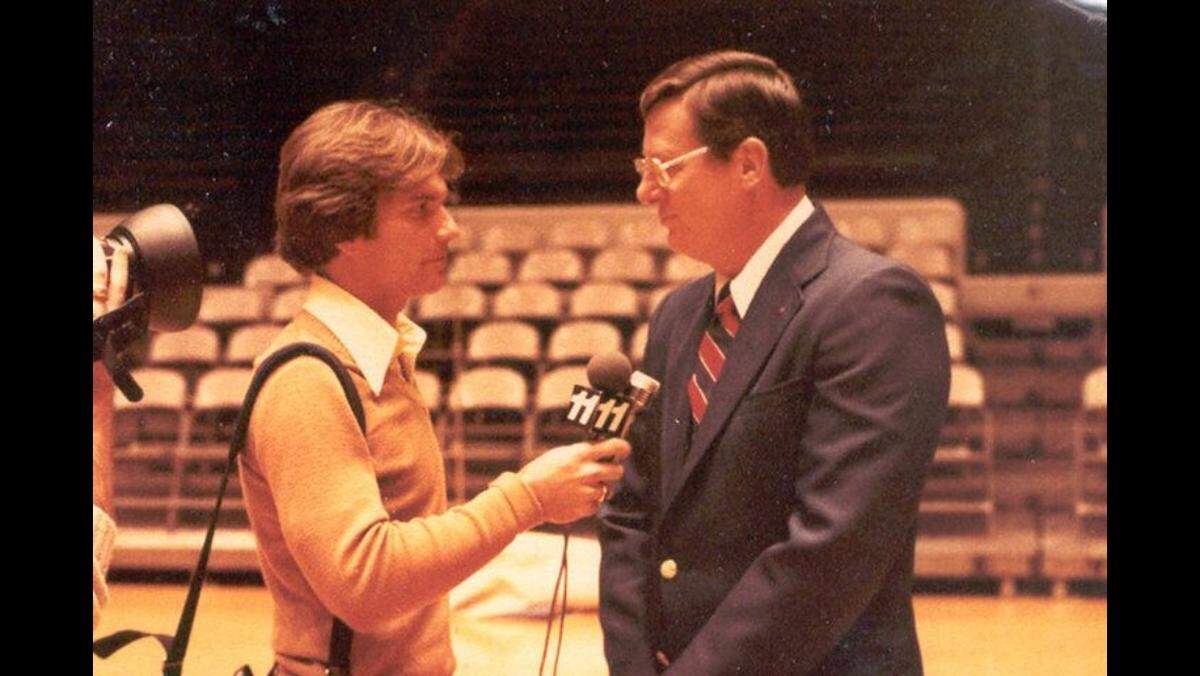
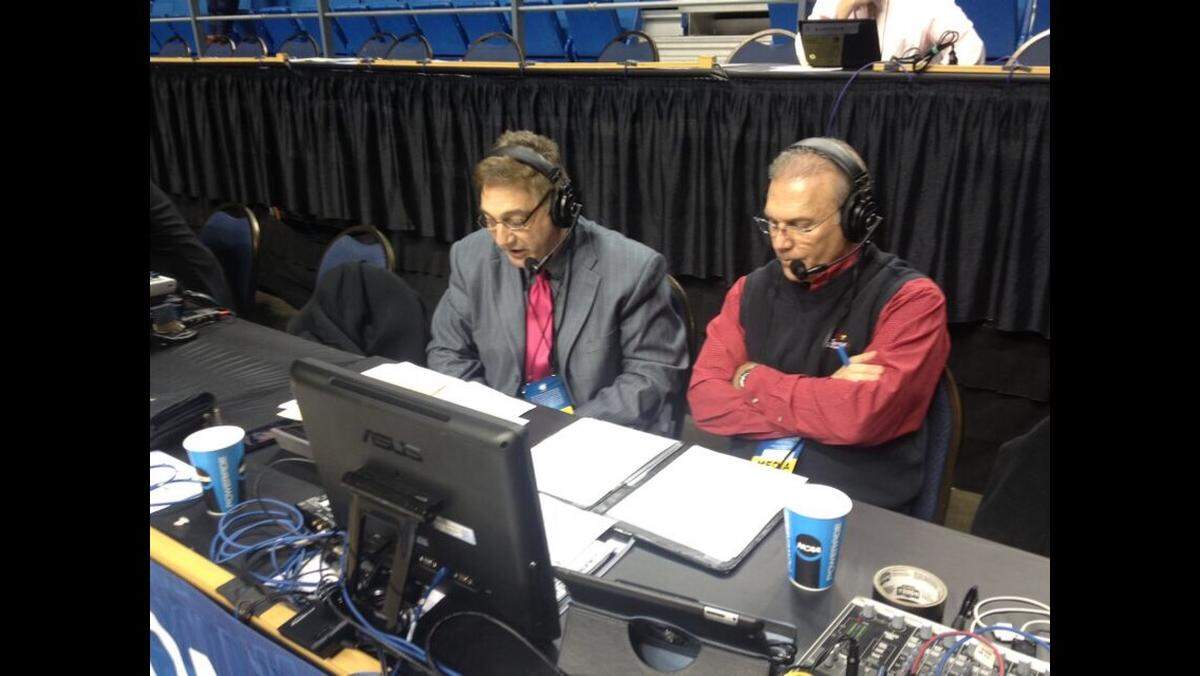
The good news for Rogers is that his duties as Louisville Cardinals play-by-play man are not impacted by the disappearance of his “day job” with WHAS.
In fact, Rogers was with Coach Chris Mack’s U of L men’s hoops team in Pittsburgh at a pregame practice in the Petersen Events Center before the Cardinals played Pitt on Tuesday evening when he got a phone call. Over the phone, Rogers was told his more-than-four-and-a-half decades career with WHAS would be ending.
“I was standing in almost the same place I was standing in the Pittsburgh arena when, two years ago right before a game, I got a call my mother had died,” Rogers said. “Other than that, I really do like Pittsburgh.”
After getting the news his longtime employer was cutting him loose, Rogers had to describe for radio listeners what became U of L’s 73-68 victory over Pitt.
“It wasn’t, frankly, as hard as you might think,” Rogers said. “It would have broken my heart if I had been taken off the (U of L) games. But, being a separate contract with (radio rights holder) Learfield (Sports), that is not the case.
“So, when it came to the game, I had no problem. The games are always kind of a time when I retreat into my own little world and do that. So it really wasn’t that big a deal.”
In Lexington, Buerger said he too got a phone call Tuesday that informed him that “Sunday Morning Sports Talk” had ended with the prior Sunday’s show.
For more than 11 years, Buerger had been the host of the program that had gained a following. The show tended to be a place for some entertaining fan venting the morning after the Kentucky Wildcats suffered Saturday losses.
“I will miss the show a lot,” Buerger said. “I will miss the people we talked to and interacted with and who I became friends with that I would never have met without the show. I’ve been surprised by the level of reaction I got to the announcement that the show had ended.”
Buerger — whose “real job” is in communications for Special Olympics Kentucky — said people have been asking him if he is upset with iHeart Media.
“I can’t be mad at people who gave me 11 years to chase something I always dreamed of doing,” Buerger said of hosting a radio sports talk show. “I do feel badly for folks, a lot of friends of mine, who lost their ‘day jobs’ in radio.”
On the plus side, Buerger said he will not miss having to get up at 6 a.m. every Sunday morning to do the show.
Not having to get up at 4 a.m. every work day is what Rogers thinks will be his main benefit from no longer being WHAS radio’s morning sports guy.
Yet, after the UK men’s basketball team lost to South Carolina on a buzzer-beater Wednesday night, Rogers said it also hit him what he had lost.
“I didn’t get up and get to go talk about last night’s game, which was the hot topic of conversation, on the radio,” he said. “There was a little bit of withdrawal in that regard.”
Still, like his mentor Ledford (who died in 2001), Rogers first and foremost thinks of himself as a radio play-by-play man.
“Just let people know, I’ll still be doing the part of (announcing) I like most, and that’s calling the ballgames,” Rogers said.