Tom Leach calling games in a mask? For announcers, pandemic is unsettling.
In 23 prior seasons as the radio play-by-play voice of the Kentucky Wildcats football program, Tom Leach has never entered a year with so much uncertainty.
Because of the coronavirus pandemic and the efforts to contain it, Leach is only weeks from the start of the 2020 college football season — if it actually starts — with no fixed idea of how he will be performing his duties.
“My attitude is, ‘Wherever you tell me to go, I am fine,’” Leach said last week. “If it’s (calling games) from home, if it’s (calling games) from a studio or, obviously, (from) the stadium, I’m fine no matter.”
Louisville Cardinals play-by-play announcer Paul Rogers said the virus that has upended so much of American life has pushed the college sports radio broadcasting industry into confusion and searching.
“What’s safe to do and what’s not? What are the alternatives? None of us really know yet,” said Rogers, who has been calling U of L football since 1992. “And that’s probably the most unsettling thing, we don’t really know yet.”
Let’s examine some of the COVID-19-related uncertainties that hang over our state’s college football radio play-by-play announcers.
Calling games off of TV?
As Major League Baseball has launched its season amid the pandemic, it has prohibited visiting teams from taking their broadcasters on the road.
In the 1930s, a young Ronald Reagan provided simulated broadcasts of Chicago Cubs baseball games off a telegraph wire for radio listeners in Des Moines, Iowa.
In a 21st century adaptation of that, this year’s MLB announcers are calling road games off of TV monitors from their home cities.
Might a similar model apply for radio broadcasts of college football games in the commonwealth of Kentucky this fall?
Tom Stultz, president of JMI Sports, the company that owns the radio broadcast rights to UK sports, said there are three options under consideration for Kentucky’s broadcast crew.
“One option, we travel (to games) with the (UK football) team,” Stultz said. “Another option, we go to the (road) games, but travel separately. And the other is trying to do the Reagan thing (calling a road game from Lexington via technology).”
Last week, I spoke with four Kentucky college football radio play-by-play announcers — UK’s Leach; U of L’s Rogers; Eastern Kentucky’s Greg Stotelmyer and Murray State’s Neal Bradley.
All four said they believed they would be traveling to road games by some means this fall — if the season is played.
Broadcasting in a mask?
The mechanics of how radio play-by-play announcers will call college football games in 2020 are still to be determined.
Kim Shelton, who serves as the president of UK Sports and Campus Marketing for JMI, said she anticipates significant changes to the normal operations in the Wildcats’ radio booth.
There will be fewer people working within the booth than normal.
Shelton said the statistician and the spotter (the person who helps identify players for the play-by-play announcer) might be asked to work from elsewhere and to try communicating with Leach via text or other instantaneous communication technology.
Shelton said there will be a protective plexiglass barrier installed in between Leach and game analyst Jeff Piecoro.
There has been no discussion, Shelton said, of having Leach try to broadcast while wearing a mask. “That is an interesting conversation,” she said, “but how would that audio come across?”
Stotelmyer, who has been broadcasting EKU football since 1979, said he anticipates an effort to create social distancing in the Eastern Kentucky radio booth this fall.
However, such plans might be challenging at some venues in the Ohio Valley Conference.
“We get into some pretty small booths at our level,” Stotelmyer said. “But plexiglass could be used to divide us. So I think we can pull off (broadcasts) safely.”
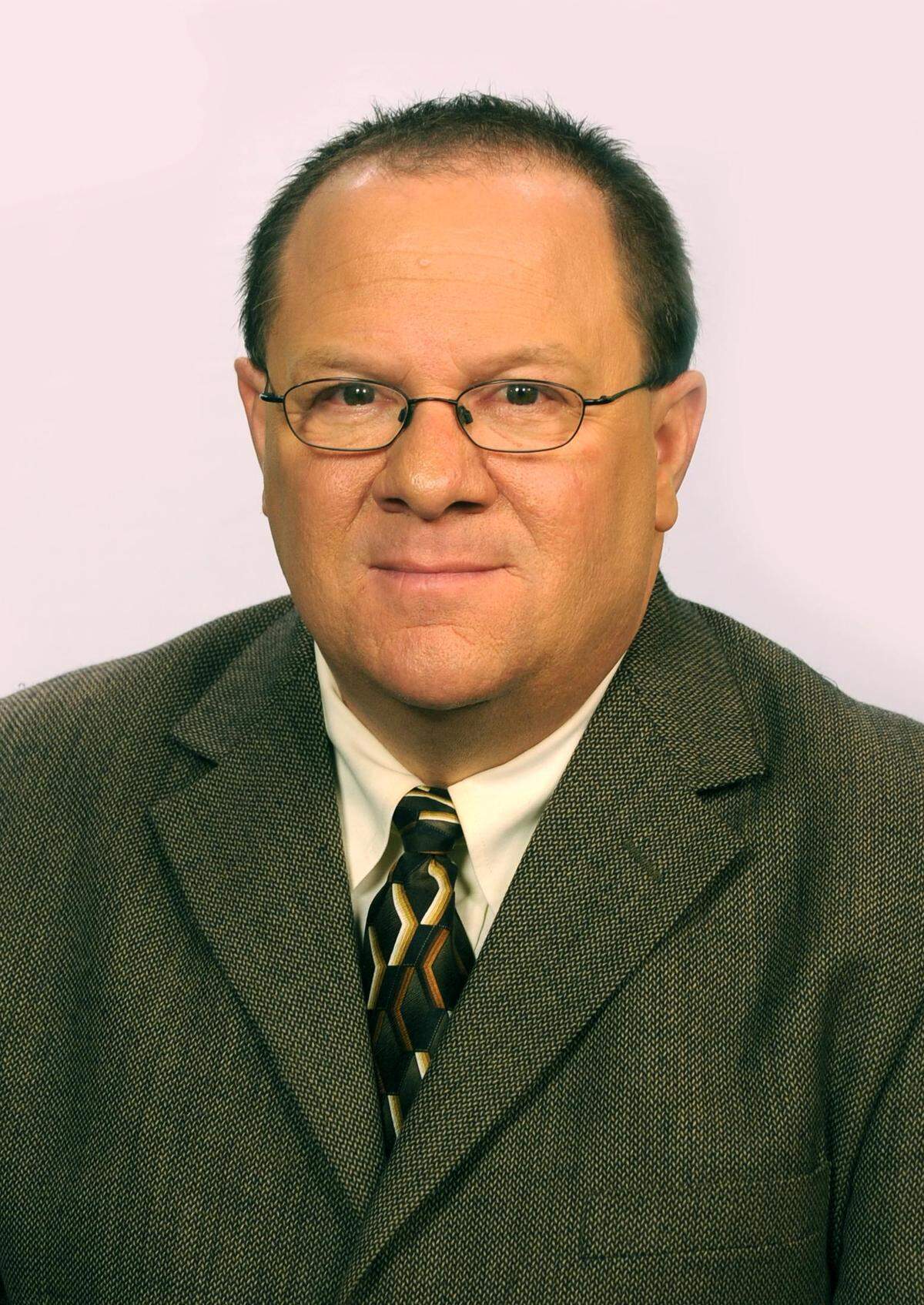
Bradley, who has called Murray State games for three decades, has in recent years been using one of his grandsons, Jacob Smith, as his spotter.
This year, “because of social-distancing requirements, I won’t have a spotter,” Bradley said. “I am on my own for picking up (who makes) the tackles. And my grandson is pretty bummed.”
Not opting out
There has been a steady trickle of college football players announcing they will not risk playing this fall due to the pandemic.
Just by their chronological age, Kentucky’s college football radio broadcasters have reason to be wary of the coronavirus, which has proven far more lethal for the well-seasoned than for the young.
U of L’s Rogers is 69; EKU’s Stotelmyer and Murray’s Bradley are each 64; Leach is 59.
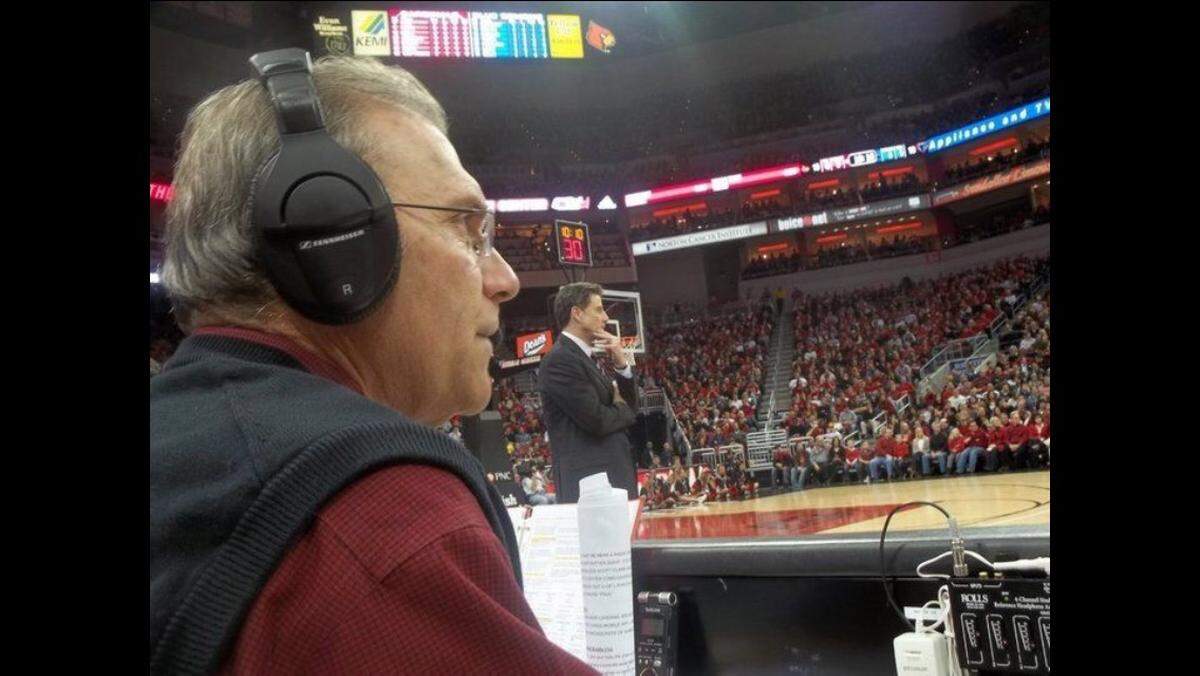
Yet none of the play-by-play men currently plan to opt out for the coming season — if there is one.
Stotelmyer said he answered a survey from Learfield/IMG College, the company that owns the radio rights to EKU sports, that was sent to gauge the feelings of play-by-play announcers about working during the pandemic.
“They said, ‘If you have any concerns, pass them along,’” Stotelmyer said. “I didn’t say anything.”
Rogers believes if he chose not to call Louisville games this season due to concerns over the virus, the university would “be OK with it,” he said. “At 69, I’m in a high-risk category, for sure. But I am not ready to go to that extreme yet.”
Whatever risks and obstacles this fall brings, Leach said that if the Kentucky Wildcats are playing football, he plans to be describing the action.
“I’m fine with anything,” Leach said. “Whatever it is, I just want the work, need the work. There will be challenges, but everybody, not just play-by-play announcers, is dealing with challenges this year.”