Despite all the griping, NIL is improving — not ruining — college sports
Big Ten Commissioner Kevin Warren said something perceptive this past week at that league’s football media days.
On the big picture of college sports, Warren said, “I’m a big believer the reason we are dealing with a lot of issues we’re dealing with today is the business of college athletics has grown faster than the structure and the governance of college athletics.”
Actually, the problem Warren identified is even more fundamental.
In high-level college athletics, too many of the stakeholders refuse to accept the reality of what the enterprise they are engaged in truly is: a multi-billion-dollar entertainment industry which produces content for media conglomerates such as The Walt Disney Company, the Fox Corporation, Paramount Global and Warner Bros. Discovery, among others.
In spite of that fact, until last summer the entertainers whose labor yields the bounty — primarily football and men’s basketball players for the major conference schools — were having the earning potential that derives from their fame restricted by wildly outdated concepts of “amateurism.”
One year in since the U.S. Supreme Court helped the dam break in allowing college athletes to finally profit from their celebrity, NIL has been a net-positive. With one exception, all the primary complaints one hears about the alleged negative impact from name, image and likeness deals on college sports are bunk.
Complaint one: NIL will hurt non-revenue sports.
Actually, name, image and likeness money for players might be the only way to save the big, multi-faceted athletics departments that provide scholarships to athletes in sports that don’t produce revenue.
If it reaches the point where the universities themselves have to directly pay football and men’s hoops players, athletics departments might have to drop sports to meet their payrolls. Title IX implications would come into play, and it would seem a whole lot of players in men’s non-revenue sports might lose the chances to compete in college with their schooling funded through scholarships.
However, if NIL allows football and men’s hoopsters to get their fair shares of the pie by profiting from their notoriety, that contraction might be avoided.
Complaint two: NIL makes college sports less fun to follow for fans.
I would argue that players signing name, image and likeness deals with businesses makes college sports more interesting. Just last week, the wonderfully named Nebraska Cornhuskers football player Decoldest Crawford signed to promote a heating and cooling company.
How great is that?
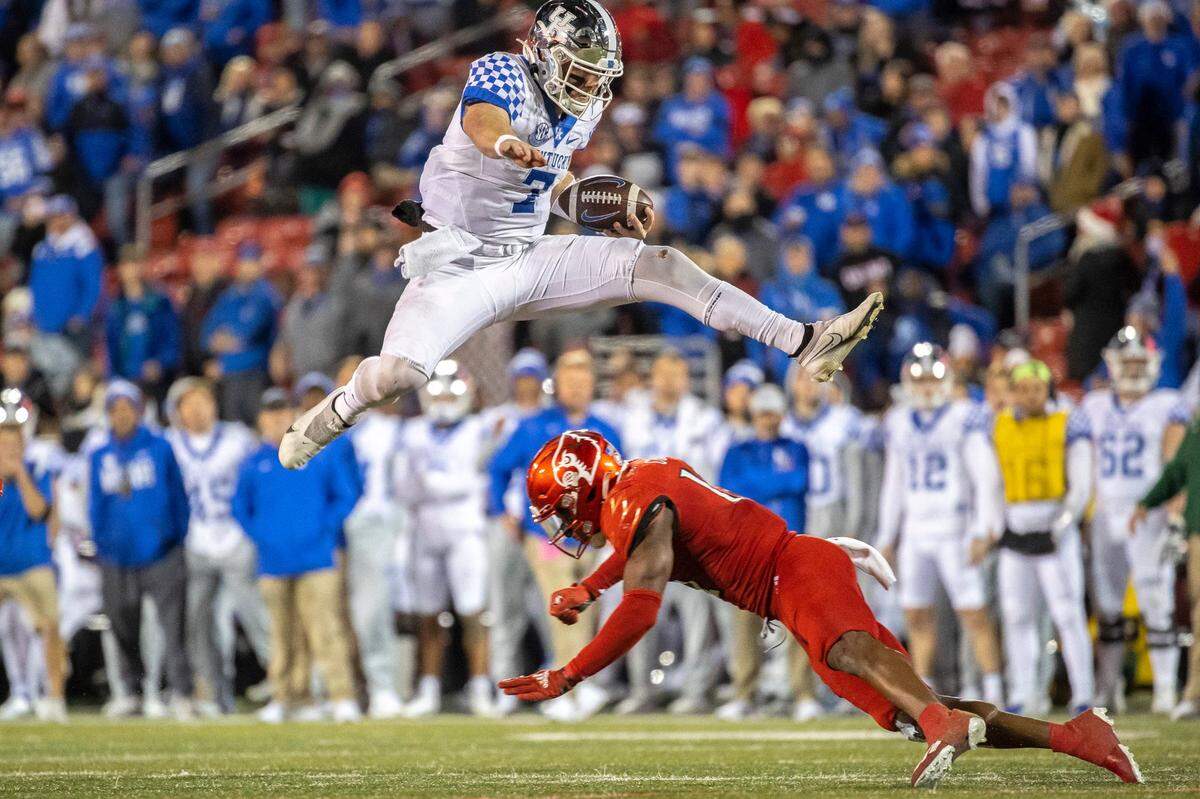
But if you aren’t interested in the business of sports, tune it out. You don’t have to be tracking each NIL deal Will Levis signs to enjoy watching him play quarterback for Kentucky.
Complaint three: NIL disparities are going to sink my school.
Paranoia attached to the recruiting impact of name, image and likeness deals is rampant in 2022. In fact, every time a school fails to successfully lure a prospect, that team’s fan base tends to see the defeat as a function of NIL.
On the first weekend in July, University of Kentucky sports message boards were sent into apocalyptic meltdown over UK “being behind” on NIL when instate defensive back Cristian Conyer chose Tennessee over the Wildcats.
Yet only two days later, Florida State football boards were inflamed by the belief that it was Kentucky’s advantage in NIL that led four-star Alabama defensive back Avery Stuart to pick the Wildcats over the Seminoles.
The one valid NIL concern is that different schools are interpreting differently the propriety of booster-funded collectives offering inducements to recruits under the guise of name, image and likeness.
Some schools are full-speed ahead using collectives to lure talent; others are holding on to the NCAA rulebook and the old way of banning boosters from recruiting.
I think allowing collectives to participate in recruiting is the most realistic path forward. Either way, there needs to be one uniform standard for what is allowed.
Complaint four: NIL means the already successful teams will only get richer.
It is too soon to know, obviously, but there’s a significant chance that NIL actually helps create greater parity, especially in college football.
Should, oh, Texas A&M or Miami “buy” their way into the College Football Playoff for the first time via the successful deployment of a recruiting collective, that increases parity, not decreases it.
As it is now, six teams — Alabama (seven), Clemson (six), Ohio State (four), Oklahoma (four), Georgia (two) and Notre Dame (two) — have combined to fill 25 of the 32 College Football Playoff slots since 2014.
If NIL through its impact on recruiting threatens that status quo, that’s a plus.
Complaint five: NIL is a fundamental contradiction to the idea of college sports as an extracurricular activity played by student amateurs.
Please.
In 1982, CBS paid the NCAA $16 million to broadcast that year’s March Madness. For 2025, CBS and Turner Broadcasting are slated to pay the NCAA $1.1 billion annually to carry the men’s hoops tourney.
Starting in 2024-25, the Southeastern Conference will enter into a 10-year, $3 billion contract with the Walt Disney Company for its Tier I media rights.
Currently, the Big Ten is said to be putting the finishing touches on a deal that will yield that league $1 billion annually for its media rights.
Rather than a threat, NIL is a needed step in closing the gap between what big-time college sports really is versus what it long ago needed to stop pretending to be.
This story was originally published July 30, 2022 at 7:00 AM.