Wade and Alice Houston are known from hoops. Film tells rest of their success story.
When one weighs the basketball legacies of Alice and Wade Houston, the Louisville wife and husband perhaps should be considered “the first couple” of hoops in Kentucky.
Alice Houston, 76, is the daughter of William Kean, the legendary Central High School head coach whose immense success mostly occurred before interscholastic sports in the commonwealth were racially integrated.
Wade Houston, 78, came to Louisville 60 years ago from Alcoa, Tenn., and joined with classmates Eddie Whitehead and Sam Smith as the first Black basketball players in University of Louisville history.
Houston went on to become a U of L starter; a state championship-winning high school hoops coach at Male; a vital assistant to Denny Crum during Louisville basketball’s heyday in the 1980s; and, in 1989, the first Black head men’s hoops coach in SEC history when he was hired by Tennessee.
Alice and Wade Houston’s son, Allan Houston, led Ballard High School to the 1988 state championship; was Kentucky’s 1989 Mr. Basketball; and is the leading all-time scorer in Tennessee Volunteers men’s basketball history (2,801 career points). He was also a two-time NBA All-Star during a 12-year pro basketball career.
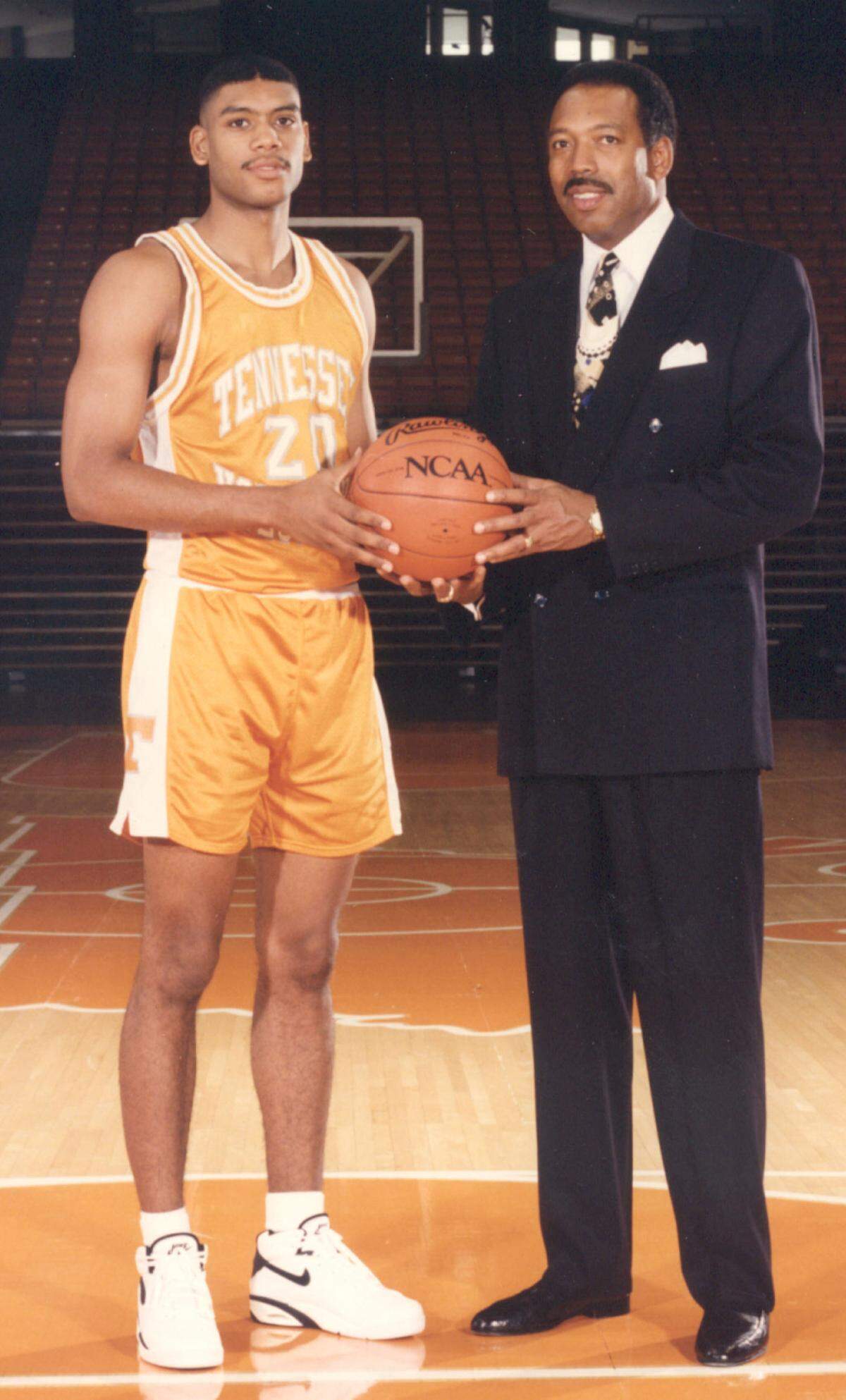
Yet a new KET documentary by filmmakers Tom Thurman and Brandon Turner shows that the most interesting part of Alice and Wade Houston’s story began after they left basketball behind in 1994.
The couple went into business and built, with partners, one of the largest Black-owned transportation companies in the United States. For family and civic reasons, the Houstons then divested themselves from that company and built another successful business, a Louisville-based logistics firm.
“The Alice and Wade Houston Story” will debut on KET on Monday night at 9 p.m. “When you are telling the story of people who have such integrity and generosity and warmth as Alice and Wade Houston, so much of your work is already done for you,” Thurman says.
It is a story with many layers.
For those with a passion for Kentucky high school hoops history, William Kean stands as a figure of enduring curiosity. Kean went 856-83 as Central boys’ basketball coach, winning five state championships in the all-Black Kentucky High School Athletic League and four national titles of the National Negro High School Tournament.
“To me, he was Daddy,” Alice Houston says. “He was assertive, but very calm, very much a gentleman.”
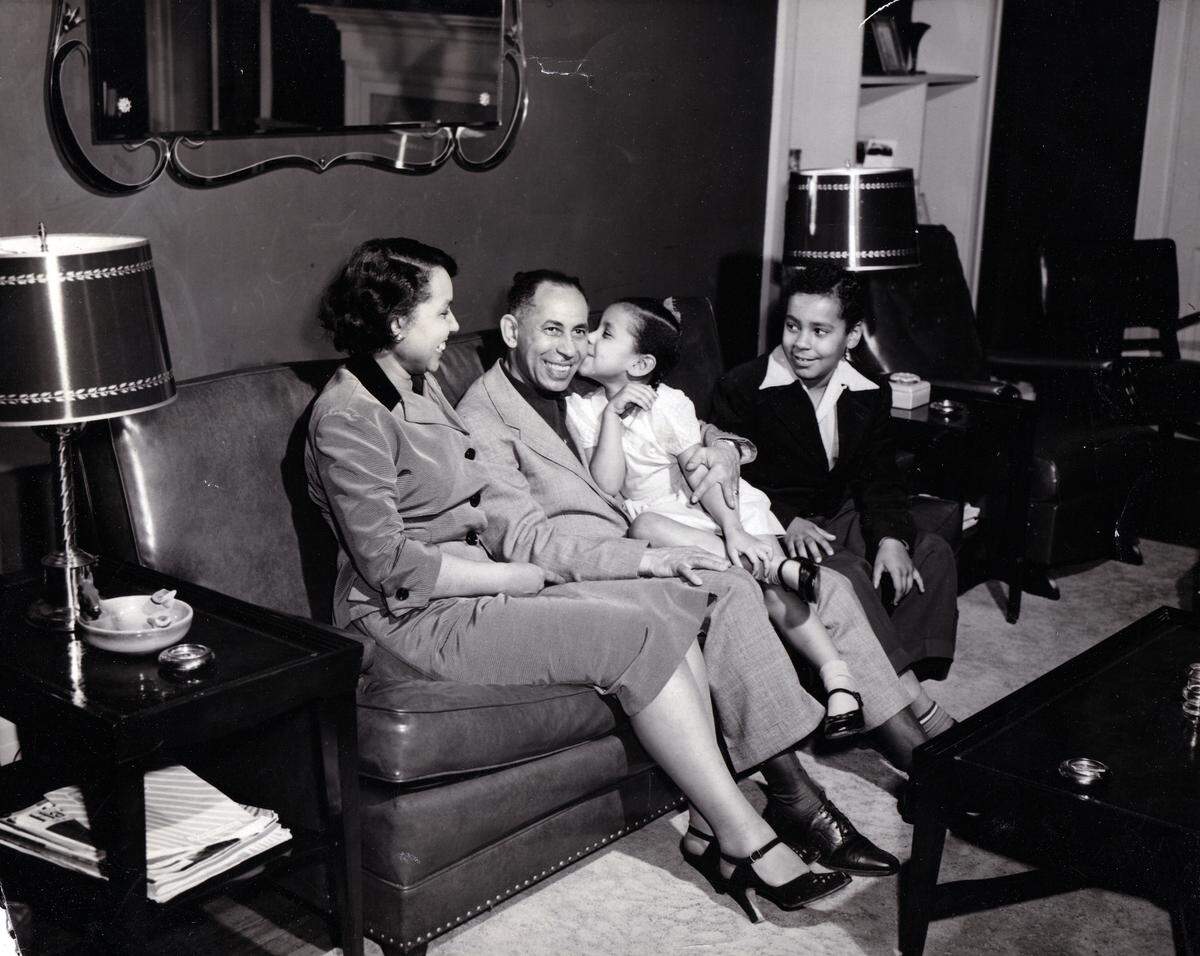
Growing up in a racially segregated Alcoa, Tenn., Wade Houston had seen his father, Charlie Wade Houston, frequently laid off by the aluminum company that gave the town its name. “At that time, the Black workers were the first to be laid off anytime there was a (business) downturn,” Wade Houston says.
The elder Houston always met those layoffs with an entrepreneurial zeal, be it hiring out to do landscaping or working in sales. From watching his dad meet adversity with action, Wade Houston developed an aspiration to own his own business.
Once Houston graduated from U of L, however, basketball was not through with him. He launched his coaching career at Louisville’s Ahrens High School in 1971. After two seasons, he landed the Male job. With the Bulldogs, Houston got to coach Darrell Griffith and Bobby Turner, two of the best players ever produced in Kentucky. Houston led Male to the 1975 state title. When Griffith and Turner chose to stay home and play in college for Denny Crum at Louisville, their high school coach eventually joined them.
Houston developed into Crum’s right-hand man and was U of L’s ace recruiter as the Cardinals won NCAA titles in 1980 and 1986 and also reached the Final Four in 1982 and 1983.
All that Louisville success eventually helped Houston land the Tennessee head coaching job. In 1962, when Houston was picking a college as a high school star in Alcoa, nearby UT was not recruiting players of his skin complexion. To come home in 1989 as the Volunteers head coach was an historic achievement.
Though Tennessee had some good moments in Wade Houston’s five seasons, including three victories over Kentucky, there weren’t enough positive endings. After five seasons, Houston parted ways with UT with a 65-90 mark.
“Would I like to have won more games?” Wade Houston asks rhetorically. “Yeah. … But, had I won more games, I’d probably still be in coaching. And I wouldn’t trade (what’s come since coaching) for anything.”
What’s come since basketball for Wade and Alice Houston has shown the possibilities that can arise from recreating one’s self. Along with a business partner, Wade’s college roommate Charlie Johnson, the couple launched a transportation business with three trucks.
“We ended up with 3,000 trucks, terminals in Canada, Mexico and 38 states,” Wade Houston says. “We hired a lot of young Black kids as terminal managers, put people in jobs.”
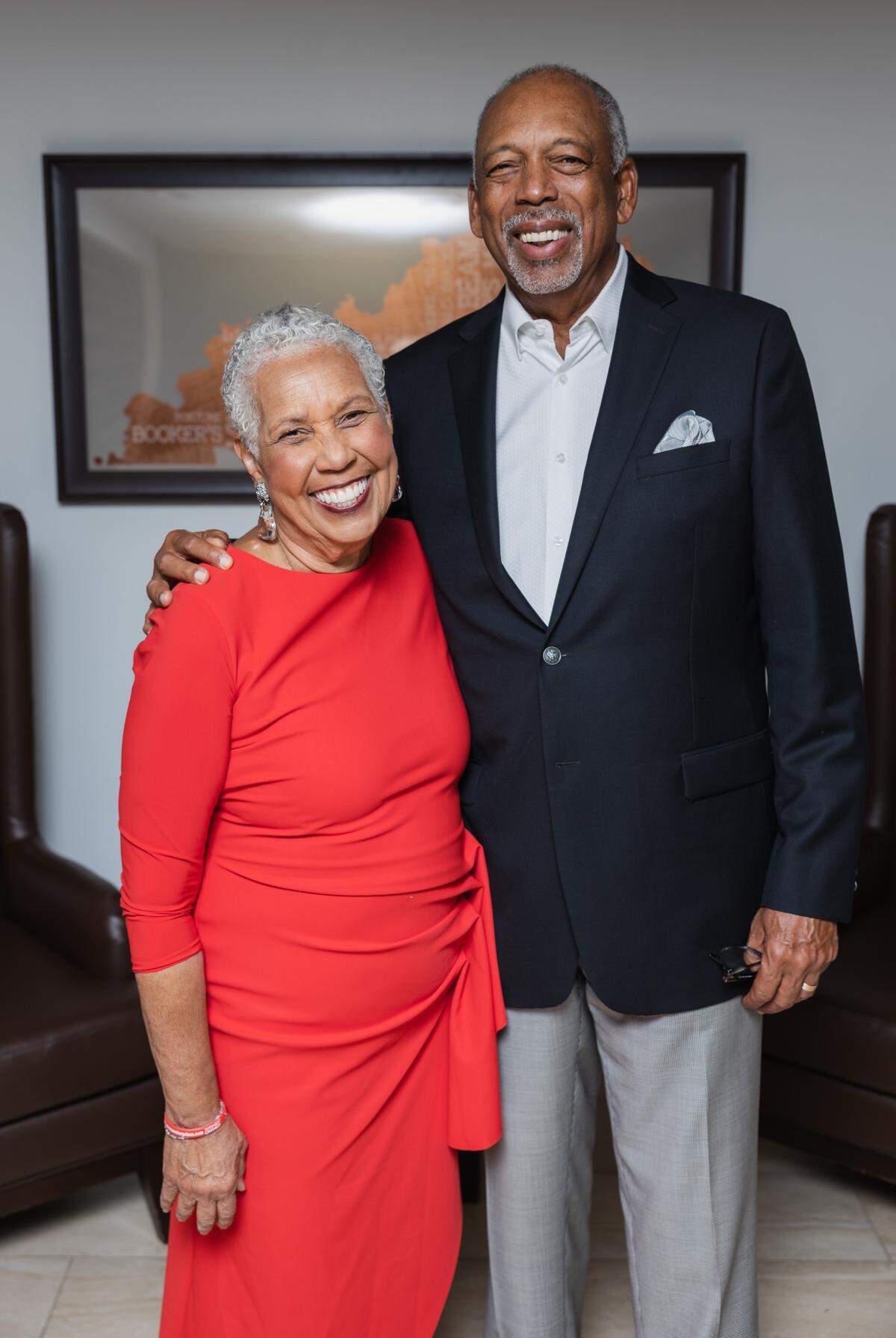
For personal reasons, the Houstons eventually chose to divest from the transportation company. They then concentrated on building up another firm they owned, now known as HJI Supply Chain Solutions, in the logistics sector.
“We really wanted to maintain a corporate presence in Louisville, Kentucky,” Alice Houston says. “We wanted a business we could pass to our children. The easiest path (to doing that) was to divest and start over. We will probably never reach the level of revenue or the number of facilities that we had when we were the larger company. But I think, in a very real sense, our community impact is greater.”
One of the Houstons’ two daughters, Lynn Moore, is now the CEO of HJI Supply Chain Solutions. Condrad Daniels, who is married to the Houston’s other daughter, Natalie, is the company president. Alice and Wade now have more time for their 15 grandchildren.
As for a documentary that is about far more than basketball, “I hope people see a family that has been governed by Faith and has been tremendously blessed,” Alice Houston says. “And I hope they see people that have been committed to providing opportunities and employment to people in our community.”
This story was originally published February 26, 2023 at 6:35 AM.