Amid college sports changes, EKU AD Kyle Moats has one primary hope for Eastern
If you have wondered what it is like to work in college athletics during the current moment, Eastern Kentucky University athletics director Kyle Moats puts it like this: “Anytime you don’t know what the finish line is, it’s hard to figure out how to run the race.”
This, obviously, is an uncertain time in NCAA Division I college sports. The very structure of the enterprise is in limbo, waiting on United States district court senior judge Claudia Wilken to rule yea or nay on a proposed settlement to the antitrust lawsuit, House v. NCAA. Should the settlement be approved, universities, if they so choose, will be allowed for the first time to directly share revenues with their athletes.
That could make the House settlement only the latest factor that is escalating the separation along financial lines between the universities in the conferences that have enough revenue to share — the ACC, Big Ten, Big 12 and the SEC — and the rest of the NCAA Division I schools.
As the first interview in what I plan to be periodic check-ins with leaders in Kentucky college sports about their views of the future, I spoke to EKU’s Moats about his hopes and aspirations for Eastern within the evolving college sports firmament.
A former assistant AD at both Kentucky and Louisville and the ex-longtime athletics director at Missouri State (2009-2024), Moats is winding down his first year running the athletics department at Eastern Kentucky.
The Colonels play in NCAA Division I with most of their sports in the ASUN Conference. In football, Eastern is in the FCS, and competes in the geographically far-flung United Athletic Conference.
In terms of athlete compensation, Moats says there is an EKU-affiliated collective and that, out of roughly 400 Colonels athletes in 2024-25, around 30 were earning some money from their name, image or likeness.
In assessing EKU’s place in the college sports future, Moats has one primary hope: that, regardless of how the business model changes for power four conference athletics programs, that athletes from schools such as EKU will still have a chance to compete for national championships against the players from the top-tier leagues.
“My wish has always been that, at our level, we still have the opportunity to compete at the highest level, meaning the (men’s) NCAA basketball tournament, women’s basketball tournament, baseball, whatever those may be, that we still get that opportunity,” Moats says.
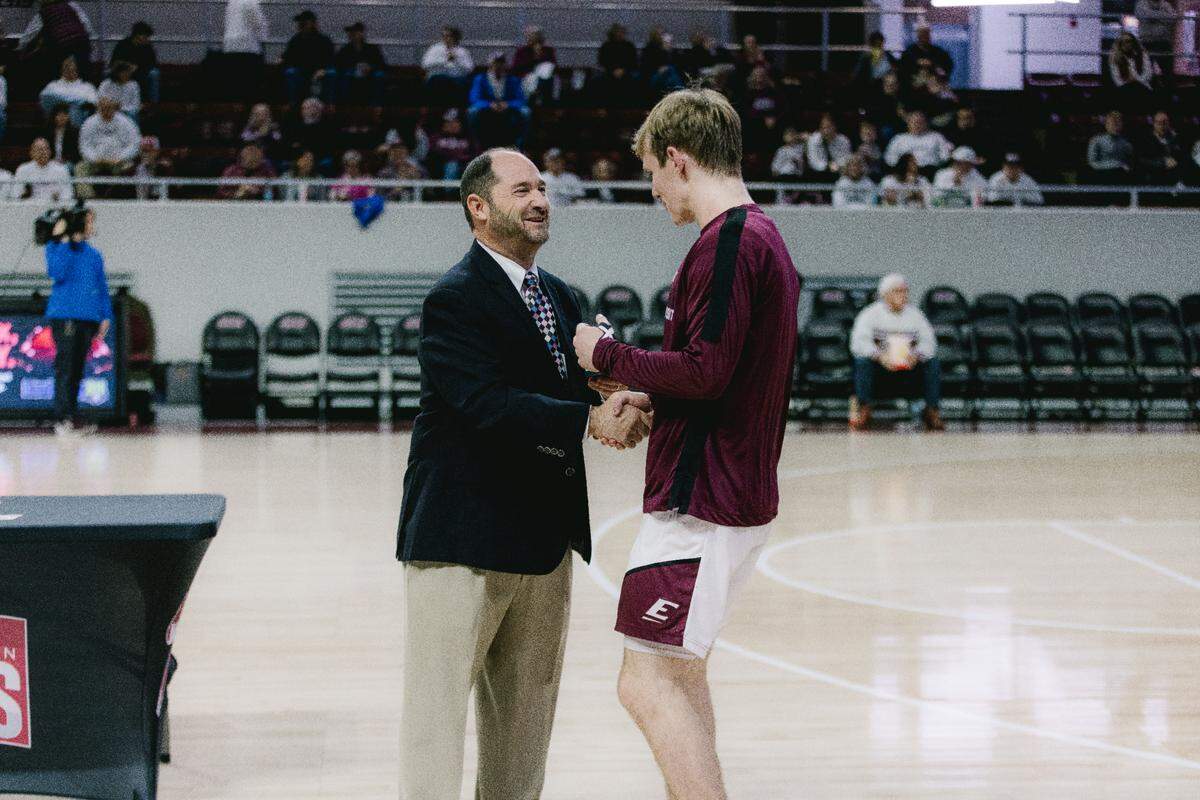
The Eastern AD says he accepts that the schools and leagues that are making/spending the most money might soon tilt the processes for qualifying for postseason NCAA tournaments (even more) in their favor.
“It’s going to be harder (for schools such as Eastern) to get into the tournament somehow, some way,” Moats says. “But, as long as we have some opportunity, I’m OK with that.”
Some question the practicality of a school such as EKU, which had an athletics budget of $23.088 million in fiscal year 2023, competing in the same division as schools such as Texas ($325 million athletics budget) or Ohio State ($292.3 million).
Moats, however, says there are two primary reasons why it is important that schools at Eastern’s level continue to have access to competition against the financial upper crust of college athletics.
One is that EKU’s athletes relish the chance to play men’s basketball at Louisville and football at Mississippi State and baseball against Kentucky — to name three such games Eastern played during the 2024-25 school year.
“Our kids love playing in those games,” Moats says. “It’s good for our kids to play (vs. power conference foes), even in football. … It gives our (football) kids an opportunity to play in front of 50, 60, 70,000 (fans) and they love that. I don’t want our kids to lose those experiences.”
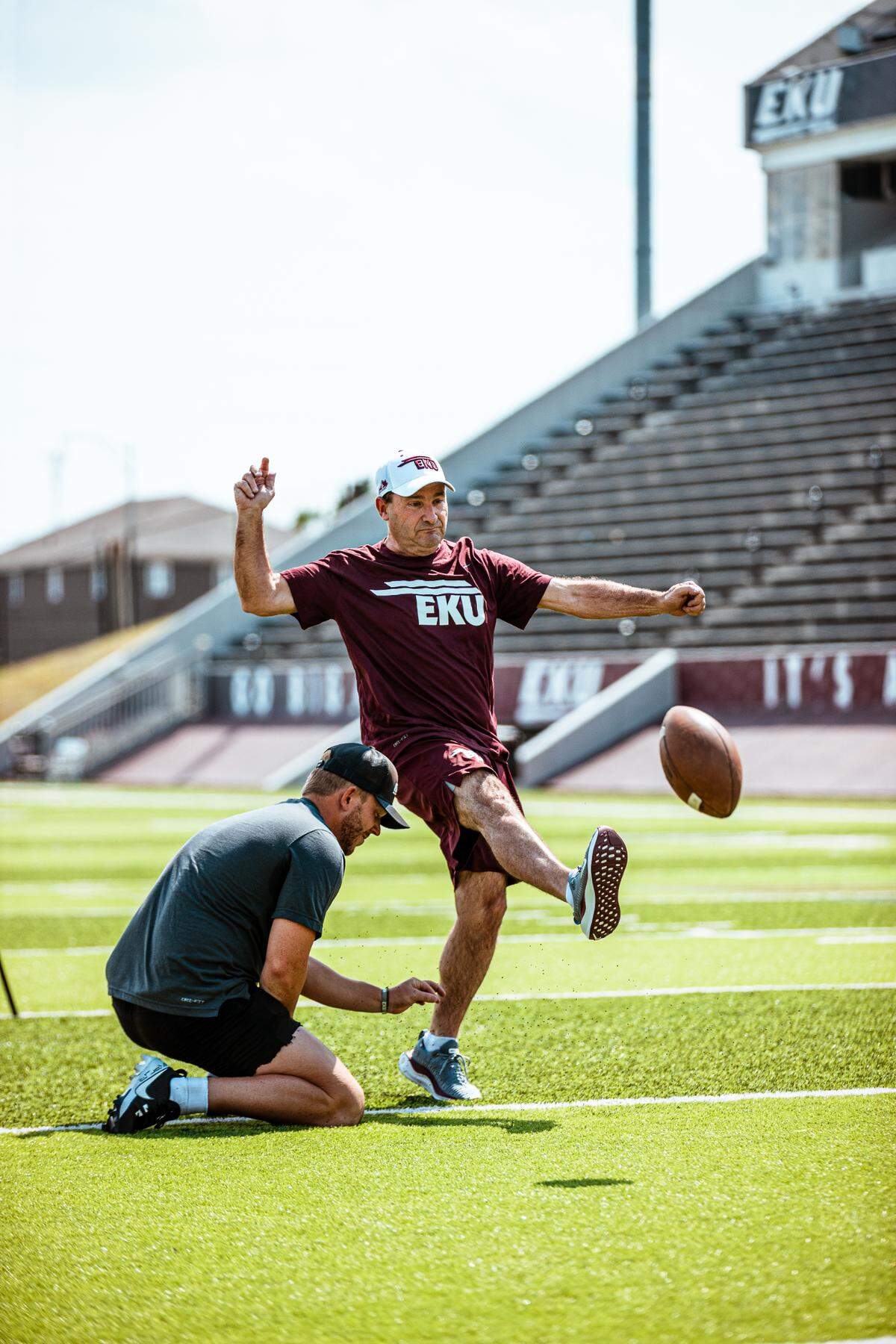
The second reason is money. Specifically, the football guarantees that EKU receives from playing against power conference foes are vital to Eastern’s overall athletics budget.
Moats says if Eastern makes $500,000 for playing a football game against a major conference team but spends $50,000 to transport its team to the game, then the Colonels athletics department clears $450,000.
Take that away, “We we don’t have somewhere we can make up (the loss of) $450,000 in our budget,” Moats says.
As the financial gap between the college sports “haves” and the “have nots” widens, Moats says it is incumbent on schools not in the power conferences to accept that there will not, cannot, be uniform rules that bind all of NCAA Division I athletics.
“The top 60 or 70 or 50 (athletics programs), whatever that number is, they need to do what they need to do because they’re so different than us,” Moats says. “I don’t think that they should adhere necessarily to all the (same) rules. They need to do what they need to do to make sense for them. They shouldn’t worry about us — because it’s (the difference between) apples and watermelons.”
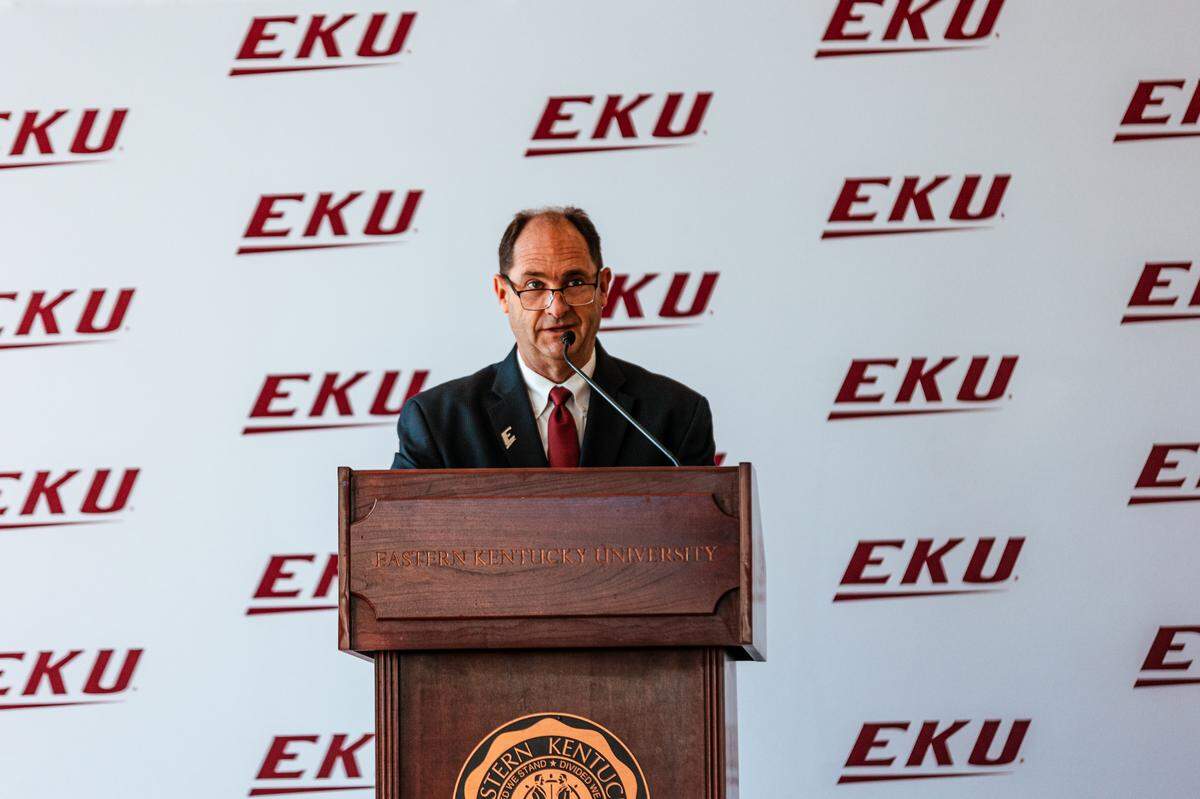
Ultimately, Moats says he hopes the power conference schools will allow universities like EKU to retain a seat at the same table.
“They may not want to have us. I get that,” Moats says. “But there’s two things: One, help us a little bit (financially) by playing us, and then let us have an opportunity (to compete for the championship). And you can stack that however you want to stack it. If we got to play four games to get in (the NCAA Tournament), at least somebody (from a non-power league) is going to get in.”