From Iraq to Morehead St.: How the U.S. Army shaped Jackie Alexander as a coach
After starring for Rockcastle County in the 2010 Kentucky girls basketball state tournament, Jackie Alexander spent her freshman year of college as a plebe at the United States Military Academy.
For Alexander, who had no prior military ties, the unrelenting demands placed on first-year students at West Point shocked her system.
“I hated it, which is really unfortunate,” Alexander said. “I was super immature, like 17, and ... I just hated it. I didn’t want to stay, and thought I didn’t want to do the ‘military thing’ at all. So I transferred.”
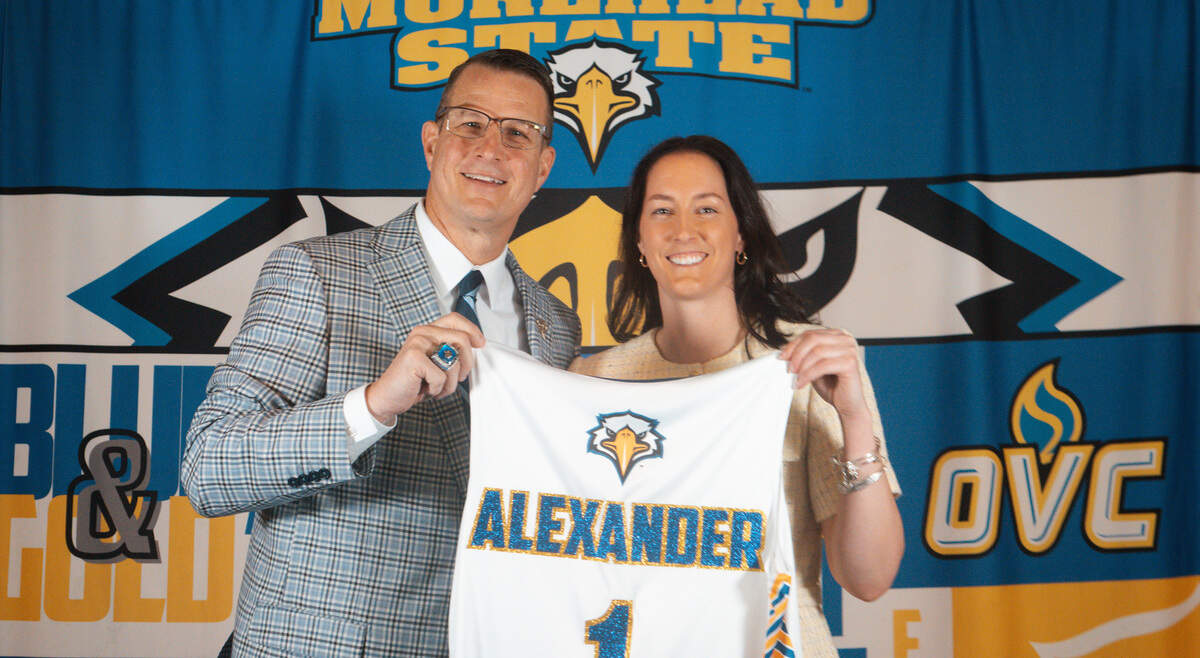
Almost three months ago, Alexander was named the new head women’s basketball coach at Morehead State University. In a reality that would have stunned the college freshman who decided to leave Army-West Point, a defining characteristic that Alexander will bring to her first college head coaching job is her military background.
Alexander served from 2014 through 2017 on active duty in the U.S. Army, reaching the rank of Captain. In 2016, she deployed to Iraq with the 101st Airborne Division in support of Operation Inherent Resolve. That was the United States military’s operational name for the conflict against the jihadist militant group, the Islamic State.
Drawing upon her experiences in the Army, Alexander said, has helped make possible her rise to NCAA Division I basketball head coach at age 34.
Service in Iraq
After leaving West Point, Alexander’s path back into military service was forged at the University of the Cumberlands. Following her decision to transfer to the NAIA school in Williamsburg to play basketball, Alexander was persuaded to join the school’s ROTC program.
“I regretted my decision to leave West Point,” Alexander said. “Being from a small town (Brodhead, estimated population of 1,110) and a first-generation college student, I had no idea what an opportunity West Point was. Eventually, I realized, and I reapplied, but I didn’t get back in.”
However, in joining the ROTC program at Cumberlands, Alexander said she thought “‘This is an opportunity to not be a quitter, to finish what I’d started.’”
Within ROTC, Alexander was determined to perform at a sufficiently high level that she would have the opportunity upon college graduation to enter the Army on active duty.
When that was achieved, Alexander was eventually assigned to the 101st Airborne Division — the famed “Screaming Eagles” — at Fort Campbell. When the chance to deploy to Iraq during Operation Inherent Resolve arose, Alexander, then 23, was eager to go.
“I sought out that deployment,” she said. “I felt like I was probably going to get off of active duty and pursue coaching. ... So I was like, ‘You know, I don’t want to get out (of the Army) and not ever have done what we trained to do.’”
In Iraq, Alexander said her primary duties involved logistics. “I was a company executive officer,” she said. “Our job, we advised and assisted a mission with the Iraqi army, we were helping transport materials as they were building a bridge over the Euphrates River.”
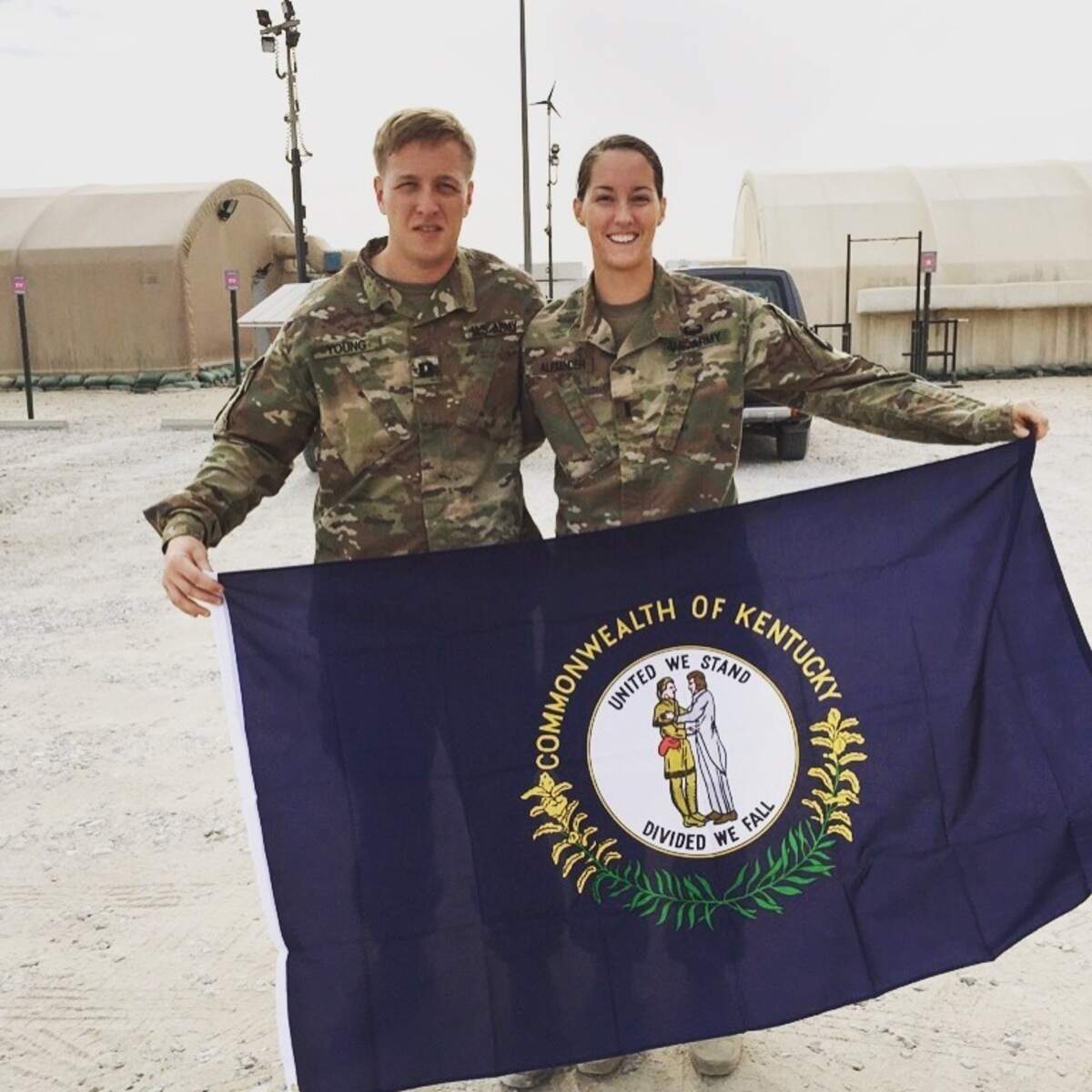
The heat in the Middle East was searing. “I was in Kuwait one day, and I want to say it was 118 degrees Fahrenheit,” Alexander said. “You were in a constant state of sweating.”
According to U.S. Government data, 25 American service members suffered “hostile deaths” while serving in Operation Inherent Reserve.
Over her roughly nine-month deployment, Alexander said the closest she came to danger was when an “improvised explosive device went off about, I don’t know, it was, like, 15 miles from us. ... I was very fortunate that I didn’t come into contact with anything. I was very lucky in that regard, because not everyone was as lucky.”
From Screaming Eagles to MSU Eagles
When, at age 24, it came time to make a decision on whether to stay in the U.S. Army, Alexander was torn.
Her dream of being a basketball coach had taken root in middle school. “But, honestly, the Army kind of grabbed me,” she said. “I ended up enjoying it. My mentors in the military, they wanted me to stay in. They were like, ‘You can coach when you get out.’”
As Alexander figured it, she could log 20 years in the Army, then probably break into high school coaching with relative ease. However, if she aspired to be a college head coach, she felt she had to launch her coaching career while young.
So Alexander exited the military, and began to climb the college coaching ladder. There were stops at the Air Force Academy, Albany, Eastern Kentucky, East Tennessee State, Toledo and, last season, on Shauna Green’s staff at Illinois.
This spring, after Ashton Feldhaus left Morehead State for McNeese State after leading the Eagles to an 18-15 mark last year in her single season at MSU, Alexander landed her initial head-coaching gig in her home state.
“I think fit at Morehead State is probably the most important piece in our coaching decisions,” MSU athletics director Kelly Wells said. “Jackie’s one of us. ... She understands Kentucky, she understands Morehead State. I just think the fit right now is perfect with Jackie Alexander.”
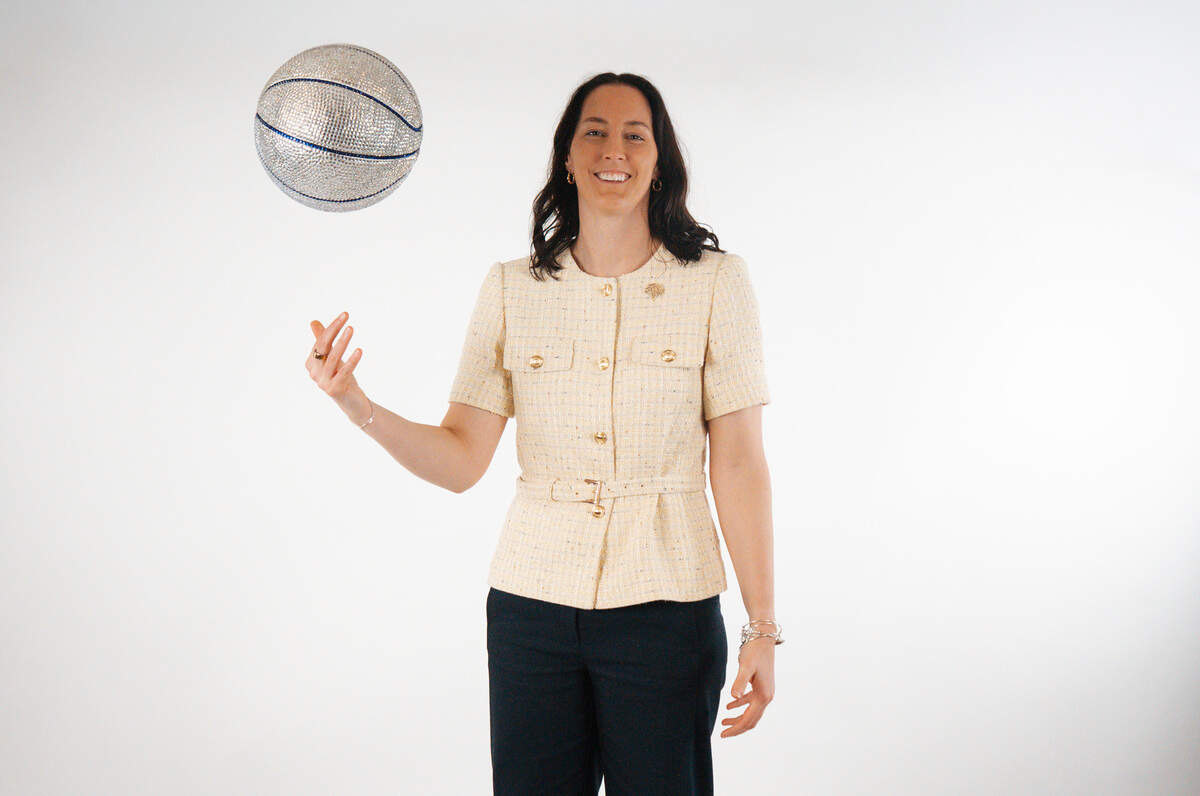
Alexander’s military background is seen as a coaching plus by Wells. “I think it’s created a lot of diverse experiences for her, especially at a young age, to be in charge of grown men,” he said.
Even as a head coach, Alexander continues to serve in the U.S. Army Reserves. Conveniently, her unit is based at Fort Knox.
As Alexander sees it, the biggest benefit from her Army background to her coaching is that the military helped teach her how to lead people who come from myriad backgrounds.
According to U.S. Census Bureau data, Alexander’s native Rockcastle County features a population that is 97.3% white.
“Growing up in Rockcastle County, there’s not a lot of people that look differently than me,” Alexander said. “At 22 years old, I go to Fort Leonard Wood (in Missouri), and then Fort Campbell, and I’m around people from different walks of life, (that) have different experiences, that look different, talk different.
“Being able to lead and develop relationships with a different group of people, I think that is a skill set I had before, but I think it really developed and (was) enhanced when I was in the military. That’s something that has really helped me (in) recruiting and developing relationships with (players). In coaching, you’re trying to lead them and develop them, and bring them together for a common mission.”