Why corporate logos on Kentucky Wildcats jerseys shouldn’t bother you
Mark Pope likes to refer to the Kentucky Wildcats jersey as “a sacred piece of cloth.”
Starting with the 2026-27 school year, that UK sports vestment could, hypothetically, have an ad for Big Ass Fans on it.
On Jan. 23, the NCAA Division I Cabinet approved a policy change that will take effect Aug. 1 and allow “commercial patches” on college sports team uniforms and apparel “for non-NCAA championship competition.”
Already, LSU has announced a “multi-million-dollar, multi-year deal” with Woodside Energy that will put the company’s logo on the Tigers’ uniforms in all 21 sports the university sponsors.
Kansas just revealed a five-year, $30 million deal with digital finance firm Ripple that will put patches for XRP Cryptocurrency on Jayhawks uniforms in every KU sport.
UNLV has agreed to a five-year, $11 million deal with Acesso Biolgics, a regenerative medicine firm, that will place that company’s logo on the Rebels’ team uniforms in football, men’s and women’s basketball and baseball.
Meanwhile, the Big 12 Conference has announced a $20 million annual deal with Monster Energy that will put the carbonated energy drink company’s familiar green logo on the fields and uniforms of all 16 league schools.
Kentucky fans should be preparing themselves because UK very much hopes to sell advertising space on its team uniforms, too.
In April, Paul Archey, president of JMI Sports Properties, the multimedia rights holder for the University of Kentucky, told the Champions Blue LLC board of governors that “branding on uniforms and equipment” is the emerging opportunity in “new asset development.”
Archey told the board of Champions Blue, the holding company that now contains the UK Athletics department, that “major unsold assets” could generate from $3 million to $5 million in potential revenue with “the biggest ... being the uniform jersey patches.”
“We’re currently in the market now talking about this new asset development,” Archey said then.
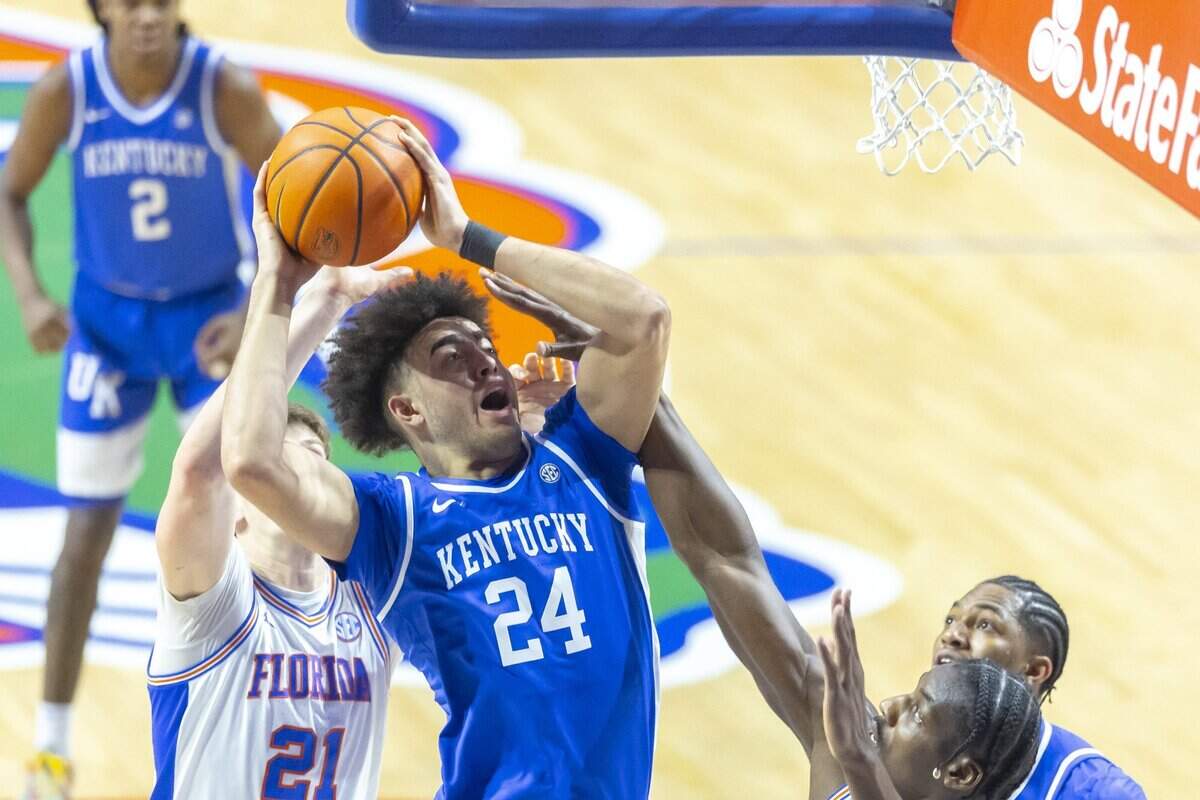
In the ideal scenario, Archey said JMI would sell one corporation the right to put its logo on the uniforms of Kentucky’s teams in every sport.
“Perfect world is one brand (on all UK teams’ jerseys) with a brand that is endemic to Kentucky, right?” Archey said. “That’s perfect world. But that’s expensive, and it’s going to be hard to get there.
“I think we will end up with selling it with an unbundled strategy, which means we can sell individual teams separately. We can sell team groups that go together, such as baseball (and) softball or (the men’s and women’s) soccer teams. Or (we can sell) whatever groups might work or platforms, say sell one sponsor across (all) women’s sports (teams).”
When the Division I Cabinet made its original announcement that corporate logos on team jerseys would be allowed, it specified that was only for regular season and exhibition games, not NCAA championship competition.
Presumably, that is to protect the NCAA’s own corporate sponsors.
The NCAA news release that announced the changed policy on corporate patches on uniforms said “The Cabinet also supported NCAA staff efforts to explore possible policies for teams to wear commercial patches during NCAA championships in collaboration with NCAA corporate marketing and media rights holders.”
Archey told the Champions Blue board that gaining clearance for teams to wear their own corporate logos in NCAA championship play is vital to unlocking the full economic impact of those deals. “That represents about 50% of (the value) of those patches,” he said. “So very significant.”
The sales price of jersey patches is also reliant, Archey said, on the attractiveness of a team’s schedule and what media platform will broadcast its games.
“You certainly have more value for those marks if you’re playing on national television, on a linear network, versus the SEC Network, or in the postseason in particular,” he said.
From what I read on the message boards and X, some are offended by corporate logos on team jerseys, see it as yet another example of commercialization in big-time college sports run amok.
Maybe because I once closely followed NASCAR — long the poster child in American sports for ubiquitous corporate branding — the prospect of company logos on team uniforms has never bothered me.
The college sports push to enhance revenues through selling uniform patches comes at a time when the schools finally have to share some of their economic bounty with the entertainers — the players — who provide the product in a multi-billion-dollar entertainment industry.
To the extent that is the motivation for selling uniform patches, that is an unequivocal positive.
In terms of JMI finding “a brand that is endemic to Kentucky” to put on the uniforms of the Kentucky Wildcats, I will leave you with three reasons I really am pulling for Big Ass Fans to be the company to cut that deal:
One, the company’s unique name would draw attention, which is the whole point.
Two, the maker of commercial and industrial fans is headquartered in Lexington.
Three, having “Big Ass Fans” adorned upon “the sacred piece of cloth” would be an unmitigated hoot.