
Artis Gilmore earned call from Hall of Fame
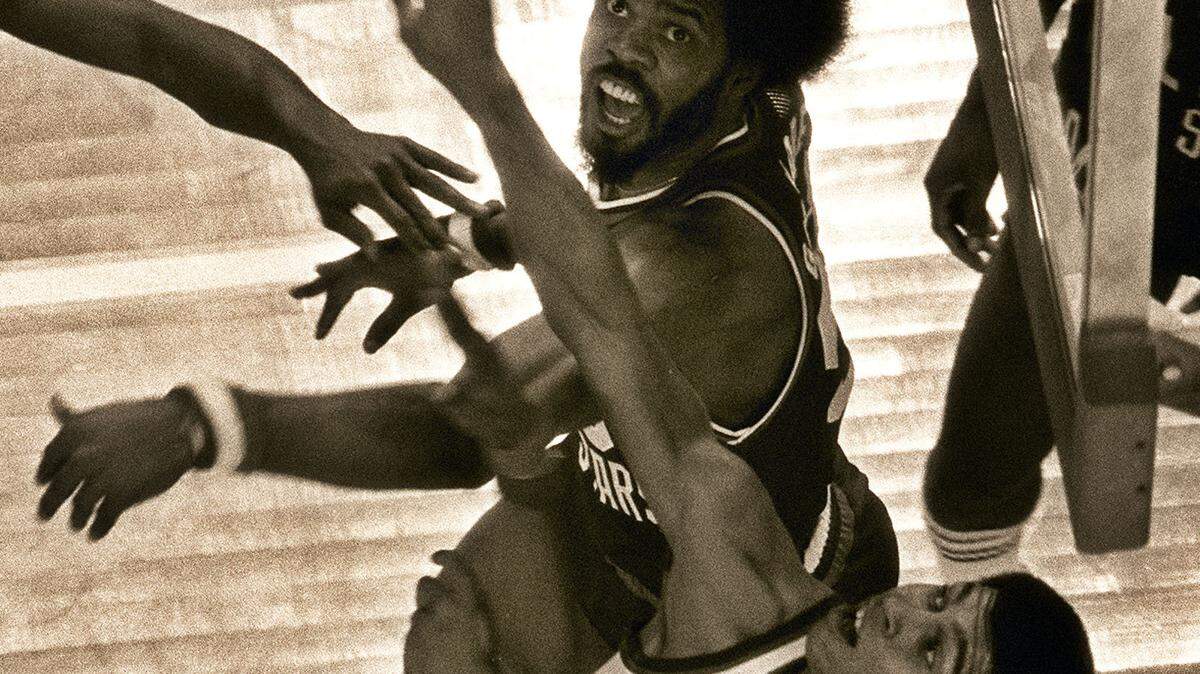
When Artis Gilmore shocked the basketball establishment by shunning the NBA to sign with the Kentucky Colonels of the renegade ABA in 1971, he had one concern.
"I was afraid the fans in Kentucky didn't like me," Gilmore recalls.
As a star player at Jacksonville University, Gilmore had been part of two epic NCAA Tournament games against schools from the commonwealth.
In the 1970 NCAA tourney, Gilmore led Jacksonville (25-1) into an Elite Eight matchup with Dan Issel and Kentucky (26-1). The 7-foot-2 Gilmore had 24 points and 20 rebounds against Adolph Rupp's Wildcats. Issel had 28 points and 10 rebounds but fouled out midway through the second half on a controversial charging call.
Jacksonville 106, Kentucky 100.
The loss meant Issel — arguably the most revered player ever to wear UK blue — never made a Final Four appearance. Jacksonville went on to lose to John Wooden's UCLA dynasty 80-69 in the NCAA finals.
In the 1971 NCAA Tournament first round, Gilmore faced another big man showdown against Western Kentucky University star Jim McDaniels.
Jacksonville led 40-22 in the first half. After a stunning rally, WKU won 72-70 on a Clarence Glover layup with four seconds left. The 6-10 McDaniels had 23 points; Gilmore had 12. Western went on to reach the Final Four.
His college career over, Gilmore's next official game would be played on the same side as Kentucky basketball fans, not against them.
The 61-year-old Gilmore was back in the news in a big way last week. It was announced in Houston during the Final Four that Gilmore is at long last being inducted into the Naismith Basketball Hall of Fame.
Gilmore — who led the Kentucky Colonels to the 1975 American Basketball Association title — was chosen by the Hall of Fame's "ABA committee."
As a star-caliber player in college basketball, the ABA and then the NBA, he should have been elected long ago via the traditional selection process.
This year is turning out to be a very good one for the Chipley, Fla., native in terms of Hall of Fame recognition.
On June 8 at a banquet in Louisville, the guy who wore No. 53 in the red, white and blue of the Colonels will be enshrined into the Kentucky Athletic Hall of Fame.
"It turned out, I loved playing in Louisville," Gilmore said.
'Barely had a roofover our heads'
Gilmore was 22 when he came to the Colonels for the 1971-72 season. Kentucky secured the big center because it offered a 10-year, $1.5 million contract before the NBA held its 1971 draft.
"My agent said (the Kentucky offer) was the one to take," Gilmore said. "I did what he told me to do."
In a LeBron world, $150,000 a year seems like a pittance for a big-time pro athlete, but to Gilmore in 1971 it seemed like unimaginable riches.
He had grown up without much in the small Florida town of Chipley.
His dad, Otis, was a fisherman who "was basically disabled," Gilmore says. "My mother (Mattie) was a stay-at-home mom. My father had no education; my mother had very little. There were eight kids, six boys, two girls. We barely had a roof over our heads."
Gilmore's father stood 5-foot-7. His mom was 6-2. Artis, the second-oldest child in the family, took after his mom.
In Chipley in the 1950s and early '60s, public accommodations were segregated by race. Black people, Artis recalls, were required to sit in the balcony at the town's movie theater.
Still, the one time he was excluded from the movies had nothing to do with skin color. Children got in to see the pictures for 15 cents, while adults paid a quarter. A 12-year-old Artis showed up with his 15 cents — but he was so tall, he couldn't convince the theater ticket taker that he was a kid.
"And I didn't have 25 cents," Gilmore says.
7-foot-8 counting Afro
In the 1960s and '70s, the NBA was known as "the big-man's league." Bill Russell, Wilt Chamberlain and, later, Kareem Abdul-Jabbar dominated play.
The ABA had no such giants, so sweet-shooting guards and dynamic small forwards tended to be the stars in a league whose style of play was wide open and fast-paced.
Signing Gilmore represented a direct challenge by the ABA to the NBA's defining strength. To boast, the Colonels took Gilmore to New York City for a news conference.
Decked out in platform shoes and boasting a robust Afro, Gilmore was measured at 7-8 from sole of shoe to top of hair in New York.
Gilmore was an immediate hit with the Colonels, averaging 23.8 points, 17.8 rebounds and five blocks in 1971-72. He helped Kentucky to a staggering 68-14 regular-season record and was named ABA Rookie of the Year.
Yet in what became a disturbing pattern, the Colonels were stunned in a six-game playoff loss to Rick Barry and the New York Nets. The next season, Kentucky made it to the ABA finals only to lose in seven games to the hated Indiana Pacers. In 1974, Kentucky went out in the second round of the playoffs.
The resulting frustration was immense. Most observers considered a roster that included Gilmore, his former NCAA Tournament rival Issel and long-range bomber Louie Dampier the most talented in the ABA and one of the best in all of pro basketball.
"I really can't pinpoint that," Gilmore says of what kept the Colonels from winning more titles. "Naturally, the first thing you do is blame the coach. Then you put it at the feet of the players. We had truly great talent. For whatever reason, we were unable to make that count in the playoffs."
Finally, champions
Before the 1974-75 season, Colonels ownership hired an up-and-coming NBA assistant, Hubie Brown, to coach Kentucky.
The new boss decided to run more of the team's offense through Gilmore, meaning less offensive emphasis for Issel. Given that Big Dan was arguably the most popular person in the commonwealth, it was a controversial, if gutsy, coaching move.
Gilmore's scoring rose from 18.7 in 1973-74 to 23.6; Issel's fell from 25.5 to 17.7.
With 10 contests left in the season, the Colonels were five games behind Julius Erving and the Nets. Then Kentucky caught fire.
The Colonels won the last 10 games of the season, beat the Nets in a one-game showdown for the division crown, and then rampaged through the playoffs. Kentucky lost only three games total while beating Memphis, St. Louis and, finally, the rival Pacers for the elusive ABA championship.
The night the Colonels clinched the crown, May 22, 1975, a Freedom Hall throng of 16,622 witnessed both history and something bizarre. As the Kentucky players began to cut down the nets, a thunderstorm knocked out electricity and plunged the arena into darkness.
Before the game, Gilmore and his wife, Enola Gay, had left their daughter, Shawna, with a young baby sitter.
"That was such a thrilling moment," Gilmore says of the Colonels' championship. "My wife and I, we were talking the other day about the big storm that night. Our baby sitter, she lit candles after the lights went out. Our daughter lit her hair on fire. We had to leave the arena and get that tended to."
End game
For the Colonels, the championship feeling was fleeting.
The ensuing summer, team owner John Y. Brown Jr. sold Issel's contract to the Baltimore Claws. He said it was necessary to keep afloat a franchise that was not making money in spite of its winning ways.
An infuriated fan base never forgave the team.
One year later, four ABA franchises, the Nuggets, Spurs, Pacers and Nets, were absorbed into the NBA, The Colonels and the rest of the league fell defunct.
"I was upset," Gilmore says. "They told me I would be going to Chicago (in the dispersal draft). At the time, I much rather would have been here in Louisville."
The reason Gilmore should have been a Basketball Hall of Famer long before now is that he went into the NBA, first with the Bulls, then the Spurs and briefly the Celtics, and was an elite player.
He averaged a double-double (points and rebounds) in eight of his first nine years in the league. His career averages in NBA action are 17.1 points, 10.1 rebounds, 2 blocks and 2 assists.
Today, Gilmore and Enola Gay have five children and two grandchildren. Artis has returned to Jacksonville University where he works as a special assistant to the school's president.
Yet the Florida native still feels a connection to the state where he won his only professional championship — the state he worried did not like him at the time he signed with the Colonels way back in 1971.
"They never forget you," Gilmore said of Kentucky sports fans. "They respect athletes there. If you are part of a Kentucky team, they treat you like a Kentuckian."
This story was originally published April 10, 2011 at 12:00 AM.